
Directing
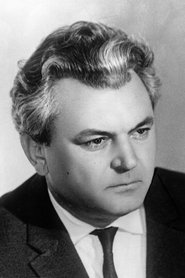
Sergei Bondarchuk
Born — Died
1920-09-25 — 1994-10-20
Place of birth
Belozerka, Kherson Governorate, Ukrainian SSR
Known for
Directing
Credits
84 titles
Sergei Bondarchuk (25 September 1920 — 20 October 1994) was a Soviet director, actor, and screenwriter. People's Artist of the USSR (1952). Academy Awards winner (War and Peace, 1969). BAFTA winner (Waterloo, 1971). His directorial debut was Fate of a Man, a WWII classic where he portrayed the main role. Bondarchuk is considered a master of big scale pieces with epic battle scenes that involved thousands of extras (War and Peace, Waterloo). He often starred star in his films, as well as cast his family, notably his wife, actor Irina Skobtseva (e.g. War and Peace, Vybor Tseli, Molchanie Doktora Ivensa). In late 1980s-early 1990s Bondarchuk started his long-term passion project – an adaptation…
Known for
 NR
NRNo synopsis available yet.
Legends of Cinema
2016
 7.6
7.6The love story of young Countess Natasha Rostova and Count Pierre Bezukhov is interwoven with the Great Patriotic War of 1812 against Napoleon's invading army.
War and Peace
1968
 6.7
6.7In January 1943 the German army, afraid of an Allied invasion of the Balkans, launched a great offensive against Yugoslav Partisans in Western Bosnia. The only way out for Partisan forces and thousands of refugees was the bridge on the river Neretva.
The Battle of Neretva
1969
 7.2
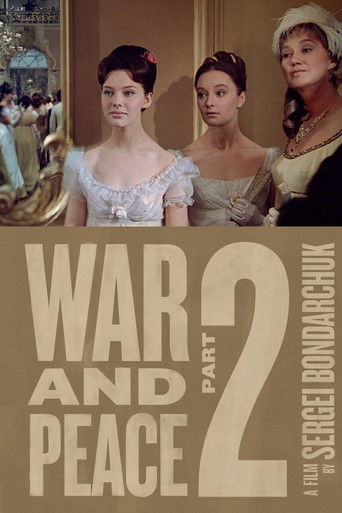
7.2As 1809 nears its end, Natasha attends her first ball, where Andrei falls in love with her with the intent of marriage. However, as her father demands they wait, the prince travels abroad, leaving Natasha in desperate longing. But she meets Anatol Kuragin and forgets Andrei. Part two of the four-part adaptation of Leo Tolstoy's 1869 novel.
War and Peace, Part II: Natasha Rostova
1966
 7.1
7.1After defeating France and imprisoning Napoleon on Elba, ending two decades of war, Europe is shocked to find Napoleon has escaped and has caused the French Army to defect from the King back to him. The best of the British generals, the Duke of Wellington, beat Napolean's best generals in Spain and Portugal, but now must beat Napoleon himself with an Anglo Allied army.
Waterloo
1970
 7.5
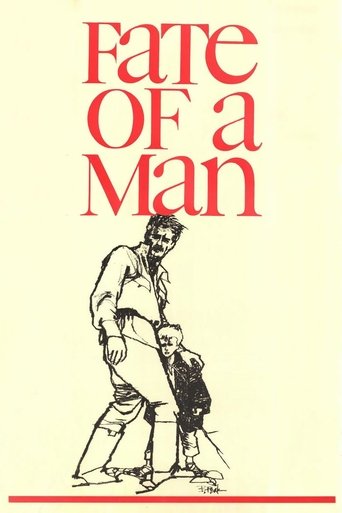
7.5The story of a man whose life was ruthlessly crippled by World War II. His wife and daughters were killed during the bombing of his village, he spent some time as a prisoner, and his only son was killed in action only a few days before the victory...
Fate of a Man
1959
Film credits
2010s · 1 titles
1990s · 2 titles
 6.1
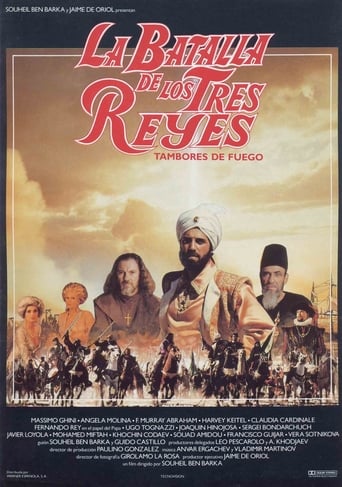
6.1In 1568, Saadi prince Abdelmalek is exiled from Morocco by his brothers, an event that is only the beginning of his adventures: fighting the Spanish Inquisition, taking part in the Battle of Lepanto, being incarcerated in Alicante prison, and assist in the Conquest of Tunis. Eventually, he returns to Morocco to fulfill his destiny.
Drums of Fire
1990
 8.0
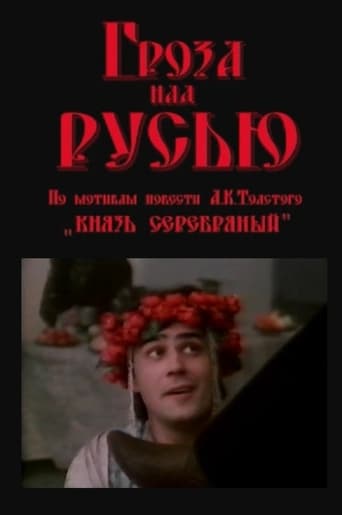
8.0Two-part adaptation of A. K. Tolstoy's novel "Prince Serebriany a tale of unrest and intrigue under the rule of Ivan the Terrible.
Thunder Over Rus'
1992
1980s · 8 titles
 4.5
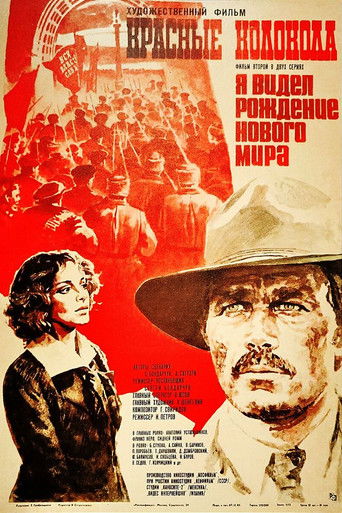
4.5The second part of Soviet filmmaker Sergei Bondarchuk's epic biography of John Reed. It is October 1917 and the American journalist has found himself and his wife, Louise Bryant, in Petrograd on the eve of the Bolshevik revolution.
Red Bells Part II: I Saw the Birth of a New World
1982
 4.1
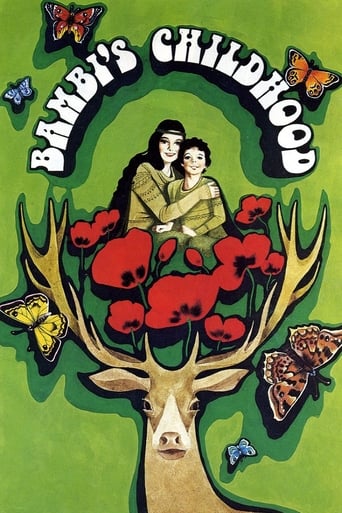
4.1In the forest a holiday — the deer Bambi was born, the son of the leader, the prince, the heir to the crown. Bambi is still small, and the whole huge world around him appears like a fairy tale. In this tale, he meets many miracles: animals and trees, the sun and the river, his second cousins and sister, squirrel, funny hares and beautiful swans. But in the fairy forest, where everyone lives together, there is He... The one whose name is not called. Whom everyone is afraid of, even the most powerful animals. Bambi will face a series of dangers, adventures and new knowledge, before he grows up and rightfully takes the place of an unnamed father - he will become the leader of his pack.
Bambi's Childhood
1985
 5.8
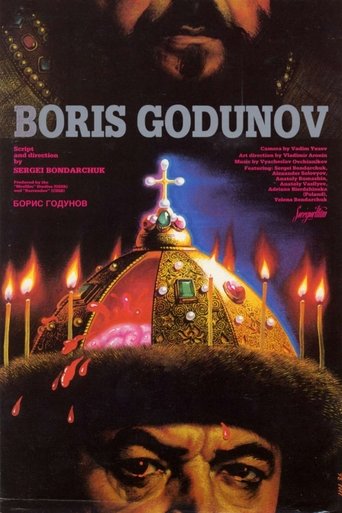
5.8Praised for its fine photography and production design if not its narrative, Sergei Bondarchuk directed this adaptation of the tale by Alexander Pushkin. Boris Godunov came to the Czarist throne at the end of the 16th century, after the original heir to Ivan the Terrible had died. At first, things went well for Godunov (played by Bondarchuk), but when the Russian people began to believe he had killed Ivan the Terrible's son in order to gain the throne, an alliance sprang up against the new Czar. Events continued to spin out of control as a young monk was presented as the son Godunov had supposedly killed. Now he was openly accused of failing an assassination attempt, which seems to be even worse than succeeding. In addition to these woes, Boris Godunov began to suffer serious health problems. So much for the joys of kingship.
Boris Godunov
1986
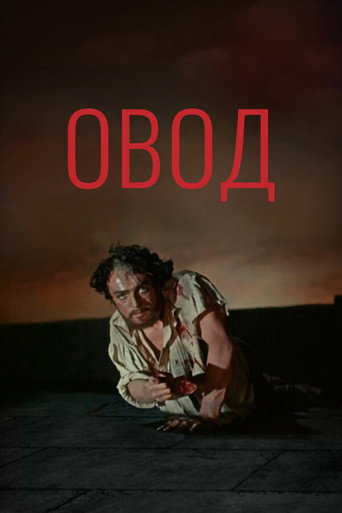 5.1
5.1The movie set in 1840s Italy under the dominance of Austria, a time of tumultuous revolt and uprisings. The story centers on the life of the protagonist, Arthur Burton, as a member of the Youth movement, and his antagonist, Padre Montanelli. A thread of a tragic relationship between Arthur and his love Gemma simultaneously runs through the story. It is a story of faith, disillusionment, revolution, romance, and heroism.
The Gadfly
1980
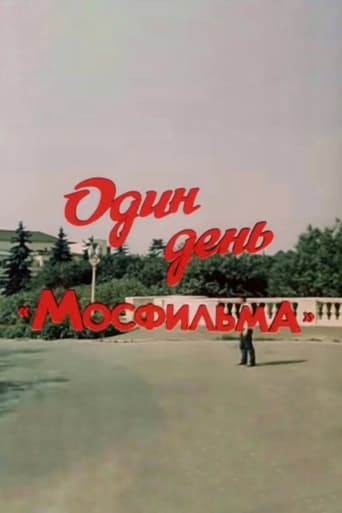 NR
NRThe film tells about the main stages of the history of the country's largest studio "Mosfilm", about the work of the creative team, introduces the viewer to the outstanding masters of Soviet cinematography, with such unique groups such as the Theater-Studio of Film Actors, with the workshops of the studio.
One Day of Mosfilm
1985
About the work of the Soviet film director S. F. Bondarchuk.
Sergey Bondarchuk
1982
A short documentary on the director, presumably made for Russian TV, that mixes interview with footage of the director at home and at work, extracts from the film and archive footage from screenings.
Interviews with Filmmakers: Sergey Bondarchuk
1983
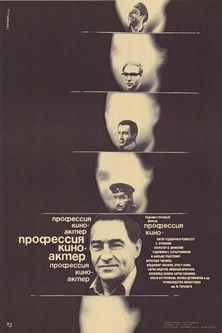 4.7
4.7Vyacheslav Tikhonov's roles are discussed by his colleagues.
Profession: Film Actor
1980
1970s · 15 titles
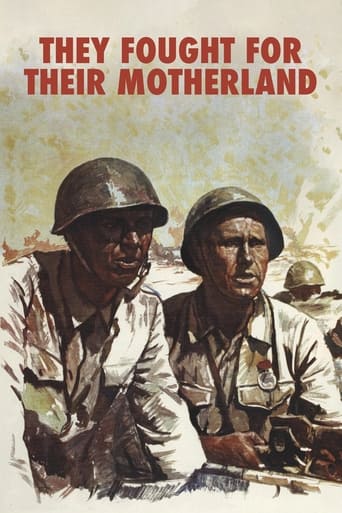 6.9
6.9In July 1942, in the Second World War, the rearguard of the Russian army protects the bridgehead of the Don River against the German army while the retreating Russian troops cross the bridge. While they move back to the Russian territory through the countryside, the soldiers show their companionship, sentiments, fears and heroism to defend their motherland.
They Fought for Their Motherland
1975
 6.8
6.8Having revolutionized film editing through such masterworks of montage as Potemkin and Strike, Soviet director Sergei Eisenstein emigrated West in hopes of testing the capabilities of the American film industry. Quickly ostracized from Hollywood, Eisenstein, Grigory Alexandrov, and photographer Eduard Tisse (at the urging of author Upton Sinclair) wandered south of the border, where they began filming a highly stylized documentary about the people and volatile social climate of Mexico. Unfortunately, a lack of funds prohibited the film's completion, and the famed director was unable to edit the film. In 1979, by referring to Eisenstein's extensive notes and sketches, Alexandrov assembled the most definitive version of the film; as close to Eisenstein's vision as one is ever likely to see.
¡Qué Viva México!
1979
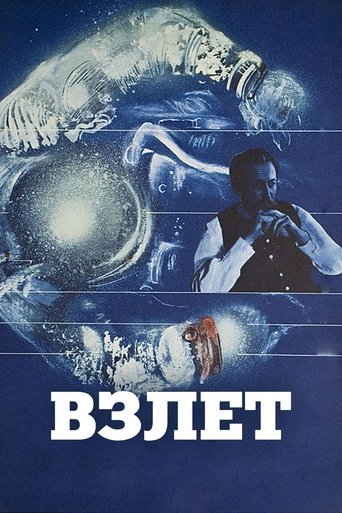 9.0
9.0A biographical film about the life of the great Russian scientist, inventor of rocket technology and the founder of theoretical astronautics — Konstantin Tsiolkovsky, the hard spiritual work of the thinker, overcoming the stagnation of the surrounding and dramatic events of his family life.
Take-Off
1979
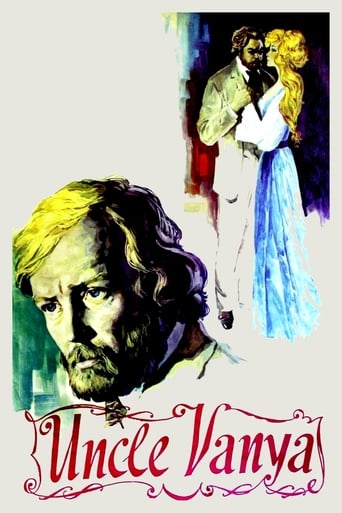 6.7
6.7Retired professor Serebryakov and his young wife Yeléna disrupt the lives of his brother-in-law Vanya and daughter Sofya on a rural estate, leading to a crisis of unrequited love, resentment, and disillusionment.
Uncle Vanya
1970
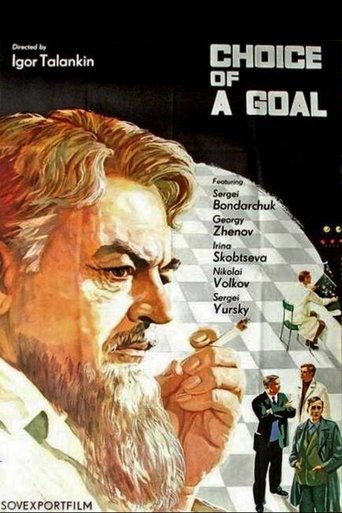 8.0
8.0A story of Igor Kurchatov - a father of Soviet nuclear weapons.
Choice of Purpose
1975
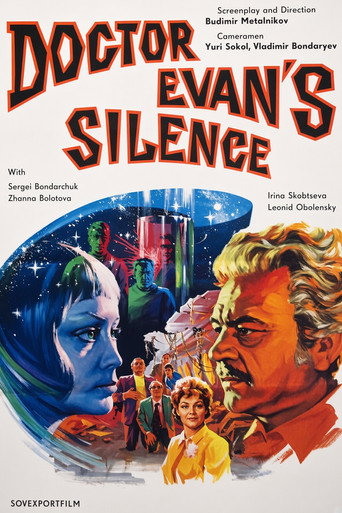 5.1
5.1In the surreal aftermath to a plane crash at sea Dr. Evan an eminent scientist is the only survivor to be taken into the confidence of the alien rescuers. He learns that the world with its weapons of mass destruction is not ready for the wonders of the culture of the pacifist visitors. The situation is further complicated by the close relationship that blossoms between the doctor and the female alien, and due to this relationship he is the only survivor allowed to retain his memory of the events, unlike the other survivors including his wife, whose memories are erased.
Doctor Evan's Silence
1974
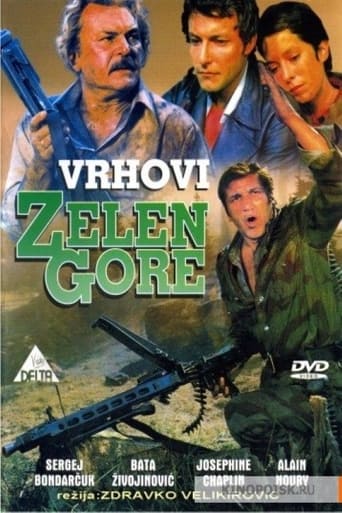 6.5
6.5During the Battle of Sutjeska, partisan troops must endure 24 hours of big and heavy attacks on German units Ljubino grave, to the main Partisan units, with the wounded and the Supreme Headquarters, pulled out the ring that is tightened around them.
The Peaks of Zelengore
1976
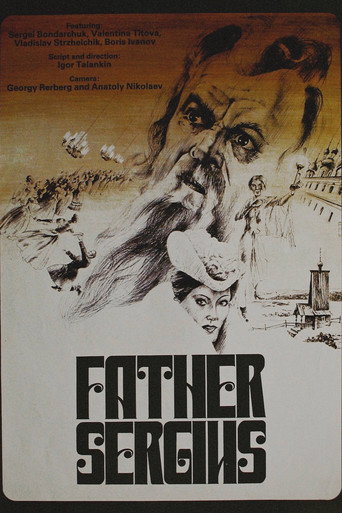 3.4
3.4Prince Stepan Kasatsky is an officer, an ardent, proud young man, and a big fan of the tsar. Kasatsky is going to marry, but at the last moment he learns from the bride that she was the mistress of the emperor. The prince is deeply disappointed in social life, he takes a monastic vow and leaves the capital. Faith in God was to save the soul, but passions and worldly temptations don't leave Kasatsky.
Father Sergius
1978
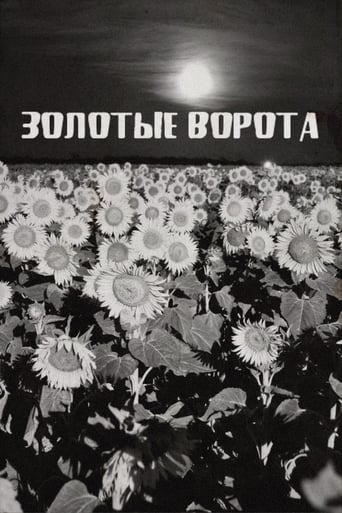 6.5
6.5The film-remembrance of the creative fate of the Ukrainian Soviet film director Alexander Dovzhenko, shot on his diaries. It has his statements about his work, about the role of the artist in society, his plans and sources of inspiration, his artistic style and the peculiarities of his worldview. Used excerpts from his films and documentary footage taken during the director's life, as well as filmed fragments of the unfinished scripts " The Death of the Gods” and “Tsar”.
The Golden Gates
1971
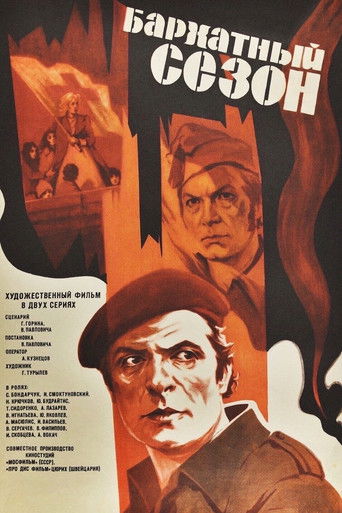 7.0
7.0In the fall of 1938, three former fighters of the international brigade — russian Shukhov, frenchman Henri and american Liz — fall into a resort town on the border of Spain and France. Having met a nurse who is supposed to send Spanish children to Corsica, they decide to help her. However, a fascist rebellion suddenly breaks out in the city, and the children are held hostage to criminals.
Velvet Season
1978
 5.7
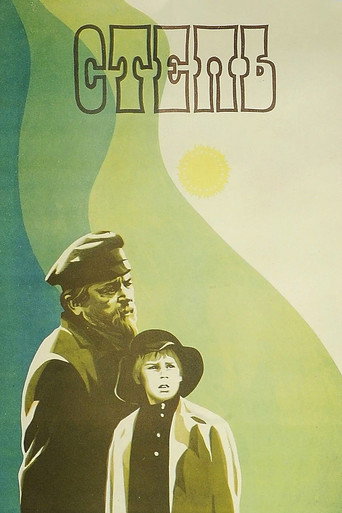
5.7A boy in Russia, circa 1900, makes a daunting trip from his home village to a school in the city.
The Steppe
1978
 NR
NRThe story of VGIK teachers and students about the acting profession.
VGIK: Teachers and Students Talk About the Profession
1979
 8.0
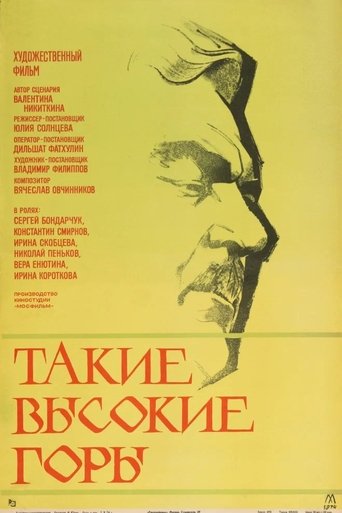
8.0A poetic story about a country teacher and the challenges and triumphs he encounters as he strives to educate young people in a way that awaken both their minds and their emotions.
Such High Mountains
1974
 NR
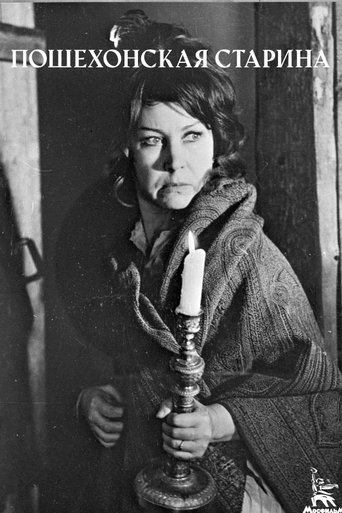
NRThe film consists of three short stories: 'The Unhappy Matryonka', 'Brother Fedos' and 'Vanka-Cain'.
Old Times in Poshekhonye
1977
 5.0
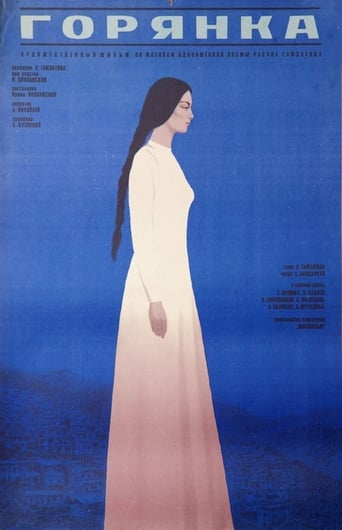
5.0After Asiat refuses to marry a much older rich man to whom she was betrothed since childhood, her father kicks her out of the house. She leaves for Makhachkala to study and falls in love with the young Yusup.
The Mountain Woman
1975
1960s · 10 titles
7.6The love story of young Countess Natasha Rostova and Count Pierre Bezukhov is interwoven with the Great Patriotic War of 1812 against Napoleon's invading army.
War and Peace
1968
6.7In January 1943 the German army, afraid of an Allied invasion of the Balkans, launched a great offensive against Yugoslav Partisans in Western Bosnia. The only way out for Partisan forces and thousands of refugees was the bridge on the river Neretva.
The Battle of Neretva
1969
7.2As 1809 nears its end, Natasha attends her first ball, where Andrei falls in love with her with the intent of marriage. However, as her father demands they wait, the prince travels abroad, leaving Natasha in desperate longing. But she meets Anatol Kuragin and forgets Andrei. Part two of the four-part adaptation of Leo Tolstoy's 1869 novel.
War and Peace, Part II: Natasha Rostova
1966
 7.5
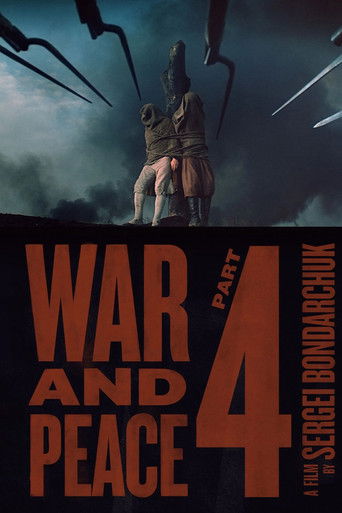
7.5As Moscow is set ablaze by the retreating Russians, the Rostovs flee their estate, taking wounded soldiers with them, and unbeknownst to them, also Andrei. Pierre, dressed as a peasant, tries to assassinate Napoleon but is taken prisoner. As the French are forced to retreat, he's marched for months with the Grande Armée, until being freed by a raiding party. Part four of the four-part adaptation of Leo Tolstoy's 1869 novel.
War and Peace, Part IV: Pierre Bezukhov
1967
 7.6
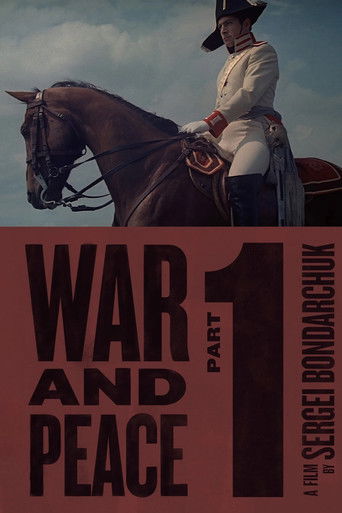
7.6In 1805 St. Petersburg, Pierre Bezukhov, illegitimate son of a rich nobleman, is introduced to high society. His friend, Prince Andrei Bolkonsky, joins the Imperial Russian Army as aide-de-camp of General Mikhail Kutuzov in the War of the Third Coalition against General Napoleon Bonaparte. Part one of the four-part adaptation of Leo Tolstoy's 1869 novel.
War and Peace, Part I: Andrei Bolkonsky
1966
 7.6
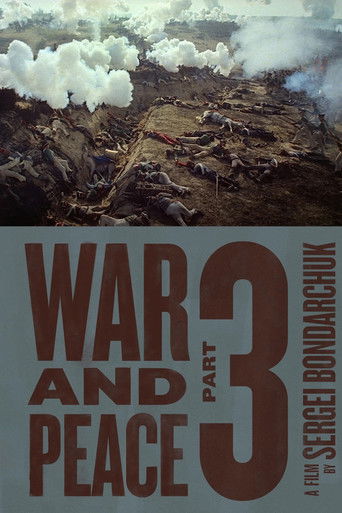
7.6In 1812, as Napoleon's army invades Russia, Kutuzov asks Bolkonsky to join him as a staff officer, yet the prince requests a command in the field. Pierre sets out to watch the armies' impending confrontation. As the Battle of Borodino rages, he volunteers to assist in an artillery battery. Part three of the four-part adaptation of Leo Tolstoy's 1869 novel.
War and Peace, Part III: The Year 1812
1967
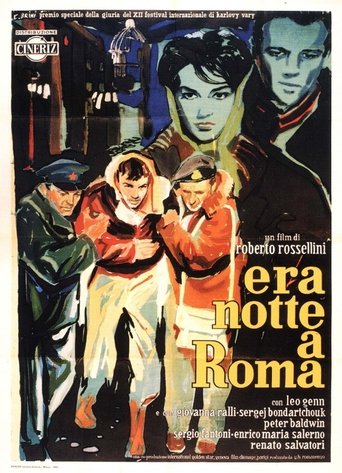 7.0
7.0In Nazi-occupied Rome, a beautiful bootlegger, to the chagrin of her lover, gives sanctuary to three escaped POWs: an American pilot, a Russian sergeant and a British major.
Escape by Night
1960
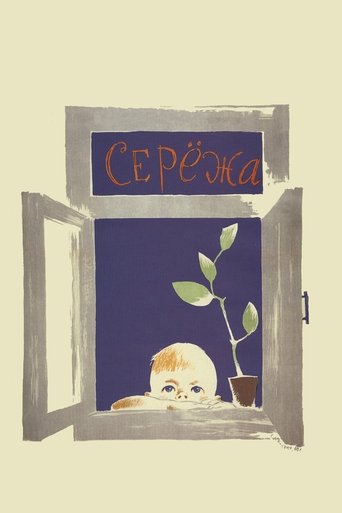 5.7
5.7Based on the Vera Panova book about a complicated relationship between an 8-year-old boy and his new stepfather.
A Summer to Remember
1960
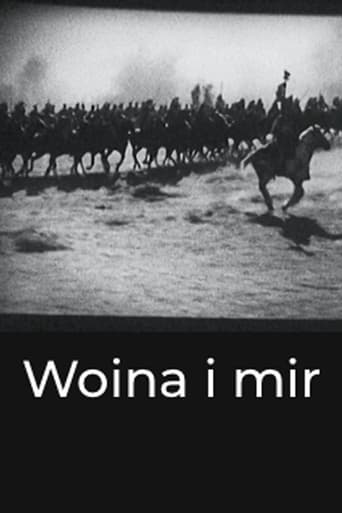 NR
NRA behind-the-scenes look at the filming of "War and Peace," from conceptual sketches and costume design to cameras rolling.
Woina i Mir
1966
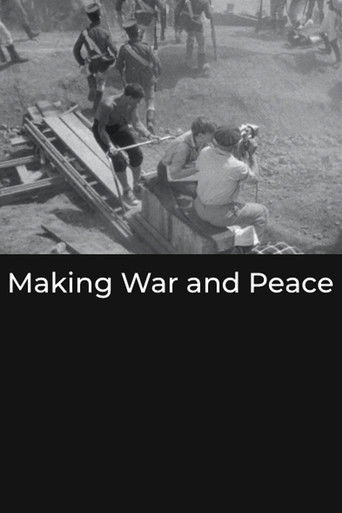 NR
NRProduced in 1969 by Mosfilm, this documentary details the filming and editing of "War and Peace."
Making 'War and Peace'
1969
1950s · 13 titles
7.5The story of a man whose life was ruthlessly crippled by World War II. His wife and daughters were killed during the bombing of his village, he spent some time as a prisoner, and his only son was killed in action only a few days before the victory...
Fate of a Man
1959
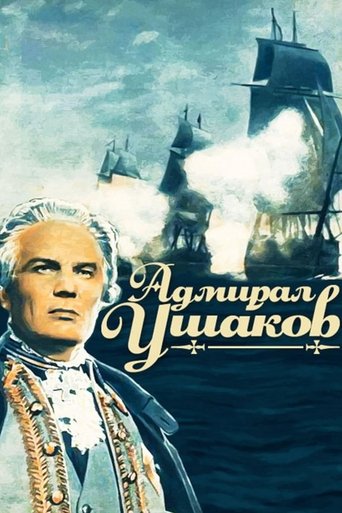 6.1
6.1Historical epic about the legendary Russian naval commander of the 18th century, admiral Fyodor Ushakov, and his fight for Crimea during the Russo-Turkish War.
Admiral Ushakov
1953
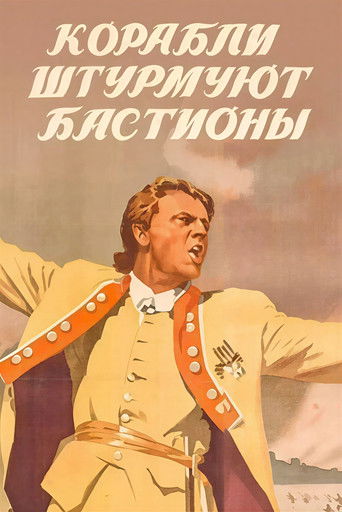 6.0
6.0The historical and biographic movie about the glorified Russian naval commander Ushakov. France begins aggressive wars. The Russian and allied troops freeing Italy are headed by A. V. Suvorov. The victory in the fortress of Corfu is ensured by operation of the admiral Ushakov.
Attack from the Sea
1953
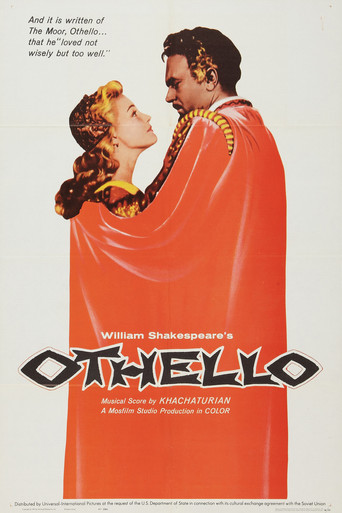 5.3
5.3Othello, a celebrated Moorish general, secretly marries Desdemona, angering her noble father and inciting the envious Iago’s hatred. Sent to Cyprus, Othello’s victories are overshadowed by Iago’s manipulations: he frames Desdemona as unfaithful with Othello’s lieutenant Cassio. Consumed by jealousy, Othello murders his wife. Discovering Iago’s treachery too late, Othello kills himself as Cyprus learns the bitter truth.
Othello
1955
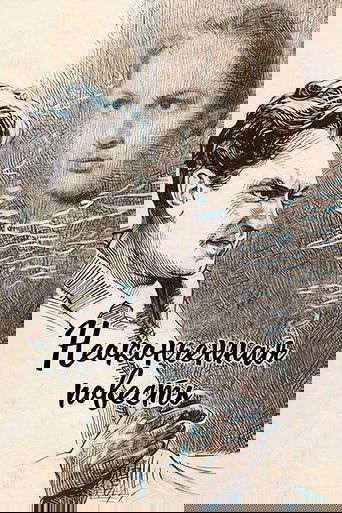 5.3
5.3The local doctor Yelizaveta Maksimovna is a beautiful woman and a wonderful sympathetic person. She is lonely, although she is cared for by a confident and promising colleague. Yelizaveta Maksimovna has one patient, a manly, full-energy ship builder Yershov, chained to the bed with a paralysis of both legs. All doctors recommend him rest, and Elizaveta Maksimovna advises to work and not feel sorry for herself. Yershov with all his heart falls in love with his doctor, and she loves him, but she does not dare to say her feelings. Ershov thinks that he has no hopes, but...
Unfinished Story
1955
 5.2
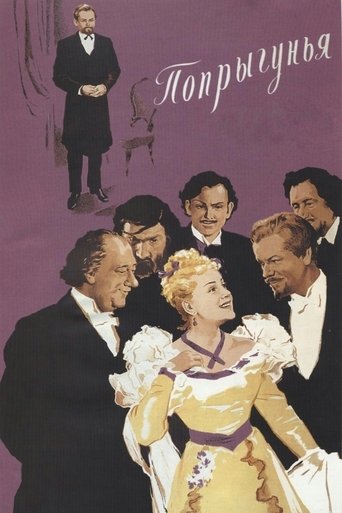
5.2Osip Dymov, the titular counselor and the doctor of thirty one years, serves in two hospitals at the same time: intern and anatomist. From nine o'clock in the morning and in the forenoon accepts patients, then goes to open corpses. But its income is hardly enough for a covering of expenses of the wife mad about talents and celebrities in the art and artistic environment whom it daily accepts in the house.
The Grasshopper
1955
 4.8
4.8Growing up in a Ukrainian peasant family, knowing all hardships of serf life, young artist and poet Taras Shevchenko in the years of study clearly identifies the meaning of true art, which is to serve the interests of the people. The poems of Shevchenko are imbued with love for the common people. Fiery freedom-loving creativity of Taras Shevchenko is known throughout Russia. Nicholas I exiles the poet to the distant Caspian fort where he is to serve as an ordinary soldier and is banned from writing or drawing. In the poet's difficult days he has the support of Ukrainian soldier Skobelev, Polish revolutionary Sierakowski, captain Kosarev and the commandant of the fortress, Uskov. For the sake of his release Chernyshevsky and Dobrolyubov are hard at work. And so, the sick and aged Shevchenko is finally free. Together with Chernyshevsky and Dobrolyubov, he dreams of a bright future of the motherland, when the Russian and Ukrainian peoples throw off the chains of slavery.
Taras Shevchenko
1951
 10.0
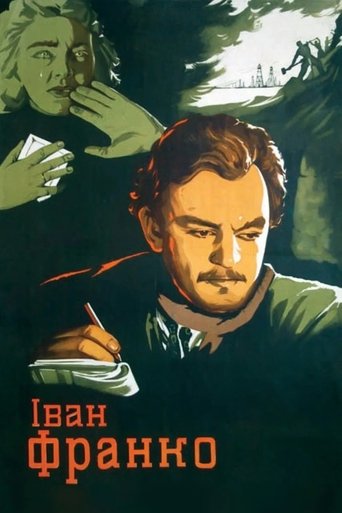
10.0Historical and biographical film about the life and work of Ukrainian writer Ivan Franko.
Ivan Franko
1956
 NR
NRDocumentary essay about the First Moscow International Film Festival, held in August 1959, about its participants and guests - Soviet and foreign actors, directors who came to the film forum.
Stars Meet in Moscow
1959
 8.0
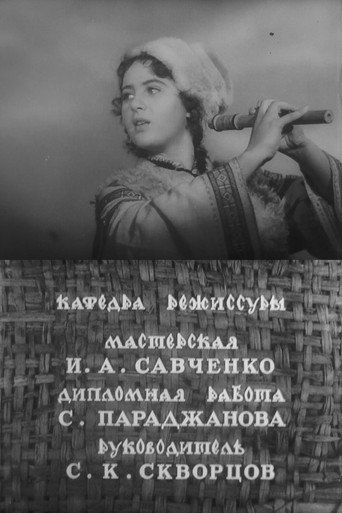
8.0A short diploma film based on a fairy tale by Yemelian Bukov and directed by Sergei Parajanov. The film was made in 1952, since that moment it was considered to be lost, but finally it was found in VGIK in 2025.
Andriesh
1952
 8.0
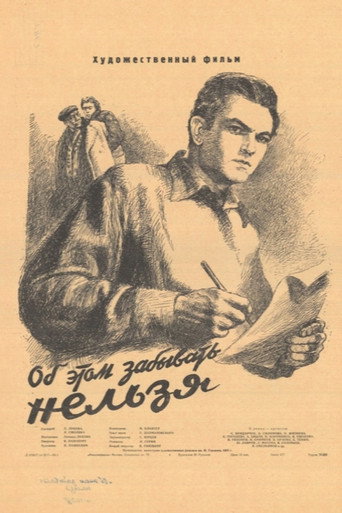
8.0The story unfolds in a post-war town in Western Ukraine. The enemy agents are trying to subvert communist writer Aleksandr Garmash using ideological diversions. In parallel, a story is told about student Rostislav Danchenko who is being recruited by enemy agents. The story is pertinent due to resurgence of ultra-nationalist underground activity in Western Ukraine after World War II.
It Can Not Be Forgotten
1954
 7.0
7.0October 1917. Russian and German soldiers, exhausted by three years of war, began to fraternize. But officers' bullets shot the fraternizers. The survivors - Ilya, Matvey, nurse Olga and German soldier Jakob - swore in front of the fallen soldiers to reach St. Petersburg and achieve peace for all.
Soldiers Were Walking
1959
 5.6
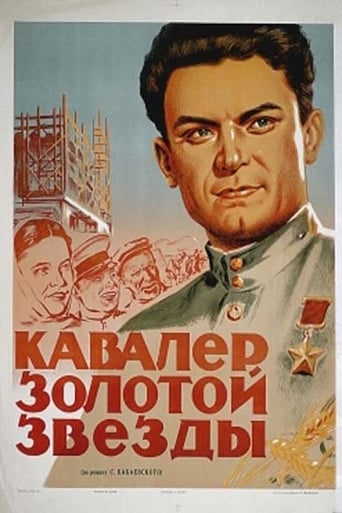
5.6Soviet filmmaker Yuri Raisman once more combines political dogma with solid entertainment values in Dream of a Cossack (aka Cavalier of the Golden Star). The title character, played by future director Sergei Bondarchuk (and billed for obscure reasons as Semyon Bondarchuk), is an ex-soldier who returns home to the Kuban region, there to take up life as a farmer. Instead, he galvanizes the local citizenry into participating in a massive construction project, which will result in a new power station and canal. Thus does Raisman offer an prime example of Russian collectivism while making it seem as though it had sprung from individual initiative. Dream of a Cossack is based on a popular novel by S. Babayefsky.
Dream of a Cossack
1951
1940s · 4 titles
 5.0
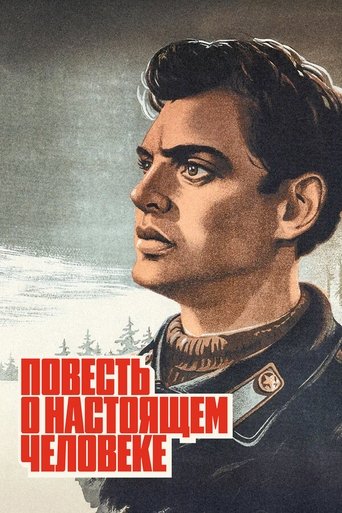
5.0Alexey Meresyev was a fighter pilot during the war. One day he was shot down by Nazis, and because of his wounds both of his legs had to be cut off up to his knees. Because of his spirit and courage, Alexey was able to overcome his disability. He learned not only to walk on his artificial limps, but even dance and fly the plane again. Based on a real-life story.
Story of a Real Man
1948
 5.5
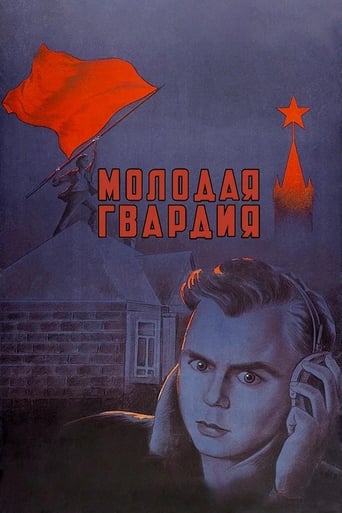
5.5In 1942, local teenagers are organizing the underground resistance in the city of Krasnodon during the Nazi occupation of Russia. The teens manage to outsmart the Nazis in their fight, and their activity lifts the spirits of the surviving citizens.
The Young Guard
1948
 5.6
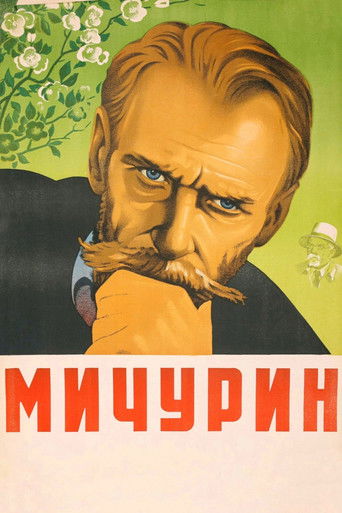
5.6About the life of the Russian biologist Ivan Michurin. 1912 year. Having rejected American offers to work abroad, Michurin continues his research in the Russian Empire, despite the fact that his ideas are not perceived by the tsarist government, the church and idealistic science. Michurin is supported by prominent scientists of the country and he continues to work hard. After the October Revolution, a small Michurin garden in the city of Kozlov (the biologist's homeland) becomes a large state nursery.
Michurin
1949
 8.0
8.0A girl from a small village goes to the big city to realize her dream of driving trains.
Glorious Path
1949
Series credits
NRNo synopsis available yet.
Legends of Cinema
2016
 8.0
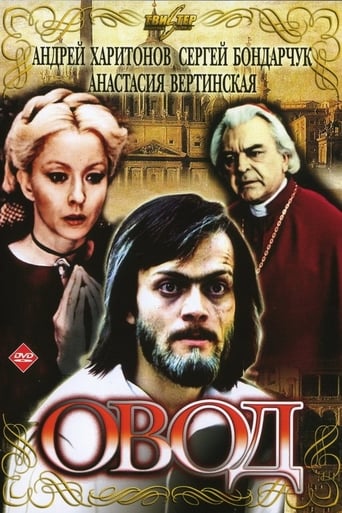
8.0The story of the dramatic relationship between a father and son. The backdrop is the struggle of Italian patriots against the Austrian occupiers for the unification and independence of Italy.
Gnat
1980
 8.0
8.0The movie begins by showing how Schneller takes up the profession of a teacher out of love for the children. When the First World War begins, he becomes a 'volunteer officer' and slowly the political situation begins to shape him. He develops into a revolutionary fighter.
Ernst Schneller
1977
 7.0
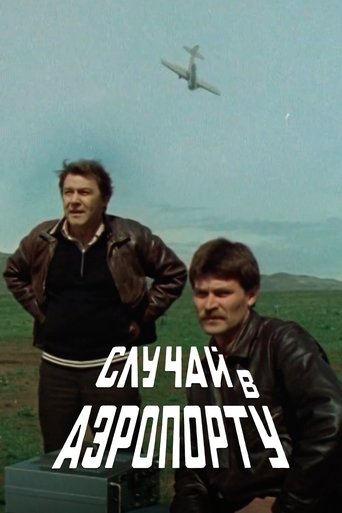
7.0Major of the militia, Dzhuraev, is occupied with a rather mundane task — investigating the robbery of the apartment of the elderly actress Kurbatova, whose jewelry was stolen. The crime has already been confessed to by Bahor Murodov, a man who served his sentence. He intentionally "got caught" by breaking into a bridal shop without taking anything. And then — a sudden turn of events at the airport… Two officers from the private security service are poisoned, and their cargo — unique jewelry made of pure gold — is stolen...
The Airport Incident
1989
Behind the camera
7.6The love story of young Countess Natasha Rostova and Count Pierre Bezukhov is interwoven with the Great Patriotic War of 1812 against Napoleon's invading army.
War and Peace
1968
7.6The love story of young Countess Natasha Rostova and Count Pierre Bezukhov is interwoven with the Great Patriotic War of 1812 against Napoleon's invading army.
War and Peace
1968
7.2As 1809 nears its end, Natasha attends her first ball, where Andrei falls in love with her with the intent of marriage. However, as her father demands they wait, the prince travels abroad, leaving Natasha in desperate longing. But she meets Anatol Kuragin and forgets Andrei. Part two of the four-part adaptation of Leo Tolstoy's 1869 novel.
War and Peace, Part II: Natasha Rostova
1966
7.2As 1809 nears its end, Natasha attends her first ball, where Andrei falls in love with her with the intent of marriage. However, as her father demands they wait, the prince travels abroad, leaving Natasha in desperate longing. But she meets Anatol Kuragin and forgets Andrei. Part two of the four-part adaptation of Leo Tolstoy's 1869 novel.
War and Peace, Part II: Natasha Rostova
1966
7.1After defeating France and imprisoning Napoleon on Elba, ending two decades of war, Europe is shocked to find Napoleon has escaped and has caused the French Army to defect from the King back to him. The best of the British generals, the Duke of Wellington, beat Napolean's best generals in Spain and Portugal, but now must beat Napoleon himself with an Anglo Allied army.
Waterloo
1970
7.5The story of a man whose life was ruthlessly crippled by World War II. His wife and daughters were killed during the bombing of his village, he spent some time as a prisoner, and his only son was killed in action only a few days before the victory...
Fate of a Man
1959
7.5As Moscow is set ablaze by the retreating Russians, the Rostovs flee their estate, taking wounded soldiers with them, and unbeknownst to them, also Andrei. Pierre, dressed as a peasant, tries to assassinate Napoleon but is taken prisoner. As the French are forced to retreat, he's marched for months with the Grande Armée, until being freed by a raiding party. Part four of the four-part adaptation of Leo Tolstoy's 1869 novel.
War and Peace, Part IV: Pierre Bezukhov
1967
7.5As Moscow is set ablaze by the retreating Russians, the Rostovs flee their estate, taking wounded soldiers with them, and unbeknownst to them, also Andrei. Pierre, dressed as a peasant, tries to assassinate Napoleon but is taken prisoner. As the French are forced to retreat, he's marched for months with the Grande Armée, until being freed by a raiding party. Part four of the four-part adaptation of Leo Tolstoy's 1869 novel.
War and Peace, Part IV: Pierre Bezukhov
1967
6.9In July 1942, in the Second World War, the rearguard of the Russian army protects the bridgehead of the Don River against the German army while the retreating Russian troops cross the bridge. While they move back to the Russian territory through the countryside, the soldiers show their companionship, sentiments, fears and heroism to defend their motherland.
They Fought for Their Motherland
1975
6.9In July 1942, in the Second World War, the rearguard of the Russian army protects the bridgehead of the Don River against the German army while the retreating Russian troops cross the bridge. While they move back to the Russian territory through the countryside, the soldiers show their companionship, sentiments, fears and heroism to defend their motherland.
They Fought for Their Motherland
1975
 4.2
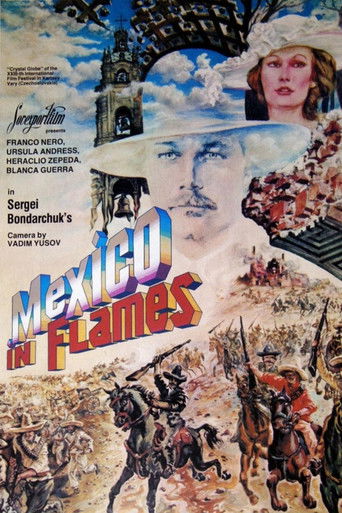
4.2American journalist John Reed travels to Mexico during the Mexican Revolution and interviews Francisco Villa. At the same time, we learn about his relationship with his lover Mabel Dodge, his participation in the Patterson strike, and his work as a reporter during World War I.
Red Bells Part I: Mexico in Flames
1982
4.2American journalist John Reed travels to Mexico during the Mexican Revolution and interviews Francisco Villa. At the same time, we learn about his relationship with his lover Mabel Dodge, his participation in the Patterson strike, and his work as a reporter during World War I.
Red Bells Part I: Mexico in Flames
1982
7.6In 1805 St. Petersburg, Pierre Bezukhov, illegitimate son of a rich nobleman, is introduced to high society. His friend, Prince Andrei Bolkonsky, joins the Imperial Russian Army as aide-de-camp of General Mikhail Kutuzov in the War of the Third Coalition against General Napoleon Bonaparte. Part one of the four-part adaptation of Leo Tolstoy's 1869 novel.
War and Peace, Part I: Andrei Bolkonsky
1966
7.6In 1805 St. Petersburg, Pierre Bezukhov, illegitimate son of a rich nobleman, is introduced to high society. His friend, Prince Andrei Bolkonsky, joins the Imperial Russian Army as aide-de-camp of General Mikhail Kutuzov in the War of the Third Coalition against General Napoleon Bonaparte. Part one of the four-part adaptation of Leo Tolstoy's 1869 novel.
War and Peace, Part I: Andrei Bolkonsky
1966
7.6In 1812, as Napoleon's army invades Russia, Kutuzov asks Bolkonsky to join him as a staff officer, yet the prince requests a command in the field. Pierre sets out to watch the armies' impending confrontation. As the Battle of Borodino rages, he volunteers to assist in an artillery battery. Part three of the four-part adaptation of Leo Tolstoy's 1869 novel.
War and Peace, Part III: The Year 1812
1967
7.6In 1812, as Napoleon's army invades Russia, Kutuzov asks Bolkonsky to join him as a staff officer, yet the prince requests a command in the field. Pierre sets out to watch the armies' impending confrontation. As the Battle of Borodino rages, he volunteers to assist in an artillery battery. Part three of the four-part adaptation of Leo Tolstoy's 1869 novel.
War and Peace, Part III: The Year 1812
1967
 6.6
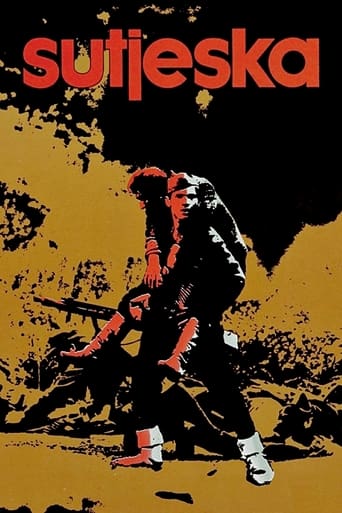
6.6The headquarters of the Marshal Tito's Liberation Army are surrounded by Axis forces. The Partisans have no choice but to fight their way out of the encirclement and face the enemy on the plains of Sutjeska.
The Battle of Sutjeska
1973
 4.3
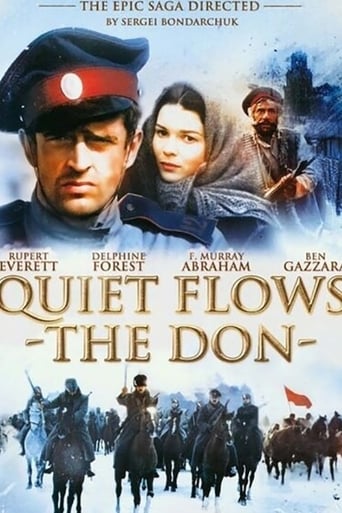
4.3With World War I, the Bolshevik Revolution, and the Russian Civil War as backdrop, it's an old-fashioned, blood-and-guts narrative, filled with earthly humor and a wealth of colorful characters. The story concerns the fluctuating fortunes of Grigory Melekhov, a young Cossack who is both a hero and a victim of the uprising.
Quiet Flows The Don
2006
4.3With World War I, the Bolshevik Revolution, and the Russian Civil War as backdrop, it's an old-fashioned, blood-and-guts narrative, filled with earthly humor and a wealth of colorful characters. The story concerns the fluctuating fortunes of Grigory Melekhov, a young Cossack who is both a hero and a victim of the uprising.
Quiet Flows The Don
2006
4.5The second part of Soviet filmmaker Sergei Bondarchuk's epic biography of John Reed. It is October 1917 and the American journalist has found himself and his wife, Louise Bryant, in Petrograd on the eve of the Bolshevik revolution.
Red Bells Part II: I Saw the Birth of a New World
1982
4.5The second part of Soviet filmmaker Sergei Bondarchuk's epic biography of John Reed. It is October 1917 and the American journalist has found himself and his wife, Louise Bryant, in Petrograd on the eve of the Bolshevik revolution.
Red Bells Part II: I Saw the Birth of a New World
1982
5.8Praised for its fine photography and production design if not its narrative, Sergei Bondarchuk directed this adaptation of the tale by Alexander Pushkin. Boris Godunov came to the Czarist throne at the end of the 16th century, after the original heir to Ivan the Terrible had died. At first, things went well for Godunov (played by Bondarchuk), but when the Russian people began to believe he had killed Ivan the Terrible's son in order to gain the throne, an alliance sprang up against the new Czar. Events continued to spin out of control as a young monk was presented as the son Godunov had supposedly killed. Now he was openly accused of failing an assassination attempt, which seems to be even worse than succeeding. In addition to these woes, Boris Godunov began to suffer serious health problems. So much for the joys of kingship.
Boris Godunov
1986
5.8Praised for its fine photography and production design if not its narrative, Sergei Bondarchuk directed this adaptation of the tale by Alexander Pushkin. Boris Godunov came to the Czarist throne at the end of the 16th century, after the original heir to Ivan the Terrible had died. At first, things went well for Godunov (played by Bondarchuk), but when the Russian people began to believe he had killed Ivan the Terrible's son in order to gain the throne, an alliance sprang up against the new Czar. Events continued to spin out of control as a young monk was presented as the son Godunov had supposedly killed. Now he was openly accused of failing an assassination attempt, which seems to be even worse than succeeding. In addition to these woes, Boris Godunov began to suffer serious health problems. So much for the joys of kingship.
Boris Godunov
1986
5.7A boy in Russia, circa 1900, makes a daunting trip from his home village to a school in the city.
The Steppe
1978
5.7A boy in Russia, circa 1900, makes a daunting trip from his home village to a school in the city.
The Steppe
1978