

Acting
Henri Crémieux
Born — Died
1896-07-19 — 1980-05-10
Place of birth
Marseille, France
Known for
Acting
Credits
67 titles
Known for
 NR
NRLes Cinq Dernieres Minutes is a crime based French television series
Les Cinq Dernières Minutes
1958
 7.2
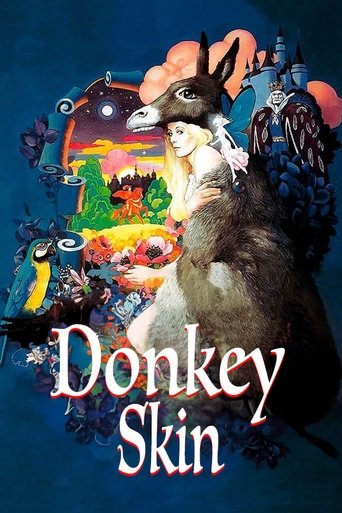
7.2A fairy godmother helps a princess disguise herself so she won't have to marry her father.
Donkey Skin
1970
 7.7
7.7A famous poet in postwar Paris, scorned by the Left Bank youth, is in love with both his wife Eurydice and a mysterious princess. Seeking inspiration, the poet becomes obsessed and follows the princess from the world of the living to the land of the dead.
Orpheus
1950
 7.7
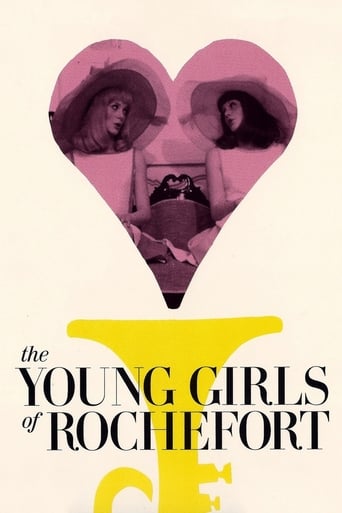
7.7In the seaside town of Rochefort, twin sisters Delphine and Solange dream of love and artistic fulfillment beyond their quiet lives. As sailors, artists, musicians, and chance visitors pass through town during a weekend fair, a web of near-misses and romantic longing brings ideal partners tantalizingly close—without their realizing it.
The Young Girls of Rochefort
1967
 10.0
10.0No synopsis available yet.
Un mystère par jour
1970
 9.0
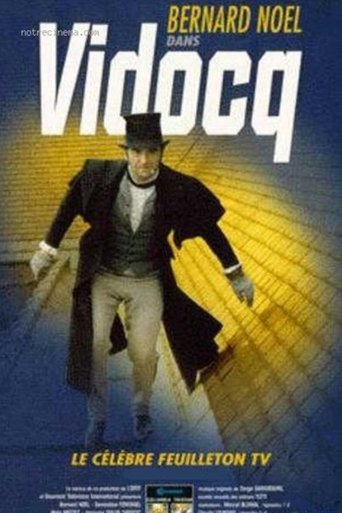
9.0François Vidocq has been sentenced to eight years' hard labor for a crime he didn't commit. Escaped with the help of his faithful friends Desfossés and Fil de fer, the convict is pursued by his lifelong enemy: the policeman Flambart. Between scams and disguises, Vidocq initially leads an undercover life in 19th-century Paris. Eventually, the two men team up to fight criminals... And Vidocq succumbs to Annette's charms.
Vidocq
1967
Film credits
1970s · 11 titles
7.2A fairy godmother helps a princess disguise herself so she won't have to marry her father.
Donkey Skin
1970
 6.5
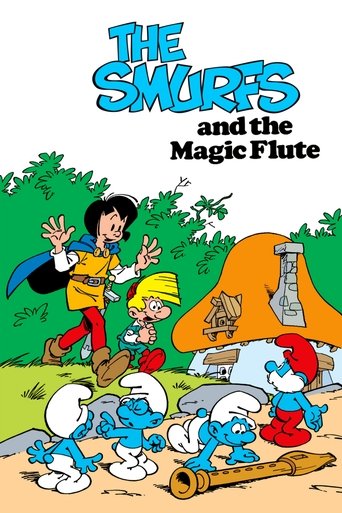
6.5The evil knight Torchesac, who is at the service of the sinister lord of La Mortaille, gets a very powerful magic flute and uses it for evil purposes. Johan and Pirlouit, assisted by the magician Homnibus, travel to the land of the Smurfs, the only manufacturers of this sort of instrument, to get a new one and battle the usurpers.
The Smurfs and the Magic Flute
1975
 4.6
4.6Alain Revent, a seductive and refined man, derives a peculiar satisfaction from debasing his wives. The first, driven to the brink of despair, throws herself out of a window. Enlisting the help of an equally perverse casual acquaintance, Dino, the "handsome brute" proceeds to emotionally torture his second wife, Nathalie. The sadistic plan is picked up on by Officer Leroy who suspects the truth. Will he be able to snatch the unfortunate woman from the evil Alain's clutches?
Love Me Strangely
1971
 6.0
6.0Patterning himself after the American gangster John Dillinger, the criminal (Robert Hossein) is tracked by the inspector (Charles Aznavour), a former childhood friend. Plenty of gunplay and psychology is used to trap the killer. His only tender moments are spent with his girlfriend Stella (Virna Lisi). Dillinger is cornered by the police and kills several innocent victims in a crowd during the shootout. The mob decides to take things into their own hands as they approach the doomed man with a noose when he runs out of bullets.
Time of the Wolves
1970
 5.8
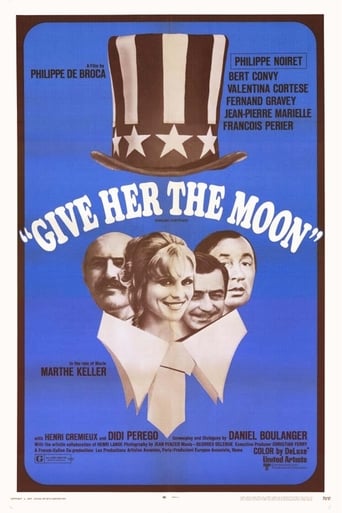
5.8Marie, a young provincial girl, is seduced by an American billionaire. She agrees to stay with him if he moves her village to New York.
Give Her the Moon
1970
 6.5
6.5No synopsis available yet.
Les Dix Petits Nègres
1970
 4.5
4.5Four generations of Oppenheim men gather in Paris for Isaac's 90th birthday. He's "Romeo," still a lady's man, waiting to hear from a woman to whom he has proposed, threatening suicide if she says no. They gather at Isaac's grandson's, Ben, who lives with Peggy and their son Mathias who's 10. Joining them, from Israel, is Isaac's son Elie. Against a backdrop of Elie's attempts to call his ex-wife, Ben and Peggy's marital difficulties, Mathias's budding sexuality, everyone's love of chess and practical jokes, Ben's house (shifting dangerously on its foundation), and the twentieth-century struggles of the Jews, the film explores their relationships and Isaac's aging.
Make Room for Tomorrow
1979
 6.1
6.1The independently-minded daughter of lower-middle class French shopkeepers, Brigitte, one of three sisters, refused to marry the father of her child when she became pregnant. In this film, she reminisces about her family life beginning when she was about five years old, up to the present when she is in her early 20s. Of her two sisters, one has a nervous breakdown and the other one becomes something of a baby factory. Colorful anecdotes of her eventful life lend additional depth to her insights.
Heart to Heart
1979
A group of pensioners, exasperated by the Social Security strike, meet Chalupot, a former paratrooper and ex-priest who has just been released from prison. He encouraged them to form the M.L.V. (Mouvement de Libération des Vieillards) and organize demonstrations. But as Chalupot is arrested and locked up, the pensioners plan to hold up the Social Security.
Na !
1973
 7.0
7.0Prosecutor Maillard can rejoice: he has just obtained the death sentence of an accused accused of murder. It is the third head he gets at the assizes. There followed an evening of rejoicing with his wife and friends, including the prosecutor Bertolier. The latter's wife is Maillard's mistress. The lovers left alone, the condemned man, Valorin, burst into the room. He managed to escape during his transfer to the remand center. Valorin immediately recognized Bertolier's wife. And for good reason: at the time of the crime, they were together in a brothel. Stunned by the miscarriage of justice he has just committed, Maillard then tries to rehabilitate Vallorin while trying to avoid a scandal in the judiciary. He then calls Bertolier to the rescue. Valorin is opportunely killed "accidentally" and ... everything will go back to "order".
La Tête des autres
1973
 10.0
10.0In this imaginary investigation, the scientist, who was very secretive, is presented in a new light. Actors play people who knew Einstein and retrace his journey. The portrait is followed by a debate on a point of controversy, the involvement of Albert Einstein in the nuclear war.
Albert Einstein
1972
1960s · 11 titles
7.7In the seaside town of Rochefort, twin sisters Delphine and Solange dream of love and artistic fulfillment beyond their quiet lives. As sailors, artists, musicians, and chance visitors pass through town during a weekend fair, a web of near-misses and romantic longing brings ideal partners tantalizingly close—without their realizing it.
The Young Girls of Rochefort
1967
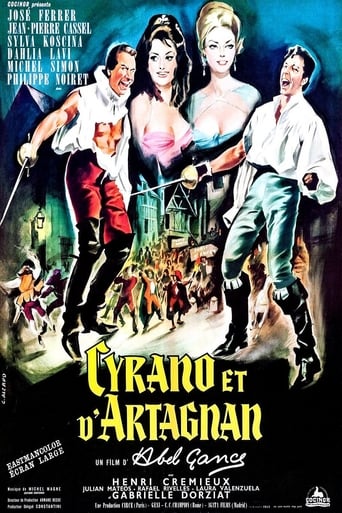 5.9
5.9In 1642, the Kingdom of France is in a state of permanent political turmoil marred by various plots. King Louis XIII is the official ruler but political power lies in the hands of wicked Cardinal Richelieu. Some take the side of the King, others the Cardinal, and a few the Queen. The Queen plots against Richelieu and intends to secretly request the help of the King of Spain. Meanwhile, two poor Frenchmen from Gascony, Cyrano de Bergerac and d'Artagnan, meet on the road to Paris where they seek fame and fortune. de Bergerac intends to serve the Queen while d'Artagnan aims to join the King's musketeers. The two become close friends and live a series of swashbuckler adventures and a few romantic exploits.
Cyrano and d'Artagnan
1964
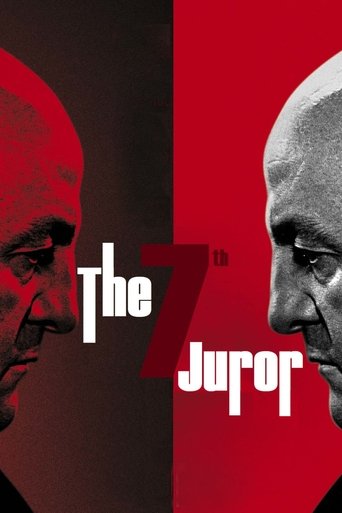 6.8
6.8In a moment of madness a middle-aged, married and respectable pharmacist kills a young woman who is sun-bathing by a lake. Unable to take in what he has done, he flees from the scene of the crime and behaves as if nothing has happened. Eventually her boyfriend is charged with the crime and, in a strange twist of fate, the killer finds himself serving on the jury.
The Seventh Juror
1962
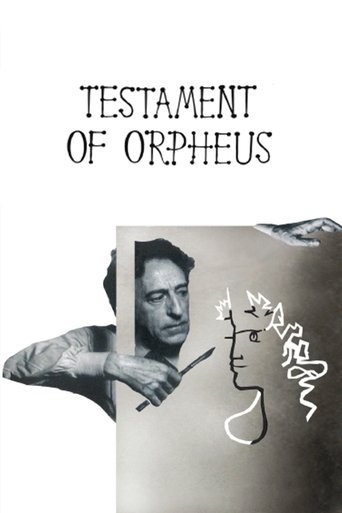 7.6
7.6An 18th century poet travels through time in search of divine wisdom. In a mysterious wasteland, he has a series of enigmatic encounters with symbolic phantoms with whom he muses about the nature of art and his own career. Ultimately, the poet strives to achieve his rebirth as a celestial being.
Testament of Orpheus
1960
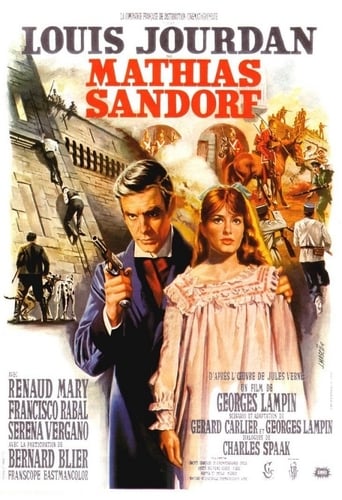 6.1
6.11868. Revolutionary Mathias Sandorf is determined to oust the dictatorship oppressing his country. The people see him as their liberator. Denounced by his banker, Mathias is arrested and sentenced to death. He manages to escape and takes refuge in a fishing village where he prepares a new uprising.
Mathias Sandorf
1963
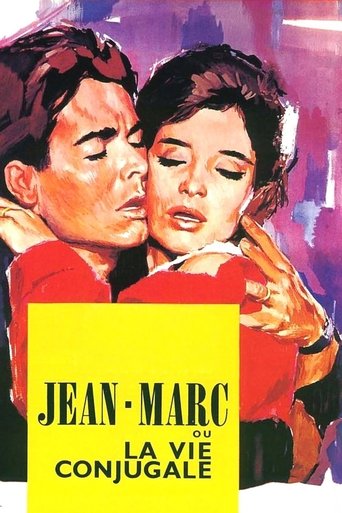 6.2
6.2The story of the couple from the very first meeting to break up told from a view of a man, Jean-Marc. The film shares the same plot with "Françoise ou La vie conjugale", that tells the same story from another perspective.
Anatomy of a Marriage: My Days with Jean-Marc
1964
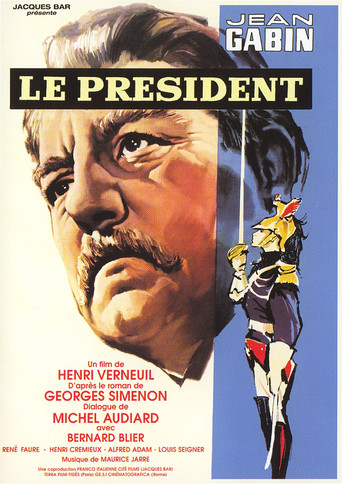 7.2
7.2At 73, a former President of the French Council reflects on his political career while writing his memoirs, delving into his relationships with key figures, including the one set to become the next President.
The President
1961
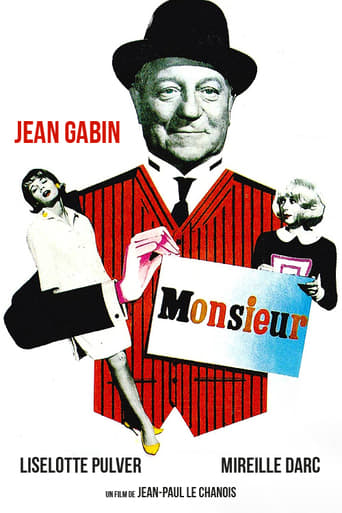 6.4
6.4Left heartbroken by the death of his beloved wife, a rich banker tries to commit suicide. When he learns from his former maid that his wife was unfaithful, he fakes his own death and comes back under a new identity.
Monsieur
1964
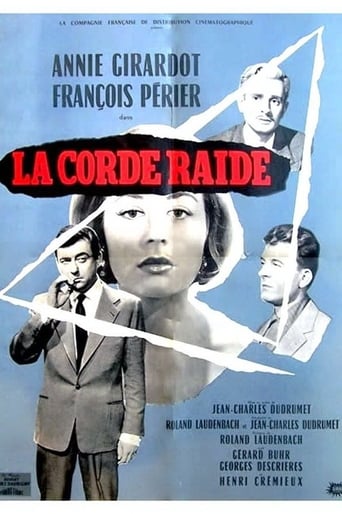 6.3
6.3Cora, the wife of a wealthy Parisian businessman, Daniel, is involved in an affair with Henri, an unscrupulous garage mechanic who has set his sights on Cora's fortune. Daniel becomes suspicious and hires a detective to investigate, but the detective is unsuccessful in pinpointing Cora's extramarital activities.
Lovers on a Tightrope
1960
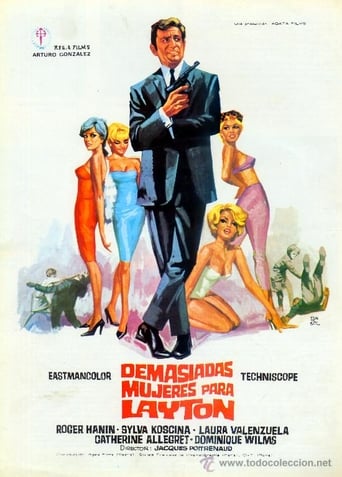 5.5
5.5Hakim Gregory escapes from prison by killing a number of guards, and returns to his hide-out abroad, to lead again his gang of drug trafficking and contract murders. Layton of the Secret Service must discover, and arrest him. The difficult mission almost becomes impossible with the rivalry of Layton's partner, Petula, the jealousy of his bride, Marion, the possible treachery of a Spanish woman, Dolores Arrabal, and yet a mysterious and sexy informant, Rosario... Too many women for Layton.
Four Queens for an Ace
1966
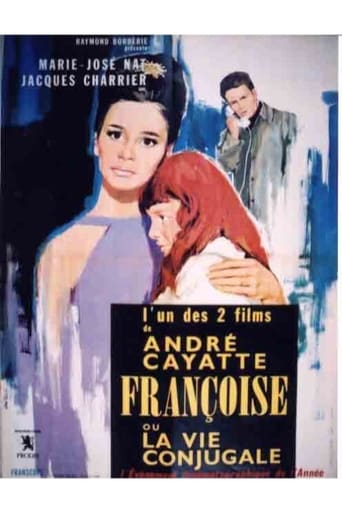 5.9
5.9The story of the couple from the very first meeting to break up told from a view of a woman, Francoise. The film shares the same plot with "Jean-Marc ou La vie conjugale", that tells the same story from another perspective.
Anatomy of a Marriage: My Days with Françoise
1964
1950s · 24 titles
7.7A famous poet in postwar Paris, scorned by the Left Bank youth, is in love with both his wife Eurydice and a mysterious princess. Seeking inspiration, the poet becomes obsessed and follows the princess from the world of the living to the land of the dead.
Orpheus
1950
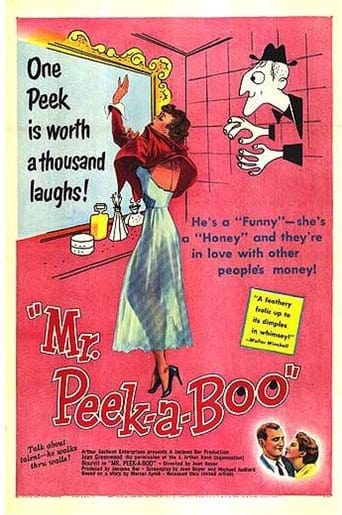 6.1
6.1Léon, a humble civil servant, has the unusual ability to walk through walls, however thick they are. One day, he falls madly in love with a charming hotel thief by the name of Suzan.
Mr. Peek-a-Boo
1951
 7.5
7.5Three stories about pleasure. The first one is about a man hiding his age behind a mask to keep going to balls and fancying women - pleasure and youth. Then comes the long tale of Madame Tellier taking her girls (whores) to the country for attending her niece's communion - pleasure and purity. And lastly, Jean the painter falls in love with his model - pleasure and death.
Le Plaisir
1952
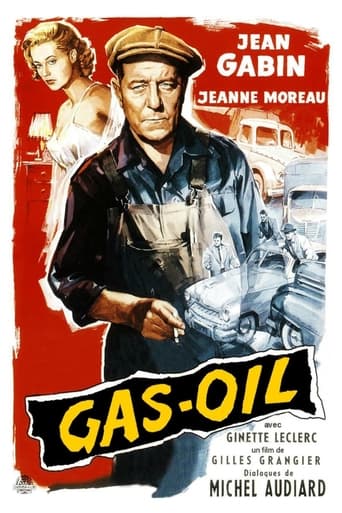 6.6
6.6A trucker encounters a dead body on the road home. He reports the incident to the police, who suspect that Jean was responsible for the death, and his new truck is impounded. To make matters worse, the man's widow accuses him of having robbed her husband, and a gang of sinister crooks are also harassing him.
Hi-Jack Highway
1955
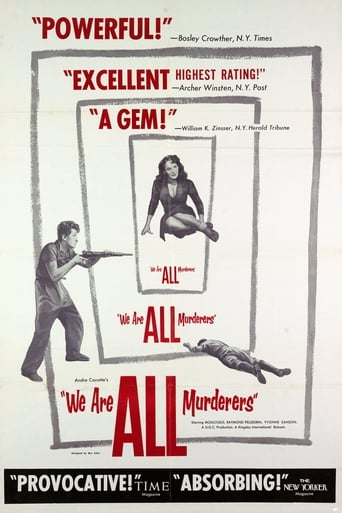 6.7
6.7Originally titled Nous Sommes Tout des Assassins, We Are All Murderers was directed by Andre Cayette, a former lawyer who detested France's execution system. Charles Spaak's screenplay makes no attempt to launder the four principal characters (Marcel Mouloudji, Raymond Pellegrin, Antoinine Balpetre, Julien Verdeir): never mind the motivations, these are all hardened murderers. Still, the film condemns the sadistic ritual through which these four men are brought to the guillotine. In France, the policy is to never tell the condemned man when the execution will occur--and then to show up without warning and drag the victim kicking and screaming to his doom, without any opportunity to make peace with himself or his Maker. By the end of this harrowing film, the audience feels as dehumanized as the four "protagonists." We Are All Murderers was roundly roasted by the French law enforcement establishment, but it won a special jury prize at the 1952 Cannes Film Festival.
We Are All Murderers
1952
 6.1
6.1Géo Paquet, aka The Gorilla, breaks from jail. Now an escaped convict, the elite agent must infiltrate a dangerous gang working for a foreign embassy as their leader, a spy enjoying diplomatic immunity, can't be arrested by regular police.
The Mask of the Gorilla
1958
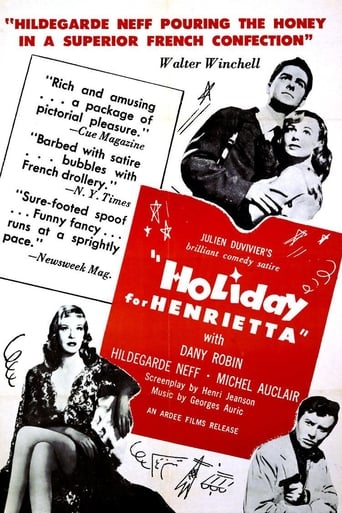 7.1
7.1Two scriptwriters argue about the fate of Henrietta, a charming and gamine shopgirl. One favors a comical path for their heroine, who is overcome with sentimental love for a young photographer on Bastille Day. The other has a more thrilling and dastardly fate in mind for her. Among the film's irresistible conceits is Hildegarde Neff as an oversexed circus bareback rider.
Holiday for Henrietta
1952
 6.3
6.3François Cardinaud is one of the richest shipowners in the region. But this success arouses resentment and jealousy. When Marthe, his wife, leaves the home without warning, Cardinaud sees her life cracking little by little.
Blood to the Head
1956
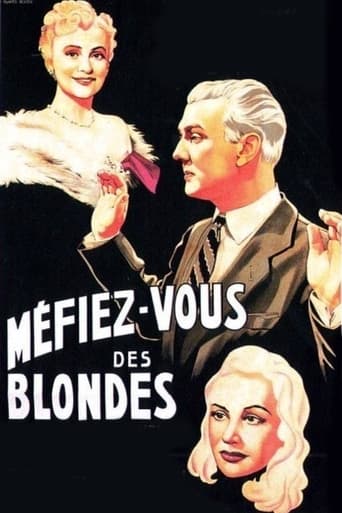 6.0
6.0Back from a stay in the Far East, a woman who knew the names of the chiefs of a drug ring is murdered. Georges Masse, the famous reporter, decides to investigate, accompanied by his faithful photographer P'tit Louis. He will come across some unappetizing characters like M. Dubois, a killer, Luigi Costelli, a dangerous trafficker and a beautiful but dubious lady, Suzanne Wilson. After being himself suspected, Masse will make the truth triumph.
Beware of Blondes
1950
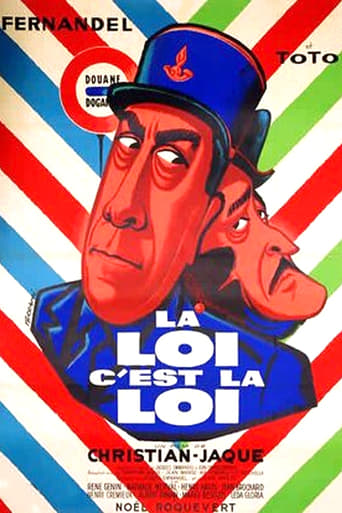 7.2
7.2Assola is an imaginary village on the border between Italy and France and the borderline crosses the village itself. The French customs agent Ferdinand is always trying to catch the Italian smuggler Giuseppe. Giuseppe discovers that Ferdinand was actually born in Italy and therefore he can't be a French customs agent.
The Law Is the Law
1958
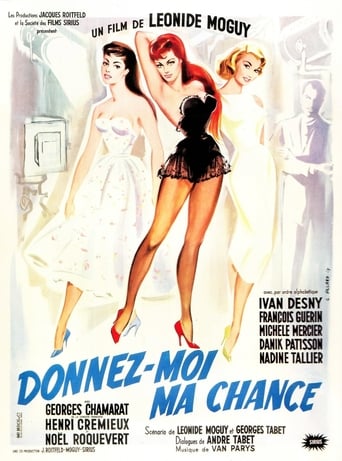 6.5
6.517 year-old small-town girl Nicole Noblet comes to Paris dreaming of becoming a world-famous actress.
Give Me My Chance
1957
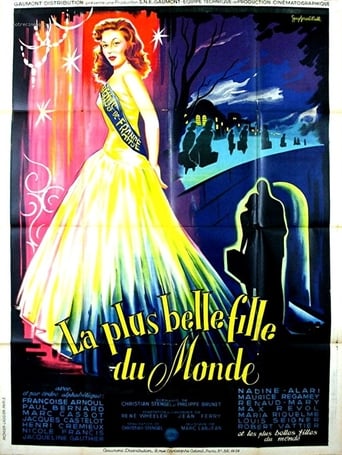 9.0
9.0In order to please Martineau, a wealthy industrialist, cynical Gabory accepts to organize a rigged beauty contest whose winner will be Françoise, Martineau's young mistress. However, there are other comely contestants among whom Christiane, the daughter of a general, Jackie, an unemployed actress, Colette, the daughter of a distiller and Marie, a secretary engaged to serious-minded construction foreman Robert. So, will things turn out exactly the way Martineau and Gabory want them...?
The Most Beautiful Girl in the World
1951
 6.8
6.8Picked up by a beautiful motorist, jobless hitchhiker Pierre (Hossein) is subsequently romanced by the girl. Immediately thereafter, however, she dumps him, attempting to run him over as a final insult. Memorizing her license number, Pierre pursues the enigmatic motorist. Arriving at her home, Pierre is met by two young ladies (Marina Vlady and Odelle Versois), either one of whom might be the woman he's looking for.
Blonde in a White Car
1959
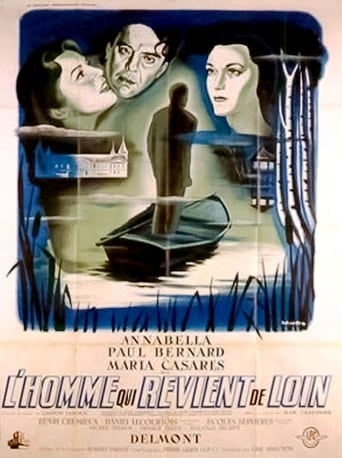 9.0
9.0A man, after a fight, believes he has killed his cousin, and hides the body. The dead man had only passed out, but when he regained consciousness, he became amnesiac. When she sees him again, the woman who loved him takes him for a ghost.
The Man Who Returns from Afar
1950
 6.3
6.3A terminally ill Mr. Bard, a casino bus driver forced to quit his job, miraculously wins a fortune playing roulette. Instantly becoming a millionaire, he wants to fulfill his life's dream: to become a father. This plan is opposed by his greedy relatives who would go any low to take this money away from him. They are being led by a small-time crook. Mr. Bard's natural shyness and good heart lead him to the journey of self-exploration and finding his true love.
Strange Desire of Mr. Bard
1954
 6.1
6.1"Easiest Profession" - Tistin is the only unemployed man in Clochemerle. Obliged to use their tax money to keep Tistin alive, the other guys in town insist that he find some sort of work. Tistin obligingly takes a few jobs, working for the various ladies in town. Before long, the menfolk become convinced that Tistin is using this cover to play the field, and they're angry at him all over again.
Easiest Profession
1957
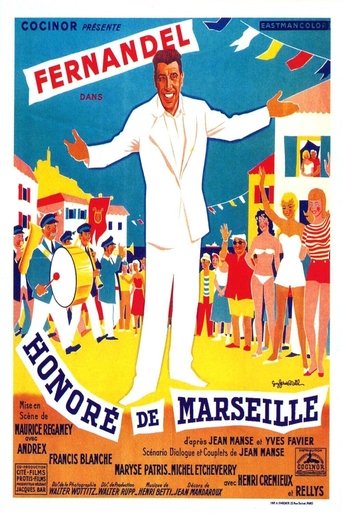 6.2
6.2As he explains to the journalist who came to interview him, Honoré cultivates, as a perfect Marseillais, farnienté and galéjade. He evokes the Phocaean Protis, who founded the city of Marseille, and the Roman Honorius, who invented pétanque. He loves to go fishing with his friends Garrigue and Watermelon to prepare a good bouillabaisse, and even more, to rig the results of a vote to allow a little protégée to be crowned Miss flots bleus.
Honoré de Marseille
1956
6.2As he explains to the journalist who came to interview him, Honoré cultivates, as a perfect Marseillais, farnienté and galéjade. He evokes the Phocaean Protis, who founded the city of Marseille, and the Roman Honorius, who invented pétanque. He loves to go fishing with his friends Garrigue and Watermelon to prepare a good bouillabaisse, and even more, to rig the results of a vote to allow a little protégée to be crowned Miss flots bleus.
Honoré de Marseille
1956
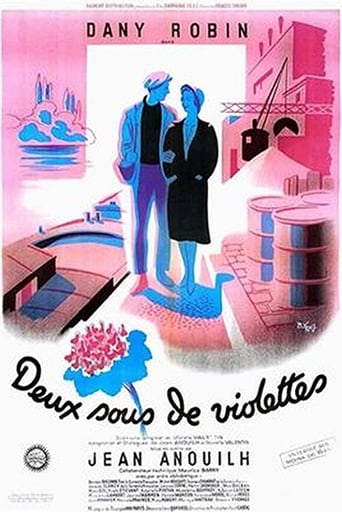 4.7
4.7Thérèse, a young flower girl, tries hard to remain virtuous but the whole world seems to conspire against her, whether her petty Paris family, or her relatives in the province bristling with false respectability, or her lustful employer, or the boy she loves who seduces her and abandons her. But at the end of the day there is Yvon, her childhood friend. Will he be the one that will love her truly?
Two Pennies Worth of Violets
1951
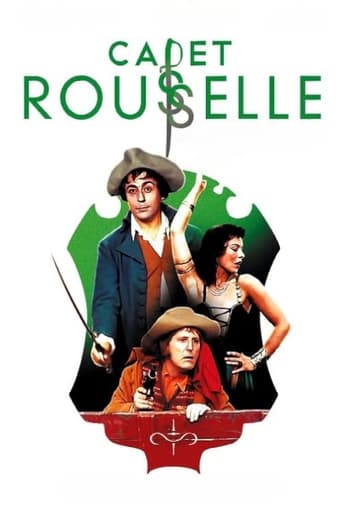 4.8
4.8The Adventures of Cadet Rousselle that on the French Revolution left his hometown in search of fortune. He thinks he knows love with Violeta, a dancer in a band of comedians but ends up involved in a monarchist plot.
Cadet Rousselle
1954
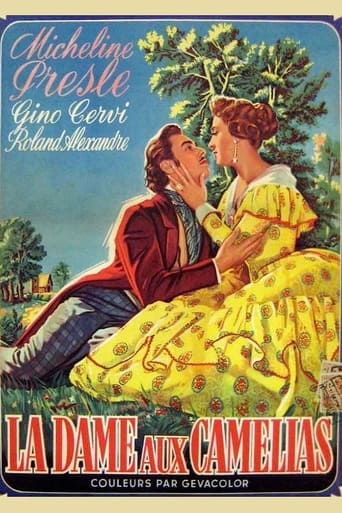 5.3
5.3Young and handsome Armand Duval falls in love with Marguerite Gautier, a 'demi-mondaine'. He manages to persuade her to give up her life as a courtesan and they both settle down in the country. Tthe beginning of their idyll is like a dream but a short-lived one as their relationship is considered scandalous by Armand's family. During a secret visit to Marguerite, Armand's father convinces her to leave his son, which she does broken-heartedly but out of love for Armand. Her end will be doubly tragic; not only does she suffer from terminal tuberculosis but she is abandoned by everyone, including by Armand, who believes she has betrayed her. At long last, learning the truth, Armand rushes to her bedside and Marguerite has the joy to breathe her last in his arms.
La Dame aux camélias
1953
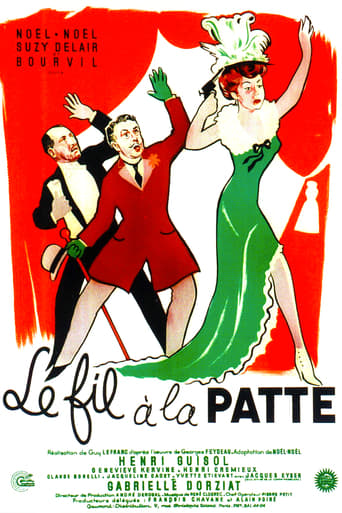 5.2
5.2Count Fernand du Bois d'Enghien typifies the pleasure seeker and as such he has a mistress of course, star singer Lucette Gauthier. But now Fernand feels it is time for him to tie the knot. For that, pretty Viviane Duverger is the ideal prey. The trouble is that the explosive Lucette does not hear it that way. Fortunately for Bois d'Enghien, Urugua, a rich South American general, falls in love with Lucette.
Le Fil à la patte
1954
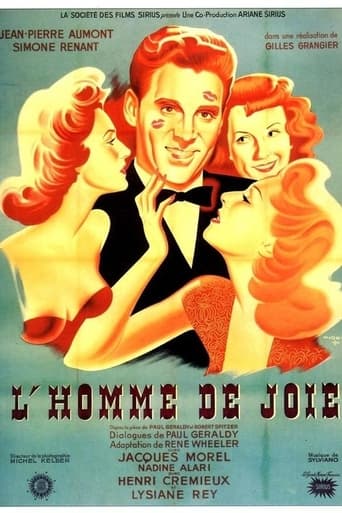 10.0
10.0A boudoir adventure during which the seductive Madame Jolivet, shocked by the behavior of her husband who appears with an actress, calls on the services of a young man, known as "the man of joy".
L'homme de joie
1950
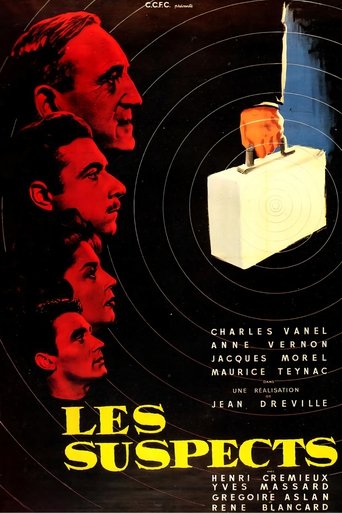 8.0
8.0Commissaire Perrache, the chief of the D.S.T., the French domestic intelligence service, tries to neutralize a group of terrorists named the Partisans de la Métropole. He sends one of his best agents, inspector Louis Vignon, incidentally the husband of his charming secretary Lucette, on the trail of an illegal transmitter. But Vignon gets kidnapped by the gang and held captive on a boat off the shores of Monaco...
The Suspects
1957
1940s · 8 titles
 6.7
6.7A married tugboat captain falls for a woman he rescues from a sinking ship.
Stormy Waters
1941
 7.0
7.0An episode in the life of the tumultuous poet who murdered his rival, in love with Catherine de Vauselles.
François Villon
1945
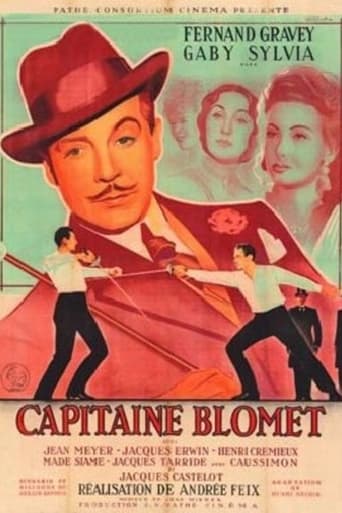 8.0
8.0Returning from the cemetery where he has just buried his wife, Captain Blomet is on the point of committing suicide, when his valet reveals to him that the deceased had 17 lovers. Blomet undertakes to wash his honor in different ways according to his rivals.
Captain Blomet
1947
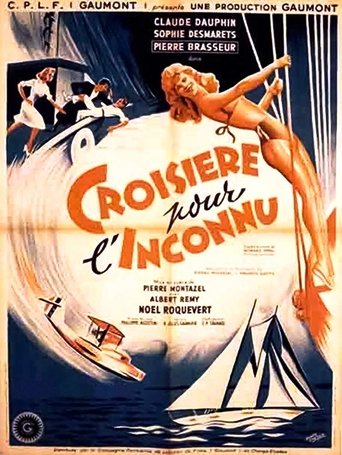 6.7
6.7Kohlman, the attorney for the Fournil bank, diverts money from the institution. To hide his malpractices, he imagines to remove the director, the young and overconfident Clement Fournil, during a cruise at sea on the yacht Emile Frechisse.
Cruise for the Unknown One
1948
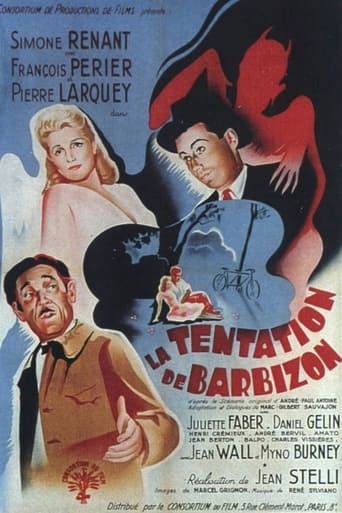 5.8
5.8Daniel Gelin and Juliette Faber star as a blissfully happy honeymooning couple. They are so happy that they arouse the jealous attentions of Satan. The Dark Prince sends an emissary to beak up the romance, but his advocate is promptly challenged by a representative from "up above."
The Temptation of Barbizon
1946
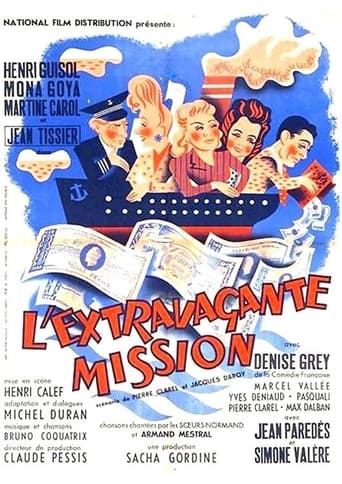 4.7
4.7A young man, Robert Dupont, with suicidal tendencies and a bit stupid to boot, is saved by a stranger who pretends to be a well-known banker. This stranger then entrusts him with a suitcase full of mysterious documents, which he asks him to take with him to Indochina. But in reality, the suitcase is stuffed with banknotes from a scam.
The Queer Assignment
1945
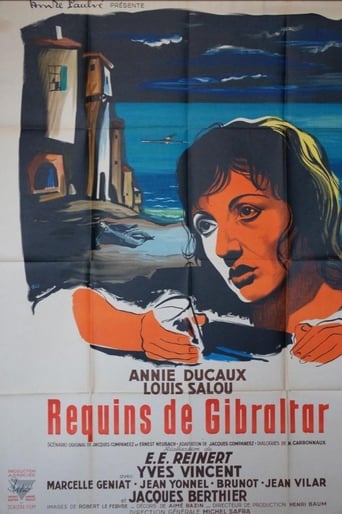 7.0
7.0In order for important British admiralty papers to pass into the hands of the Germans, the spy Gordon has the ingenious idea of transforming a lamentable drunkard into a Lady, haughty but submissive to his orders. Stella's transformation is complete, the success extraordinary. Why must a French officer touching the heart of the former pochard bring down the fragile edifice? A submarine is about to blow up, Gordon is shot down and a confessed Stella returns to her horrible taverns to drown her sorrows in alcohol for good.
The Sharks of Gibraltar
1947
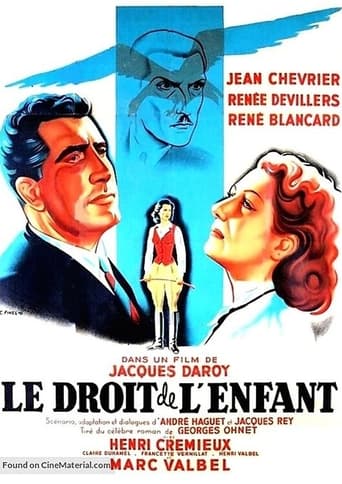 7.0
7.0Jacques Herbelin is the faithful husband of Louise and the proud father of Cécile, a kind little girl. But Louise does not reciprocate her husband's affection and prefers to cheat on him in the arms of Marquis de Condottier. The latter is a sinister character who, not satisfied with being Herbelin's wife's lover, sets his heart on their daughter, who has now become a pretty young lady. Jacques can't take it anymore.
Le Droit de l'enfant
1949
1930s · 6 titles
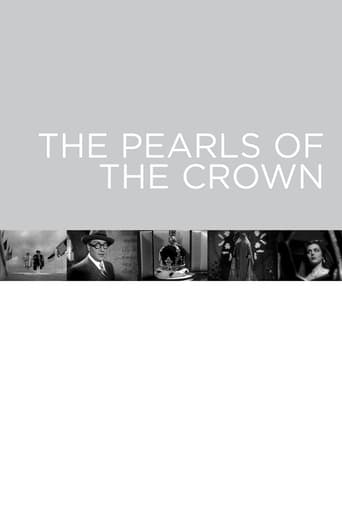 6.5
6.5The story of the seven pearls of the English Crown, from Henry VIII to 1937 – three of them missing.
The Pearls of the Crown
1937
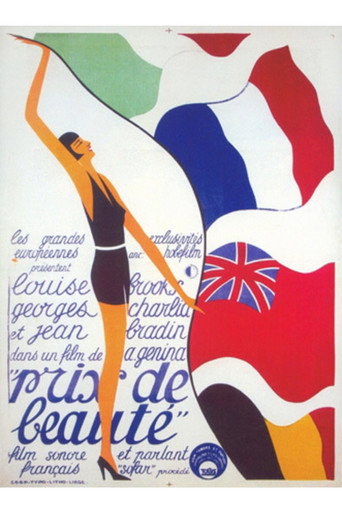 6.4
6.4Lucienne, typist and gorgeous bathing beauty, decides to enter the 'Miss Europe' pageant sponsored by the French newspaper she works for. She finds her jealous lover Andre violently disapproves of such events and tries to withdraw, but it's too late; she's even then being named Miss France. The night Andre planned to propose to her, she's being whisked off to the Miss Europe finals in Spain, where admirers swarm around her. Win or lose, what will the harvest be?
Miss Europe
1930
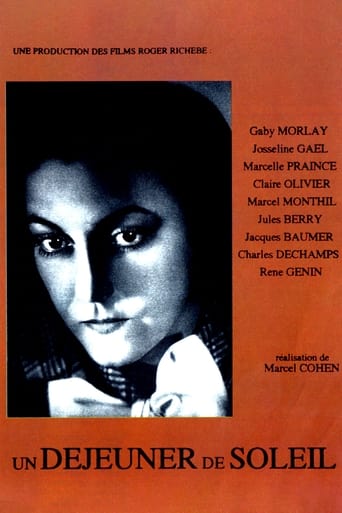 10.0
10.0A rich young woman asks a poor man to play for her the role of a generous friend. He ends up falling in love.
A Picnic on the Grass
1937
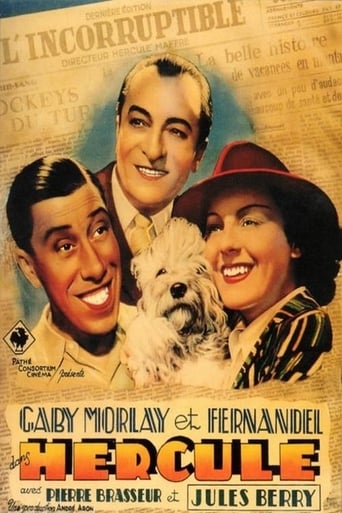 6.7
6.7Hercule, a young peasant, inherits a Parisian newspaper with a large circulation. The editor-in-chief, Vasco, takes advantage of his ignorance to make corruption prevail. But Hercules gradually realizes the role that we make him play.
Hercule
1938
 10.0
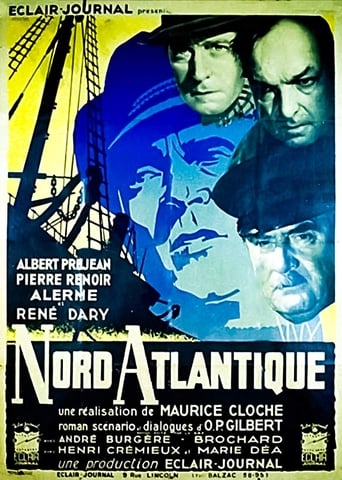
10.0Barnes, the mate of the 'Portland', is the object of the hate of the whole ship's crew. His mistress is murdered shortly before the departure and suspicion naturally falls on him. Some time later, Jeff Cooper, the skipper, falls to his death in the middle of the night. Once again Barnes is suspected and the mate has to resort to force to maintain his authority on board. During the stopover, Barnes is interrogated and finally cleared. He is even appointed captain of the 'Portland' in replacement of Jeff and can marry his best friend's daughter.
Nord-Atlantique
1939
 5.5
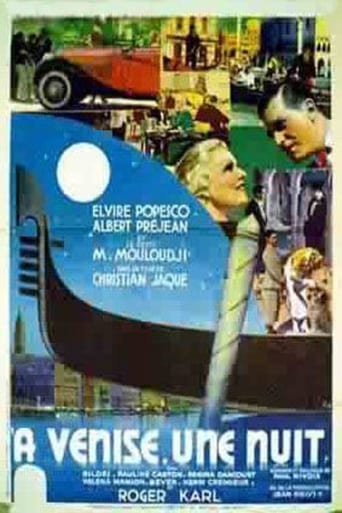
5.5Mortal is ready to do anything to obtain a divorce from his wife Nadia. To compromise her, he needs to find her a lover. He thinks he has found the ideal candidate in the person of a manly private detective by the name of Robert Arnaud. But the experience gets out of Mortal's control as, on the one hand, Robert and Nadia fall in love for good, and, on the other hand, Robert, assisted by resourceful young Toto, manages to expose Mortal as the jewel thief he is.
In Venice, One Night
1937
Series credits
NRLes Cinq Dernieres Minutes is a crime based French television series
Les Cinq Dernières Minutes
1958
10.0No synopsis available yet.
Un mystère par jour
1970
9.0François Vidocq has been sentenced to eight years' hard labor for a crime he didn't commit. Escaped with the help of his faithful friends Desfossés and Fil de fer, the convict is pursued by his lifelong enemy: the policeman Flambart. Between scams and disguises, Vidocq initially leads an undercover life in 19th-century Paris. Eventually, the two men team up to fight criminals... And Vidocq succumbs to Annette's charms.
Vidocq
1967
 NR
NRNo synopsis available yet.
Maurin des Maures
1970
 7.0
7.0No synopsis available yet.
Plaisir du théâtre
1956
 10.0
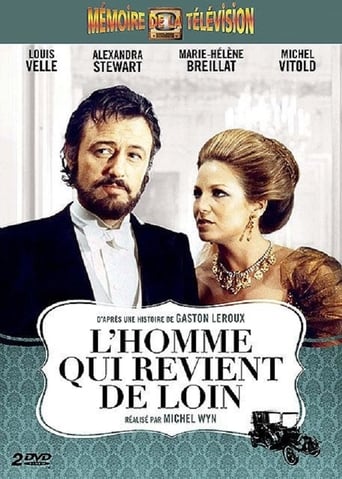
10.0The story of a rich and arrogant owner of a French château who disappears suddenly, leaving the direction of his company to his younger brother and his ambitious wife Fanny. But soon, the ghost of the missing brother arrives to disrupt the couple’s dream life.
L'Homme qui revient de loin
1972
 7.0
7.0Marianne is a young orphan of mysterious birth, taken in by caring people. She grows up in 18th century French society, going through various adventures, loves and trials.
La Vie de Marianne
1976