

Acting
Georges Moustaki
Born — Died
1934-05-03 — 2013-05-23
Place of birth
Alexandria, Egypt
Known for
Acting
Credits
33 titles
Georges Moustaki (born Giuseppe Mustacchi; 3 May 1934 – 23 May 2013) was an Egyptian-French singer-songwriter of Jewish Italo-Greek origin, best known for the poetic rhythm and simplicity of the romantic songs he composed and often sang. Moustaki gave France some of its best-loved music by writing about 300 songs for some of the most popular singers in that country, such as Édith Piaf, Dalida, Françoise Hardy, Yves Montand, Barbara, Brigitte Fontaine, Herbert Pagani, France Gall, Cindy Daniel, Juliette Gréco, Pia Colombo, and Tino Rossi, as well as for himself. Georges Moustaki was born Giuseppe Mustacchi in Alexandria, Egypt, on 3 May 1934. His parents, Sarah and Nessim Mustacchi, were Fra…
Known for
 5.7
5.7No synopsis available yet.
Sacrée soirée
1987
 3.6
3.6No synopsis available yet.
Vivement dimanche
1998
 9.0
9.0Midi Première is a French variety show presented by Danièle Gilbert, directed by Jacques Pierre and broadcast from January 6, 1975 until January 1, 1982 on TF1. The program was generally broadcast between 12:15 p.m. and 12:55 p.m., then giving way to the 1:00 p.m. TV news. However, the broadcast schedule could change, depending on the guests, and the setting where the recording of the program was shot. Certain performances by artists who have become cult like the one where Ringo jostles with a demonstrator in interpretation (1977), that of Dalida with the title There is always a song with the soundtrack that does not start, twice, at the right speed (1978), Claude François and his Clodettes, who, in the provinces, are unable to join "the set" in order to interpret his song, the latter being taken by the crowd of delirious fans (summer 1977) . The group Supertramp performed there with the title "Dreamer" on March 8, 1975.
Midi Première
1975
 6.8
6.8No synopsis available yet.
Champs-Elysées
1982
 NR
NRNo synopsis available yet.
Le monde est à vous
1987
 7.5
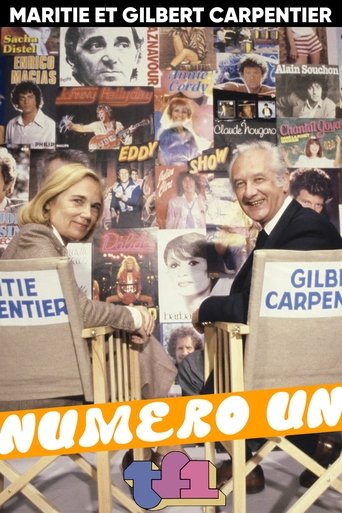
7.5A French variety show.
Numéro un
1975
Film credits
2010s · 2 titles
 8.0
8.0No synopsis available yet.
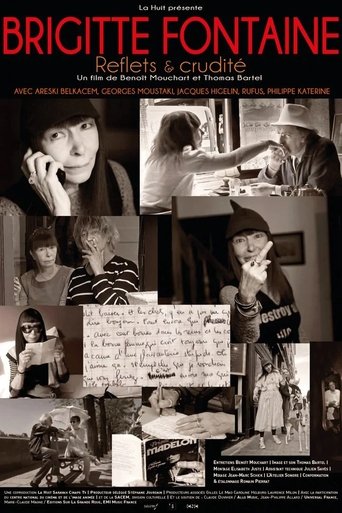
Brigitte Fontaine : Reflets et crudité
2013
 6.6
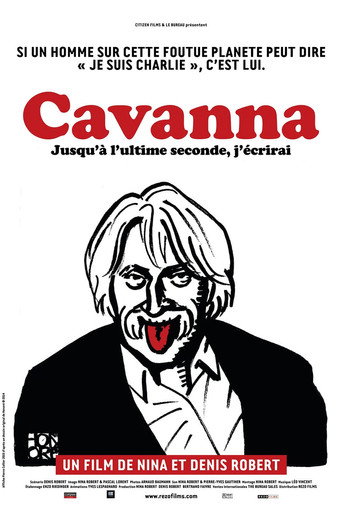
6.6A feature-length documentary about François Cavanna—creator of the publications Charlie Hebdo and Hara-Kiri—who passed away on January 29, 2014. His influence on several generations of writers, journalists, and comedians is far too little known. While older audiences are aware that he co-founded Hara-Kiri and Charlie Hebdo with Choron, the dozens of books and collections he wrote or contributed to remain largely unfamiliar. People chiefly remember his early autobiographical works—such as *Les Ritals*, *Les Russkoffs*, and *Bête et méchant*—while overlooking his historical novels, encyclopedias, and polemical writings like *Stop crève…* The film draws on interviews with Cavanna conducted shortly before his death, forgotten archival footage, and previously unheard testimonies from figures such as Siné, Willem, Delfeil de Ton, and Sylvie Caster.
Cavanna, jusqu'à l'ultime seconde j'écrirai
2015
2000s · 3 titles
 4.9
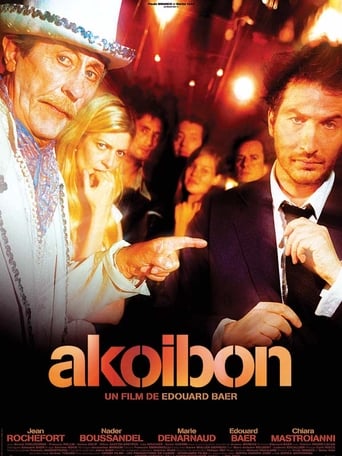
4.9A disparate group of people meet at a hotel on a gorgeous and isolated Mediterranean island. Meanwhile, a woman schemes to get even with its owner.
Akoibon
2005
 4.7
4.7It's the dawn of April 25, 1974, when Marco, a 25-year old Italian and his Portuguese friend Victor leave Paris on a yellow Citroen 2CV. The goal of their trip is Lisbon, which on that night was freed from Europe's longest dictatorship. The two are joined by Claire, Victor's former girlfriend and University classmate, who wants to take a break from her everyday life, leaving behind her husband and baby son, to form again, even for a few days, the traveling trio with her friends.
The Revolution on Two Horses
2002
 9.0
9.0No synopsis available yet.
Autour de la guitare, Olympia 2000
2001
1990s · 2 titles
 5.2
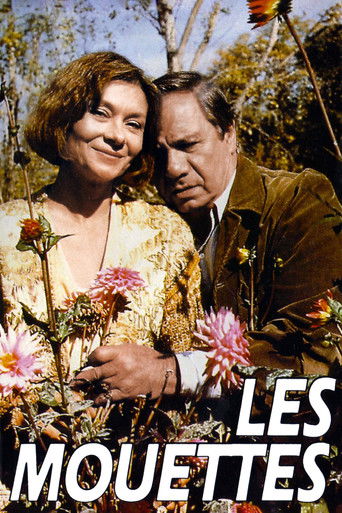
5.2A small village lies peacefully nestled in the hills beneath the Provence sun... until the arrival of an odd group of vacationers. Who are these gorgeous young women from the big city strolling on the village square under the watchful eye of a chaperone as beautiful as she is authoritarian? Scandal arises when it’s learned these dreamy creatures are none other than the employees of a Marseille brothel come to enjoy the good clean air of the country. All hell breaks loose as the villagers take a stand for or against the presence of these "ladies of pleasure". The mayor is called on to relay women of the moral rules of the region to the women. But the fact remains, they can’t be forced to leave: while they have no intention of plying their trade, no law exists to bring their country retreat to a premature end. Different mentalities are revealed, passions unbridled, love kindled... and doesn’t love always solve everything in the end?
The Cocottes
1991
For many, Georges Moustaki is "Le Métèque." He is also, and above all, the author of legendary songs for Edith Piaf, Milord, Reggiani, Sarah, La Solitude, Barbara, J'm'en balance..., Montand, Henri Salvador, Dalida, Colette Renard, and more. This film reveals how his songs have accompanied the key events in our history since 1968. It takes us to Egypt, to Alexandria, his hometown, and Paris with Henri Salvador, Serge Reggiani, Théodorakis, Paco Ibanez, Albert Cossery, Gérôme Charyn, Alexandre Fassianos, and Jorge Amado. A portrait at the crossroads of all the known and unknown paths in the life of Georges Moustaki, tenderly blending music, history, writing, friendships, and memories.
Joseph Mustacchi dit Georges Moustaki
1995

Series credits
5.7No synopsis available yet.
Sacrée soirée
1987
3.6No synopsis available yet.
Vivement dimanche
1998
9.0Midi Première is a French variety show presented by Danièle Gilbert, directed by Jacques Pierre and broadcast from January 6, 1975 until January 1, 1982 on TF1. The program was generally broadcast between 12:15 p.m. and 12:55 p.m., then giving way to the 1:00 p.m. TV news. However, the broadcast schedule could change, depending on the guests, and the setting where the recording of the program was shot. Certain performances by artists who have become cult like the one where Ringo jostles with a demonstrator in interpretation (1977), that of Dalida with the title There is always a song with the soundtrack that does not start, twice, at the right speed (1978), Claude François and his Clodettes, who, in the provinces, are unable to join "the set" in order to interpret his song, the latter being taken by the crowd of delirious fans (summer 1977) . The group Supertramp performed there with the title "Dreamer" on March 8, 1975.
Midi Première
1975
6.8No synopsis available yet.
Champs-Elysées
1982
NRNo synopsis available yet.
Le monde est à vous
1987
7.5A French variety show.
Numéro un
1975
 6.0
6.0A talk show presented by Michel Drucker
Les Rendez-vous du dimanche
1975
 8.0
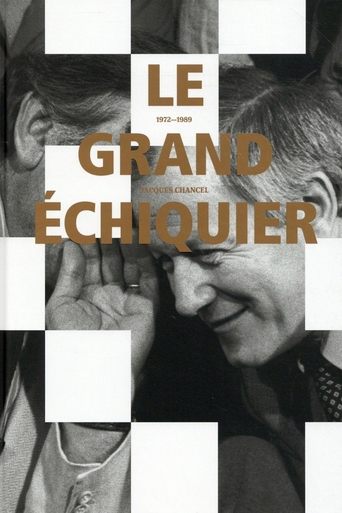
8.0Le Grand Échiquier is a French variety television program created and presented by Jacques Chancel. It aired at 8:30 pm on the first channel of the ORTF from January 12, 1972 to July 12, 1972, then on the second color channel of the ORTF from September 1972 to December 1974, and finally on Antenne 2 from January 1975 to December 21, 1989. The program returned to France 2 on December 20, 2018 and is hosted by Anne-Sophie Lapix.
Le Grand Échiquier
1972
 6.0
6.0No synopsis available yet.
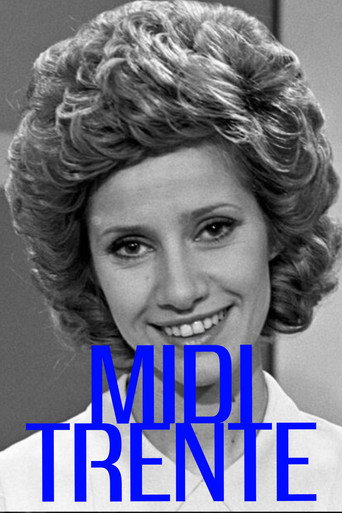
Midi trente
1972
 6.5
6.5No synopsis available yet.
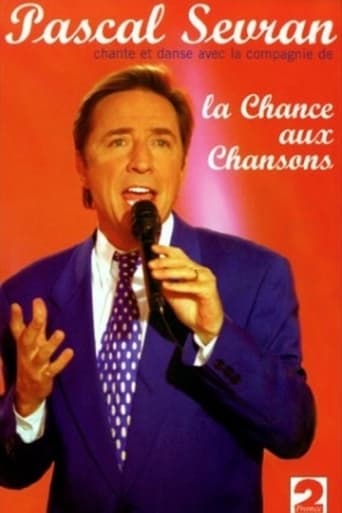
La Chance aux chansons
1984
 8.0
8.0No synopsis available yet.
Discorama
1959
No synopsis available yet.
Samedi soir
1971
No synopsis available yet.
Was bin ich?
1955
 8.0
8.0No synopsis available yet.
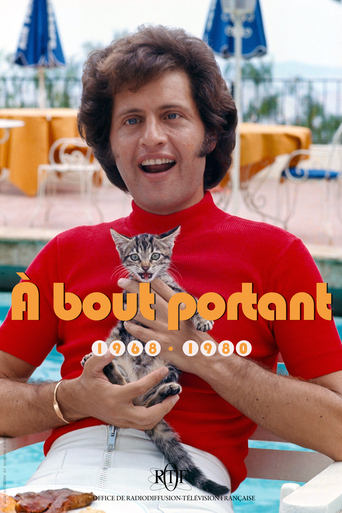
À bout portant
1968
No synopsis available yet.
Système 2
1975
 7.0
7.0No synopsis available yet.
Musik aus Studio B
1961
 5.3
5.3No synopsis available yet.
Stars in der Manege
1959
 8.0
8.0No synopsis available yet.
Dim Dam Dom
1965
 7.3
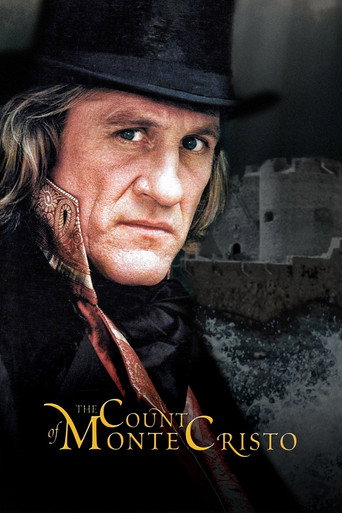
7.3A TV mini-series adaptation of the classic Alexandre Dumas novel. Edmond Dantes is unjustly sent to prison for 18 years. He escapes to reclaim his fiancée Mercedes and revenge against his nemesis, Mondego.
The Count of Monte Cristo
1998
 NR
NRNo synopsis available yet.
Aujourd'hui la vie
1982
 6.5
6.5No synopsis available yet.
Il était une fois Champs-Élysées
2022
No synopsis available yet.
Night-Club
1968
No synopsis available yet.
Rockpop in Concert
1978