

Directing
Germán Gutiérrez
Place of birth
Colombia
Known for
Directing
Credits
7 titles
Born in Colombia, Germán Gutierrez studied drama in Paris before moving to Quebec some forty years ago. After studying film in Ottawa, he worked first as a camera assistant and then as a cameraman for Radio-Canada, the National Film Board, and several production companies, including Pixcom, Virage, and Gala Films. While continuing to work as a director of photography on a wide variety of projects, he quickly became interested in directing. His work takes him all over the world, often to conflict zones: Cambodia, Sarajevo, South Africa, Rwanda, and El Salvador—as well as to remote regions. His personal works primarily address social, political, and cultural themes.
Known for
A documentary about the many problems of Colombia, highlighting a leftist politician (the director's brother) who tries to improve the lot of the most vulnerable people in the country.
Who Shot My Brother?
2005
Through archival footage and testimonials from some of his closest friends and family, filmmakers Germán Gutierrez and Carmen Garcia paint a portrait of filmmaker and polemicist Pierre Falardeau, who died on September 25, 2009.
Falardeau
2010
 NR
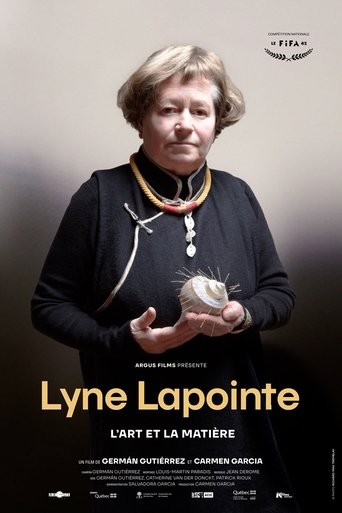
Everything about the Quebec visual artist Lyne Lapointe reflects the grip of art on her life. Lesbian and feminist, she tirelessly highlights in her work the challenging position of women in society and in the art world. This concern is the common thread in the story of her life and projects. Despite a serious accident that ended her first series, revolutionary urban creations that earned her international reputation, she reinvents her approach with the tenacity that characterizes her, ultimately becoming the subject of significant exhibitions in Quebec, Canada, and abroad.
Lyne Lapointe – L'art et la matière
2025
 NR
Upon the announcement of the signing of the peace agreement between the Colombian government and the guerrillas in 2016, Germán Gutiérrez went to film in one of the last FARC camps. There he met ex-combatants, many of them women, Afro-Colombians, and indigenous people, all from the poorest strata of society. It is to them that he wanted to give a voice. For six years, he was on the front lines of this crucial historical period for Colombia, which would end with the election of Gustavo Petro, an ex-guerrilla of the M-19, as president of the country in June 2022.
L'Histoire jugera
2023
Recent years have seen many Latin Americans choose exile over repression and poverty. In Montreal alone, there are currently around 35,000, mostly from El Salvador, Argentina and Chile. But who are they? What do we know of their culture, experiences or challenges? How have they adapted to life in Quebec? What dreams and hopes do they carry — and how do they experience life as an exile? Lastly, how do they see Canadians, and what do they expect of us? In giving voice to Latin American immigrants, this documentary invites us to go beyond the numbers and get to know them better.
The Latin American Family
1986
Behind the camera
A documentary about the many problems of Colombia, highlighting a leftist politician (the director's brother) who tries to improve the lot of the most vulnerable people in the country.
Who Shot My Brother?
2005
A documentary about the many problems of Colombia, highlighting a leftist politician (the director's brother) who tries to improve the lot of the most vulnerable people in the country.
Who Shot My Brother?
2005
Through archival footage and testimonials from some of his closest friends and family, filmmakers Germán Gutierrez and Carmen Garcia paint a portrait of filmmaker and polemicist Pierre Falardeau, who died on September 25, 2009.
Falardeau
2010
Through archival footage and testimonials from some of his closest friends and family, filmmakers Germán Gutierrez and Carmen Garcia paint a portrait of filmmaker and polemicist Pierre Falardeau, who died on September 25, 2009.
Falardeau
2010
NREverything about the Quebec visual artist Lyne Lapointe reflects the grip of art on her life. Lesbian and feminist, she tirelessly highlights in her work the challenging position of women in society and in the art world. This concern is the common thread in the story of her life and projects. Despite a serious accident that ended her first series, revolutionary urban creations that earned her international reputation, she reinvents her approach with the tenacity that characterizes her, ultimately becoming the subject of significant exhibitions in Quebec, Canada, and abroad.
Lyne Lapointe – L'art et la matière
2025
NRUpon the announcement of the signing of the peace agreement between the Colombian government and the guerrillas in 2016, Germán Gutiérrez went to film in one of the last FARC camps. There he met ex-combatants, many of them women, Afro-Colombians, and indigenous people, all from the poorest strata of society. It is to them that he wanted to give a voice. For six years, he was on the front lines of this crucial historical period for Colombia, which would end with the election of Gustavo Petro, an ex-guerrilla of the M-19, as president of the country in June 2022.
L'Histoire jugera
2023
Recent years have seen many Latin Americans choose exile over repression and poverty. In Montreal alone, there are currently around 35,000, mostly from El Salvador, Argentina and Chile. But who are they? What do we know of their culture, experiences or challenges? How have they adapted to life in Quebec? What dreams and hopes do they carry — and how do they experience life as an exile? Lastly, how do they see Canadians, and what do they expect of us? In giving voice to Latin American immigrants, this documentary invites us to go beyond the numbers and get to know them better.
The Latin American Family
1986