

Acting
Juliette Gréco
Born — Died
1927-02-07 — 2020-09-23
Place of birth
Montpellier, Hérault, France
Known for
Acting
Credits
74 titles
Juliette Gréco (7 February 1927 – 23 September 2020) was a French singer and actress. Her best known songs are "Paris Canaille" (1962, originally sung by Léo Ferré), "La Javanaise" (1963, written by Serge Gainsbourg for Gréco) and "Déshabillez-moi" (1967). She often sang tracks with lyrics written by French poets such as Jacques Prévert and Boris Vian, as well as singers like Jacques Brel and Charles Aznavour. Her 60-year career concluded with her final worldwide tour titled "Merci", which began in 2015. As an actress, Gréco played roles in films by French directors such as Jean Cocteau and Jean-Pierre Melville. Juliette Gréco was born in Montpellier, France, to an absent Corsican father, …
Known for
 5.7
5.7No synopsis available yet.
Sacrée soirée
1987
 6.8
6.8No synopsis available yet.
Champs-Elysées
1982
 3.6
3.6No synopsis available yet.
Vivement dimanche
1998
 8.5
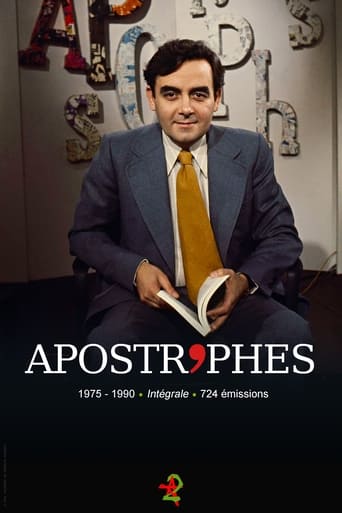
8.5Apostrophes was a live, weekly, literary, prime-time, talk show on French television created and hosted by Bernard Pivot. It ran for fifteen years (724 episodes) from January 10, 1975, to June 22, 1990, and was one of the most watched shows on French television (around 6 million regular viewers). It was broadcast on Friday nights on the channel France 2 (which was called "Antenne 2" from 1975 to 1992). The hourlong show was devoted to books, authors and literature. The format varied between one-on-one interviews with a single author and open discussions between four or five authors.
Apostrophes
1975
 NR
NRNo synopsis available yet.
Le monde est à vous
1987
 7.5
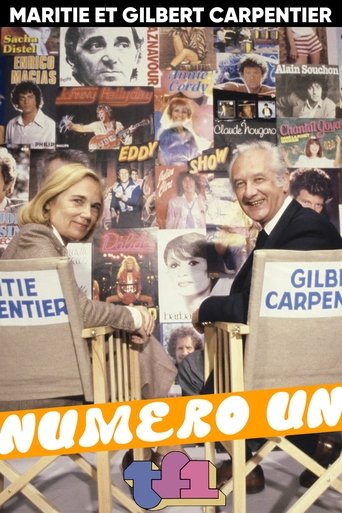
7.5A French variety show.
Numéro un
1975
Film credits
2020s · 3 titles
 5.5
5.5Ulrike Ottinger weaves her personal memories of Parisian bohemianism and the serious social, political and cultural upheavals of the time into a cinematic “figure poem.”
Paris Calligrammes
2020
 6.0
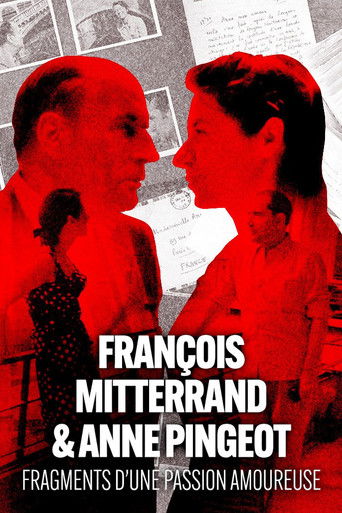
6.0In the summer of 1963, François Mitterrand was going through a deep existential crisis. His political career was at a standstill and, after 19 years of marriage, the couple had grown apart. It was at this point that François Mitterrand met the woman who was to give new meaning to his life. Anne Pingeot, aged 19, was to become the companion of a lifetime, a woman who would be with him throughout his rise to power and who would remain by his side until his last breath. For the first time, Anne Pingeot has agreed to allow the fragments of this passionate love story — hundreds of letters and a diary — to be shown on television, before being donated to the National Library.
François Mitterrand & Anne Pingeot: Pieces of a Love Story
2021
 7.2
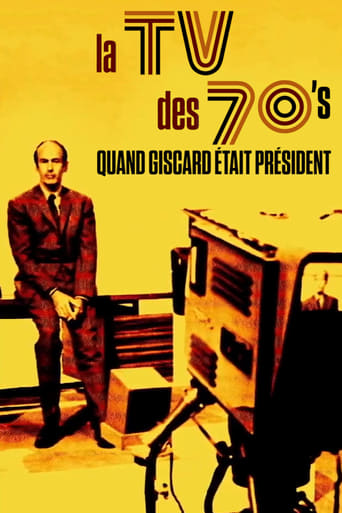
7.2In May 1974, Valéry Giscard d'Estaing became President of the Republic and wanted to bring about a new era of modernity. One of his first decisions was to break up the ORTF with the creation of three new television channels: TF1, Antenne 2 and FR3. Three new public channels but autonomous and competing. It is a race for the audience which is engaged then, and from now on the channels will make the war! This competition will give birth to a real golden age for television programs, with variety shows in the forefront. The stars of the song are going to invade the living rooms of the French for their biggest pleasure. This unedited documentary tells the story of the metamorphosis of this television of the early 1970s, between freedom of tone, scandals, political intrigues and programs that have become mythical.
La TV des 70's : Quand Giscard était président
2022
2010s · 8 titles
 7.1
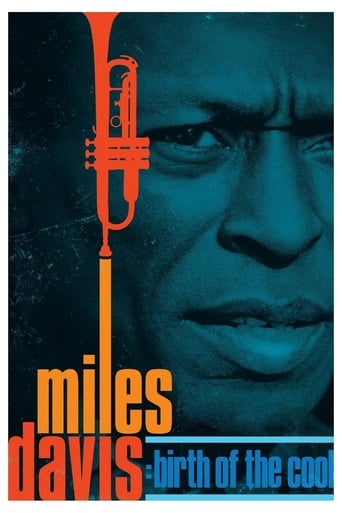
7.1An immersive look at the eventful life and brilliant artistic career of visionary American jazz trumpeter Miles Davis (1926-1991).
Miles Davis: Birth of the Cool
2019
 4.1
4.1Provocative, misunderstood, unloved, cynical poet... Serge Gainsbourg as seen by the women in his life: Juliette Gréco, Vanessa Paradis, Jane Birkin, Brigitte Bardot, Régine, France Gall, Charlotte Gainsbourg, Bambou... An intimate portrait of the man who could not live without them.
Gainsbourg and His Girls
2010
 6.5
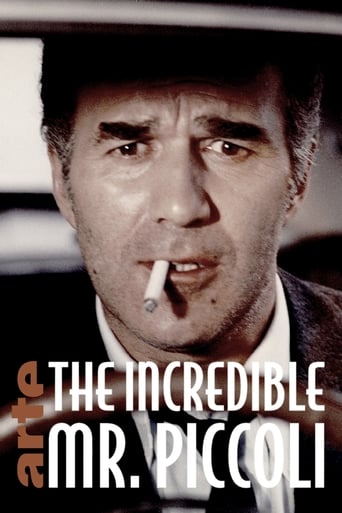
6.5A captivating portrait of French actor Michel Piccoli, who has worked with the greatest filmmakers of his time and has built a dazzling career of remarkable merit and success, focusing on his work during the 1970s and his professional relationship with Claude Sautet, Romy Schneider, Marco Ferreri and Luis Buñuel.
The Incredible Mr. Piccoli
2017
 NR
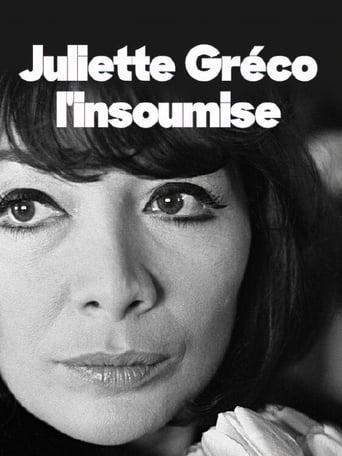
NRHer chansons made her world-famous: Juliette Gréco. The French singer and actress died on September 23 at the age of 93. To mark the occasion, ARTE is repeating a portrait of the singer from 2012, which was made for her 85th birthday. At that time, she gave one concert after another...
Juliette Gréco, l'insoumise
2012
 5.2
5.2No synopsis available yet.
On l'appelait Roda
2018
 5.9
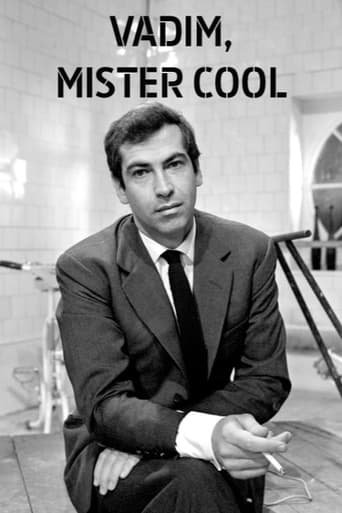
5.9As a poster boy for hedonism, his whole life was one big party. A journalist, filmmaker, director, producer, actor, novelist, ladies' man and prolific father... Roger Vladimir Plémiannikov, a.k.a. Roger Vadim, tried everything until his death in 2000. Portrait of a man at the cutting edge of fashion and trends.
Vadim Mister Cool
2016
 NR
NRAn atypical portrait of singer, songwriter, poet Georges Brassens.
Le regard de Georges Brassens
2013
 NR
NRHôtel La Louisiane is, at its core, a film about freedom and dignity. Freedom for those who wish to live in a place where they are able to feel inspired. Dignity for the hotel owner to stand by his promise to his father and keep their mission alive: to provide an affordable sanctuary for artists and students in search of fulfilling employment, which they certainly won’t find at other hotels. Freedom, too, to be in an environment of tolerance and rid of prejudice. This film is not just a story about a mythical setting in Paris; it portrays the microcosm of a lifestyle in which collective values reign supreme. A film where what’s real and true is placed above national borders or cultural barriers.
Hôtel La Louisiane
2015
2000s · 4 titles
 4.6
4.6A collection of artifacts from an archeological dig in Egypt are brought to the famous Louvre museum in Paris, and while experts are using a laser scanning device to determine the age of a sarcophagus, a ghostly spirit escapes and makes its way into the museum's electrical system.
Belphegor, Phantom of the Louvre
2001
 NR
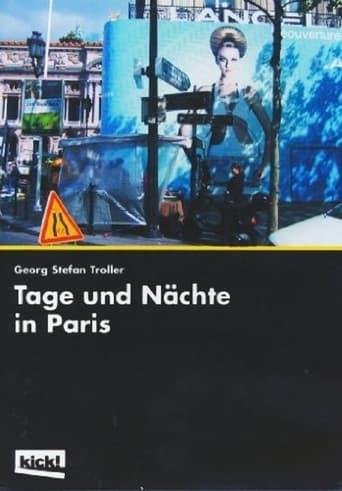
NRReencounter with a myth. 40 years since Georg Stefan Troller reported from his adopted home in "Pariser Journal," he returns to his old haunts. A journey through time in a city of contradictions that is always reinventing itself.
Days and Nights in Paris
2004
 NR
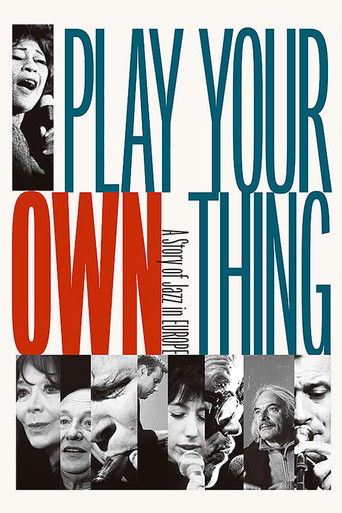
NRA comprehensive history of European Jazz, exploring the origins of the US-influenced Jazz clubs after the Second World War, the first steps independent of American jazz and the various changes of direction that have repeatedly occurred in European jazz in the search for that "own voice" that European jazz musicians have helped to form. Featuring the great masters of European jazz such as Chris Barber, Jan Garbarek, Juliette Gréco, Stefano Bollani and Till Brönner, to name but a few.
Play Your Own Thing: A Story of Jazz in Europe
2006
 4.0
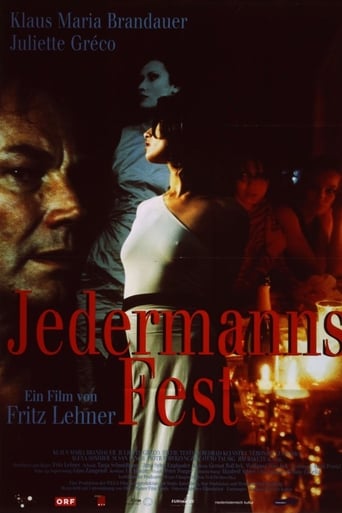
4.0Austrian television director Fritz Lehner makes his feature debut with the big-budget drama Jedermann's Fest, based on the 1911 play by Hugo von Hofmannsthal, which in turn was based on a medieval tale. Originated in parts of England, the myth of Jan Jedermann ("John Everyman") deals with a rich man on his deathbed coming to terms with his life's failures. Not following much of a plot, the modernized version involves famous fashion designer Jedermann (Klaus Maria Brandauer) imagining his last big gala event while rendered unconscious as a result of a car accident in his Ferrari. He is a success in Vienna but not in fashionable Paris, so he wishes to impress French elder stateswoman Yvonne Becker (Juliette Greco).
Everyman's Feast
2002
1970s · 2 titles
 5.7
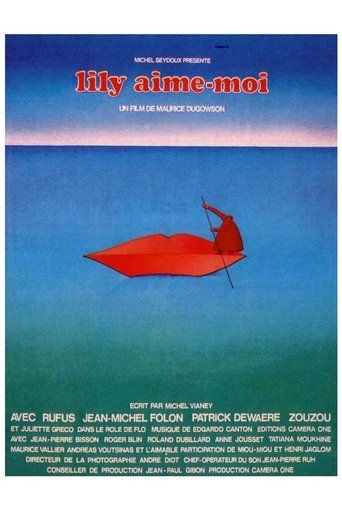
5.7Everything starts when a journalist François decides to investigate the world of working class people. He gets into the lives of Claude, a worker and his wife Lily who has left him.
Lily, aime-moi
1975
 8.0
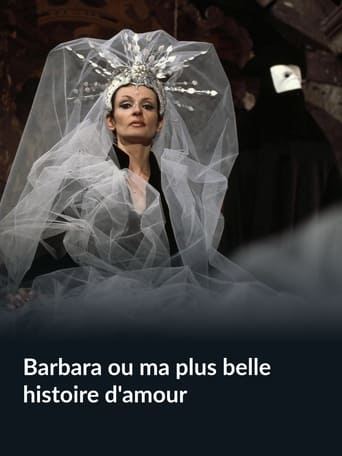
8.0In the early 70s, Barbara discovered herself backstage on her French tour. The artist plays with intimacy and camera glances. Between concerts, she talks to herself and the men in her life.
Barbara ou ma plus belle histoire d'amour
1973
1960s · 10 titles
 6.8
6.8A German intelligence officer investigates a prostitute's killing in Warsaw during World War II. He lands on three major Nazi generals as suspects, two of whom are also involved in a plot to kill Adolf Hitler.
The Night of the Generals
1967
 7.1
7.1During her holiday in Brest, a young Parisian falls in love with a sailor. But autumn comes and the two lovers have to part. They write to each other. Will their love resist at a distance, each living his life, him in Brest with his friends, she in Paris who keeps waiting for him? An impossible love story and the cross-portrait of two cities, Paris and Brest, between the realism of the color images and the poetry infused by the sepia black and white images, lives to the rhythm of the nostalgia of the two lovers...
Love at Sea
1965
 7.5
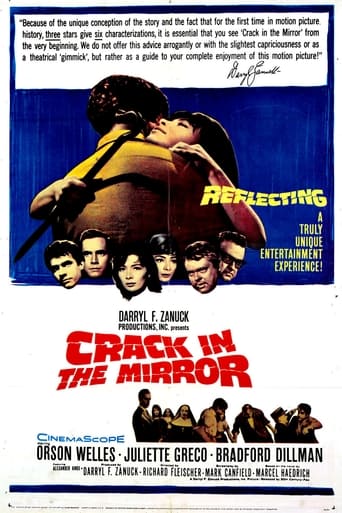
7.5Three stars appear in two separate but intertwined stories of romantic triangles gone wrong in this ambitious drama. In the first segment, Hagolin is a loutish construction worker with an unhappy wife, Eponine. The wife becomes involved with a swarthy working man, Larnier, and their passion knows no boundaries of caution or safety. Eventually, Eponine's and Larnier's lust drives them to madness, and they murder Hagolin. The second tale concerns an up-and-coming young lawyer, Claude, whose mentor is a highly successful veteran attorney, Lamerciere, with a beautiful young wife named Florence. Claude finds himself defending Larnier and Eponine, while Lamerciere dies of a heart attack after he discovers that Florence has been unfaithful to him with Claude.
Crack in the Mirror
1960
 7.0
7.0A young veterinarian falls in love with a strange woman, a former explorer who might be a Voodoo priestess, after he comes to help her ailing cheetah. She begs him to return to Africa with her, but he doesn’t want to leave his wife. Soon his wife finds herself plagued by a series of bizarre accidents.
Where the Truth Lies
1962
 5.9
5.9In the pre-Civil War South, a sadistic plantation owner brutalizes his slaves to the point of rebellion. Always obedient, peaceful and honest old slave Tom plays a central role in this tragedy.
Uncle Tom's Cabin
1965
 6.4
6.4After stealing a diamond from Mylène Demongeot, Richard hides it inside a guitar. But on returning to the music shop he discovers that the precious instrument has just been sold! The problem is complicated by the fact that five stars all bought the same model that morning...
Cherchez l'idole
1964
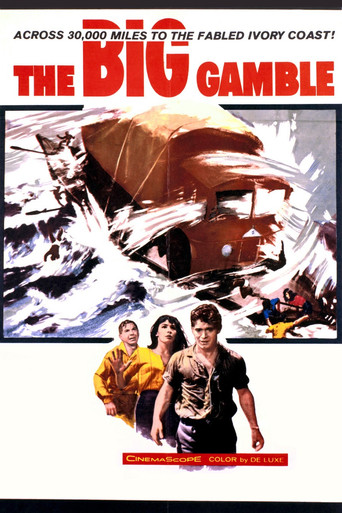 6.0
6.0Irish seaman Vic Brennan persuades his Dublin family to finance a truck-hauling business in the remote African town of Jebanda. The only stipulation is that his cousin Samuel, a timid bank clerk, accompany Vic and his Corsican bride, Marie, to Africa and protect the family fortune.
The Big Gamble
1961
No synopsis available yet.
Paris nach Noten
1968
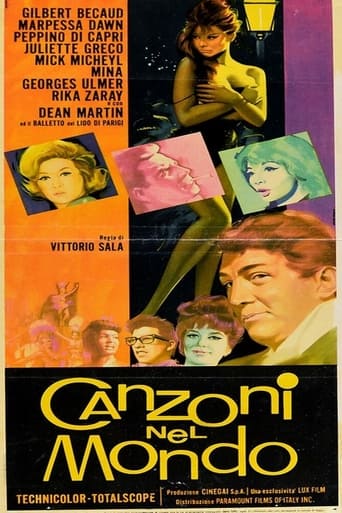 8.0
8.0The film is a rundown of the songs sung by the stars of the time, chained to various shows such as strip and comic caricatures.
38-24-36
1963
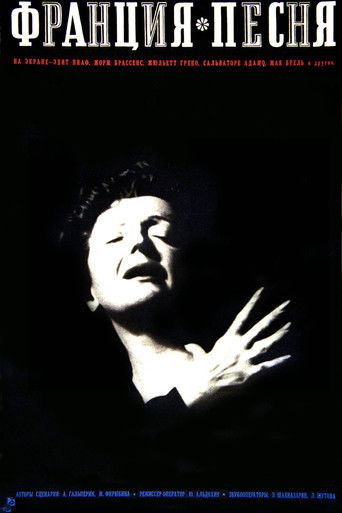 NR
NRSong chronicle of France in the 60s. The film introduces the work of famous French chansonnier singers.
France, Song
1969
1950s · 16 titles
 7.7
7.7A famous poet in postwar Paris, scorned by the Left Bank youth, is in love with both his wife Eurydice and a mysterious princess. Seeking inspiration, the poet becomes obsessed and follows the princess from the world of the living to the land of the dead.
Orpheus
1950
 6.1
6.1In French Equatorial Africa, an idealist campaigns to save the African elephant, gaining support from a nightclub hostess and an ex-soldier. His cause attracts a mix of characters, including a U.S. commentator, a government aide opposed to him, and an ivory hunter with conflicting interests.
The Roots of Heaven
1958
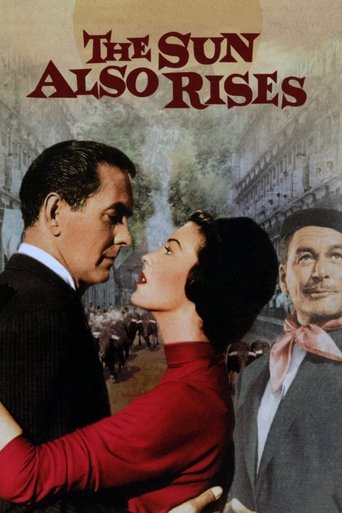 5.8
5.8A group of disillusioned American expatriate writers live a dissolute, hedonistic lifestyle in 1920's France and Spain.
The Sun Also Rises
1957
 6.7
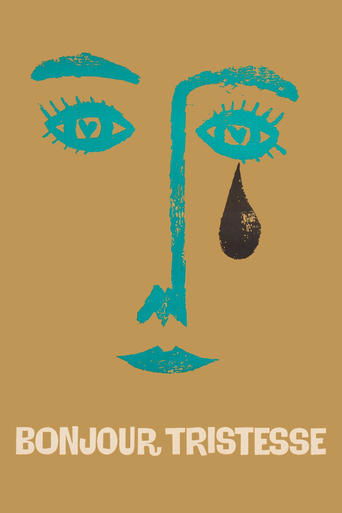
6.7A spoiled teenager spends the summer at the French Riviera with her rich, widower, playboy father, but when his old flame resurfaces, she resolves to keep her frivolous lifestyle at all costs.
Bonjour Tristesse
1958
 6.0
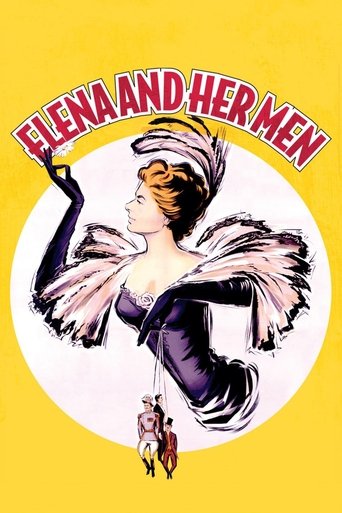
6.0Set amid the military maneuvers and Quatorze Juillet carnivals of turn-of-the-century France, Jean Renoir’s delirious romantic comedy Elena and her Men stars a radiant Ingrid Bergman as a beautiful, but impoverished, Polish princess who drives men of all stations to fits of desperate love. When Elena elicits the fascination of a famous general, she finds herself at the center of romantic machinations and political scheming, with the hearts of several men—as well as the future of France—in her hands.
Elena and Her Men
1956
 6.4
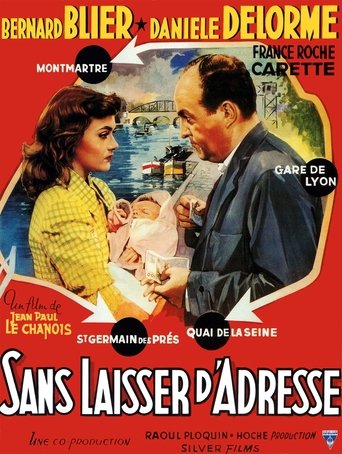
6.4A woman in Paris hires a taxi driver to locate her ex-lover, father to her newborn child, who left her without leaving an address.
Without Leaving an Address
1951
 5.9
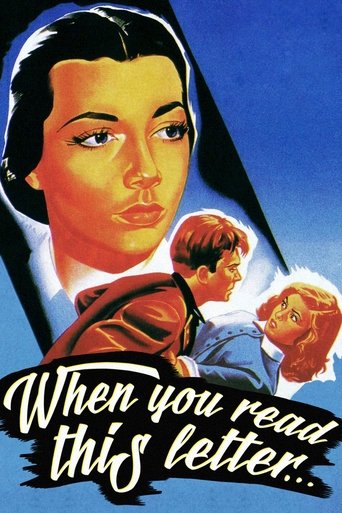
5.9After a novice nun learns of the sudden death of her parents, she leaves the convent to manage the family business and look after her teenage sister. Both of them fall prey to a womanizing mechanic with psychopathic tendencies.
When You Read This Letter
1953
 6.4
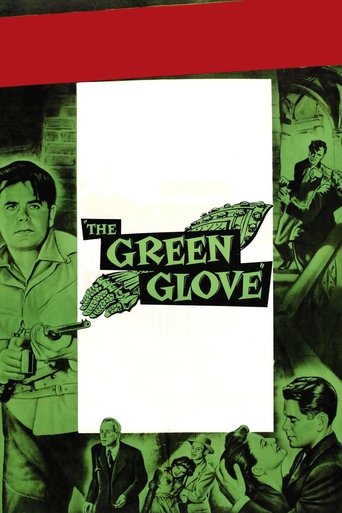
6.4In World War II France, American soldier Michael Blake captures, then loses Nazi-collaborator art thief Paul Rona, who leaves behind a gem studded gauntlet (a stolen religious relic). Years later, financial reverses lead Mike to return in search of the object. In Paris, he must dodge mysterious followers and a corpse that's hard to explain; so he and attractive tour guide Christine decamp on a cross-country pursuit that becomes love on the run...then takes yet another turn.
The Green Glove
1952
 5.7
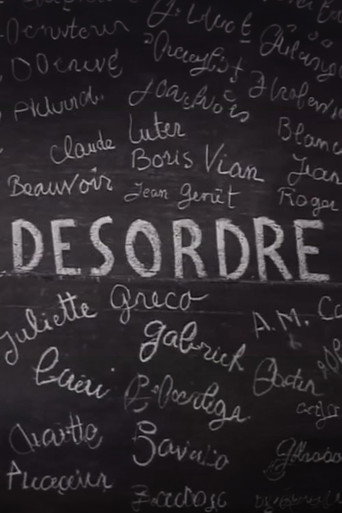
5.7Variations on the cultural and intellectual explosion in the Saint-Germain-des-Prés district in 1946.
Disorder
1950
 5.7
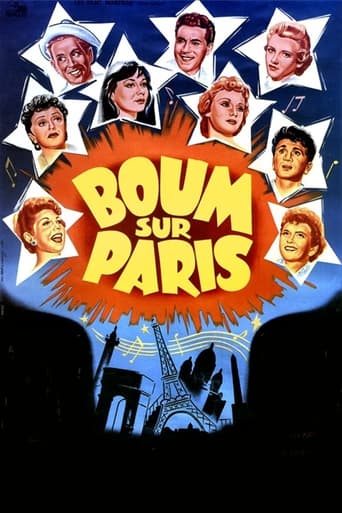
5.7In the early 1950s, the popular radio show "La Kermesse aux Étoiles", hosted by the famous Jean Nohain, mixing lottery games and performances of various artists, will be disrupted by the adventures of a man and his fiancée seeking to recover a dangerous bottle of perfume (explosive) which was unfortunately mixed with the prizes to be won ...
Boom on Paris
1954
 5.5
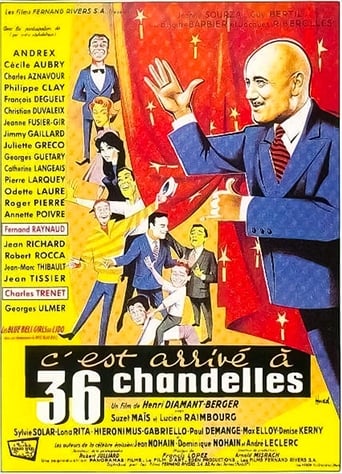
5.5Rejecting the union of her daughter Brigitte with a modest worker, Madame Magnin invents an adultery for the lover, then introduces Brigitte to a good-looking man working on the famous RTF entertainment show 36 Chandelles. The show ultimately seals the reunion of the two estranged young lovers. The story features a parade of music-hall stars from the era: Charles Trenet, Charles Aznavour, Georges Guétary, Juliette Gréco, Roger Pierre and Jean-Marc Thibault, Fernand Raynaud, Georges Ulmer and many more.
It Happened on the 36 Candles
1957
 7.0
7.0No synopsis available yet.
Saint-Tropez, devoirs de vacances
1954
 10.0
10.0Africa, early 20th century, an Englishman marries the girlfriend of a late friend and faces natives and adventures, on the banks of a river infested with crocodiles.
The Naked Earth
1958
 4.7
4.7In Lebanon, industrialist Hennequin, director of a French oil company, entrusts engineers Jean Domèvre, a Frenchman, and Mokhrir, a Lebanese, with the prospecting of an isolated region granted to him by Countess Athelstane Orloff. Their search remains fruitless until Mokhir reports the discovery of a uranium deposit, but disappears before Jean can identify the location. He goes to the Countess for help in finding Mokhir and surprises her when, due to financial difficulties, she is negotiating her concession with the Englishman Hobson, director of a rival company. Attracted by Jean, the Countess nevertheless gives him her preference and they set off together in search of Mokhir.
The Lebanese Mission
1956
 6.3
6.3The ex-girlfriend of a German fugitive hides with the captain and crew of a ship on the Rhine.
Whirlpool
1959
 5.5
5.5Fred Barker, an unmarried American who remained in France after heroically defending the country during the Second World War, runs the perfume factory in Grasse of his friend Carlo Ferelli, whose life he saved during the conflict. Fred has since adopted a little girl, Cathy. One day, he receives a visit from Félix Mercier, an old man who informs him that he has taken Cathy into his custody and that he will return her to him when Fred finds his granddaughter Hélène, a 17-year-old teenager who accuses the factory of being a front for white slavery. Fred, dumbfounded, sets out to find Hélène, so he can quickly get Cathy back.
Man and Child
1956
1940s · 2 titles
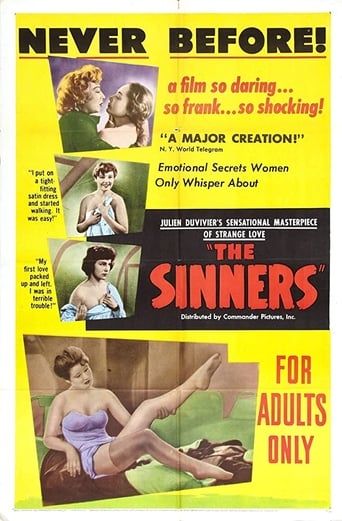 5.9
5.9Au Royaume des Cieux takes place in in a dreadful girls' reformatory. A couple of lovers will try to escape from this living hell.
The Sinners
1949
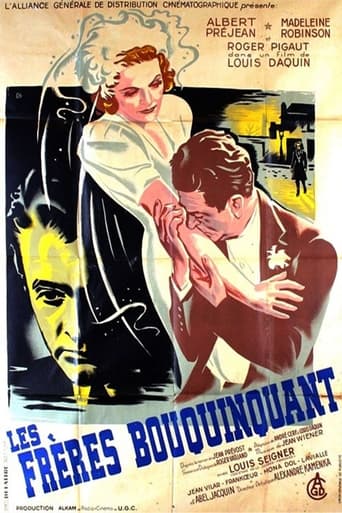 7.0
7.0A provincial, Julie Moret, is hired as a servant in a Parisian bourgeois residence. She is courted by one of the Bouquinquant brothers, Léon, who does not take long to ask her to marry him. Alas, Léon turns out to be violent, alcoholic and lazy. Faced with her misfortune, Julie gets closer to her brother-in-law Pierre, the opposite of Léon, serious and hardworking, and they become lovers. The drama will rush when Julie becomes pregnant with Pierre.
The Bouquinquant Brothers
1948
Series credits
5.7No synopsis available yet.
Sacrée soirée
1987
6.8No synopsis available yet.
Champs-Elysées
1982
3.6No synopsis available yet.
Vivement dimanche
1998
8.5Apostrophes was a live, weekly, literary, prime-time, talk show on French television created and hosted by Bernard Pivot. It ran for fifteen years (724 episodes) from January 10, 1975, to June 22, 1990, and was one of the most watched shows on French television (around 6 million regular viewers). It was broadcast on Friday nights on the channel France 2 (which was called "Antenne 2" from 1975 to 1992). The hourlong show was devoted to books, authors and literature. The format varied between one-on-one interviews with a single author and open discussions between four or five authors.
Apostrophes
1975
NRNo synopsis available yet.
Le monde est à vous
1987
7.5A French variety show.
Numéro un
1975
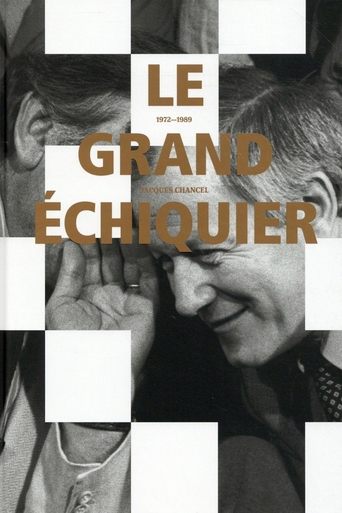 8.0
8.0Le Grand Échiquier is a French variety television program created and presented by Jacques Chancel. It aired at 8:30 pm on the first channel of the ORTF from January 12, 1972 to July 12, 1972, then on the second color channel of the ORTF from September 1972 to December 1974, and finally on Antenne 2 from January 1975 to December 21, 1989. The program returned to France 2 on December 20, 2018 and is hosted by Anne-Sophie Lapix.
Le Grand Échiquier
1972
 6.0
6.0No synopsis available yet.
Midi trente
1972
 6.8
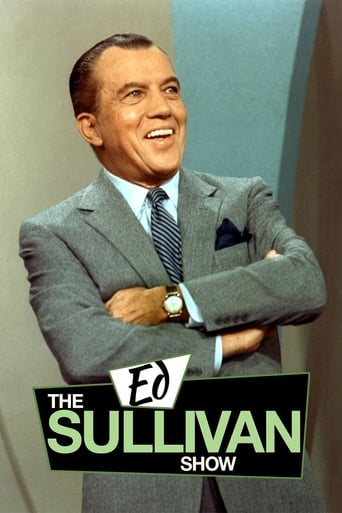
6.8The Ed Sullivan Show is an American TV variety show that originally ran on CBS from Sunday June 20, 1948 to Sunday June 6, 1971, and was hosted by New York entertainment columnist Ed Sullivan. It was replaced in September 1971 by the CBS Sunday Night Movie, which ran only one season and was eventually replaced by other shows. In 2002, The Ed Sullivan Show was ranked #15 on TV Guide's 50 Greatest TV Shows of All Time.
The Ed Sullivan Show
1948
 6.5
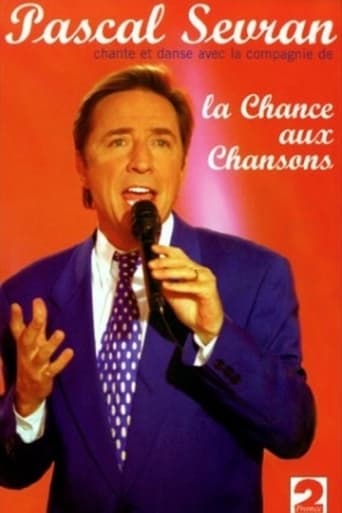
6.5No synopsis available yet.
La Chance aux chansons
1984
 8.0
8.0No synopsis available yet.
Discorama
1959
 3.3
3.3No synopsis available yet.
Victoires de la musique
1985
No synopsis available yet.
Was bin ich?
1955
 8.0
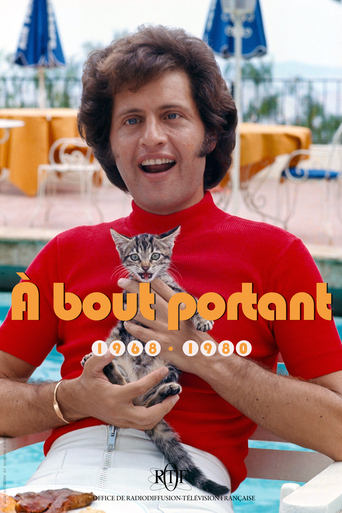
8.0No synopsis available yet.
À bout portant
1968
 8.7
8.7No synopsis available yet.
Cinépanorama
1956
No synopsis available yet.
Einer wird gewinnen
1964
 5.3
5.3No synopsis available yet.
Stars in der Manege
1959
V.I.P.-Schaukel is a 45 minute documentary-family-news-talk show starring Margret Dünser as Host. The series premiered on Sun May 09, 1971 on ZDF and Folge 37 - Final Show last aired on Fri May 09, 1980.
V.I.P. Schaukel
1971
 6.2
6.2No synopsis available yet.
Stars 90
1990
No synopsis available yet.
Musik ist Trumpf
1975
No synopsis available yet.
Bio’s Bahnhof
1978
No synopsis available yet.
Night-Club
1968
 7.0
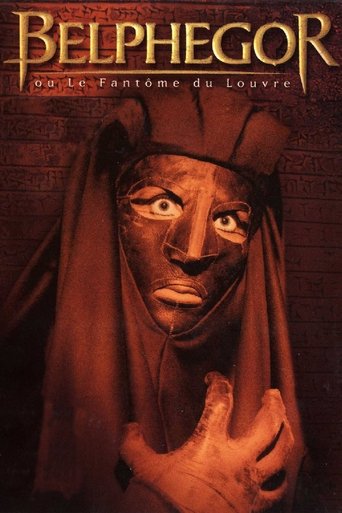
7.0Four episodes chronicle a mysterious phantom who appears in the Musée du Louvre in Paris at night. Neither guards nor police are able to make an arrest. But a curious young man tries to break the ice and discover what drives the creature and its activities.
Belphegor, or The Phantom of the Louvre
1965
No synopsis available yet.
Das große Los
1996
A series of weekly programmes presenting music in the folk idiom from many parts of the world.
Tonight in Person
1963
 7.1
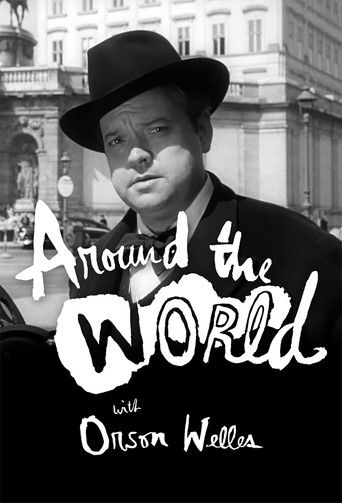
7.1A six-part British television travel series written, directed, and presented by Orson Welles for ITV in 1955. Filmed entirely in Europe, the series follows Welles through Vienna, the Basque Country, Madrid, Paris’s Saint-Germain-des-Prés, and London’s Chelsea Pensioners, blending travelogue, cultural portraiture, and personal essay. Moving between documentary observation and reflective commentary, the episodes combine interviews, local history, and Welles’s distinctive narration into a series that functions as both travel film and cinematic essay.
Around the World with Orson Welles
1955
No synopsis available yet.
Lieben Sie Show ?
1962