
Acting
Werner Dissel
Born — Died
1912-08-26 — 2003-01-22
Place of birth
Köln, Germany
Known for
Acting
Credits
81 titles
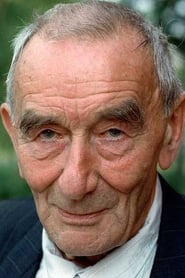
Werner Friedrich Dissel (26 August 1912 – 22 January 2003) was a German actor, director, and resistance fighter against the Nazi regime. Dissel's began working as a newspaper photographer in the late 1920s. After the Nazis' rise to power, he became a member of an antifascist group headed by Harro Schulze-Boysen, and was involved in the resistance newspaper Wille zum Reich. Dissel was caught and imprisoned from 1937 to 1939. During his time in prison, the Gestapo arranged for Boysen to visit him, in the hope that something incriminating would be said while the two would be left alone in a tapped room; Boysen passed a cigarette pack to Dissel, on which he wrote that the police had no concrete…
Known for
 6.2
6.2Polizeiruf 110 is a long-running German language detective television series. The first episode was broadcast 27 June 1971 in the German Democratic Republic, and after the dissolution of Fernsehen der DDR the series was picked up by ARD. It was originally created as a counterpart to the West German series Tatort, and quickly became a public favorite.
Polizeiruf 110
1971
 6.3
6.3German soap opera about the staff of the fictional hospital "Sachsenklinik" in the city of Leipzig.
In All Friendship
1998
 6.6
6.6A long-running German television series about a two-man team of highway police, originally set in Berlin and later in North Rhine-Westphalia.
Alarm for Cobra 11: The Motorway Police
1996
 3.8
3.8Der Staatsanwalt hat das Wort was an East German television series.
Der Staatsanwalt hat das Wort
1965
 5.0
5.0No synopsis available yet.
Der letzte Zeuge
1998
 6.5
6.5No synopsis available yet.
Auf eigene Gefahr
1993
Film credits
1990s · 6 titles
 3.8
3.8No synopsis available yet.
Die Spur des Bernsteinzimmers
1992
 4.3
4.3Erich Kasulke and Rudolf Portmann are comedian stars of the former GDR. When the Wall falls, so does their success. Portmann becomes a successful businessman, while Kasulke tries to continue working on the comedy circuit - without success. When his wife also cheats on him, he decides to start a new life in Berlin. There he quickly meets his old friend Portmann, who has built up a huge company. He offers him a job. But Erich puts the entire company in danger...
Everything's a Lie
1992
 5.0
5.0Johannes Breutigam, a successful architect, is confronted with his real life on a New Year's Eve. His wife is cheating on him, his partner Losfeld has betrayed him and his company is on the verge of bankruptcy. Deeply depressed and desperate, he rents a hotel room on the 32nd floor. He writes a farewell letter to his wife and opens the window to jump into the depths. A young woman is standing on the window sill next door, apparently up to the same thing. With the promise to spend the last evening of the year with her, he manages to save her and himself for the time being. This is the beginning of a strange, romantic, comical story that takes place on a single New Year's Eve and in which two people change their lives
Picknick im Schnee
1999
He could have had women, he could have climbed the ladder of his accountancy career, and he could have stood on the podium next to the highest in the land. If only he had wanted to! But Farssmann, shaken by divorce and unwilling to better himself, wants to remain what he is: an ordinary bookkeeper like you and me. And so the dollar deal with Mr. Osbar from Utah (USA) is not the first time he comes into conflict with the very palpable unreality of a country called the German Democratic Republic.
Farssmann oder Zu Fuß in die Sackgasse
1991
 7.0
7.0The architect Daniel Brenner is in his late thirties when he receives his first challenging and lucrative commission: to design a cultural center for a satellite town in East-Berlin. He accepts the offer under the condition that he gets to choose who he works with. This way, he reunites with former colleagues and friends - most of them architects or students of architecture who have since chosen a different profession due to personal restraint or economic confinement. Together, they develop a concept which they hope will be more appealing to the public than the conventional and dull constructions common to the German Democratic Republic. However, their ambitious plans are once and again foiled by their conservative supervisors. As frustration grows, Daniel has trouble keeping his career in balance with his family-life: his wife Wanda wants to leave for West-Germany.
The Architects
1990
 7.5
7.5Elias, born at the end of the war, receives an anonymous phone call on his 47th birthday: his parents are dead. He is now a successful politician, but thirty years ago he had fled from his home and parents in the East to seek a new life in the West. The return to his parental home causes Elias a sense of unease and disturbs the rigid order and complacency of his life.
Verlorene Landschaft
1992
1980s · 14 titles
 6.6
6.6Philipp, a closeted teacher, is dating a female colleague to keep up appearances. One night he stumbles into a gay bar and falls for a man. Transformed by this love, he is no longer afraid to face up to who he is.
Coming Out
1989
 5.7
5.7Fifteen-year-old Heinz Stielke is a Hitler Youth fanatic who is devastated to learn a hidden truth about his respected father who was a German officer in WWII: He was Jewish. Pushed out of his community after the discovery, young Heinz falls into a tailspin of alienation and anger. He is subsequently thrust into a series of social collisions across the war-torn German fatherland.
Stielke, Heinz, Fifteen...
1987
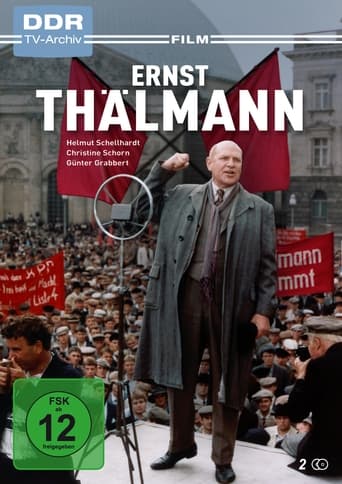 8.5
8.5This elaborate two-part television film features a section from the life of communist worker leader Ernst Thälmann. It begins with the bloody riots on May 1, 1929 in Berlin, in which police officers shot at demonstrating workers, and ends with February 7, 1933, when Thälmann appeared as a speaker at the illegal meeting of the Central Committee of the Communist Party of Germany in goat neck. This period was marked by the struggle of the Communists against the ever stronger National Socialists and the rise of Adolf Hitler.
Ernst Thälmann
1986
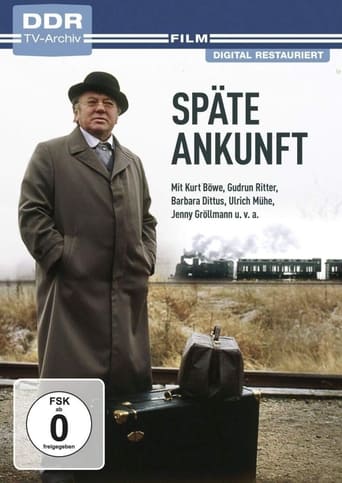 10.0
10.0In 1896 the Berlin noble doctor Dr. Wilhelm Holtfreter takes over his well-to-do wife Mathilde and takes over the country doctor's office in the Prussian district of Westprignitz from the late Dr. Tochtenhagen. His decision was met with incomprehension everywhere.
Späte Ankunft
1989
 4.0
4.0The nurses and friends Anna and Annette grow desperate over men and love. At the hospital, Anna has fallen in love with Markus, whom she lovingly calls "moose", but they only meet twice a year, when Markus has time for her. In the meantime, she keeps afloat with flights of fancy. Meanwhile, Annette clings to the painter Ludwig who cannot stand such a close relationship. Through Annette and Ludwig, Anna meets an attractive married man but her high spirits do not last long.
Der Traum vom Elch
1986
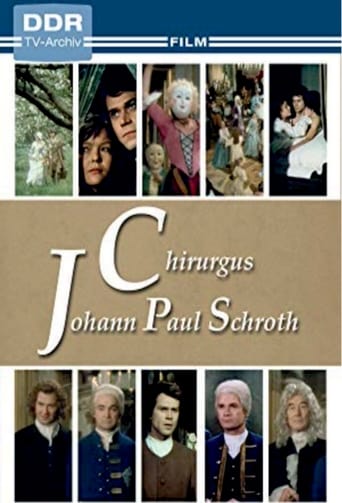 7.0
7.0Johann Paul Schroth is a 20-year-old barber's apprentice who breaks out of the barber-surgeon's trade. Schroth wants to realize his dream, which is to put aside the beard knife and use the scalpel in such a way that people are healed and not tortured...
Chirurgus Johann Paul Schroth
1981
7.0Johann Paul Schroth is a 20-year-old barber's apprentice who breaks out of the barber-surgeon's trade. Schroth wants to realize his dream, which is to put aside the beard knife and use the scalpel in such a way that people are healed and not tortured...
Chirurgus Johann Paul Schroth
1981
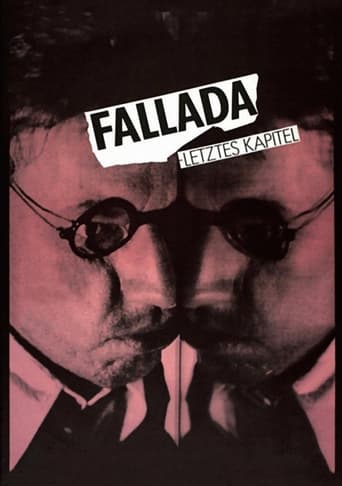 6.0
6.0This biographical film is set in 1937, with Fallada suffering the effects of living under a microscope. The film details his decline, as he is intermittently imprisoned and threatened in order to motivate him to write for the Fatherland. Even the attention of his kind, patient wife and loving children begin to feel oppressive to him. This is one of the few films to take a serious, in-depth look at the tribulations of a creative artist pulled in all different directions by the real world.
Fallada: The Last Chapter
1988
No synopsis available yet.
Zeitzünder
1984
A Little Boy in the ruins of World War II and the white lie of an old man - after a story by Wolfgang Borchert.
Nachts schlafen die Ratten
1988
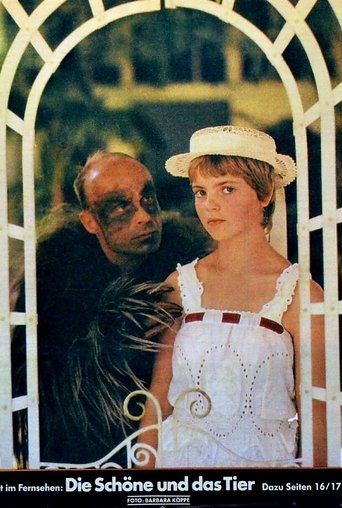 10.0
10.0No synopsis available yet.
Die Schöne und das Tier
1984
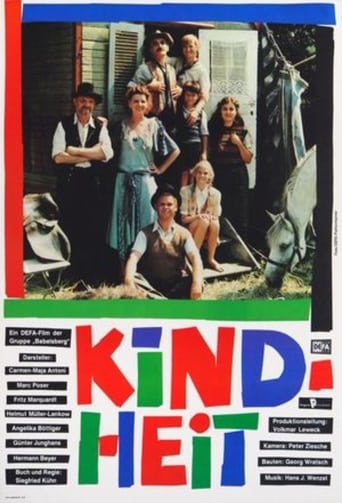 6.5
6.5Alfons lives with his grandparents on a Silesian village farm at the end of WWII. He adores his grandmother, who runs everything after her husband dies. But everything changes after the appearance of a traveling showman in the xenophobic village.
Childhood
1987
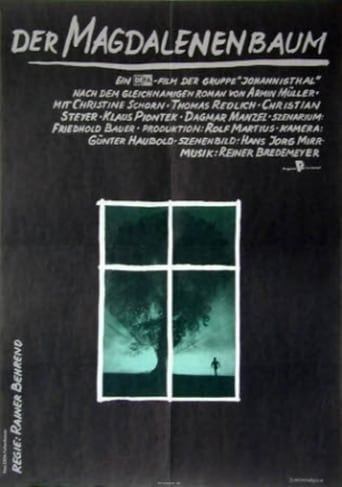 NR
NRThe young sailor Felix Striebel goes on vacation to a village and visits the fresh grave of "Mother Magda".
Der Magdalenenbaum
1989
The real blue is the color with which potter Benito Guerrero makes his fortune. When he no longer receives the color from Germany as a result of the Second World War, he and his family's existence are threatened. However, with the help of his inventive cousin Ruben, he manages to bring his real blue back onto the market.
Das wirkliche Blau
1986
1970s · 16 titles
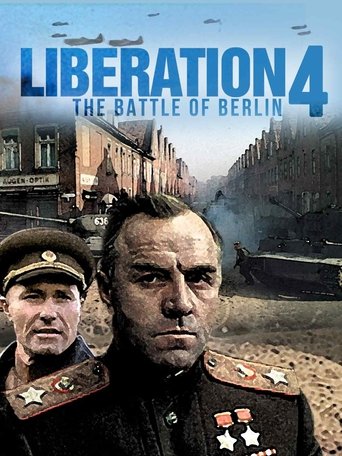 6.8
6.8In this the fourth episode, “Battle of Berlin,” the Soviets start their assault on Berlin, and Stalin negotiates with the other Allies.
Liberation - Part 4 : The Battle of Berlin
1971
 7.4
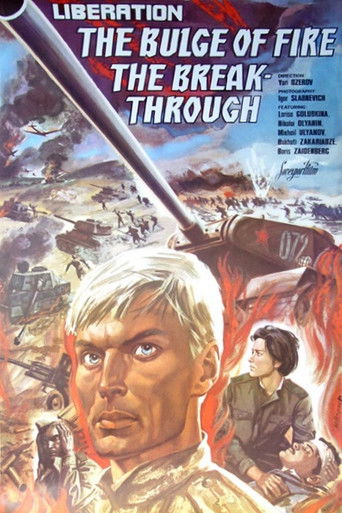
7.4The "Fiery Arc" tells of a grandiose battle on the Kursk Bulge in the summer of 1943. Here was the largest tank battle in the history of World War II. Along with the personal fate of the heroes, the film shows battle scenes, the activities of headquarters and intelligence, those who worked at the front and in the rear.
Liberation - Part 1 : The Fire Bulge
1970
 6.0
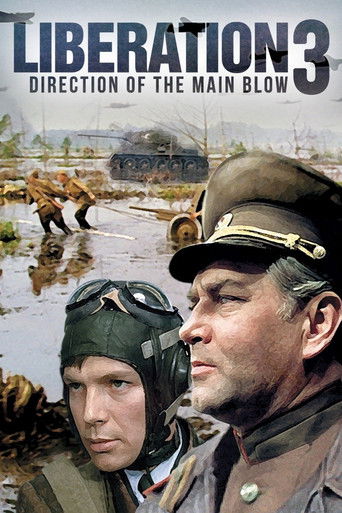
6.0This five part epic war drama gives a dramatized detailed account of Soviet Union's war against Nazi Germany during world war two. Each of the five parts represents a separate major eastern front campaign.
Liberation - Part 3 : Direction of the Main Blow
1971
 8.4
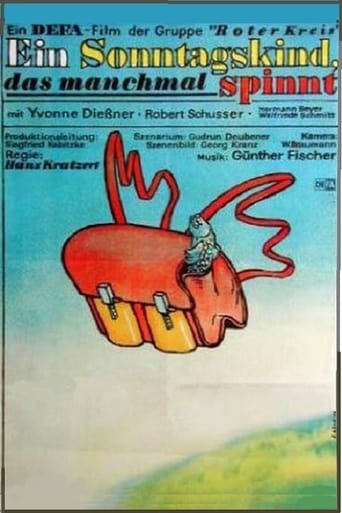
8.410-year-old Kathy Montag moves to a big city in Brandenburg. Before that, she lived in the Harz Mountains together with her father Peter. Her mother has died a few years ago. The girl finds her new home very exciting, and since Kathy takes an interest in everything she encounters, she keeps finding herself in peculiar situations such as a brigade party or the shooting of a historical epic movie. Her classmates consider her an oddball and even her father is unhappy about his daughter′s development.
Sunday's Child Sometimes Runs Wild
1978
 7.0
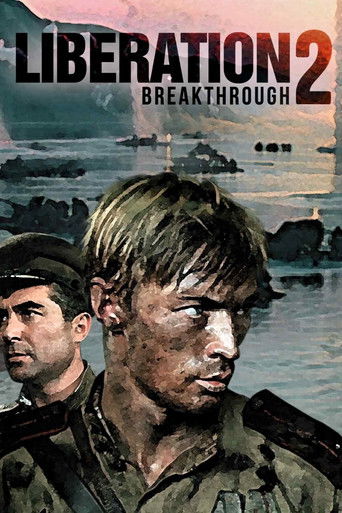
7.0Fascist Italy's prime-minister Mussolini is arrested following the Allies landing in Sicily. Meanwhile, Soviet troops plan their offense towards Kyiv. Lt. Col. Lukin's regiment crosses the Dnieper river as the division's vanguard. Unbeknownst to them, they're merely a ploy to mislead the Germans so the rest of the army can catch them off guard.
Liberation - Part 2 : Breakthrough
1970
 5.4
5.4In medieval Germany, poor and witty Till Eulenspiegel fools and cheats citizens, churchmen, and landlords. Although in most cases he uses his wit for personal well-being, he often helps the poor and weak. Eventually, he gains an influential but also dangerous position as royal fool at the court of the emperor.
Till Eulenspiegel
1975
 5.8
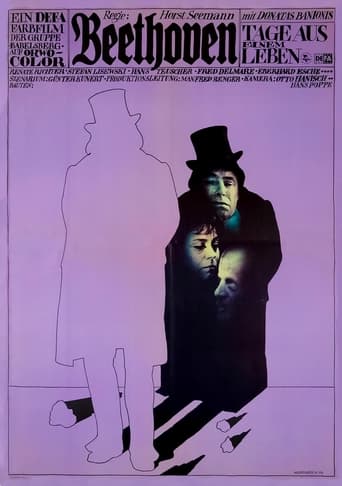
5.8Vienna, 1813-1819: Beethoven (played by Donatas Banionis) is at the peak of his fame. Orchestras all over the world play his music, but he lives modestly and is dependent upon private patrons. Nagged by his patronizing brothers, spied upon by officials for his republican beliefs and faced by his progressive hearing loss, the composer becomes more and more isolated. Seeman’s poetic film explores the joys, heartbreak and artistic spirit of the great composer as he works on his Ninth Symphony.
Beethoven - Days in a Life
1976
 5.0
5.0This rather unconventional Western movie is set in the middle of the 19th century in Arizona. The film portrays an Indian tribe, the Mimbreno Appacheans, who are celebrating their Thanksgiving, building an irrigation plant, carrying on commerce, and trying to settle down in a rather constricted territory. But the confrontation with the white Americans changes their situation as the mercantile "gentlemen" want to prevent the Indian tribe to become independent from the white men′s business practices. Thus, they destroy the irrigation plant and chase the Indian tribe in an inhospitable territory where they cannot survive. Led by their chief Ulzana, the Appacheans thus start a bitter fight to preserve their habitat.
Ulzana
1974
 7.0
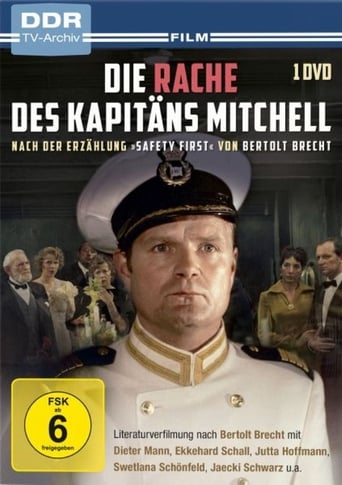
7.0The "Astoria", an English luxury liner, collides with a freighter shortly before the end of its voyage and threatens to sink. Captain Mitchell, successful and envied, sets in motion an expensive rescue operation. He manages to avert a catastrophe and bring the passengers and the ship to safety. But the shipowner considers the operation excessive, calls Mitchell a coward and fires him. His career seems to be over. When his friends and his fiancée also make fun of him, he devises a cunning plan of revenge.
Die Rache des Kapitäns Mitchell
1979
 7.0
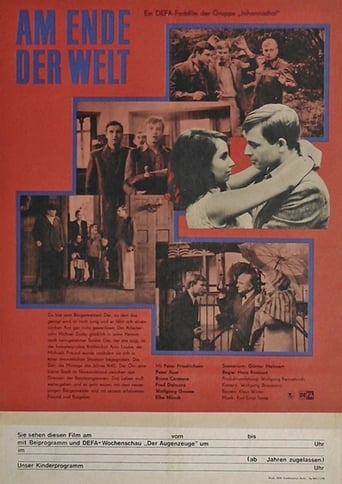
7.0In May 1945, returning soldier Michael Duda finds his hometown Weißenthal unoccupied. He meets escaped camp prisoner Arno Laube, who leads the town’s ad hoc move toward democracy and improbably appoints 19-year-old Michael as mayor. Tasked with refugees, shortages, and rogue soldiers, Michael must prove himself in a fractured No Man’s Land.
Am Ende der Welt
1975
 9.0
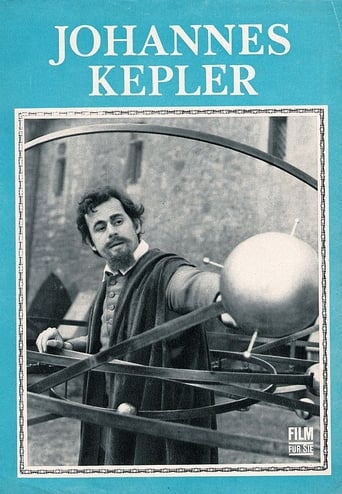
9.0Europe, 1620: The well-known astronomer and mathematician Johannes Kepler, who teaches as a professor in Linz, receives the message that his mother is prosecuted as a witch in Württemberg. The truth behind the allegations is rather simple: His mother has been denunciated by a former friend after an argument with the authorities. Kepler tries desperately to convince the prosecutors of the absurdity of their allegations with rational arguments.
Johannes Kepler
1974
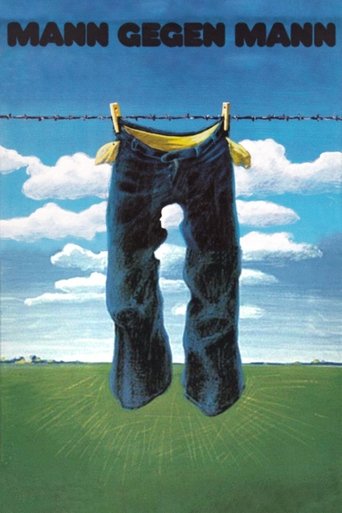 7.5
7.5Robert and Michael meet on their return from captivity. They discover that they are both married to the same woman: After Robert was pronounced dead, Michael married Anna. The decision about the future is left to chance.
Man against Man
1975
 NR
NRDuring the October Revolution in 1917 the Bolshevik Party appointed a woman commissioner of the “Free Anarchist-Revolutionary Section”. This regiment emerged from an anarchist division of the ship of the line “Imperator Paul I.”
Optimistische Tragödie
1971
 NR
NRHitler's seizure of power in 1933 and his rule in the years that followed are transferred to the North American criminal world of the 1930s in a parable. Gangster boss Ui needs the protection of the ruling class to achieve his goals and offers his help to their representatives. They initially hesitate, but join forces after Ui violently gains their respect. His victory is perfect and the people fall silent before the revolvers of their "protectors". Ui takes the raised hands as a sign of approval... Bertolt Brecht wrote the play in 1941 in a Finnish asylum - the premiere only took place in Stuttgart after his death in November 1958. It has been staged at the Berliner Ensemble since 1959 - Ekkehard Schall has played Ui over 500 times since then. On January 13, 1974, the play was shown for the last time, recorded in color by GDR television.
Der aufhaltsame Aufstieg des Arturo Ui
1974
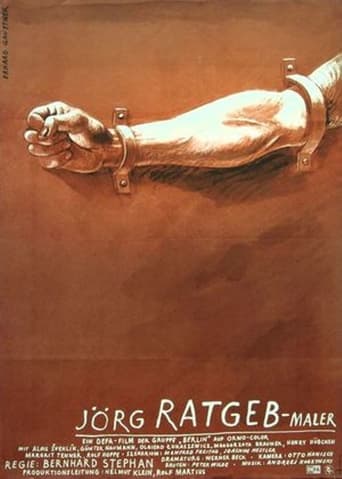 10.0
10.0On the eve of the German Peasants' Revolt, painter Joerg Ratgeb is occupied by a crisis of his own: finding a model for a Christ figure. He sets off on a journey to consult with his artistic role model, Albrecht Dürer. Although Ratgeb has always tried to stay out of the political conflict, his journey brings him face-to-face with peasant revolutionaries and the brutality and violence of their daily lives.
Jörg Ratgeb, Painter
1978
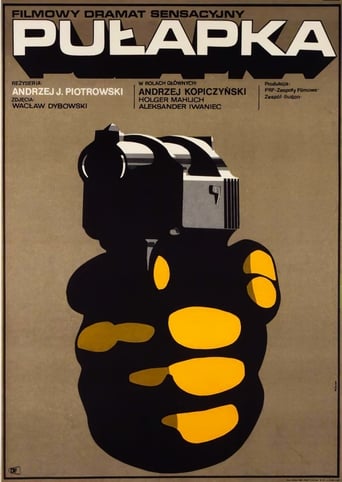 6.0
6.0Shortly after World War 2 a conflict between cousins, a Polish major and a former SS soldier arises on the Recovered Territories.
Pułapka
1971
1960s · 16 titles
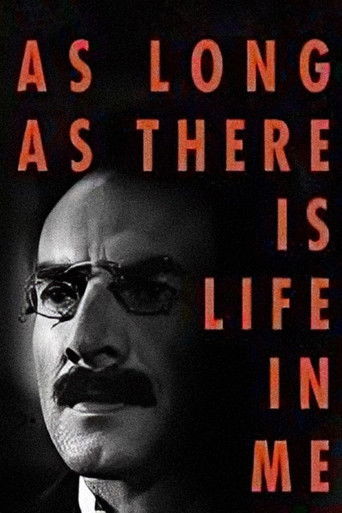 10.0
10.0This is part one of a two-part biopic about Karl Liebknecht. In 1914, Germany is arming itself for war. Karl Liebknecht, left-wing revolutionary Social Democrat, workers’ leader and a virulent antimilitarist, is one among 110 SPD members of Parliament who vote against approving war loans. From then on, he is considered un-German and a traitor to the fatherland, and his own party’s leadership turns against him. Despite threats, Liebknecht speaks up against the war and writes the manifesto “The Main Enemy Is at Home.” Even when he is arrested and charged with treason, he does not surrender.
As Long as There’s Life in Me
1965
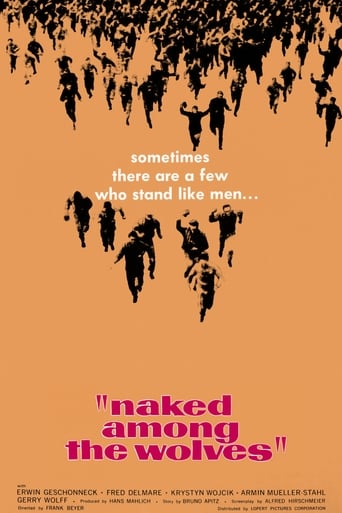 6.3
6.3Based on a true story of inmates at KZ Buchenwald that risked their lives to hide a small Jewish boy shortly before the liberation of the camp.
Naked Among Wolves
1963
 7.4
7.4High-school senior Peter considers the adults around him to be hypocritical, self-congratulatory, and immersed in the past. He gets suspended for writing an essay that his teachers consider to be a challenge to the state. Just Don't Think I'll Cry became one of twelve films and film projects-almost an entire year's production-that were banned in 1965-1966 due to their alleged anti-socialist aspects. Although scenes and dialogs were altered and the end was reshot twice, officials condemned this title as "particularly harmful." In 1989, cinematographer Ost restored the original version, and this and most of the other banned films were finally screened in January 1990. Belatedly, they were acclaimed as masterpieces of critical realism.
Just Don't Think I'll Cry
1965
 7.0
7.0Co-pilot Horst Schubert is a braggart and a true Don Juan. Thus, he tells young Ilse that he is in fact an "aircraft commander". This assertion brings about an embarrassing situation, for he suddenly meets her onboard his new work place, an IL-14 charter plane where Ilse acts as a stewardess. It gets worse, however: During a stop in Varna the police appear because Horst’s former lover Madelon has vanished. At home, meanwhile, his landlady has her hands full with her lodger’s current and former playmates. Ilse decides to put an end to this mixup and since the dull captain of the plane, Richard, makes no move to confront his co-pilot about his unstable private life, the smart stewardess appeals to the rest of the crew to help her teach Horst a few lessons in love.
Die Liebe und der Co-Pilot
1961
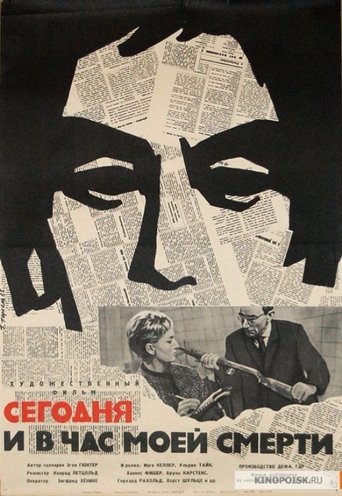 6.0
6.0Ella Conradi, a dedicated journalist from Germany, is in Jerusalem to report about the trial against the Nazi criminal Eichmann. Disgusted by the monstrosities that are revealed, she eventually returns to Germany. There, she wants to cover common cases and trials again. Her first assignment is a murder trial against a man called Ralf Jordan who constantly maintains his innocence. Conradi, who believes Jordan and wants to help him, starts to investigate the case - and thus opens up a political can of worms. The backgrounds of the case reach back to the Nazi period and involve officials of the Third Reich, who in the meantime have returned to their powerful positions.
Jetzt und in der Stunde meines Todes
1963
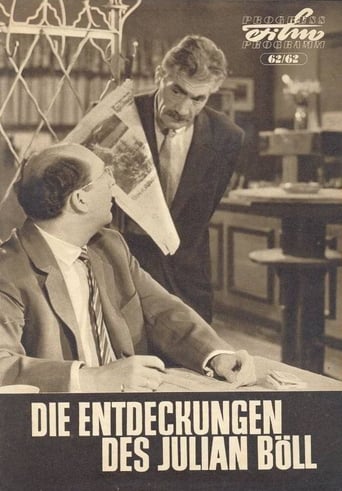 7.0
7.0The six members of the Julian Böll brigade have been working well together for years. One day, the brigadier is missing a 100-mark bill from his pay box. Ashamed of his own doubts about his colleagues, he remains silent. Böll investigates the question of why his colleagues in the brigade have not been able to get to know each other personally despite working well together, and why he does not have the confidence to resolve the matter collectively. He recognizes omissions and decides to have a clarifying discussion. It turns out that the money was not stolen.
Entdeckung des Julian Böll
1962
 5.4
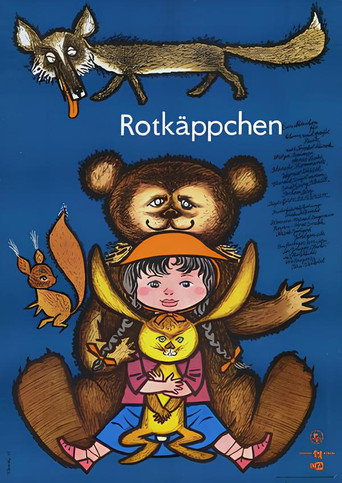
5.4Little Red Riding-Hood lives together with her parents in a house on the edge of the forest. Her friends are a bunny, a squirrel and a bear. The little girl is always prepared to help, friendly, innocent and even unsuspecting, for she does not hold anyone capable of doing anything bad. Little Red Riding-Hood often visits her grandmother who lives in the depths of the forest. But her way there is a dangerous one: the wolf and its lackey, the fox, terrorize everyone with their evil deeds. One day, Little Red Riding-Hood is caught in their net.
Little Red Riding Hood
1962
Victory and demise of the first proletarian dictatorship in the history of mankind, about the struggling, bleeding workers of Paris who enthusiastically defend their historical initiative. The little Cabet family from Rue Pigalle and their friends let the spectator participate in the action.
Die Tage der Commune
1966
 6.7
6.7The machinations of an ex-officer and a servant who want to get their hands on a fortune.
The Opportunists
1960
 7.0
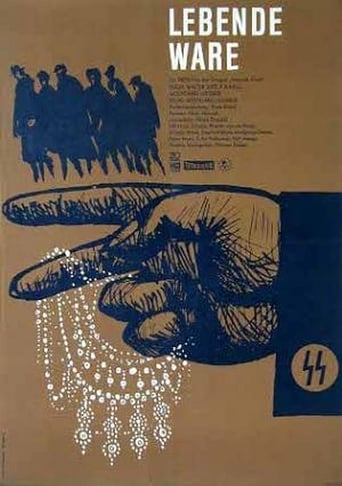
7.0In 1944, SS-Obersturmbannführer Becher arrives in Budapest in order to obtain material for the Waffen-SS. At the same time, he starts to gather private property by offering an insidious choice to the corporation′s Jewish majority shareholder, Dr. Chorin: Either Chorin assigns the company to Becker "on his own free will" – thereby obtaining the permission to travel abroad - or he his family will end up in an extermination camp.
Lebende Ware
1966
 6.9
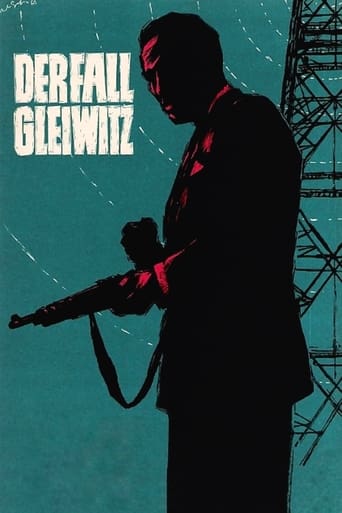
6.9To justify their invasion of Poland at the start of WWII, Nazi high command hatches a secret plan: six Polish men from an SS training camp are sent on a special mission to the town of Gleiwitz, to fake a Polish raid on Germany. The ‘provoked’ Germans will thus launch a ‘counterattack’ on Poland.
The Gleiwitz Case
1961
 6.7
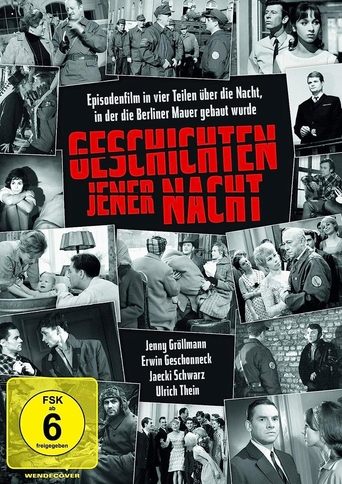
6.7Four directors - four styles - four episodes, all relating the events of a single night which has entered the history books: August 12-13, 1961. There are thousands of complex narratives connected with the frontier drawn through the middle of Berlin, and each episode relates the story of a difficult decision made on that night...
Stories of That Night
1967
 6.0
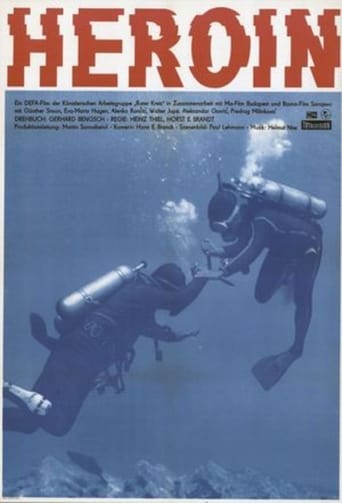
6.0This East German movie was co-produced with studios in Hungary and Yugoslavia, with many interesting location shots (border checkpoint to West Berlin, the Gellert bath in Budapest, and more). The plot is about French drug dealers, who obtain heroin somewhere in the Middle East, and smuggle it in several steps to East Berlin, and from there to France (or so it appears), killing when necessary. The hero is an officer of East German customs, who with detective work, some masquerade, and occasional violent action ultimately unravels the whole network, of course with the support of the local customs departments.
Heroin
1968
 5.8
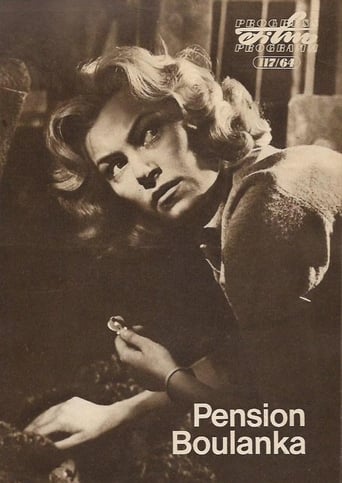
5.8A murder has been committed in "Pension Boulanka", a famous guesthouse for artists and circus people. Captain Bruckner is heading the investigating team.
Pension Boulanka
1964
 10.0
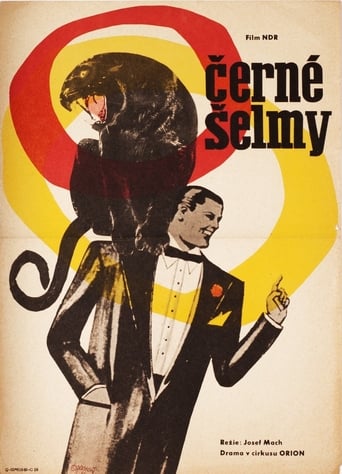
10.0Seventeen-year-old Martina has a paralyzing fear of heights, which prevents her from fulfilling her father’s wish that they perform a tightrope act together. As she is quite taken with the black panthers in the circus, as well as their trainer Dittrich, she decides to be an animal trainer instead.
Black Panthers
1966
No synopsis available yet.
Die Rosenholzmöbel
1969
1950s · 7 titles
 7.2
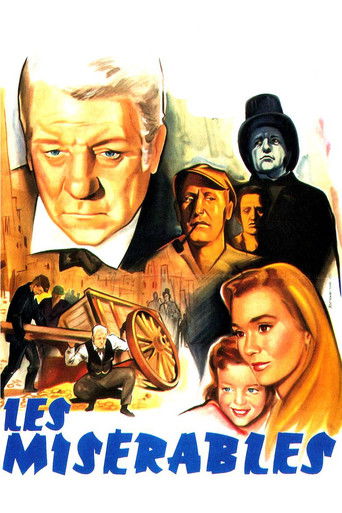
7.2In 19th century France, Jean Valjean, a man imprisoned for stealing bread, must flee a relentless policeman named Javert. The pursuit consumes both men's lives, and soon Valjean finds himself in the midst of the student revolutions in France.
Les Misérables
1958
 5.8
5.8In 1955, Michael Vierkant, a Jew who had emigrated during the Nazi era, returns from abroad to the Federal Republic of Germany to obtain the conviction of Korn, the former informer responsible for the murder of his sister. Korn is back in office; Michael's efforts remain unsuccessful. There is a direct confrontation between the two, and Michael shoots Korn in self-defense. He flees and is hidden by the young, reclusive artist Marie Jäger, but is then caught by the police and charged with premeditated murder. The case is taken out of the hands of the criminal investigation department by the Office for the Protection of the Constitution, which constructs an act of political revenge on behalf of the communists. Michael manages to escape from prison. Marie and her friends organize a press conference at which Michael reveals the connections. The trial is postponed.
Der Prozeß wird vertagt
1958
 4.7
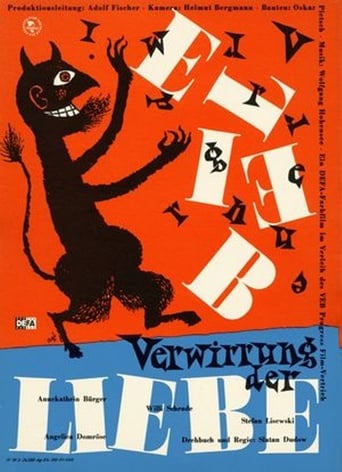
4.7The film tells the love story of two young couples. According to their social ranks, construction worker Edy is dating employee Siegi, while medical student Dieter is dating art school student Sonja. Rather unintentionally, they exchange partners. During a carnival ball, Dieter makes out with Siegi because he falls for her her fresh and happy girlish manner. Sonja coolly observes this game and sees this intermezzo as a test for their relationship. While Siegi and Dieter vacation at the sea, Sonja falls in love with Edy. Now the die seems to be cast for new constellations. But when both couples stand in front of the registrar’s office, they finally come to their senses.
Love's Confusion
1959
 10.0
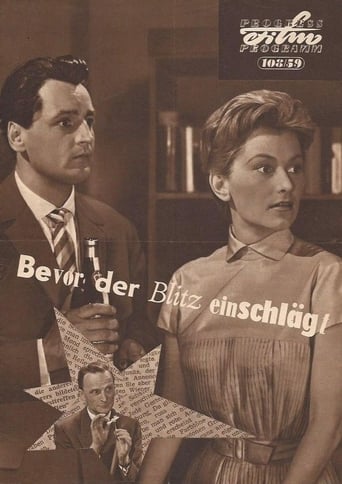
10.0No synopsis available yet.
Before lightning strikes
1959
 5.5
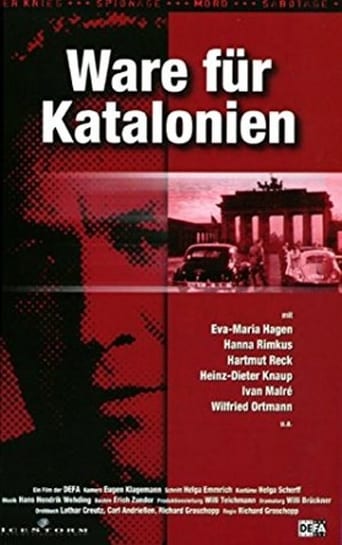
5.5At the end of the 1950s, the production of optics in the German Democratic Republic has reached top quality and instigates interest in the West. When national demand rises strongly and at the same time the export to South America heavily decreases, the Volkspolizei - the GDR police force - starts to look into the case. Two seemingly unrelated cases are the starting point for the investigation by second lieutenant Schellenberg of the department for optics racketeering: An old woman who was arrested in the Berlin city railway for trying to smuggle a pair of binoculars to West Berlin, and a dead person in an area of allotments who was involved in obscure dealings with optical devices.
Ware für Katalonien
1959
 7.1
7.1Albert Hauptmann is an out of work waiter in Cologne who is often confused with a former Captain of the Nazi Army. Albert uses this to his advantage and becomes the Director of the Montan Corporation, and a member of the West German Parliament. Herr Karjanke, the real Captain, learns of Albert’s ruse, and wants to claim his "rightful" position in Parliament. But Karjanke cannot come forward until his politicking "Doppelganger" succeeds in passing an amnesty law for war criminals. When Albert is finally brought before a judge on charges of fraud, he learns that this own amnesty law does not apply to him.
The Captain from Cologne
1956
 7.0
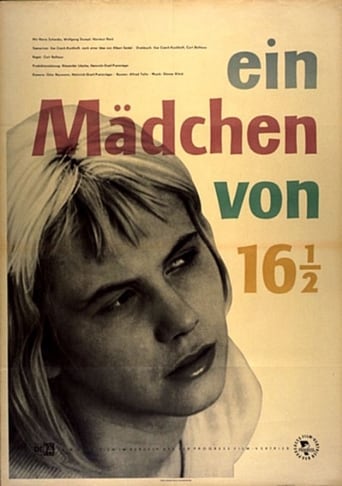
7.0The young orphan Helga is raised by her aunt after WW II. At the age of sixteen, she turns her back to go her own way. As a rambler, Helga wanders through the night streets of Berlin and has brief acquaintances.
Ein Mädchen von 16 ½
1958
Series credits
6.2Polizeiruf 110 is a long-running German language detective television series. The first episode was broadcast 27 June 1971 in the German Democratic Republic, and after the dissolution of Fernsehen der DDR the series was picked up by ARD. It was originally created as a counterpart to the West German series Tatort, and quickly became a public favorite.
Polizeiruf 110
1971
6.2Polizeiruf 110 is a long-running German language detective television series. The first episode was broadcast 27 June 1971 in the German Democratic Republic, and after the dissolution of Fernsehen der DDR the series was picked up by ARD. It was originally created as a counterpart to the West German series Tatort, and quickly became a public favorite.
Polizeiruf 110
1971
6.2Polizeiruf 110 is a long-running German language detective television series. The first episode was broadcast 27 June 1971 in the German Democratic Republic, and after the dissolution of Fernsehen der DDR the series was picked up by ARD. It was originally created as a counterpart to the West German series Tatort, and quickly became a public favorite.
Polizeiruf 110
1971
6.2Polizeiruf 110 is a long-running German language detective television series. The first episode was broadcast 27 June 1971 in the German Democratic Republic, and after the dissolution of Fernsehen der DDR the series was picked up by ARD. It was originally created as a counterpart to the West German series Tatort, and quickly became a public favorite.
Polizeiruf 110
1971
6.2Polizeiruf 110 is a long-running German language detective television series. The first episode was broadcast 27 June 1971 in the German Democratic Republic, and after the dissolution of Fernsehen der DDR the series was picked up by ARD. It was originally created as a counterpart to the West German series Tatort, and quickly became a public favorite.
Polizeiruf 110
1971
6.3German soap opera about the staff of the fictional hospital "Sachsenklinik" in the city of Leipzig.
In All Friendship
1998
6.6A long-running German television series about a two-man team of highway police, originally set in Berlin and later in North Rhine-Westphalia.
Alarm for Cobra 11: The Motorway Police
1996
3.8Der Staatsanwalt hat das Wort was an East German television series.
Der Staatsanwalt hat das Wort
1965
3.8Der Staatsanwalt hat das Wort was an East German television series.
Der Staatsanwalt hat das Wort
1965
3.8Der Staatsanwalt hat das Wort was an East German television series.
Der Staatsanwalt hat das Wort
1965
5.0No synopsis available yet.
Der letzte Zeuge
1998
6.5No synopsis available yet.
Auf eigene Gefahr
1993
No synopsis available yet.
The German Bronx
1997
 8.5
8.5Immenhof is a German television series.
Immenhof
1994
 7.5
7.5Two-part miniseries about Einstein's escape from Germany in 1932 and his influence in the invention of the nuclear bomb in 1939.
Albert Einstein
1990
 NR
NRBarfuß ins Bett is a German family television series, broadcast in 14 parts between 1988 and 1990.
Barfuß ins Bett
1988
 7.0
7.0On the run from police in America, Antonio Morena, a former World War II aviator and black-marketeer, finds himself in South America working for the all-powerful United Fruit Company, known to the natives as "the Green Monster".
The Green Monster
1962
 10.0
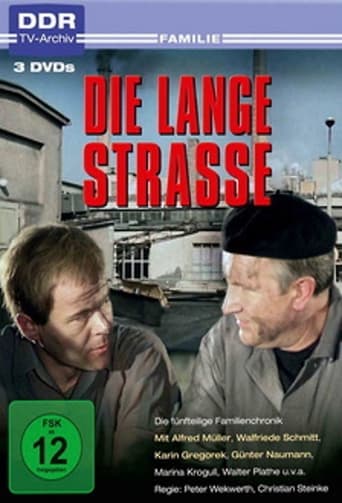
10.01949. Grafenberg in Brandenburg shortly before the foundation of the GDR. Here lives Michel Hollmann and works in roadmaking. His purpose in life are his wife Lotte and the two children Gerda and Heinz, for whom he is reconstructing a summerhouse into a “nest”. In Grafenberg, his siblings are living as well: His brother Karl, the mayor, and sister-in-law Edith, who works in a textile factory, with their son Jürgen. Edeltraut, his sister, has married the lamp fabricant Berthold Bennert and leads a well-off life. They as well have a son: Harald. Part of the family are further sister Hanna and brother-in-law Hermann, who is a fisherman on one of the local lakes and conducts a tenacious private war against old Stegewald and his presumptive prince-electoral rights. They are living their lives with their large and small conflicts, with different intentions, and yet remain connected always.
Die Lange Strasse
1979
No synopsis available yet.
Geheimkommando Ciupaga
1968
 NR
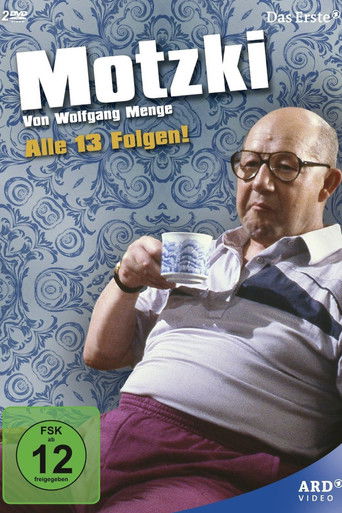
NRMotzki is a German television series.
Motzki
1993
 NR
NRA funny adventures of the twelve years old girl Antje who is fascinated by the stories about a famous pirate Stortebeker.
A Stortebeker Girl
1980