
Writing
Joyce Chan Wan-Man
Place of birth
Hong Kong, British Crown Colony
Known for
Writing
Credits
29 titles
Joyce Chan Wan-Man is a Hong Kong novelist, columnist, and scriptwriter.
Known for
In “Homeward Bound”, the corrupt Health Inspector is not your usual villain; he spouts poetry and has a loving, dutiful wife. He's also a sybarite who balances his life around a shrewd, money worshipping concubine and a mistress that is romantic, if impractical. His increasing desolation as all three women leave him is palpable and sagaciously reflects the ephemeral nature of life.
ICAC: Homeward Bound
1978
 5.9
Set in San Francisco, Love Massacre follows college student Ivy as she tries to help her friend Joy recover from a breakup. Ivy soon becomes involved with Joy's married brother Chu Chung, who spirals into senseless violence as he breaks into Ivy's dormitory and goes on a delirious killing spree.
Love Massacre
1981
 6.9
Four carefree lovers in Hong Kong enjoy their youth while danger looms on the edges.
Nomad
1982
 6.3
Ryuichi Okagawa, a Japanese writer who worked as a reporter in China has been sick ever since his return home. While in China, Okagawa had met a devoutly religious girl named Jin-hua. Okagawa was born with a predisposition to agonizing recurrent migraines, but found happiness with Jin-hua and married her. Unfortunately, he already had a wife in Japan, and this revelation crushed Jin-hua. When Okagawa returned home, leaving Jin-hua behind, she was forced to work as a prostitute, catching both a severe case of the flu and a rather less socially acceptable condition. Meanwhile, Okagawa's guilt has torn him apart enough for him to return to China in an attempt to bring Jin-hua home with him to get medical attention, but the girl is already too far gone for his help.
The Christ of Nanjing
1995
 6.1
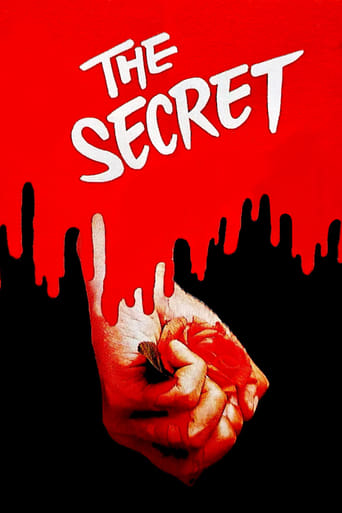
A tangled murder mystery unfolds amid a complex love triangle. As conflicting witness accounts emerge, the truth about the victim and key suspects is revealed, leading investigators down a dark and twisty path where nothing is as it seems.
The Secret
1979
 6.7
Kwong and Ming, two boys from rural China, sneak into Hong Kong to get quick rich. But they are instantly disillusioned and they get into messy situations. The superstar who looks exactly like Kwong has a nasty spill in a dangerous stunt and dies. Kwong is recruited to stand in. Money and all life's amenities become available to the pair. While Ming makes the best out of the situation by gambling and womanizing, Kwong realizes that his own amazement money is not everything.
Super Fool!
1981
Behind the camera
In “Homeward Bound”, the corrupt Health Inspector is not your usual villain; he spouts poetry and has a loving, dutiful wife. He's also a sybarite who balances his life around a shrewd, money worshipping concubine and a mistress that is romantic, if impractical. His increasing desolation as all three women leave him is palpable and sagaciously reflects the ephemeral nature of life.
ICAC: Homeward Bound
1978
5.9Set in San Francisco, Love Massacre follows college student Ivy as she tries to help her friend Joy recover from a breakup. Ivy soon becomes involved with Joy's married brother Chu Chung, who spirals into senseless violence as he breaks into Ivy's dormitory and goes on a delirious killing spree.
Love Massacre
1981
6.9Four carefree lovers in Hong Kong enjoy their youth while danger looms on the edges.
Nomad
1982
6.3Ryuichi Okagawa, a Japanese writer who worked as a reporter in China has been sick ever since his return home. While in China, Okagawa had met a devoutly religious girl named Jin-hua. Okagawa was born with a predisposition to agonizing recurrent migraines, but found happiness with Jin-hua and married her. Unfortunately, he already had a wife in Japan, and this revelation crushed Jin-hua. When Okagawa returned home, leaving Jin-hua behind, she was forced to work as a prostitute, catching both a severe case of the flu and a rather less socially acceptable condition. Meanwhile, Okagawa's guilt has torn him apart enough for him to return to China in an attempt to bring Jin-hua home with him to get medical attention, but the girl is already too far gone for his help.
The Christ of Nanjing
1995
6.1A tangled murder mystery unfolds amid a complex love triangle. As conflicting witness accounts emerge, the truth about the victim and key suspects is revealed, leading investigators down a dark and twisty path where nothing is as it seems.
The Secret
1979
6.7Kwong and Ming, two boys from rural China, sneak into Hong Kong to get quick rich. But they are instantly disillusioned and they get into messy situations. The superstar who looks exactly like Kwong has a nasty spill in a dangerous stunt and dies. Kwong is recruited to stand in. Money and all life's amenities become available to the pair. While Ming makes the best out of the situation by gambling and womanizing, Kwong realizes that his own amazement money is not everything.
Super Fool!
1981
 7.0
Instead of following the wishes of her parents and flying to Toronto, Mo-yung (Anita Yuen) journeys instead to NYC, in hope of finding Benny (Simon Yam), the man she loves. There, she meets Rubie, a sympathetic clinic worker who helps her to settle in the city.
Crossings
1994
 6.0
The beautiful Cherie Chung plays the title character, an exercise teacher who is wooed by a rich, older businessman and a young photographer. You watch Cherie as she bounces between these two, not really liking the businessman, while the photographer is more in love with her image as his model than as a true love.
Cherie
1984
 9.0
The Man from Vietnam is a Hong Kong Crime-Drama directed by Clarence Ford and starring Stanley Fung.
The Man from Vietnam
1982
 7.0
Two cops are on the trail of gang that are planning a jewel robbery. Inspector Chow lives at home with his mother, while Inspector Pang has gambling problems that the gang exploits. Soon, innocent victims will pay with their lives.
The Servants
1979
 10.0
The film depicts the youthful troubles of three young couples in Hong Kong in a remarkably down-to-earth and touching way. Each character has a distinct personality, and their experiences reflect various aspects of Hong Kong society.
First Time
1983
 6.2
A Cantonese opera company is attacked by an army of ghosts, thanks to a feud between the dead grandfathers of one of the company's actresses and a young man.
The Spooky Bunch
1980
 8.0
Four episodes combined. Dawn: the first cop goes to interrogate the parents of a babygirl who got burnt by an iron. These, eventually admit to be the one responsible but they state it was an accident. Going back on a bus, he reads a newspaper article reporting another case of violence against minors. Noon: the moustached cop cop collects the report of a mother regarding the presence of perverts in her building. A thirteen-year-old girl is spotted with a man in equivocal acts: when she is interrogated she shows no signs of anxiety. Dusk: in a nursing home a guest kills another old man with an axe. He is interrogated by the older cop who, once back home, talks with his wife and daughter while watching sadly TV. Night: the fourth cop is in a disco when he gets the call that a collegue’s wife was the victim of a hit and run. The following morning he goes back to the office.
CID: Four Moments of Life (Dawn, Noon, Dusk, Night)
1976
 NR
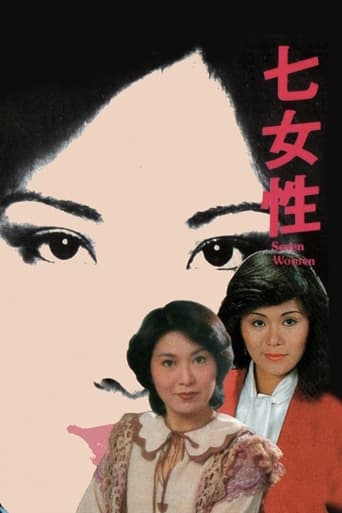
Miu Kam-fung, who plays the film’s titular character, addresses her identity as housewife and actress in Patrick Tam’s commentary on the dangers of rampant consumerism, seen as a defining moment for contemporary Hong Kong. In its studied references to Godard, Tam’s work buzzes with modern life—supermarkets, billboards, television—and juxtaposes these references with questions about marital infidelity, middle-class morality, and even political sentiment.
Seven Women: Miu Kam-Fung
1976
In “A Man”, Police Inspector Shek reports his corrupt colleagues, but it is his own integrity which comes under investigation, Joyce's implication that being honest to oneself can extract a high price. Also characteristic of her ICAC scripts is that they're non-judgmental and the protagonists have distinct personalities. Unfortunately, it was banned by the authorities until its initial release at the Hong Kong International Film Festival in 1999.
ICAC: A Man
1978
 8.0
Simon Loui's character gets thrown out by his vicious girlfriend and ends up taking on a VERY different social status than before. That of the beggar but together with a group of seemingly crazies (Victor Wong, Joe Junior and Elvis Tsui), he gets a new outlook and direction in life...
Give and Take
1994
NRIn the last episode of Patrick Tam’s anthology series “Seven Women” (1976), Lisa (Lisa Wang) suffers from "environmental depression" and those around her treat her like a lunatic. Joyce deploys a creative mix of dialogue and monologue to illustrate Lisa's complicated personality. She might act like any normal obedient daughter around her parents, yet other times she reveals her overly sensitive and suspicious mind as her moods run the gamut from poetic to violent. The villa where Lisa is sent to heal becomes a tumultuous battleground when a young doctor who has his own psychological hang-ups begins treating her and a conflict of egos is ignited.
Seven Women: Liza Wang
1976
 7.0
"Breaking the constraints of traditional television storytelling, Tam and Chan give a surprisingly in-depth exploration into the modern female psyche, exposing their fears and their desires. In their later attempts in CID: Two Teddy Girls, the pair uses a seemingly typical cat-and-mouse chase story between a cop (Mark Cheung Lui) and two criminal "teddy girls" (Ban Ban and Marysia Lam) to portray the lives of Hong Kong's different social classes.
CID: Two Teddy Girls
1976
The Story of Ah King could be summarised in four words, "meeting the wrong guy", but Joyce has created a most poignant episode, one that has dialogue peppered with lively slang. Ah King (Louise Lee), who tries hard to break off from her jammed public housing life, gets married, only ending up in another abusive relationship. Given her circumstances, Ah King really doesn't have much choices. Both episodes feature superb scripts and stunning performances.
Under the Eaves: The Story of Ah King
1978
NRThe third episode of Patrick Tam’s anthology series “Seven Women” (1976), with three short stories combined.
Seven Women: Ivy Ho, Yeung Si-Dai, Lee Yan-Yi
1976
 NR
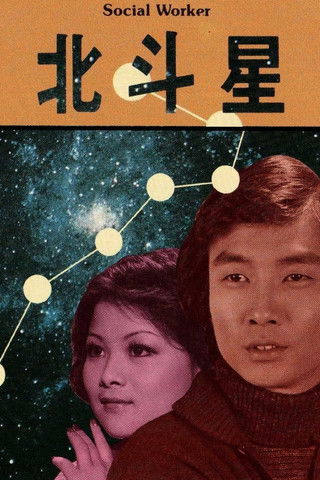
Ah Sze (Cecilia Wong Hang-sau) abandons the country for city life, but fails to find refuge from her relatives in Macau and Hong Kong. Writer Joyce Chan realistically portrays a teenaged girl whose choices are finite if she wants to survive. We see Ah Sze in one scene, an innocent girl still in pigtails, in stark contrast with the next scene after she has lost her virginity. It creates an emotional impact that is more than heart-wrecking.
Social Worker: Ah Sze
1976
Two Stories “Water” kicked off with the Cantonese tune of Raindrops Beating on the Banana Leaves, a symbolic hint on the tragic outcome of the drama – a demonstration of Joyce's astute use of music. When a kind, gullible mother-in-law and her rude, strong-willed daughter-in-law separately encounter the same con-artist, the result is high drama.
ICAC: Two Stories "Water"
1978
 7.0
No synopsis available yet.
No Big Deal
1980
 NR
The first episode of the Hong Kong reclaimed “Social Worker” series (1976)
Social Worker: The Runaway Girl
1976
NRThe fourth episode of Patrick Tam’s anthology series “Seven Women” (1976), which adapted from Swedish play “Miss Julie”
Seven Women: Louise Lee
1976
NRThe sixth episode of Patrick Tam’s anthology series “Seven Women” (1976), which adapted from Pat Flower’s “The Tape Recorder”
Seven Women: Meg Lam
1976
 8.0
A romantic comedy directed by Hong Kong New Wave filmmaker Yim Ho.
Wedding Bells, Wedding Belles
1981
One of Ann Hui's most admired works for the small screen, The Bridge examines a complex web of bureaucracy, vested interests, disillusionment and grass-roots campaigning. The title refers to a footbridge closed for demolition by the government, effectively cutting the main route to and from a roadside shantytown and triggering further local issues.
Below the Lion Rock: The Bridge
1978
One of the first single-episode special dramas shot on film, this episode of Superstar Special stars Barbara Wong Chuen-yu as a lonely housewife who is introduced to the idea of a "temporary boyfriend. "Breaking the constraints of traditional television storytelling, Patrick Tam and Joyce Chan give a surprisingly in-depth exploration into the modern female psyche, exposing their fears and their desires.
Superstar Specials: Wong Chuen-yu
1975