

Directing
Fujiko Nakaya
Sapporo, Hokkaido, Japan
Fujiko Nakaya (b. 1933, Sapporo, Hokkaido) is the second daughter of physicist Ukichiro Nakaya, whose foundational research on snow and ice is world famous. After graduating from high school in Tokyo, Nakaya attended North-western University in Evanston, Illinois, where she studied art. From 1957 to 1959, Nakaya studied painting in Paris and Madrid. In 1960, her paintings were shown at the Sherman Art Gallery in Chicago. She returned to Japan, where she had her first solo exhibition at Tokyo Gallery in 1962. In 1966, Nakaya participated in the renowned performance project 9 Evenings: Theatre and Engineering in New York and joined the group Experiments in Art and Technology (E.A.T.), founded that same year by Billy Klüver, Fred Waldhauer, Robert Whitman, and Robert Rauschenberg. E.A.T. brought engineers and artists together for joint projects, accelerating the trend toward multimedia in art. From 1969, Nakaya was E.A.T.’s representative in Tokyo and was instrumental in the design of the Pepsi Pavilion for Expo ’70 in Osaka. It was here that she first worked with artificial fog, creating a large-scale atmospheric sculpture that enveloped the exterior of the building. Since then, often in collaboration with other artists and scientists, Nakaya has created a variety of fog sculptures for public spaces, buildings, and parks. Together with Katsuhiro Yamaguchi, Yoshiaki Tono, Nobuhiro Kawanaka, Hakudo Kobayashi, and others, Nakaya founded the artist collective Video Hiroba in 1971. In 1980, Nakaya opened SCAN, Japan’s first video gallery.
Acting credits
Behind the camera
 NR
NRSoji-ji (1979) is a video work documenting a chant recitation at a Zen temple. The chant recited by many monks does not proceed in unison like group singing. Each monk recites in sync with his breath, so that the intake of breath occurs at different moments. That is to say, each monk articulates the chant differently. Since there is no unified division, when the multiple chants overlap, an endless wave of chant (sutra) appears as a collective density or modality (at the same time, each monk’s steps form a totally different rhythm from the individual chants).
Soji-ji
1979
 NR
NRCreated for the first Japanese exhibition dedicated to video art, Video Communication: Do-It-Yourself-Kit, this work documents protests outside the Chisso Corporation headquarters in central Tokyo. Hazardous byproducts from the company’s chemical plants had caused severe mercury poisoning—and, consequently, a neurological disease—in Minamata’s livestock and inhabitants. Nakaya filmed the sit-in with a handheld video camera and installed a battery-powered television monitor on-site, allowing the demonstrators to watch themselves by playing back the recordings of their actions.
Friends of Minamata Victims - Video Diary
1972
 NR
NRStatics of an Egg focuses on Nakaya’s hands as she tries to balance two eggs upright on a flat surface. The video references ‘The first day of spring’, an essay written by the artist’s father, the prominent scientist Ukichiro Nakaya, wherein he explains how it is possible to stand eggs upright, and not only on the first day of spring, as the Japanese proverb details.
Statics of an Egg
1973
 NR
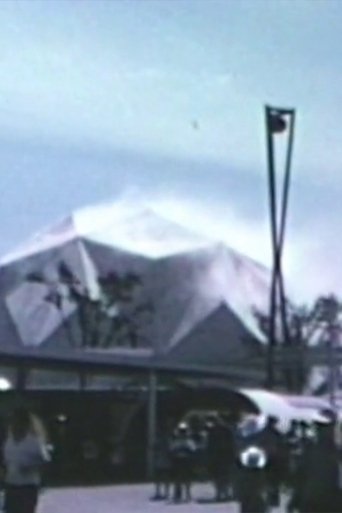
NRA project by Experiments in Art and Technology (E.A.T.) at Expo '70 in Osaka, Japan.
Pepsi Pavilion Fog Sculpture #47773
1970