
Writing
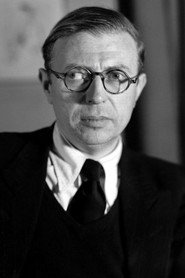
Jean-Paul Sartre
Born — Died
1905-06-21 — 1980-04-15
Place of birth
Paris, France
Known for
Writing
Credits
35 titles
Jean-Paul Charles Aymard Sartre (21 June 1905 – 15 April 1980) was a French philosopher, playwright, novelist, screenwriter, political activist, biographer, and literary critic. From Wikipedia, the free encyclopedia
Known for
 8.5
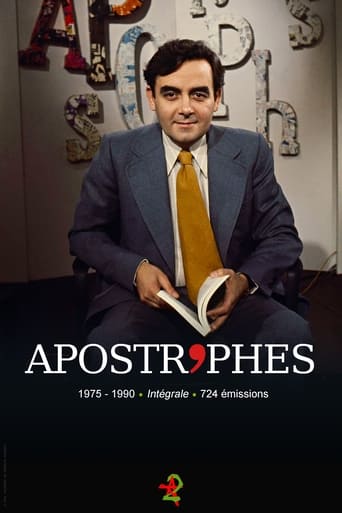
8.5Apostrophes was a live, weekly, literary, prime-time, talk show on French television created and hosted by Bernard Pivot. It ran for fifteen years (724 episodes) from January 10, 1975, to June 22, 1990, and was one of the most watched shows on French television (around 6 million regular viewers). It was broadcast on Friday nights on the channel France 2 (which was called "Antenne 2" from 1975 to 1992). The hourlong show was devoted to books, authors and literature. The format varied between one-on-one interviews with a single author and open discussions between four or five authors.
Apostrophes
1975
 6.0
6.0A talk show presented by Michel Drucker
Les Rendez-vous du dimanche
1975
 6.5
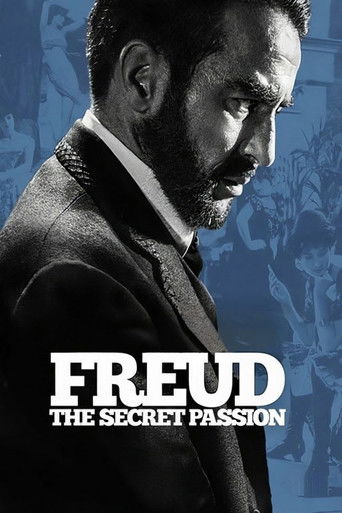
6.5An examination of Austrian psychologist Sigmund Freud's career when he began to treat patients diagnosed with hysteria, using the radical technique of hypnosis.
Freud: The Secret Passion
1962
 6.9
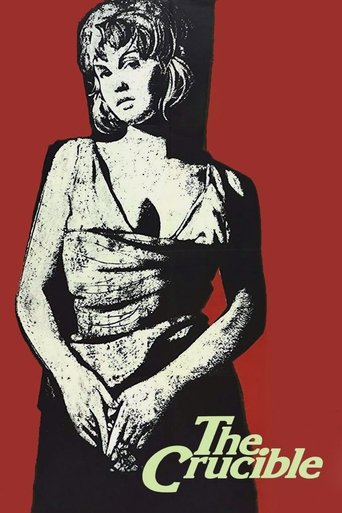
6.9Salem 1692. The young Abigail, seduced and abandoned by John Proctor, accuses John's wife of being a witch in revenge. A series of tragic trials soon befall Salem as fear and suspicion blur the lines of reality.
The Witches of Salem
1957
 7.1
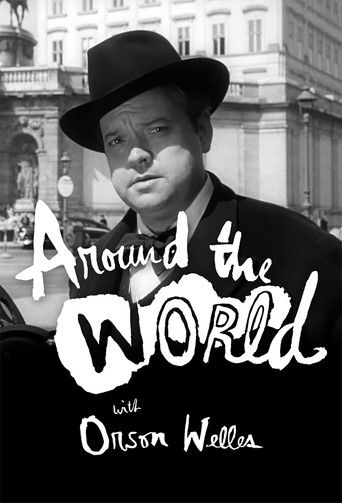
7.1A six-part British television travel series written, directed, and presented by Orson Welles for ITV in 1955. Filmed entirely in Europe, the series follows Welles through Vienna, the Basque Country, Madrid, Paris’s Saint-Germain-des-Prés, and London’s Chelsea Pensioners, blending travelogue, cultural portraiture, and personal essay. Moving between documentary observation and reflective commentary, the episodes combine interviews, local history, and Welles’s distinctive narration into a series that functions as both travel film and cinematic essay.
Around the World with Orson Welles
1955
 7.0
7.0North Africa, 1954. The Algerian war of independence begins, a traumatic and extremely violent catastrophe that for eight long years will shake and finally overthrow the foundations of the colonial regime established by France in 1830.
At War for Algeria
2022
Film credits
2020s · 3 titles
 5.5
5.5Ulrike Ottinger weaves her personal memories of Parisian bohemianism and the serious social, political and cultural upheavals of the time into a cinematic “figure poem.”
Paris Calligrammes
2020
 7.0
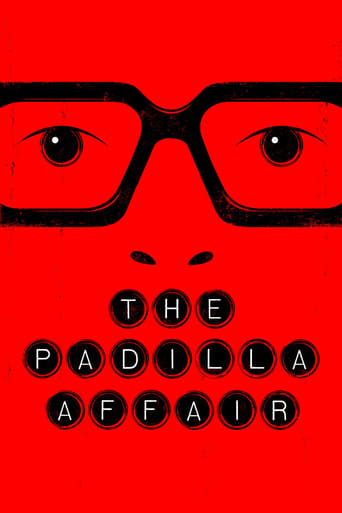
7.0Havana, spring 1971: The poet Heberto Padilla has just been set free and appears before the Cuban Writers' Union where he pronounces a statement of "heartfelt self-criticism", declares himself to be a counterrevolutionary agent and throws accusations of complicity at many of his colleagues present at the event, among them, his wife. A month previously, his arrest under the accusation of endangering the security of the Cuban state had mobilised prominent intellectuals all over the world, who wrote a letter to Fidel Castro calling for the release of the poet, whose only sin had been to dissent through his poetic work. The writer's mea culpa, the recording of which is shown for the first time to the public, marks the narrative line of a story including the testimonies of Gabriel García Márquez, Julio Cortázar, Mario Vargas Llosa, Jean-Paul Sartre, Jorge Edwards and Fidel Castro.
The Padilla Affair
2023
 7.5
7.5Despite her position at the epicentre of the Brazilian bossa nova scene, singer Heloísa Maria Buarque de Hollanda, known as Miúcha, has been largely underappreciated. This documentary, which dives into her career and personal life through a rich collection of archives, aims to change that.
Miúcha, The Voice of Bossa Nova
2022
2010s · 5 titles
 NR
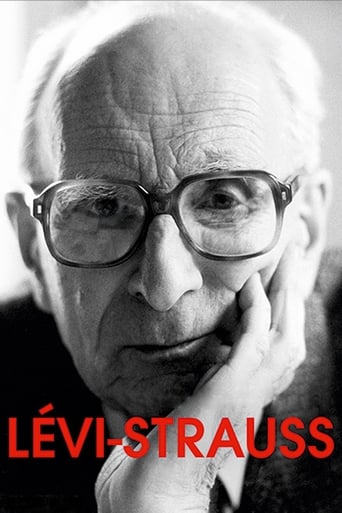
NRDocumentary about one of the greatest French thinkers of the twentieth century, Claude Lévi-Strauss (1908-2009).
The Lévi-Strauss Century
2016
A journalist meets “Man of Today” who, while a responsible citizen, is disengaged from greater society. He believes once he’s dead nothing more matters. As an experiment to see if she can turn his pessimistic view around, the journalist sends him on a journey of enlightenment to prove that the future does matter. Travelling the globe, he finds himself in surprising encounters with great minds in the arts and sciences. Starting with an unexpected poetry reading and conversation with experimental poet Christian Bök, Man of Today engages with architect Shigeru Ban, activist Francis Dupuis-Déri, philosopher Alain de Botton, artist Marlene Dumas, novelist Rivka Galchen, leading scientists and a ghost. Will the journalist succeed in turning a cynic into an optimist? Will it matter? What can one person do?
The Future Is Now!
2011
 NR
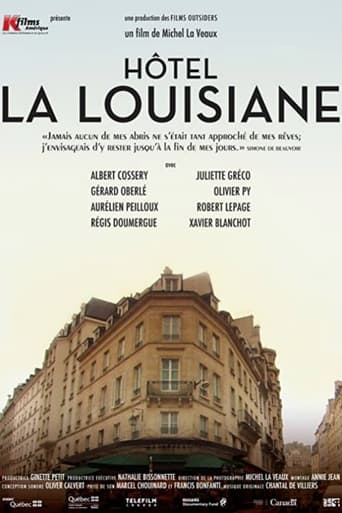
NRHôtel La Louisiane is, at its core, a film about freedom and dignity. Freedom for those who wish to live in a place where they are able to feel inspired. Dignity for the hotel owner to stand by his promise to his father and keep their mission alive: to provide an affordable sanctuary for artists and students in search of fulfilling employment, which they certainly won’t find at other hotels. Freedom, too, to be in an environment of tolerance and rid of prejudice. This film is not just a story about a mythical setting in Paris; it portrays the microcosm of a lifestyle in which collective values reign supreme. A film where what’s real and true is placed above national borders or cultural barriers.
Hôtel La Louisiane
2015
 7.0
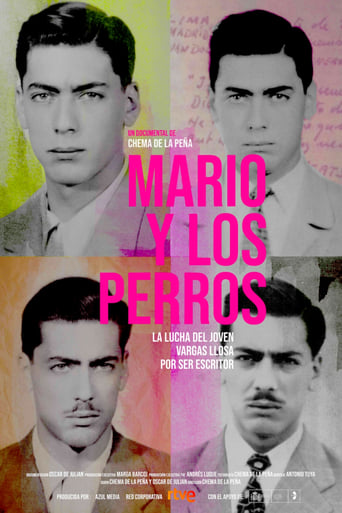
7.0An account of the childhood and youth of the Peruvian writer Mario Vargas Llosa, Nobel Prize for Literature in 2010, and how the hard experiences he lived during these formative years led him to write and publish his first major work when he was only 26 years old.
Mario y los perros
2019
 NR
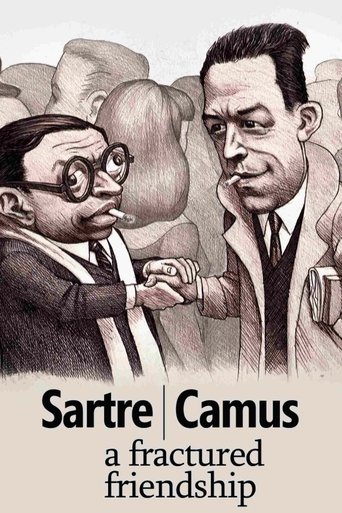
NRSartre and Camus, the two most world-famous, 20th century, French writers, form a legendary and inseparable couple. The two extraordinary thinkers propelled the figure of the politically engaged writer into the limelight.
Sartre/Camus: A Fractured Friendship
2014
2000s · 4 titles
 6.9
6.9A documentary made to coincide with Niemeyer's 100th birthday. The renowned architect talks about his long life, his inspirations, and his aspirations towards a just Brazil, and the ways he tried to help that along in his spectacular and beautiful buildings.
Oscar Niemeyer: Life is a Breath of Air
2007
 NR
NRNo synopsis available yet.
Benny Lévy, la révolution impossible
2008
How could the son of a graduate historian and a secretary, who liked to adorn himself with fast cars, fake eyelashes and expensive clothes, who wanted to become an artist, journalist or film director, become the "public enemy No. 1"?
Andreas Baader - Das Leben eines Staatsfeindes
2002
 NR
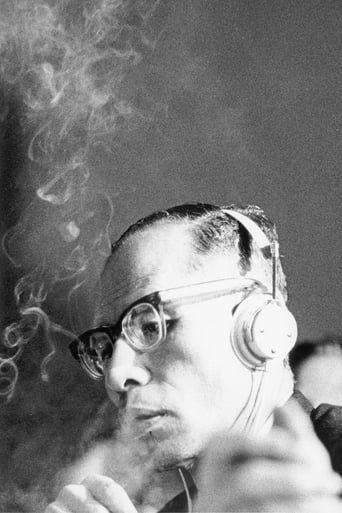
NRAt the height of the Vietnam War, a group of intellectuals begins a series of hearings in the People’s Palace in Stockholm. (Filmform)
The Russell Tribunal
2003
1990s · 2 titles
 10.0
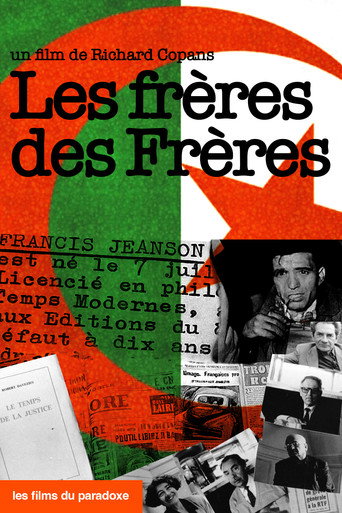
10.0From 1954 to 1962, during the Algerian War, French citizens provided concrete assistance to the FLN in France: sheltering refugees, forging documents, facilitating border crossings, and transporting funds. Whether committed to the ideals of the Republic or driven by Third Worldist revolutionaries, they sought to build a bridge of friendship between nations. They paid for their commitment with imprisonment and exile. Four veterans of the Jeanson network recall this period. Today, they are no longer seen as traitors or heroes, but as witnesses recounting "their" war... Silent for 30 years, the "Jeanson network" now bears witness to this history.
Brothers in Arms
1992
 NR
NRNo synopsis available yet.
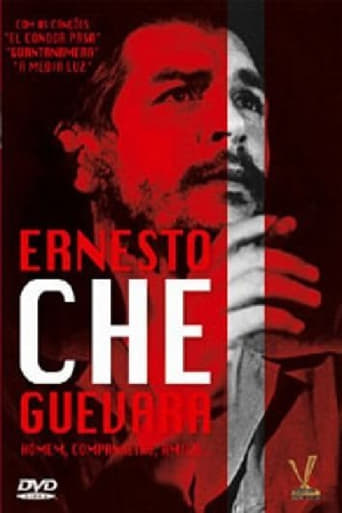
Ernesto Che Guevara - Uomo, Compagno, Amico
1995
1960s · 1 titles
1950s · 4 titles
 5.7
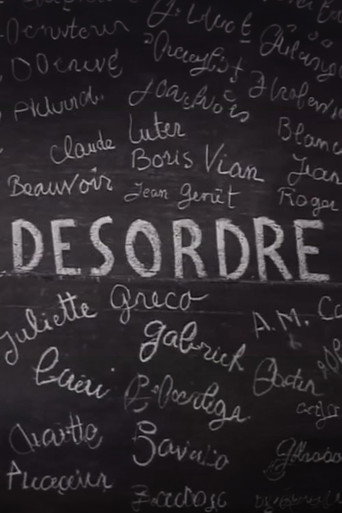
5.7Variations on the cultural and intellectual explosion in the Saint-Germain-des-Prés district in 1946.
Disorder
1950
 7.0
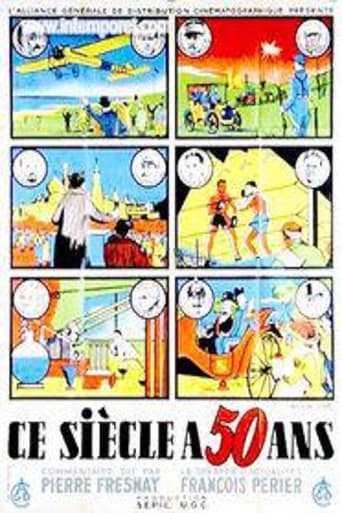
7.0As the title of this French documentary indicates, Ce Siecle a 50 Ans examines the 20th Century at its halfway point. Utilizing the archives of several European film reserves, director Denise Tua offers a fascinating mosaic of the people and events that shaped the years 1900 to 1950. Complementing the vintage film clips are three dramatized sketches, delineating the romantic customs of three different points in time. These sketches are inadequately performed, and can easily be ignored. Ce Siecle a 50 Ans both preserved and provided celluloid material for scores of future documentaries.
The Century Is Fifty
1950
 6.6
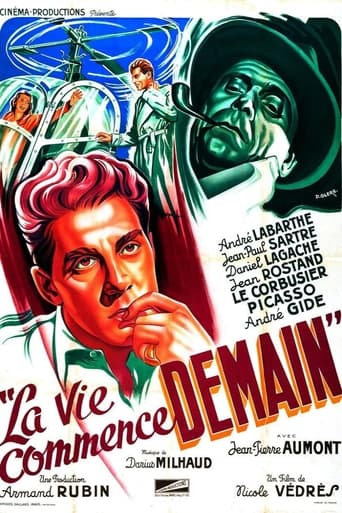
6.6Documentary filmmaker Védrès' first semi-fictional feature was released in France in 1949 as La Vie Commence Demain. The film made it to the U.S. in 1952 as Life Begins Tomorrow. Made in cooperation with UNESCO, the film speculates on the future of mankind after the advent of Atomic Energy. Many prominent French artists and intellects contribute to the narration: Jean-Pierre Aumont plays The Man of Today, Andre Labarthe is the Man of Tomorrow, and Jean-Paul Sartre, Daniel Agache, Jean Rostand, Le Corbusier, Pablo Picasso and Andre Gide are respectively seen as "The Existentialist," "The Psychiatrist,' "The Biologist," "The Architect," "The Artist" and "The Author". Film clips of hospitals, schoolrooms, scientific laboratories, and even nightclubs are woven into Védrès' fascinating tapestry.
Life Begins Tomorrow
1950
 3.0
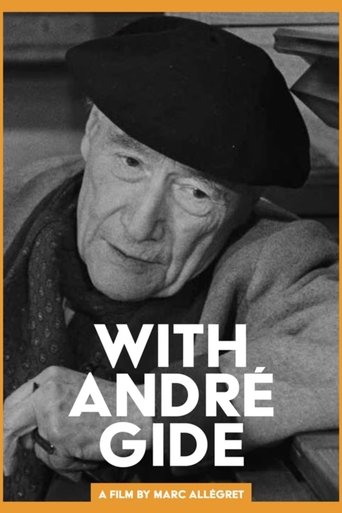
3.0Nobel-prize-winning author, social justice crusader, anti-colonialist, adventure traveler, musician, and one-time Communist: André Gide was a larger-than-life character who dominated French letters from the turn of the 20th century to his death in 1951. Directed by Marc Allégret, with whom Gide traveled extensively in French Equatorial Africa, the film was made in the year leading up to the writer’s death.
With André Gide
1952
Undated · 3 titles
 NR
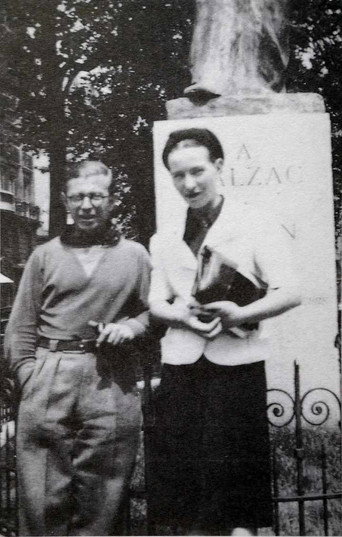
NRA rare one-hour documentary that takes viewers behind the scenes of one of the most dynamic and intriguing intellectual relationships of the twentieth century.
Jean-Paul Sartre et Simone de Beauvoir
—
 NR
NRNo synopsis available yet.
MORTEM IMAGINIS.
—
 8.0
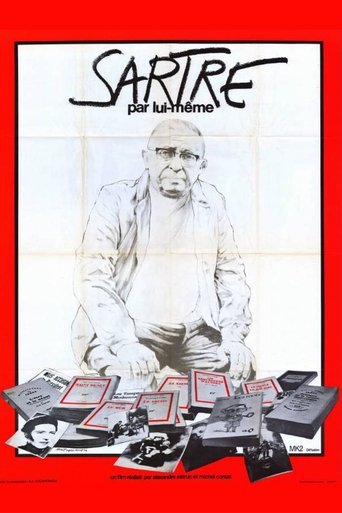
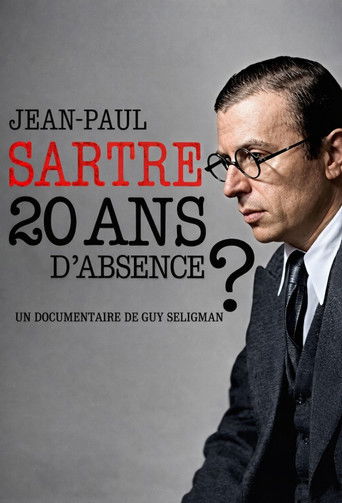
8.0This historic documentary highlights the basis of Jean-Paul Sartre's thoughts in all its forms: novel, theater, philosophy, political commitments. Surrounded by Claude Lanzmann, Michel Contat, JB Pontalis, Jean Toussaint Desanti and Bernard Henri Levy, Sartre expresses himself at length in this rare film. Features rare on-camera interview film footage of Sartre giving his thoughts on the following subjects: Sartre on Philosophy Sartre on Intellectualism Sartre on Literature Sartre on the Theater Sartre on Literary Activism Sartre on Discussions Sartre on his novel, "Nausea" Sartre on the Review, "Les Temps Modernes"
Jean-Paul Sartre - A 20 Year Absence?
—
Series credits
8.5Apostrophes was a live, weekly, literary, prime-time, talk show on French television created and hosted by Bernard Pivot. It ran for fifteen years (724 episodes) from January 10, 1975, to June 22, 1990, and was one of the most watched shows on French television (around 6 million regular viewers). It was broadcast on Friday nights on the channel France 2 (which was called "Antenne 2" from 1975 to 1992). The hourlong show was devoted to books, authors and literature. The format varied between one-on-one interviews with a single author and open discussions between four or five authors.
Apostrophes
1975
6.0A talk show presented by Michel Drucker
Les Rendez-vous du dimanche
1975
7.1A six-part British television travel series written, directed, and presented by Orson Welles for ITV in 1955. Filmed entirely in Europe, the series follows Welles through Vienna, the Basque Country, Madrid, Paris’s Saint-Germain-des-Prés, and London’s Chelsea Pensioners, blending travelogue, cultural portraiture, and personal essay. Moving between documentary observation and reflective commentary, the episodes combine interviews, local history, and Welles’s distinctive narration into a series that functions as both travel film and cinematic essay.
Around the World with Orson Welles
1955
7.0North Africa, 1954. The Algerian war of independence begins, a traumatic and extremely violent catastrophe that for eight long years will shake and finally overthrow the foundations of the colonial regime established by France in 1830.
At War for Algeria
2022
 7.0
7.0No synopsis available yet.
The Century of Icons
2022
Behind the camera
6.5An examination of Austrian psychologist Sigmund Freud's career when he began to treat patients diagnosed with hysteria, using the radical technique of hypnosis.
Freud: The Secret Passion
1962
6.9Salem 1692. The young Abigail, seduced and abandoned by John Proctor, accuses John's wife of being a witch in revenge. A series of tragic trials soon befall Salem as fear and suspicion blur the lines of reality.
The Witches of Salem
1957
 6.4
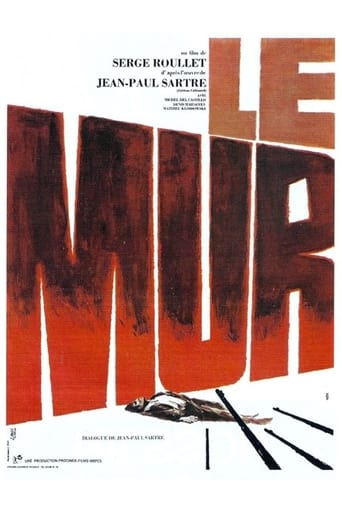
6.4Prisoners await execution by firing squad when they are captured during the Spanish Civil War in this drama taken from the novella by Jean-Paul Sarte. Pablo is a loyalist jailed after he searches for his brother. An Irish mercenary and a Belgian physician are his cellmates. Flashbacks recall their lives before the war as they spend their last moments on Earth waiting for their date with death.
The Wall
1967
 5.9
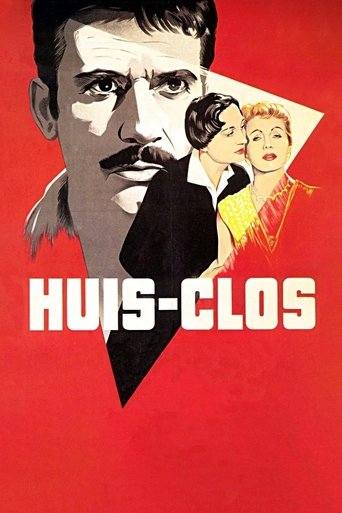
5.9The scene is a tawdry hotel room in Limbo, where several damned souls are gathered. At first, the group fails to comprehend where they are or why they're there. When the horrible truth dawns upon them, they carp and snipe at one another, blaming everyone but themselves for their dismal fate.
No Exit
1954
 6.8
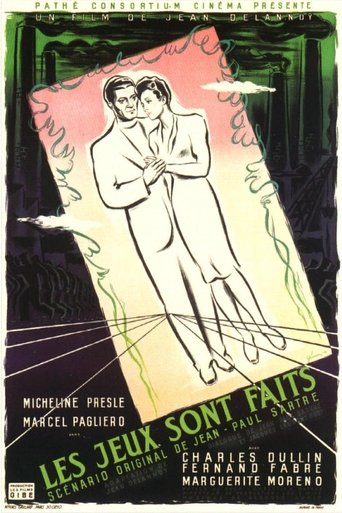
6.8A society heiress and a resistance fighter are tragically killed at the same moment and meet in the afterlife. They are offered a second chance at life if they can prove their love is real or be doomed to roam the earth as ghosts.
The Chips Are Down
1947
Vittorio Gassman brings Dumas's "Kean - Genius and Debauchery," adapted by Sartre, to television. Edmund Kean is a hugely popular and theatrical 19th-century English actor who is, however, addicted to vice and deeply in debt. He competes with the Prince of Wales, his partner in debauchery, for the wife of the Danish ambassador.
Kean - Genio e sregolatezza
1955