
Directing
Jean Dewever
Born — Died
1927-05-12 — 2010-11-22
Place of birth
Lille, Nord, Nord-Pas-de-Calais, France
Known for
Directing
Credits
13 titles
Jean Dewever was a French film director and screenwriter active from the 1950s to the 1970s. He directed films such as Les Honneurs de la guerre (1961), which was entered into the 11th Berlin International Film Festival. Dewever's work often delved into human relationships and societal issues, characterized by their thoughtful storytelling and character development. His contributions to French cinema reflect a commitment to exploring complex themes with sensitivity and depth.
Known for
 6.9
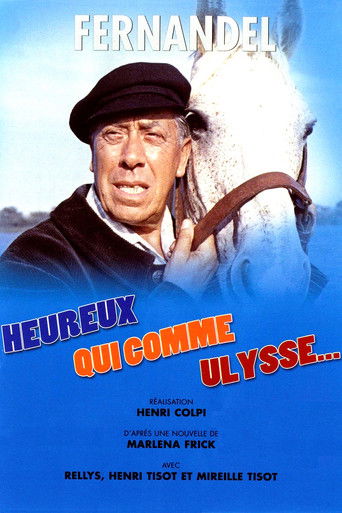
6.9For 25 years now, under the Provence sun, Antonin, a farmhand, has shared his work and everyday life with a horse named Ulysse. What a shock when Pascal, the farmer, tells him he has decided to sell Ulysse to a picador for being too old. Not only will he be separated from his faithful companion, but he is well aware too that the arenas of Arles mean death for Ulysse. Being unable to stand such injustice, Antonin runs away from the farm in the company of Ulysse. Together, they go through the Lubéron, the Baux de Provence, the Alpilles, the Crau and the Vaccarès. Yet, their journey is no pleasure cruise, specially when it comes to crossing National Road 7. After a visit to Marcellin, an old friend of his, Antonin sets off again with Ulysse, this time towards the Rhône River.
Happy He Who Like Ulysses
1970
 6.0
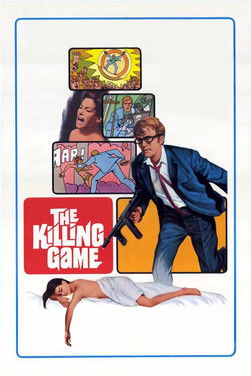
6.0Two cartoonists meet a playboy who lives out the fantasies created in their cartoons. He hires them to create a new comic strip. As they work on the new strip, the playboy begins to live it out. Unfortunately, the new strip deals with murder.
The Killing Game
1967
 6.7
6.7A Paris real estate developer feels compelled to withdraw from his seemingly perfect life into a world of his own. Is the man going insane? By conventional standards, maybe, but it's clear that the life he's fleeing is madder still from his point of view, and since that point of view is unfailingly witty and astute, we even come to accept his delusions as more "real" than reality.
Life Upside Down
1964
No synopsis available yet.
« Allô police » Retour à l'envoyeur
1970
 5.5
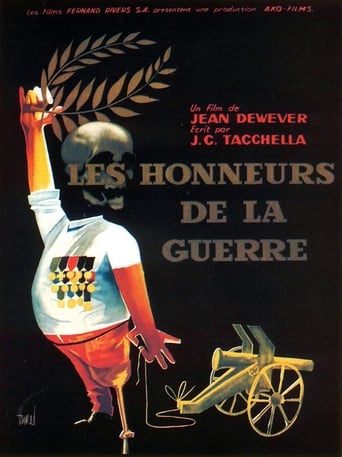
5.5One morning in August 1944, the inhabitants of a French village are celebrating their premature liberation. The festivities are interrupted by the arrival of an exhausted, leaderless German detachment. A few kilometers away, the inhabitants of the village of Muzière negotiate with the Germans and agree to a truce. But the arrival of a Wehrmacht captain, anxious to regain control of the men, puts an end to this fragile peace process. The captain suggested meeting the Americans and surrendering to regular troops rather than civilians. The inhabitants of Muzière, believing the truce to be broken, fire on the Germans and, on this misunderstanding, the guns start talking again.
The Honors of War
1962
 4.5
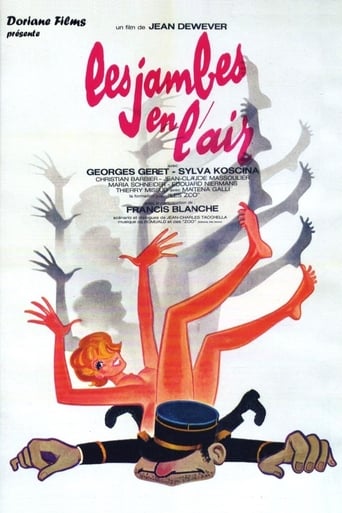
4.5Story of a marginal couple, César and Favouille, who set out to find their youngest daughter, who run away from home.
Les Jambes en l'air
1971
Film credits
1960s · 2 titles
6.0Two cartoonists meet a playboy who lives out the fantasies created in their cartoons. He hires them to create a new comic strip. As they work on the new strip, the playboy begins to live it out. Unfortunately, the new strip deals with murder.
The Killing Game
1967
6.7A Paris real estate developer feels compelled to withdraw from his seemingly perfect life into a world of his own. Is the man going insane? By conventional standards, maybe, but it's clear that the life he's fleeing is madder still from his point of view, and since that point of view is unfailingly witty and astute, we even come to accept his delusions as more "real" than reality.
Life Upside Down
1964
Behind the camera
No synopsis available yet.
« Allô police » Retour à l'envoyeur
1970
5.5One morning in August 1944, the inhabitants of a French village are celebrating their premature liberation. The festivities are interrupted by the arrival of an exhausted, leaderless German detachment. A few kilometers away, the inhabitants of the village of Muzière negotiate with the Germans and agree to a truce. But the arrival of a Wehrmacht captain, anxious to regain control of the men, puts an end to this fragile peace process. The captain suggested meeting the Americans and surrendering to regular troops rather than civilians. The inhabitants of Muzière, believing the truce to be broken, fire on the Germans and, on this misunderstanding, the guns start talking again.
The Honors of War
1962
5.5One morning in August 1944, the inhabitants of a French village are celebrating their premature liberation. The festivities are interrupted by the arrival of an exhausted, leaderless German detachment. A few kilometers away, the inhabitants of the village of Muzière negotiate with the Germans and agree to a truce. But the arrival of a Wehrmacht captain, anxious to regain control of the men, puts an end to this fragile peace process. The captain suggested meeting the Americans and surrendering to regular troops rather than civilians. The inhabitants of Muzière, believing the truce to be broken, fire on the Germans and, on this misunderstanding, the guns start talking again.
The Honors of War
1962
4.5Story of a marginal couple, César and Favouille, who set out to find their youngest daughter, who run away from home.
Les Jambes en l'air
1971
4.5Story of a marginal couple, César and Favouille, who set out to find their youngest daughter, who run away from home.
Les Jambes en l'air
1971
 6.5
6.5One year after Abbé Pierre's famous call for help on 1-2-1954 exposing the appalling conditions in which millions of French people barely survived, nothing had changed much. In 1955, the housing crisis was rife and entire families were forced to live cramped in dilapidated buildings or in slums. Jean Dewever, outraged like Abbé Pierre by such an infamous situation, took his camera and made this militant short in the hope of alerting not only the average viewer but also the competent authorities.
La Crise du logement
1955
6.5One year after Abbé Pierre's famous call for help on 1-2-1954 exposing the appalling conditions in which millions of French people barely survived, nothing had changed much. In 1955, the housing crisis was rife and entire families were forced to live cramped in dilapidated buildings or in slums. Jean Dewever, outraged like Abbé Pierre by such an infamous situation, took his camera and made this militant short in the hope of alerting not only the average viewer but also the competent authorities.
La Crise du logement
1955
No synopsis available yet.
Ulysse est revenu
1978
No synopsis available yet.
Ulysse est revenu
1978
No synopsis available yet.
George Dandin
1973