
Directing
Frank Ormiston-Smith
Known for
Directing
Credits
15 titles
Known for
 10.0
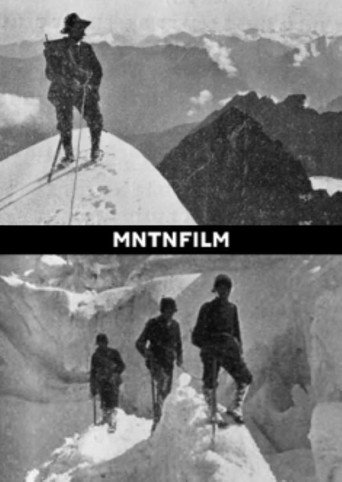
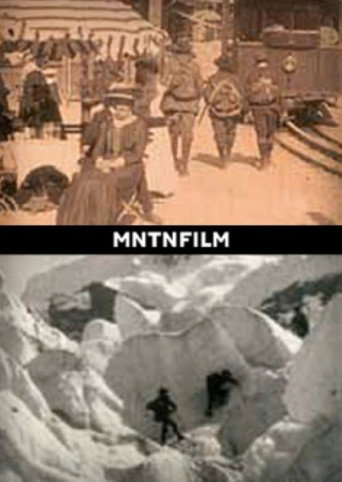
On September 28th, 1903, the Urban Mountaineering Expedition, headed by Frank Ormiston-Smith, left Zermatt to attempt the conquest of the Matterhorn. On the 29th, the conquest was completed by the filming of the panorama from the actual summit of the mountain. The film consists of 20 scenes and illustrates the whole ascent from Zermatt through the Hornli Ridge. A copy of the film was found in Zermatt in 1953 and was was erroneously attributed to Frederick Burlingham and dated 1901. Since then, the film has been widely publicized as the first mountain film under the title of 'Cervin 1901', but this is incorrect. Ormiston previously had made 'Alpine series' (1901), 'The ascent of Mont Blanc' (1902), 'Climbing the Great Schreckhorn' (1902) and 'Ascent of the Jungfrau' (1903). The pictures and descriptions of the Charles Urban Trading 1903 film catalogue show without any doubt that 'Ascent of the Matterhorn' and 'Cervin 1901' are the same film.
Cervino 1901
1903
Alpine Series is a collection of scenes taken by Frank Ormiston-Smith in 1901 in the Alps. They were screened in different selections by the Warwich Trading Company. These scenes are, along with the scenes of a roped party in the Mer de Glace of the Lumière Brothers, the first alpine films in the history of cinema. The scenes include: Eagleswing Panorama of the Wetterhorn, Panorama of the snow peaks of the Jungfrau, Eagleswing panorama of the Mer de Glace, Crossing the Mer de Glace, Ascent of the Jungfrau, Ascending the Guggi Glacier, Climbing the Wetterhorn, Climbing the Jungfrau.
Alpine Series
1901
Distributed under the title of ‘Switzerland’ or ‘Playground of Europe’, the film consists of a collection of scenes filmed in the Alps by Frank Ormiston-Smith between 1903 and 1905. The scenes belong to concrete moments in different ascents and treks in the Alps and are presented together without the intention to narrate a concrete ascent. These are some of the scenes: Snow avalanche on the Shreckhorn, Difficult ascent of a Rock Peak, A close call - Dangerous climbing, Descent of steep snow drift, Crossing a dangerous snow bridge, Fusillade of rocks on the Alps, Descending a steep rock-faced mountain side, Capt. Spelterini's balloon trip across the Jungfrau, Surmounting the summit of the Finsteraar-joch.
Switzerland Series
1904
 NR
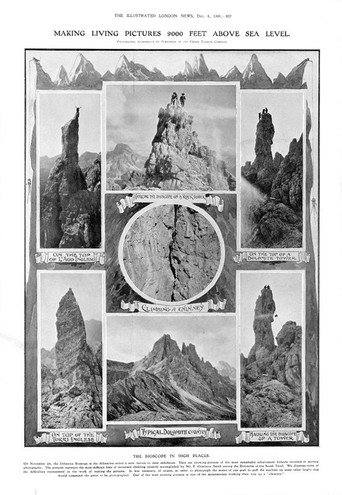
Frank Ormiston-Smith, the pioneer mountaineering photograher and filmmaker, filmed in 1906 the ascent to several towers in the Cinque Torri area in the Dolomites, acomppanied by Bortolo Barbaria, Baldessare Verzi and Damiano Dibona, three well-known Ampezzo mountain guides. Among others, the team ascended Torri Inglese, and placed the camera on top of some of the towers by pulling it with a rope. The film, produced by the Urban Trading Company, was presented at the Alhambra Theater in London in November 1906. Ormiston-Smith is considered the father of mountain cinema. In 1902 he filmed the first major mountain film shown widely in cinemas: "The Ascent of Mont Blanc". The success of his films encouraged the production of alpine films in which mountaineering feats were shown, and inspired other pioneer filmmakers.
Ascent and Descent of the Dolomite Towers
1906
 NR
The ascent of the Wetterhorn by Frank Ormiston-Smith accompanied by the guide Christian Bergener, Rev. H. J. Heard, Mr. E Burchell-Rodway from the Alpine Club, and the hotelier Herr Fritz Boss from Grindelwald. The film consists of 24 scenes including a final scene of the team on the summit. The film starts with the climbers and the guide leaving the Bear Hotel, at Grindelwald. Later the party arrives at the Wetterhorn Hotel, at the mountain base. They climb the Milchbach Ladders to gain the top of the glacier, cross the Seebach Platte and the upper glacier, and pass the night at the Mountain Inn. Next morning they overcome the Great Coulvu and gain the arete to finally reach the summit. Sections of the film are tinted to give the effects of dawn, sunset and rose-glow actually experienced during the climb.
The Dangers of the Alps
1905
Following the successful ascent of Mont Blanc, the Warwick Trading Company expedition led by Frank Ormiston-Smith went on to film the ascent of the Great Schreckhorn accompanied by three guides and porters. Screened in different selections of scenes, the film was presented as ‘the most perilous rock climbing that is within the power of man’. The film also included scenes of the ascent and descent of the Aiguilles des Grandes Charmoz. ‘The ascent of Mont Blanc’ and ‘Climbing the Great Shcreckhorn’ are the two first major mountain films shown widely in cinemas.
Climbing the Great Schreckhorn
1902
Film credits
1900s · 4 titles
10.0On September 28th, 1903, the Urban Mountaineering Expedition, headed by Frank Ormiston-Smith, left Zermatt to attempt the conquest of the Matterhorn. On the 29th, the conquest was completed by the filming of the panorama from the actual summit of the mountain. The film consists of 20 scenes and illustrates the whole ascent from Zermatt through the Hornli Ridge. A copy of the film was found in Zermatt in 1953 and was was erroneously attributed to Frederick Burlingham and dated 1901. Since then, the film has been widely publicized as the first mountain film under the title of 'Cervin 1901', but this is incorrect. Ormiston previously had made 'Alpine series' (1901), 'The ascent of Mont Blanc' (1902), 'Climbing the Great Schreckhorn' (1902) and 'Ascent of the Jungfrau' (1903). The pictures and descriptions of the Charles Urban Trading 1903 film catalogue show without any doubt that 'Ascent of the Matterhorn' and 'Cervin 1901' are the same film.
Cervino 1901
1903
Following the successful ascent of Mont Blanc, the Warwick Trading Company expedition led by Frank Ormiston-Smith went on to film the ascent of the Great Schreckhorn accompanied by three guides and porters. Screened in different selections of scenes, the film was presented as ‘the most perilous rock climbing that is within the power of man’. The film also included scenes of the ascent and descent of the Aiguilles des Grandes Charmoz. ‘The ascent of Mont Blanc’ and ‘Climbing the Great Shcreckhorn’ are the two first major mountain films shown widely in cinemas.
Climbing the Great Schreckhorn
1902
 NR
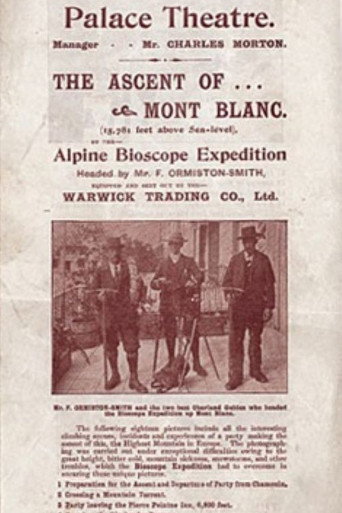
A pioneering mountaineering film made by Frank Ormiston-Smith for the Warwick Trading Company in 1902. Ormiston-Smith himself led and filmed an expedition of seven men up to the top of Mont Blanc. The party left Chamonix the 23rd of september up to Pierre-Pointue and Grands Mulets and reached the top the 25th. The film consists of 18 scenes including a final scene of the team on the summit. This is the first major mountain film shown widely in cinemas. The mountaineering filming is rudimentary by later standards, but in 1902 it gave audiences moving pictures of places, and altitudes, which they could never expect to witness otherwise.
The Ascent of Mont Blanc
1902
 NR
The ascent of the Jungfrau by the Urban Alpine Expedition, headed by Frank Ormiston-Smith, the pioneer mountaineering photograher and filmmaker, on september 24th, 1903. The film consists of 15 scenes and illustrates the whole ascent from Grindelwald through the Fieschier Glacier and the Rothal Sattel and culminates with a panorama from the summit. It was produced by the Charles Urban Trading Co., one year after the huge success of 'The ascent of Mont Blanc'. Charles Urban left the Warwick Trading Company in 1903 to form his own film business, and took with him many of the film-makers who had worked for Warwick, including Ormiston-Smith, who went on to make many more mountaineering films.
Ascent of the Jungfrau
1903
Behind the camera
10.0On September 28th, 1903, the Urban Mountaineering Expedition, headed by Frank Ormiston-Smith, left Zermatt to attempt the conquest of the Matterhorn. On the 29th, the conquest was completed by the filming of the panorama from the actual summit of the mountain. The film consists of 20 scenes and illustrates the whole ascent from Zermatt through the Hornli Ridge. A copy of the film was found in Zermatt in 1953 and was was erroneously attributed to Frederick Burlingham and dated 1901. Since then, the film has been widely publicized as the first mountain film under the title of 'Cervin 1901', but this is incorrect. Ormiston previously had made 'Alpine series' (1901), 'The ascent of Mont Blanc' (1902), 'Climbing the Great Schreckhorn' (1902) and 'Ascent of the Jungfrau' (1903). The pictures and descriptions of the Charles Urban Trading 1903 film catalogue show without any doubt that 'Ascent of the Matterhorn' and 'Cervin 1901' are the same film.
Cervino 1901
1903
Alpine Series is a collection of scenes taken by Frank Ormiston-Smith in 1901 in the Alps. They were screened in different selections by the Warwich Trading Company. These scenes are, along with the scenes of a roped party in the Mer de Glace of the Lumière Brothers, the first alpine films in the history of cinema. The scenes include: Eagleswing Panorama of the Wetterhorn, Panorama of the snow peaks of the Jungfrau, Eagleswing panorama of the Mer de Glace, Crossing the Mer de Glace, Ascent of the Jungfrau, Ascending the Guggi Glacier, Climbing the Wetterhorn, Climbing the Jungfrau.
Alpine Series
1901
Distributed under the title of ‘Switzerland’ or ‘Playground of Europe’, the film consists of a collection of scenes filmed in the Alps by Frank Ormiston-Smith between 1903 and 1905. The scenes belong to concrete moments in different ascents and treks in the Alps and are presented together without the intention to narrate a concrete ascent. These are some of the scenes: Snow avalanche on the Shreckhorn, Difficult ascent of a Rock Peak, A close call - Dangerous climbing, Descent of steep snow drift, Crossing a dangerous snow bridge, Fusillade of rocks on the Alps, Descending a steep rock-faced mountain side, Capt. Spelterini's balloon trip across the Jungfrau, Surmounting the summit of the Finsteraar-joch.
Switzerland Series
1904
NRFrank Ormiston-Smith, the pioneer mountaineering photograher and filmmaker, filmed in 1906 the ascent to several towers in the Cinque Torri area in the Dolomites, acomppanied by Bortolo Barbaria, Baldessare Verzi and Damiano Dibona, three well-known Ampezzo mountain guides. Among others, the team ascended Torri Inglese, and placed the camera on top of some of the towers by pulling it with a rope. The film, produced by the Urban Trading Company, was presented at the Alhambra Theater in London in November 1906. Ormiston-Smith is considered the father of mountain cinema. In 1902 he filmed the first major mountain film shown widely in cinemas: "The Ascent of Mont Blanc". The success of his films encouraged the production of alpine films in which mountaineering feats were shown, and inspired other pioneer filmmakers.
Ascent and Descent of the Dolomite Towers
1906
NRThe ascent of the Wetterhorn by Frank Ormiston-Smith accompanied by the guide Christian Bergener, Rev. H. J. Heard, Mr. E Burchell-Rodway from the Alpine Club, and the hotelier Herr Fritz Boss from Grindelwald. The film consists of 24 scenes including a final scene of the team on the summit. The film starts with the climbers and the guide leaving the Bear Hotel, at Grindelwald. Later the party arrives at the Wetterhorn Hotel, at the mountain base. They climb the Milchbach Ladders to gain the top of the glacier, cross the Seebach Platte and the upper glacier, and pass the night at the Mountain Inn. Next morning they overcome the Great Coulvu and gain the arete to finally reach the summit. Sections of the film are tinted to give the effects of dawn, sunset and rose-glow actually experienced during the climb.
The Dangers of the Alps
1905
Following the successful ascent of Mont Blanc, the Warwick Trading Company expedition led by Frank Ormiston-Smith went on to film the ascent of the Great Schreckhorn accompanied by three guides and porters. Screened in different selections of scenes, the film was presented as ‘the most perilous rock climbing that is within the power of man’. The film also included scenes of the ascent and descent of the Aiguilles des Grandes Charmoz. ‘The ascent of Mont Blanc’ and ‘Climbing the Great Shcreckhorn’ are the two first major mountain films shown widely in cinemas.
Climbing the Great Schreckhorn
1902
NRA pioneering mountaineering film made by Frank Ormiston-Smith for the Warwick Trading Company in 1902. Ormiston-Smith himself led and filmed an expedition of seven men up to the top of Mont Blanc. The party left Chamonix the 23rd of september up to Pierre-Pointue and Grands Mulets and reached the top the 25th. The film consists of 18 scenes including a final scene of the team on the summit. This is the first major mountain film shown widely in cinemas. The mountaineering filming is rudimentary by later standards, but in 1902 it gave audiences moving pictures of places, and altitudes, which they could never expect to witness otherwise.
The Ascent of Mont Blanc
1902
 NR
A collection of early British Films from the Filmoteca de Catalunya. Films include: Brighton Seagoing Electric Car (1897), The Inexhaustible Cab (1899), From Dalmeny to Dunfermline, Scotland via the Firth of Forth Bridge (series) (1899), Review of Lord George Sanger's Circus by the Queen (series) (1899), Sanger Circus Passing Through Inverness (1900), The “Poly” Paper Chase (1900), The Wintry Alps (series) (1903), An Affair of Honor (1904), Perzina's Troupe of Educated Monkeys (1904), Elephants Bathing in Ceylon River (1904), [Drill of the Reedham Orphans] (c.1904–1912), Venice and the Grand Canal (1901?/1904?), Edge's Motor Boat. The Napier Minor (1904), Fixing the Swing (1904), Eccentric Burglary (1905), Her Morning Dip (1906), Automobile Fête Before King Alfonso and Princess Ena (1906), The Royal Spanish Wedding (series) (1906), Lace Making (1908), The Robber's Ruse, or Foiled by Fido (1909).
Early British Films from the Filmoteca de Catalunya 1897-1909
2023
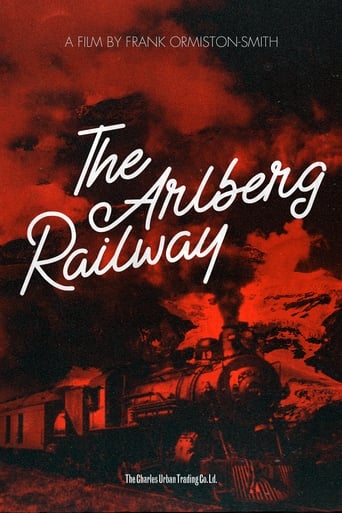 10.0
1906, produced by Charles Urban, cinematography by Frank Ormiston-Smith.
The Arlberg Railway
1906
NRThe ascent of the Jungfrau by the Urban Alpine Expedition, headed by Frank Ormiston-Smith, the pioneer mountaineering photograher and filmmaker, on september 24th, 1903. The film consists of 15 scenes and illustrates the whole ascent from Grindelwald through the Fieschier Glacier and the Rothal Sattel and culminates with a panorama from the summit. It was produced by the Charles Urban Trading Co., one year after the huge success of 'The ascent of Mont Blanc'. Charles Urban left the Warwick Trading Company in 1903 to form his own film business, and took with him many of the film-makers who had worked for Warwick, including Ormiston-Smith, who went on to make many more mountaineering films.
Ascent of the Jungfrau
1903
 NR
Scenes from a series filmed for Charles Urban by mountain expert Frank Ormiston-Smith, including The Battle of the Snow, Ski Jumping in the Alps, and Outing of the Ski Club.
The Wintry Alps
1903