

Camera
Tahar Hannache
Born 1898-11-26 · Constantine, Algérie
Tahar Hannache (in Arabic: طاهر حناش), whose real name is Tahar Ben Kouider Belhannache, is an Algerian actor, director, director of photography and screenwriter, born on November 26, 1898 in Constantine. He is considered the pioneer of Algerian cinema. Tahar Hannache, at the age of ten or eleven, discovered the films of Charlie Chaplin. Fascinated, his passion for cinema grew and he became a regular at the ciné-bus, and at the new cinema in Constantine, the Nunez, where he dissected and analyzed the films that he had often seen several times. Later, his father went bankrupt and died shortly after. Deeply affected by this loss, Tahar Hannache, who was called up for French military service, was demobilized in 1920 in France. One day, he visited a legendary Parisian film studio, a director who was looking for Arab faces, noticed him and hired him. Then, Tahar seized all the opportunities that came his way, exercising several cinematographic professions, from director of photography to assistant director, cameraman, and played important roles as an actor. In 1938, Tahar Hannache created his own production company called Taha Film and signed his first personal production Aux Portes du Sahara. At the end of the Second World War, his reputation as a talented director of photography grew, but the German occupation of France slowed down film production. He was recalled to the Free French Forces and the Allied Army in Casablanca from 1942 to 1945. During this period, he worked in the audiovisual division of the army. He filmed many military parades, dozens of important news reports and documented historical events. After the end of the war, in 1942, he was issued a filmmaker's card under the number 7951 and became the first Arab and African to be granted a professional filmmaker's card. In 1952, Tahar Hannache directed Les Plongeurs Du Désert with the poet and actor Himoud Brahimi, which would be considered the first entirely Algerian production. The film was destroyed, and the poet Jean Sénac would say: "Do we know that the film Les Plongeurs Du Désert was boycotted under the pretext that it was entirely financed, directed and played by "natives"". In 1956, he married at the age of 58, and had four daughters. The same year, French Radio and Television was created in Algeria. Tahar Hannache was integrated, he was in charge of supervising the Algerian team. He opened the door to many important names of the future independent Algerian cinema, and sent some of his team abroad to study in cinema institutes. After independence in 1962, he contributed with others to ensure the continuation of television broadcasting during the transition from RTF to the brand new Algerian Radio and Television, and to ensure the continuity of programs that will never be interrupted. At that time, he was responsible for audiovisual production, a decisive period for the construction of Algerian cinema. Tahar Hannache, who worked and participated in more than 80 films during his life, died on August 1, 1972, at the hospital of Médéa. He rests in the El Alia cemetery in Algiers.
Acting credits
 8.5
8.5Lieutenant Varnière, responsible for discovering the cause of the death of two officers in Algeria, unmasks the assassin in the person of a Russian who lives with three women. He falls in love with one of them and runs away with her while the Russian is killed by a devoted servant.
The Sandman
1932
 6.0
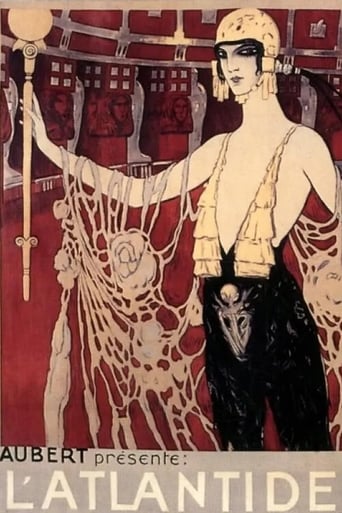
6.0Two men, lost in the desert, meet Queen Antinea, ruler of Atlantis.
L'Atlantide
1921
 8.5
8.5In 1842, during the conquest of Algeria Sidonie Panache disguised as a Soave runs away with her lover who is doing his military service there.
Sidonie Panache
1934
 9.5
9.5In the Sahara, Algeria, the leader of the Tuaregs, Aftan, saves a girl from the hands of a caravan of pillars. Madeleine falls in love with her savior and their marriage is decided. But Aftan understands that he will never be assimilated with Europeans, and he goes back to find the beautiful poet Dassine whom he had loved before.
Southern Cross
1932
Behind the camera
 10.0
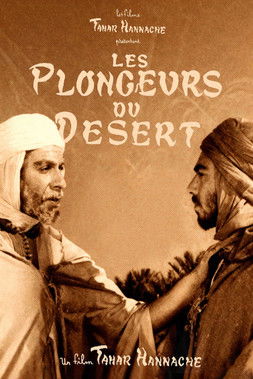
10.0Les Plongeurs Du Désert, directed by Tahar Hannache in 1952, is considered the first entirely Algerian fiction film. It tells the story of the inhabitants of an oasis whose well has dried up. The village elder, Sheikh Messaoud, calls upon the renowned desert divers, artisans specializing in clearing sand- and silt-filled wells, to restore access to the vital water for the community. After their intervention, the water begins to flow again, bringing relief to the oasis and its inhabitants. The film depicts the contrast between the traditional techniques of the divers, embodied by Sheikh Ali and his son Mansour, and the arrival of modernity, represented by the machine that ultimately replaces their craft. This story symbolizes the marginalization of local knowledge in the face of technological progress and the social injustice of the colonial era.
The Desert Divers
1952
10.0Les Plongeurs Du Désert, directed by Tahar Hannache in 1952, is considered the first entirely Algerian fiction film. It tells the story of the inhabitants of an oasis whose well has dried up. The village elder, Sheikh Messaoud, calls upon the renowned desert divers, artisans specializing in clearing sand- and silt-filled wells, to restore access to the vital water for the community. After their intervention, the water begins to flow again, bringing relief to the oasis and its inhabitants. The film depicts the contrast between the traditional techniques of the divers, embodied by Sheikh Ali and his son Mansour, and the arrival of modernity, represented by the machine that ultimately replaces their craft. This story symbolizes the marginalization of local knowledge in the face of technological progress and the social injustice of the colonial era.
The Desert Divers
1952
10.0Les Plongeurs Du Désert, directed by Tahar Hannache in 1952, is considered the first entirely Algerian fiction film. It tells the story of the inhabitants of an oasis whose well has dried up. The village elder, Sheikh Messaoud, calls upon the renowned desert divers, artisans specializing in clearing sand- and silt-filled wells, to restore access to the vital water for the community. After their intervention, the water begins to flow again, bringing relief to the oasis and its inhabitants. The film depicts the contrast between the traditional techniques of the divers, embodied by Sheikh Ali and his son Mansour, and the arrival of modernity, represented by the machine that ultimately replaces their craft. This story symbolizes the marginalization of local knowledge in the face of technological progress and the social injustice of the colonial era.
The Desert Divers
1952