
Known for
 7.0
7.0A monthly series of highly personal documentary films in which individuals are given a platform to discuss issues close to their heart.
One Pair of Eyes
1967
 5.9
5.9Mr. Topaze is an unassuming school teacher in an unassuming small French town, who is honest to a fault. He is fired when he refuses to give a passing grade to a bad student, the grandson of a wealthy baroness. Castel Benac, a government official who runs a crooked financial business on the side, is persuaded by his mistress, Suzy, a musical comedy actress, to hire Mr. Topaze as the front man for his business. Gradually, Topaze becomes a rapacious financier who sacrifices his honesty for success and, in a final stroke of business bravado, fires Benac and acquires Suzy in the deal. An old friend and colleague, Tamise questions him and tells Topaze that what he now says and practices indicates there are no more honest men.
Mr. Topaze
1961
 NR
NRIn the first part, The Compartment, an insane man boards a quiet railway coach and starts to annoy a patient man trying to read a paper with incessant small talk in an increasingly menacing manner until he finally pulls out a gun and screaming class hatred bile, humiliates the man until his stop is reached. In part two, Playmates, he breaks into a lonely house and proceeds to terrorise a spinster woman who lives there.
Double Bill
1969
 5.0
5.0Alf and his family have been moved from their East End home into a high-rise council estate. Alf is not only having trouble coping with his new 'home', but also with the long commute to work, the long walk to the corner pub, his long-suffering wife Else, rebellious daughter Rita, and her philandering, constantly unemployed husband Mike.
The Alf Garnett Saga
1972
A woman regrets inviting a salesman into her home. He's not selling any goods, just an unusual service.
The Salesman
1970
 7.6
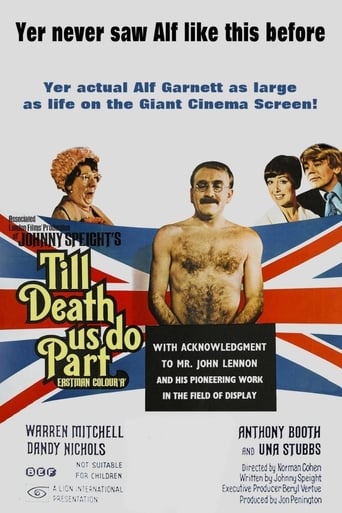
7.6Based on the hit sitcom of the same name; racist, anti-Socialist Tory Alf Garnett and his long-suffering wife Else raise their daughter Rita during the Blitz.
Till Death Us Do Part
1969
Film credits
1990s · 2 titles
 10.0
10.0A two part documentary that details the contribution of black and Asian people to television history from the birth of television in 1936 to 1992. Interviewees include: Pearl Connor, Thomas Baptiste, Lenny Henry, Norman Beaton, Horace Ové, Carmen Munroe, and Stuart Hall.
Black and White in Colour
1992
 10.0
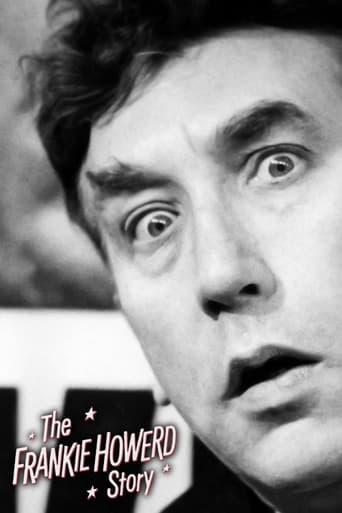
10.0Documentary about the life of Frankie Howerd, with help from friends and colleagues and including highlights from his TV and film career.
Oooh Er Missus! The Frankie Howerd Story
1990
1960s · 3 titles
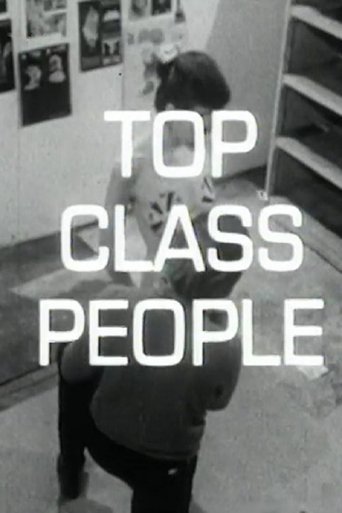 NR
NR1960s working-class stars reveal their thoughts and feelings upon meeting royalty and how accents are now less of a hindrance in establishing credentials.
Top Class People
1967
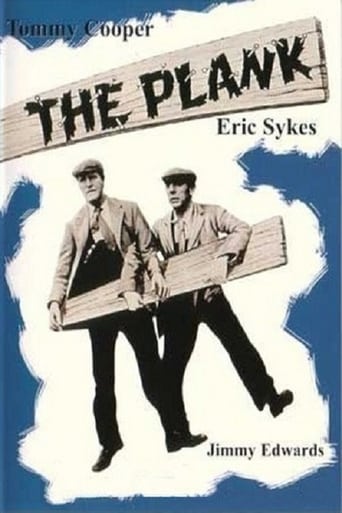 6.2
6.2A slapstick comedy about two workmen delivering planks to a building site. This is done with music and a sort of "wordless dialogue" which consists of a few mumbled sounds to convey the appropriate emotion.
The Plank
1967
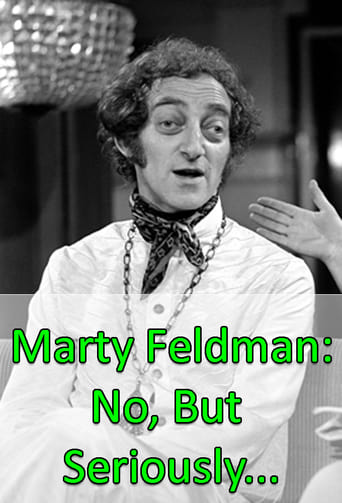 NR
NRMarty Feldman, for many years a successful comedy writer before turning to performing, explores humour through the people who create it, comparing their traditions, motivations and anxieties with his own. Among the people Marty talks to are Peter Sellers, Eric Morecambe, Peter Brough and Archie Andrews, Dudley Moore and Barry Took.
One Pair of Eyes - No, But Seriously
1969
Series credits
Behind the camera
5.9Mr. Topaze is an unassuming school teacher in an unassuming small French town, who is honest to a fault. He is fired when he refuses to give a passing grade to a bad student, the grandson of a wealthy baroness. Castel Benac, a government official who runs a crooked financial business on the side, is persuaded by his mistress, Suzy, a musical comedy actress, to hire Mr. Topaze as the front man for his business. Gradually, Topaze becomes a rapacious financier who sacrifices his honesty for success and, in a final stroke of business bravado, fires Benac and acquires Suzy in the deal. An old friend and colleague, Tamise questions him and tells Topaze that what he now says and practices indicates there are no more honest men.
Mr. Topaze
1961
NRIn the first part, The Compartment, an insane man boards a quiet railway coach and starts to annoy a patient man trying to read a paper with incessant small talk in an increasingly menacing manner until he finally pulls out a gun and screaming class hatred bile, humiliates the man until his stop is reached. In part two, Playmates, he breaks into a lonely house and proceeds to terrorise a spinster woman who lives there.
Double Bill
1969
5.0Alf and his family have been moved from their East End home into a high-rise council estate. Alf is not only having trouble coping with his new 'home', but also with the long commute to work, the long walk to the corner pub, his long-suffering wife Else, rebellious daughter Rita, and her philandering, constantly unemployed husband Mike.
The Alf Garnett Saga
1972
A woman regrets inviting a salesman into her home. He's not selling any goods, just an unusual service.
The Salesman
1970
7.6Based on the hit sitcom of the same name; racist, anti-Socialist Tory Alf Garnett and his long-suffering wife Else raise their daughter Rita during the Blitz.
Till Death Us Do Part
1969
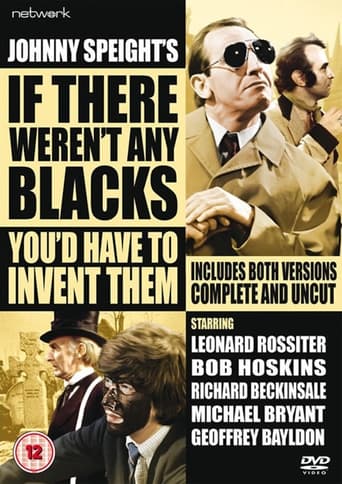 9.0
9.0Set in a cemetery, the film tells the story of a young man whom a blind man wrongly imagines to be black, and explores the nature of human prejudice.
If There Weren't Any Blacks You'd Have to Invent Them
1968
 NR
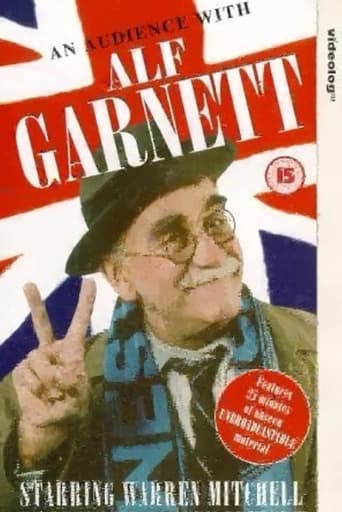
NRIn front of a celebrity audience Johnny Speight's bigoted comic creation Alf Garnett (played by Warren Mitchell) vents his spleen on all manner of sensitive subjects. He makes political correctness take a back seat as he gives his opinions on race relations, football, life, the government, sex, drugs and much more.
An Audience with Alf Garnett
1997
Set in a cemetery, the film tells the story of a young man whom a blind man wrongly imagines to be black, and explores the nature of human prejudice.
If There Weren't Any Blacks You'd Have to Invent Them
1974