

Acting
Antoine Pinay
Born — Died
1891-12-30 — 1994-12-13
Place of birth
Saint-Symphorien-sur-Coise, Rhône, France
Known for
Acting
Credits
3 titles
Antoine Pinay (30 December 1891 – 13 December 1994) was a French conservative politician who served as Prime Minister of France from 1952 to 1953. Antoine Pinay was born on 30 December 1891 in Saint-Symphorien-sur-Coise. He was a child of Claude Pinay (5 July 1852 – 4 March 1919), and his wife, Marie Antoinette Besson (10 October 1861 – 23 November 1936). On 25 April 1917, Pinay married Marguerite Fouletier (3 June 1895 – 3 December 1970) and had two daughters and one son, Geneviève (1918–2017), Odette (1920–2015), and Pierre (1922–1964). As a young man, Pinay fought in World War I and injured his arm so that it was paralyzed for the rest of his life. After the war, he managed a small bu…
Known for
 8.5
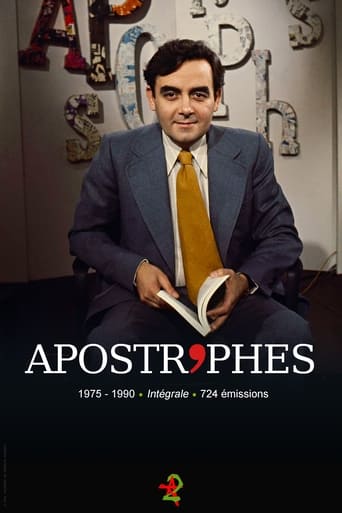
Apostrophes was a live, weekly, literary, prime-time, talk show on French television created and hosted by Bernard Pivot. It ran for fifteen years (724 episodes) from January 10, 1975, to June 22, 1990, and was one of the most watched shows on French television (around 6 million regular viewers). It was broadcast on Friday nights on the channel France 2 (which was called "Antenne 2" from 1975 to 1992). The hourlong show was devoted to books, authors and literature. The format varied between one-on-one interviews with a single author and open discussions between four or five authors.
Apostrophes
1975
 8.0
On October 4, 2018, France celebrated the 60th anniversary of the Fifth Republic. It is a republic born in the throes of the Algerian War and one which—from the day it was founded by General de Gaulle until the presidency of a very Jupiterian Emmanuel Macron—has been assailed as a “Republican monarchy” by partisans of a more assertive parliamentarian state. By revisiting the struggle of those who dared oppose the new regime — only to suffer a crushing defeat on September 28, 1958, when they were barely able to garner 20% of the vote against the constitutional text — this film shines a powerful new light on the origins of the Fifth Republic and its consequences for the next 60 years. It is a constitutional debate that planted the seeds for a complete upheaval of the French political landscape, on the left in particular, and set the country in motion toward what would be called the Union of the Left.
1958: Those Who Said No
2018
 9.0
No synopsis available yet.
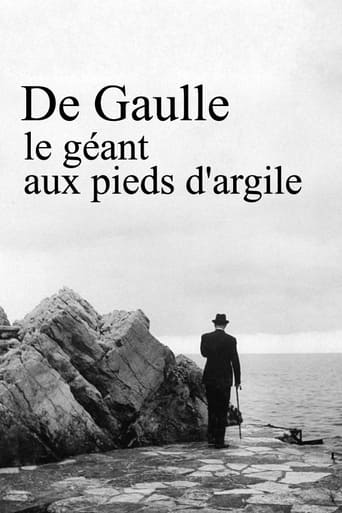
De Gaulle, le géant aux pieds d'argile
2012
Film credits
2010s · 2 titles
8.0On October 4, 2018, France celebrated the 60th anniversary of the Fifth Republic. It is a republic born in the throes of the Algerian War and one which—from the day it was founded by General de Gaulle until the presidency of a very Jupiterian Emmanuel Macron—has been assailed as a “Republican monarchy” by partisans of a more assertive parliamentarian state. By revisiting the struggle of those who dared oppose the new regime — only to suffer a crushing defeat on September 28, 1958, when they were barely able to garner 20% of the vote against the constitutional text — this film shines a powerful new light on the origins of the Fifth Republic and its consequences for the next 60 years. It is a constitutional debate that planted the seeds for a complete upheaval of the French political landscape, on the left in particular, and set the country in motion toward what would be called the Union of the Left.
1958: Those Who Said No
2018
9.0No synopsis available yet.
De Gaulle, le géant aux pieds d'argile
2012