
Acting
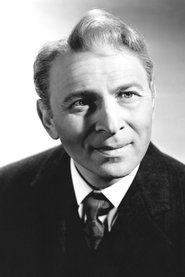
Morris Carnovsky
Born — Died
1897-09-04 — 1992-09-01
Place of birth
Saint Louis, Missouri, USA
Known for
Acting
Credits
32 titles
From Wikipedia, the free encyclopedia Morris Carnovsky (September 5, 1897 – September 1, 1992) was an American stage and film actor born in St. Louis, Missouri. He worked briefly in the Yiddish theatre before attending Washington University in St. Louis. Opting for a mainstream acting career, he appeared in dozens of Broadway shows. Description above from the Wikipedia article Morris Carnovsky, licensed under CC-BY-SA, full list of contributors on Wikipedia.
Known for
 6.6
6.6American Playhouse is an anthology television series periodically broadcast by Public Broadcasting Service in the United States.
American Playhouse
1982
 6.9
6.9War heroes Rip Murdock and Johnny Drake are sent to Washington, D.C, to receive top honors for their service. Johnny, seemingly terrified by the publicity that awaits him, jumps off the train and later turns up dead. Suspecting foul play, Rip begins digging into his pal's past. He encounters cover-ups, threats to his own life and deadly femme fatale Coral Chandler.
Dead Reckoning
1946
 7.3
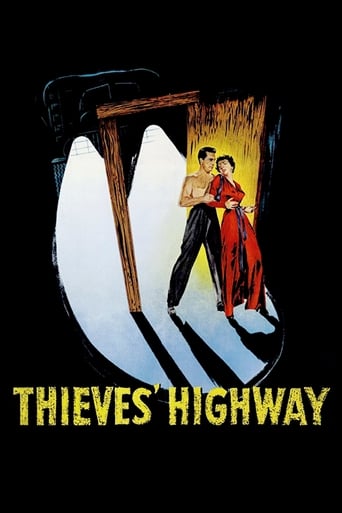
7.3Nick Garcos comes back from his tour of duty in World War II planning to settle down with his girlfriend, Polly Faber. He learns, however, that his father was recently beaten and burglarized by mob-connected trucker Mike Figlia, and Nick resolves to get even. He partners with prostitute Rica, and together they go after Mike, all the while getting pulled further into the local crime underworld.
Thieves' Highway
1949
 6.7
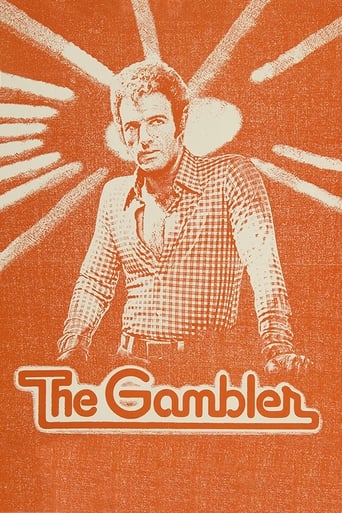
6.7New York City English professor Axel Freed outwardly seems like an upstanding citizen. But privately Freed is in the clutches of a severe gambling addiction that threatens to destroy him.
The Gambler
1974
 7.4
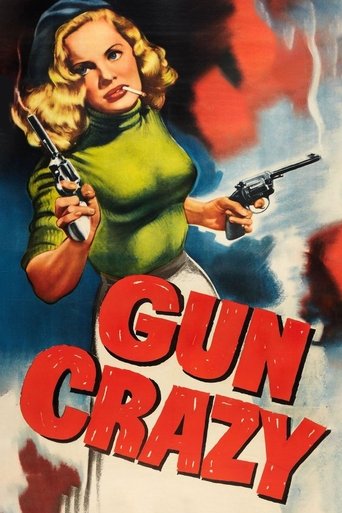
7.4Bart Tare, an ex-Army man who has a lifelong fixation with guns, meets a kindred spirit in sharpshooter Annie Starr and goes to work at a carnival alongside her. After upsetting the carnival owner who lusts after Starr, they both get fired. Soon, at Starr's behest, the couple embarks on a crime spree for cash.
Gun Crazy
1950
 6.3
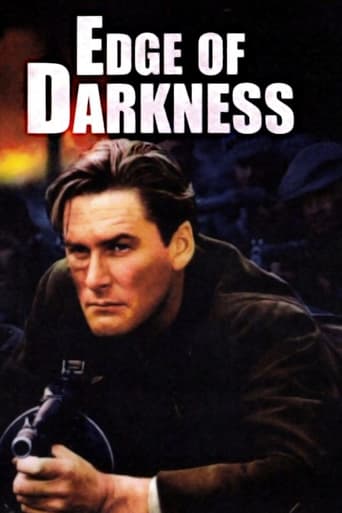
6.3The film pivots around the local Norwegian doctor and his family. The doctor's wife (Ruth Gordon) wants to hold on to the pretence of gracious living and ignore their German occupiers. The doctor, Martin Stensgard (Walter Huston), would also prefer to stay neutral, but is torn. His brother-in-law, the wealthy owner of the local fish cannery, collaborates with the Nazis. The doctor's daughter, Karen (Ann Sheridan), is involved with the resistance and with its leader Gunnar Brogge (Errol Flynn). The doctor's son has just returned to town, having been sent down from the university, and is soon influenced by his Nazi-sympathizer uncle. Captain Koenig (Helmut Dantine), the young German commandant of the occupying garrison, whose fanatic determination to do everything by the book and spoutings about the invincibility of the Reich hides a growing fear of a local uprising.
Edge of Darkness
1943
Film credits
1970s · 3 titles
6.7New York City English professor Axel Freed outwardly seems like an upstanding citizen. But privately Freed is in the clutches of a severe gambling addiction that threatens to destroy him.
The Gambler
1974
 6.0
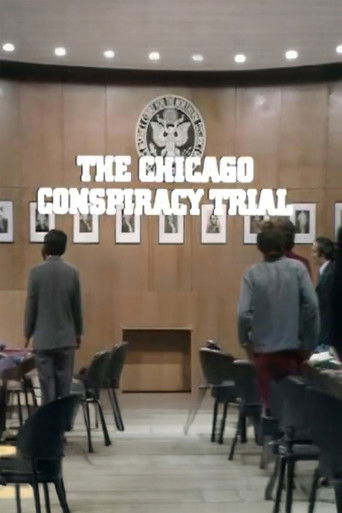
6.0A BBC-produced docudrama reconstructing the trial of the Chicago Eight, using courtroom transcripts as its primary source. Directed by Christopher Burstall, the film dramatizes the prosecution of anti–Vietnam War protesters charged with conspiracy and incitement, presenting the proceedings as a precise trial reenactment grounded in documented testimony rather than fictionalized narrative.
The Chicago Conspiracy Trial
1970
 8.0
8.0A boy and his dog take a wondrous trip under the earth's crust and through the geological eras of time, introducing children to geology in the form of a musical fantasy.
Dig: A Journey Into Earth
1972
1960s · 2 titles
 6.3
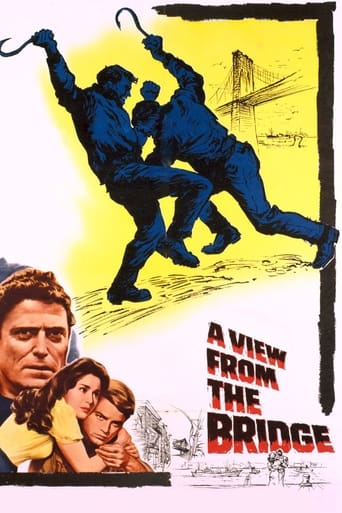
6.3Eddie Carbone, a Brooklyn longshoreman is unhappily married to Beatrice and unconsciously in love with Catherine, the niece that they have raised from childhood. Into his house come two brothers, illegal immigrants, Marco and Rodolpho. Catherine falls in love with Rudolpho; and Eddie, tormented but unable to admit even to himself his quasi-incestuous love, reports the illegal immigrants to the authorities.
A View from the Bridge
1962
 NR
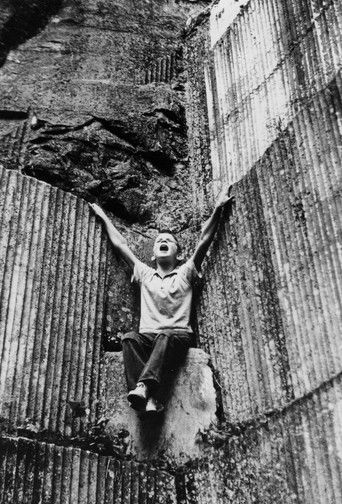
NRIn 1964, National Educational Television decided to make a program as a memorial to President Kennedy. Since he had been assassinated just a year before, it seemed unnecessary to recite the events of his death again. Executive Producer, Brice Howard, discussed with Hurwitz the possibility of making a film for television that, instead of engaging the assassination head on, would deal with the inevitablity of mortality and its trauma. Essay On Death uses a story of a camping trip by a father and son to weave the thoughts about death that intercede in our everyday affairs. The commentary is made up of writings, ancient and modern, on the life and death. Beautifully realized, it succeeds at a task that mainstream television rarely attempts.
An Essay on Death: A Memorial to John F. Kennedy
1964
1950s · 6 titles
7.4Bart Tare, an ex-Army man who has a lifelong fixation with guns, meets a kindred spirit in sharpshooter Annie Starr and goes to work at a carnival alongside her. After upsetting the carnival owner who lusts after Starr, they both get fired. Soon, at Starr's behest, the couple embarks on a crime spree for cash.
Gun Crazy
1950
 6.9
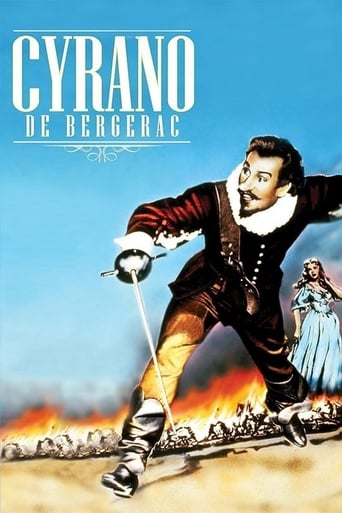
6.9France, 1640. Cyrano, the charismatic swordsman-poet with the absurd nose, hopelessly loves the beauteous Roxane; she, in turn, confesses to Cyrano her love for the handsome but tongue-tied Christian. The chivalrous Cyrano sets up with Christian an innocent deception, with tragic results.
Cyrano de Bergerac
1950
 5.6
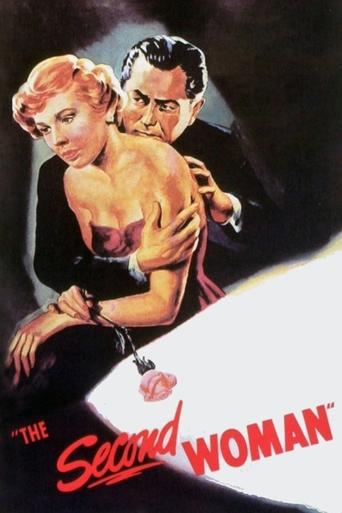
5.6In flashback from a 'Rebecca'-style beginning: Ellen Foster, visiting her aunt on the California coast, meets neighbor Jeff Cohalan and his ultramodern clifftop house. Ellen is strongly attracted to Jeff, who's being plagued by unexplainable accidents, major and minor. Bad luck, persecution...or paranoia? Warned that Jeff could be dangerous, Ellen fears that he's in danger, as the menacing atmosphere darkens.
The Second Woman
1950
 8.0
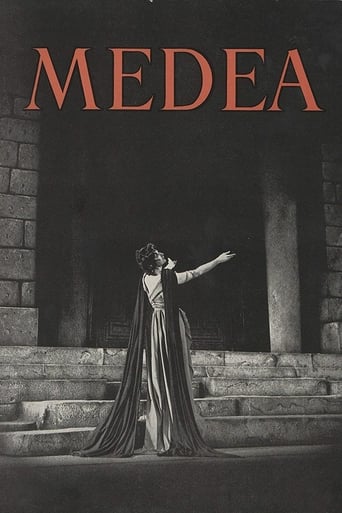
8.0A betrayed queen takes a terrible revenge.
Medea
1959
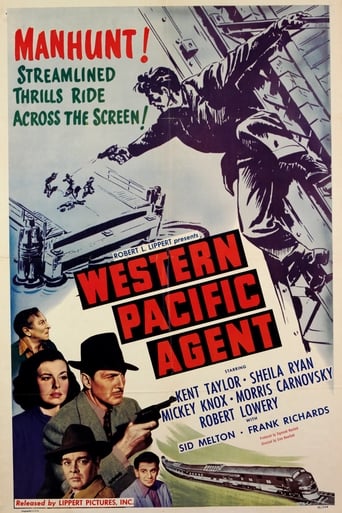 6.2
6.2An agent searches for a psychopath guilty of robbery and murder, and falls in love with a murder victim's sister.
Western Pacific Agent
1950
 9.0
9.0This omnibus release consists of three playlets filmed and aired during television's Golden Age, and starring some of the legends of film and television. The collection originally ran as a two-hour segment on December 14, 1959, on the anthology series The Play of the Week, broadcast locally in New York City via the independent radio station WNTA. Each "tale" in the anthology was adapted from a single tale by the inimitable Sholom Aleichem, regarded by many as the "Yiddish Mark Twain". Included are: "A Tale of Chelm" starring Zero Mostel and Nancy Walker in the story of a bookseller attempting to buy a goat; "Bontche Schweig" about a poor man (Jack Gilford) whose recent arrival in Heaven makes the angels cry; and "The High School" about a Jewish merchant (Morris Carnovsky) persuaded by his wife (Gertrude Berg) to let their son attend a particular high school despite the enforcement of quotas for Jewish students.
The World of Sholom Aleichem
1959
1940s · 14 titles
6.9War heroes Rip Murdock and Johnny Drake are sent to Washington, D.C, to receive top honors for their service. Johnny, seemingly terrified by the publicity that awaits him, jumps off the train and later turns up dead. Suspecting foul play, Rip begins digging into his pal's past. He encounters cover-ups, threats to his own life and deadly femme fatale Coral Chandler.
Dead Reckoning
1946
7.3Nick Garcos comes back from his tour of duty in World War II planning to settle down with his girlfriend, Polly Faber. He learns, however, that his father was recently beaten and burglarized by mob-connected trucker Mike Figlia, and Nick resolves to get even. He partners with prostitute Rica, and together they go after Mike, all the while getting pulled further into the local crime underworld.
Thieves' Highway
1949
6.3The film pivots around the local Norwegian doctor and his family. The doctor's wife (Ruth Gordon) wants to hold on to the pretence of gracious living and ignore their German occupiers. The doctor, Martin Stensgard (Walter Huston), would also prefer to stay neutral, but is torn. His brother-in-law, the wealthy owner of the local fish cannery, collaborates with the Nazis. The doctor's daughter, Karen (Ann Sheridan), is involved with the resistance and with its leader Gunnar Brogge (Errol Flynn). The doctor's son has just returned to town, having been sent down from the university, and is soon influenced by his Nazi-sympathizer uncle. Captain Koenig (Helmut Dantine), the young German commandant of the occupying garrison, whose fanatic determination to do everything by the book and spoutings about the invincibility of the Reich hides a growing fear of a local uprising.
Edge of Darkness
1943
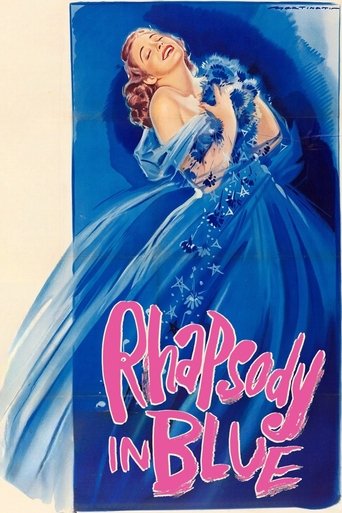 6.6
6.6Fictionalized biography of George Gershwin and his fight to bring serious music to Broadway.
Rhapsody in Blue
1945
 5.5
5.5Two Foreign Legion soldiers, Jean (Dennis O'Keefe) and Andre (Jean Pierre Aumont), accidentally discover the famed lost continent of Atlantis. Bewitched by the sultry, beauty of the Queen of Atlantis (Maria Montez) the two men vie for her affections; little realising that her previous lovers have been embalmed into statues that line the passages of her kingdom.
Siren of Atlantis
1949
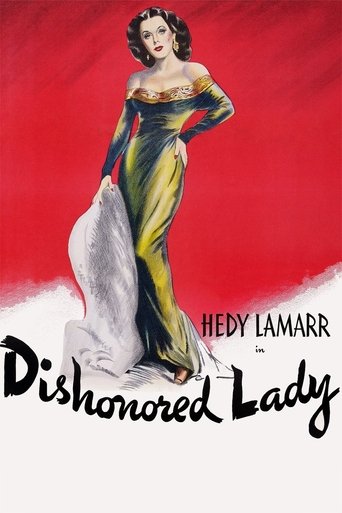 5.8
5.8Art editor Madeleine Damian carries on numerous loveless affairs. After a failed relationship with advertiser Felix Courtland, the increasingly depressed Madeleine attempts suicide. When Jack Garet, her secretary and former lover, tries to blackmail her, Madeleine resigns and seeks a reclusive life. Neighbor David Cousins befriends Madeleine, but soon Courtland and Garet discover her whereabouts and disrupt her new life.
Dishonored Lady
1947
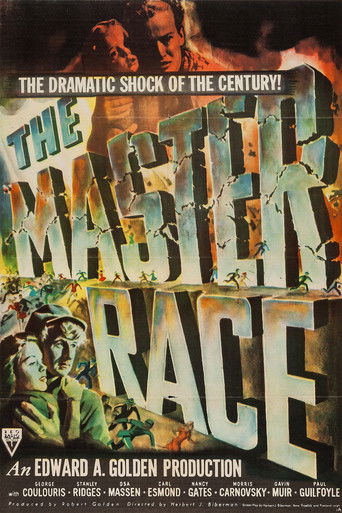 6.5
6.5When allied troops liberate a small battle-scarred Belgium town in 1944 the American and British commanders do all they can to help the war-weary people back on their feet. There are mental and physical wounds to heal, fields to plough, the church to rebuild. But a top Nazi, knowing the War is lost, has infiltrated the town and is fostering dissent and disunity.
The Master Race
1944
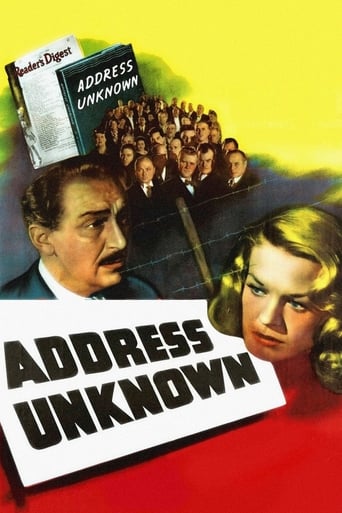 6.4
6.4When a German art dealer living in the US returns to his native country he finds himself attracted to Nazi propaganda.
Address Unknown
1944
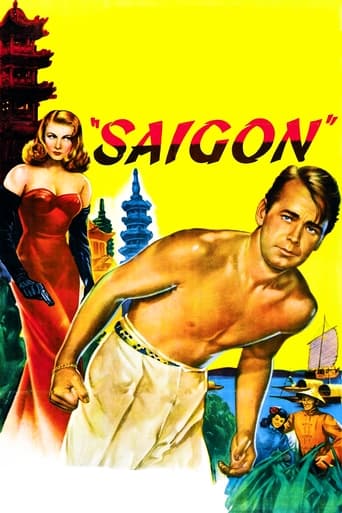 6.0
6.0After World War II Larry learns that his flying buddy Mike will only live a short time despite the efforts of the doctors. He takes on a profitable flying job for profiteers Maris to finance a good time for his buddy. As the plane takes off he shoves Maris' secretary Susan on board. When Mike falls for her, Larry tells her to play along for Mike's sake. She, of course, falls for Larry.
Saigon
1947
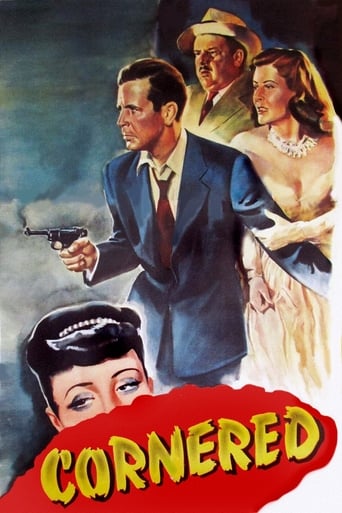 6.2
6.2A World War II veteran hunts down the Nazi collaborators who killed his wife.
Cornered
1945
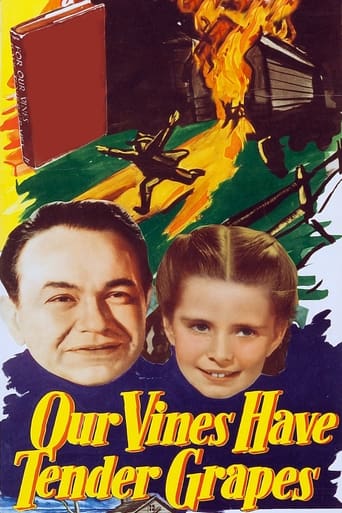 7.1
7.1Welcome to Fuller Junction, Wisconsin, a friendly small town settled by Norwegian farmers. Here we see the exploits of two young cousins, Selma and Arnold, who learn about their world and experience the ups and downs of life as the season pass.
Our Vines Have Tender Grapes
1945
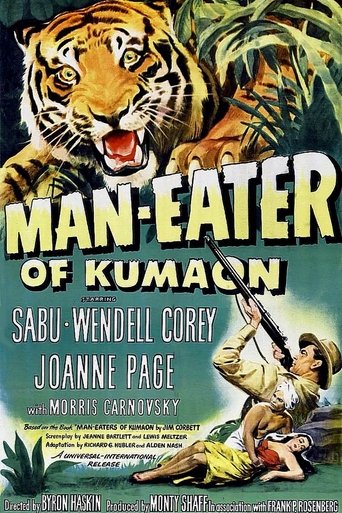 5.6
5.6A doctor hunts a vicious, man-eating tiger that terrorizes a native jungle village. In time the doctor experiences a personal change when he accepts their native customs and beliefs.
Man-Eater of Kumaon
1948
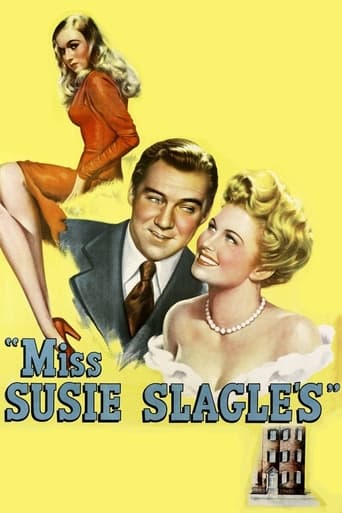 8.5
8.5A student nurse falls in love with a young intern in 1910 Baltimore, but tragedy ensues when he contracts a fatal disease.
Miss Susie Slagle's
1946
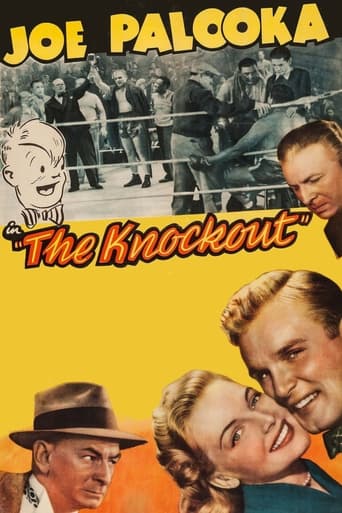 8.0
8.0The third of the Monogram series based on Ham Fisher's "Joe Palooka" comic strip, opens with Knobby Walsh, the manager of Joe Palooka trying to talk his way out of a traffic citation, and the story leading to that point is told in flashback as narrated by Walsh. Heavyweight champion Joe, after knocking out an opponent who later died in his dressing room, feels responsible and threatens to give up boxing. But the dead fighter's fiance thinks he died as the result of a drug that was given to him by a gang of gamblers, who made a rich haul betting on Palooka. Joe, Knobby and the police unite to run down the gamblers, but not before Joe also is nearly murdered by the same means...a poisoned mouthpiece. Elyse Knox is along as Joe's sweetheart Anne Howe, although Anne and Joe had long been married in the comic strip.
Joe Palooka in the Knockout
1947
1930s · 5 titles
 6.2
6.2Joris Ivens’s wartime documentary of China’s resistance to the Japanese invasion, cross-cutting civilian exodus and bombing with the Nationalist state’s mobilization—schools, industry, dispersed war production, foreign relief—and guerrilla fighting. Framing an ancient nation of “400 million,” it contrasts tradition with modernization and closes on the unresolved question of victory.
The 400 Million
1939
 6.7
6.7A fictionalized account of famous French writer Émile Zola and his involvement in the Dreyfus Affair. After struggling to establish himself, Zola wins success documenting the unsavory side of Paris and settles into a comfortable upper-class life. However, his complacency is shaken when Jewish officer Alfred Dreyfus is imprisoned for espionage. Realizing that Dreyfus is an innocent victim of anti-Semitism, Zola boldly pens an exposé, only to be charged with libel and now he must defend himself in a dramatic courtroom testimony.
The Life of Emile Zola
1937
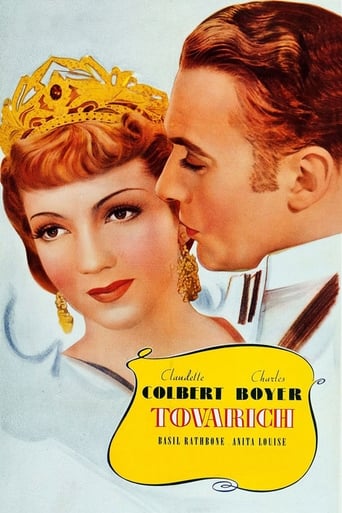 6.4
6.4When upper-class Parisian Charles Dupont and his family hire Tina and Michel as their servants, they have no idea that the domestics are in fact Tatiana, the Grand Duchess Petrovna, and her husband, Mikail, Prince Ouratieff. Recent exiles from the Russian Revolution, Tatiana and Mikail befriend the Dupont family, keeping their true identities a secret -- until one night when Soviet official Gorotchenko arrives for dinner.
Tovarich
1937
 6.0
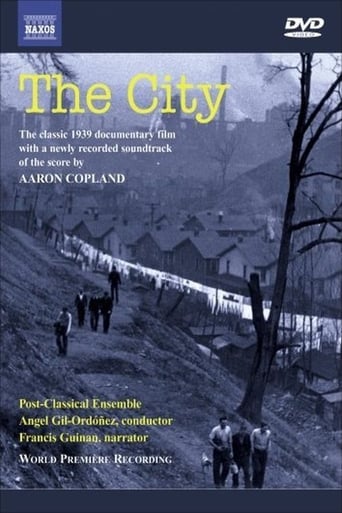
6.0A prescient documentary about city planning, which presents idyllic suburbs and nuclear families as a solution to the chaos, poverty and social decay of industrialized inner cities.
The City
1939
 7.0
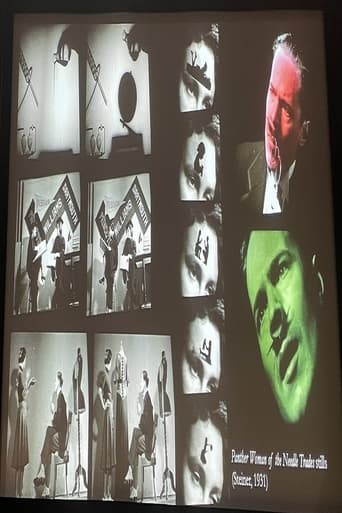
7.0The photographer Ralph Steiner, who had been making abstract avant-garde films in the late 1920s, contributed his own parody of American economic life with PANTHER WOMAN OF THE NEEDLE TRADES, OR THE LOVELY LIFE OF LITTLE LISA (1931). The film, which opens with Jehovah (Morris Carnovsky) creating the world out of a test tube, proceeds to present a short history of the universe before the birth of Elizabeth Hawes (1903), the heroine of the film’s title. It then follows her career from childhood seamstress to Parisian designer of haute couture via a college education at Vassar. Reminiscent of Robert Florey’s THE LIFE AND DEATH OF 9413—A HOLLYWOOD EXTRA (1928) in terms of its art direction and elliptical narrative style, PANTHER WOMAN is a parody of the all-American success story, a young woman’s fantasy of a glamorous career in an age of diminishing possibilities. (via: http://encyclopedia.jrank.org/articles/pages/2902/Avant-Garde-Film.html)
Panther Woman of the Needle Trades, or The Lovely Life of Little Lisa
1931