
Directing
Paul Wong
Born
1954-11-20 (71)
Place of birth
Prince Rupert, British Columbia, Canada
Known for
Directing
Credits
56 titles
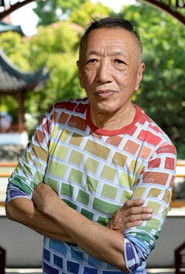
Paul Wong is a media-maestro making art for site-specific spaces and screens of all sizes. He is an award winning artist and curator who is known for pioneering early visual and media art in Canada, founding several artist-run groups, leading public arts policy, and organizing events, festivals, conferences and public interventions since the 1970s. Writing, publishing and teaching have been an important part of his praxis. With a career spanning four decades he has been instrumental proponent to contemporary art.
Known for
 NR
NRThe Hotel featured 12 site-specific performances and art installations created by Wong, which wowed the thousands who attended. This 17-minute video is both document of and art which captures the manic beauty and chaos of Wong’s mise en scène event.
The Hotel
2011
 NR
NRStorm, quite simply is a video recording of a car ride at night in hurricane forces. This is visual art that delivers us from the purely visual back to the world of the physical experience with all our senses awakened. Instead of bringing us the installation photographic image – or the digitally enhanced photographic simulation – these artists direct us from the world of images to the world of things, inviting us to grapple with them at first hand.
Storm
2009
Between Pictures: The Lens of Tamio Wakayama tells the epic journey of the late Japanese Canadian photographer Tamio Wakayama who decides to join the Student Nonviolent Coordinating Committee (SNCC) in the deep south during the 1960’s American civil rights movement. Learning the art of dark room photography along the way, this transformative moment in time allows him to confront his own identity and return ‘home’ to the west coast of Canada to begin a body of photographic work that continues to celebrate, re-present and document the spirit of Japanese Canadians who resided in the former Paueru Gai/Powell Street neighborhoods.
Between Pictures: The Lens of Tamio Wakayama
2024
 NR
NRA couple of bumbling guys on a dark road in Nicaragua spot a snake. They bound after the serpent that has slitered into the tall grass. Using bare hands they seize the Diamondback Rattler.
Diamondback
2008
 NR
NR“Early in the morning on Thursday Feb 26, 1976, a young First Nations man named Eugene Lloyd Pelly was fatally stabbed in an apartment at 4272 Watson Street, east of Main near 28th. After escaping out a window Pelly collapsed in the middle of the road and, as snow fell, succumbed to his injuries. That same morning Jeanette Reinhardt noticed Pelly’s bloody body from her window. Paul Wong, whom she was living with at the time, shot a roll of 35mm film documenting the scene – first from their window, and later at roadside. The quiet violence of the scene captivated Wong, and together with collaborator Kenneth Fletcher, the two embarked on a project to research the crime in full detail." – Allison Collins & Michael Turner, Mainstreeters: Taking Advantage 1972-1982
Murder Research
1977
 NR
NR"Paul Wong’s Mahjong is rooted in the visual and oral sensuality of the game–the saturated colours of green in the game pieces and table top, the characters and names, floral patterns and coloured numbers on the dice and game pieces. It is this rich iconography that allows the participants to invent their own rules and play the game according to the images at hand." - Jordan Strom
Mahjong
2010
Film credits
2010s · 4 titles
NRThe Hotel featured 12 site-specific performances and art installations created by Wong, which wowed the thousands who attended. This 17-minute video is both document of and art which captures the manic beauty and chaos of Wong’s mise en scène event.
The Hotel
2011
 NR
NROoooo Canada is a 30-minute edited version presenting highlights from the five-hour live webcast on February 13,2010. Ooooo Canada was the first in a series of five site-specific projects presented during the 2010 Olympic and Paralympic Winter games in Vancouver. The broadcast was co-hosted by Skeena Reece and Paul Wong. It is an alternative critique of corporate, mass, pop and nationalist culture in the 21st century. Reece and Wong provide illuminating, personal, political, aboriginal, and comedic perspectives.
Ooooo Canada
2010
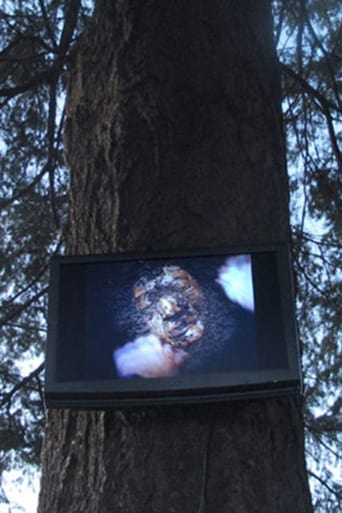 NR
NRExcerpts featuring Paul Wong as the Wiry Man in Season 3, Episode 19 of the X-Files (1996). Part of Paul Wong’s ‘5’, a series of site-specific events and installations commissioned by the City Of Vancouver 2010 Olympic and Paralympic Public Art Programs.
Hell Money
2010
 NR
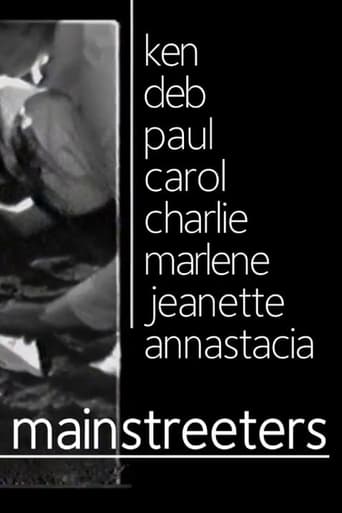
NRMAINSTREETERS: Taking Advantage, 1972-1982 surveys the history of a gang of Vancouver artists who lived and worked together in drama, excess, friendship and grief. From 1972 until roughly 1982, they lived along Main Street, the traditional dividing line between the city's working-class immigrant eastside and its more affluent westside. Core members––Kenneth Fletcher, Deborah Fong, Carol Hackett, Marlene MacGregor, Annastacia McDonald, Charles Rea, Jeanette Reinhardt and Paul Wong––engaged in ambitious collaborative media and performance work that charts the rapidly shifting social terrain of the city.
Mainstreeters: Taking Advantage 1972-1982
2015
2000s · 4 titles
NRA couple of bumbling guys on a dark road in Nicaragua spot a snake. They bound after the serpent that has slitered into the tall grass. Using bare hands they seize the Diamondback Rattler.
Diamondback
2008
 NR
NRSally is a portrait, a love ballad. The artist gazes at beautiful Sally as she relaxes in her bathrobe in the sumptuous suite of the China Club in Beijing. Always behind the camera, Wong is uninhibited as ever as he crafts an intimate portrait. Recorded in Hong Kong and Beijing.
Sally
2008
 NR
NRCrack induced euphoria amplifies a sexually charged environment. The cameraman is implicitly involved in the activities of two men in tightie-whities (one black/one white). Described by viewers as both horrific and so full of humanity. This work is not what-it-seems, or is it?
Chelsea Hotel Room 207
2008
 NR
NRThe artist records himself at home proudly indulging in the happiness of a drug (heroin and cocaine) inspired perfect day. The music of Lou Reed: Heroin and Perfect Day. Recorded on Sunday – edited on Monday. Be Happy.
Perfect Day
2007
1980s · 2 titles
 NR
NRLuc Bourdon, Marc Paradis and Simon B. Robert are curators for a selection of Canadian video to be presented within the context of the 13th Montréal International Festival of New Cinema and Video. This tape relates their experiences and research which occurs during their journey across Canada. This document is less a documentation of the trip than a logical suite to the questions raised in a previous work, Scheme vidéo. Focusing on the displacement of the three curators, the tape reflects their perceptions through the random capture of images. With Paul Wong, Grant Poier, Nida Home Doherty, Jerry Kissel, John Greyson and Collin Campbell.
Say Cheese for a Trans-Canadian Look
1985
![Confused [The Videotape] poster](https://image.tmdb.org/t/p/w342/9dH8kmIh9sdFieX0f8pZtnCk574.jpg) NR
NRA visual/aural non-linear narrative. A layering of ideas, facts, opinions, prejudices, fears, and styles. The story is based upon the innuendoes and interrelationships of four main characters – Gary, Gina, Jeanette and Paul. Distinct video forms are used to build the narrative and to handle the complex range of information and technical styles. The video’s intent is to develop a broader understanding and tolerance by its viewers towards a new sexual attitude.
Confused [The Videotape]
1984
1970s · 5 titles
 NR
NRA two-channel installation from the Modern Television Loop series. Rock Garden shows two continuous shots of stone piles. On one monitor we see a close-up of hands grasping stones off the pile and tossing them off until the pile dwindles. The second monitor is a long shot of tossing stones to yet another pile.
Rock Garden
1976
 NR
NROn the occasion of his 21st birthday, Paul Wong walks southwest from his mother’s house at St. Catherines St. to the Quebec St. home of Kenneth Fletcher. Most remarkable about this video is not its careful camera work (shot entirely from a moving vehicle), but the driving that allowed for it – a feat that brings to mind the complementary (and collaborative) relationship between the shooter and the driver. On Becoming a Man was also the title of Paul’s 1995 solo exhibition at the National Gallery of Canada.
On Becoming a Man
1975
 NR
NR"The VAG exhibition space was staged with a four walled cube, 8’X 8’ which was padded internally. The four walls and the open ceiling were monitored by video cameras. Wong entered the gallery, climbed a ladder and disappeared into the blue cube. Personally I was very uneasy about the work at this time. Knowing that [Kenneth] Fletcher was a close friend of Wong’s who had only months before committed suicide. I felt perhaps Wong would attempt his own cathartic self-mutilation as we all watched. As Wong’s slow pacing and wall assaulting became more intense the audience picked up the momentum of his energies. The intensity of the performance became overpowering. Not knowing how far Wong has planned his own movements, one began to wonder if he was indeed going to bash himself into unconsciousness as some observers had predicted." - Arthur Perry, Vanguard Magazine 1979
in ten sity
1978
 NR
NREarly colour video recorded on ½ in. Part of The Mainstreet Tapes (1976-1980) a series of autobiographic tapes documenting Wong & friends “youth & angst”. 7 day Activity – 7 days of facial treatments for acne. Mirror, mirror on the wall, who is the vainest of them all. 1970′s body/art. Digitally Re-Mastered & Re-Edited in 2008, the process of restoring the picture & sound elements included shortening the work from the original length of 13 minutes to 8.5 minutes.
7 Day Activity
1977
 NR
NRWong's first colour videotape bears the influence of several artistic genres popular in the 1970s, including performance and body art. We see Kenneth Fletcher draw several millilitres of blood from his arm and inject the contents of the syringe into Paul Wong's back, just under the skin. The camera closes in on this, observing the slow response of the immune system as the skin turns red and purple. What was originally intended as a sort of ritual uniting the young men as blood brothers, with implicit reference to drug use, has become a disturbing and dangerous act, when AIDS evokes our deepest fears and anxieties.
60 Unit; Bruise
1976
Behind the camera
NRThe Hotel featured 12 site-specific performances and art installations created by Wong, which wowed the thousands who attended. This 17-minute video is both document of and art which captures the manic beauty and chaos of Wong’s mise en scène event.
The Hotel
2011
NRStorm, quite simply is a video recording of a car ride at night in hurricane forces. This is visual art that delivers us from the purely visual back to the world of the physical experience with all our senses awakened. Instead of bringing us the installation photographic image – or the digitally enhanced photographic simulation – these artists direct us from the world of images to the world of things, inviting us to grapple with them at first hand.
Storm
2009
NRA couple of bumbling guys on a dark road in Nicaragua spot a snake. They bound after the serpent that has slitered into the tall grass. Using bare hands they seize the Diamondback Rattler.
Diamondback
2008
NR“Early in the morning on Thursday Feb 26, 1976, a young First Nations man named Eugene Lloyd Pelly was fatally stabbed in an apartment at 4272 Watson Street, east of Main near 28th. After escaping out a window Pelly collapsed in the middle of the road and, as snow fell, succumbed to his injuries. That same morning Jeanette Reinhardt noticed Pelly’s bloody body from her window. Paul Wong, whom she was living with at the time, shot a roll of 35mm film documenting the scene – first from their window, and later at roadside. The quiet violence of the scene captivated Wong, and together with collaborator Kenneth Fletcher, the two embarked on a project to research the crime in full detail." – Allison Collins & Michael Turner, Mainstreeters: Taking Advantage 1972-1982
Murder Research
1977
NR"Paul Wong’s Mahjong is rooted in the visual and oral sensuality of the game–the saturated colours of green in the game pieces and table top, the characters and names, floral patterns and coloured numbers on the dice and game pieces. It is this rich iconography that allows the participants to invent their own rules and play the game according to the images at hand." - Jordan Strom
Mahjong
2010
 NR
NRIn picture-in-picture style Wong has structured four recordings made in the Sonoran and Mojave deserts of Southern California. Recorded in the blistering heat of July he positions the natural and man’s failed attempts to exist in this unrelenting climate. Against the background of the ravine he positions the study of an empty swimming pool. The graffiti covered pool used by skateboarders was part of a short-lived yacht club. Another study is that of abandoned habitats and trailer parks on the shores of the Salton Sea. These play alongside images of the Joshua Tree.
Scorched
2010
 NR
NRIcon of Jesus is marched through town in the days leading up to Easter.
Easter Parade
2010
 NR
NRA foreign landowner negotiates with the locals and oversees digging of a well on his property.
Well Done
2010
 NR
NRThis three-channel installation, from the Modern Television Loop Series, utilizes the qualities of real and edited time. “Three views of Toronto’s underground action; trains pull in, pause, doors open, crowds exchange places, whirl off into oblivion. It is mesmerizing, this subsurface world. You could sit and watch for hours as the hypnotic qualities of TV sets and passing trains act together”. - Peggy Gale, 1977, Only Paper Today.
Subway Loop
1975
 NR
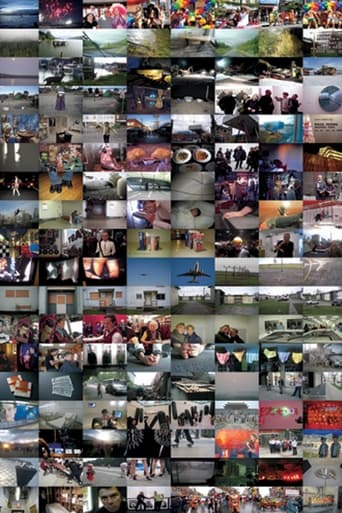
NRApprox. 6000 images, 1000 still photographs a minute flash on and off the screen. A year of pictures mash into an intense viewing experience. Using the iphoto software, Last Year is the result of compiling all 2009 photographs from several different computer sources onto one central database. The images were put into ‘a chronology’ according to iphoto logic. Part journal, part diaristic we see Wong’s incessant recording of everyday life from Chinese New Year celebrations in Vancouver, Beijing Olympics, artists, art exhibitions, architecture, friends, family, New York streets, parties, music concerts, film festivals, Calgary Stampede, Pride Parade, Toronto moments.
Last Year
2010
 NR
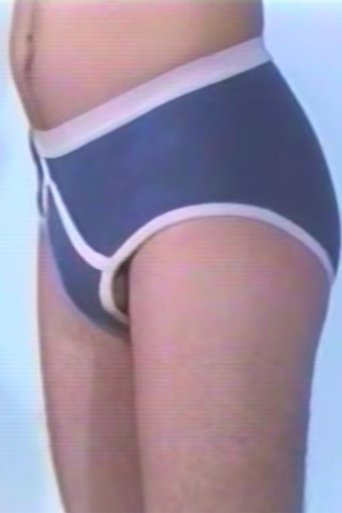
NRThe Mainstreeters initiated a number of commercial enterprises. Support Modelling was a modelling agency comprised of members of the local art and punk rock scene. To promote the project, Paul Wong made a three-channel video (later adapted to single channel) that featured certain Mainstreeters in various states of undress, accompanied by a disco soundtrack. Support Modelling also appears as a series of concept ads (weddings, funerals) in Ennui magazine.
Support Modelling
1977
 NR
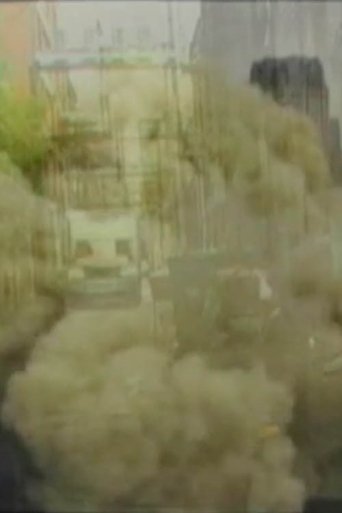
NRMixing together of Pantages’ Implosion of a longtime down town east side landmark: the Woodwards building, with Wong’s Downtown Eastside alleys.
Dovetale
2010
NRSally is a portrait, a love ballad. The artist gazes at beautiful Sally as she relaxes in her bathrobe in the sumptuous suite of the China Club in Beijing. Always behind the camera, Wong is uninhibited as ever as he crafts an intimate portrait. Recorded in Hong Kong and Beijing.
Sally
2008
 NR
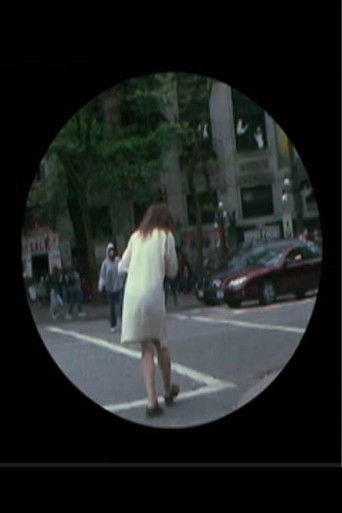
NRThe artist records everyday activities in the streets and alleys around the Main and Hasting Street intersection. On the right, the view is from a fixed camera positioned on top of a dashboard in a moving car. On the left, he walks with a handheld camera with a wide angle lens. Along the way he encounters a street artist, engages with two women in Pigeon Park, crack users, dealers and homeless people.
Downtown Eastside
2010
NROoooo Canada is a 30-minute edited version presenting highlights from the five-hour live webcast on February 13,2010. Ooooo Canada was the first in a series of five site-specific projects presented during the 2010 Olympic and Paralympic Winter games in Vancouver. The broadcast was co-hosted by Skeena Reece and Paul Wong. It is an alternative critique of corporate, mass, pop and nationalist culture in the 21st century. Reece and Wong provide illuminating, personal, political, aboriginal, and comedic perspectives.
Ooooo Canada
2010
 NR
NRWith real and constructed reflected views we glide down the Grand Canal in silence. We enter a tighter waterway slipping past buildings on each side and go under foot bridges. The single view splits into multiple views, as we reach open water it returns to a single view. The journey is repeated in reverse and speeded up.
Venenzia
2006
 NR
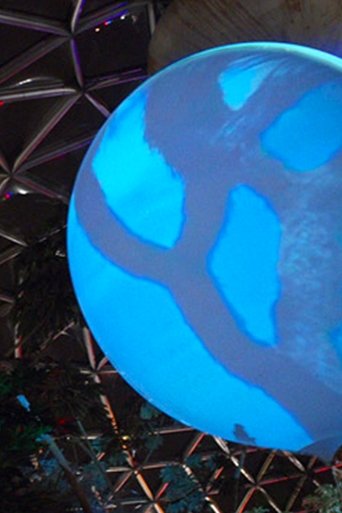
NRProjected onto 8’ weather balloon. Recorded at Joshua Tree National Park. Part of the Scorched series.
Joshua Tree
2010
NRExcerpts featuring Paul Wong as the Wiry Man in Season 3, Episode 19 of the X-Files (1996). Part of Paul Wong’s ‘5’, a series of site-specific events and installations commissioned by the City Of Vancouver 2010 Olympic and Paralympic Public Art Programs.
Hell Money
2010
 NR
NRThe scattering of Steve Lacy’s ashes at Long Island, NY on March 21, 2006.
Spring
2006
 NR
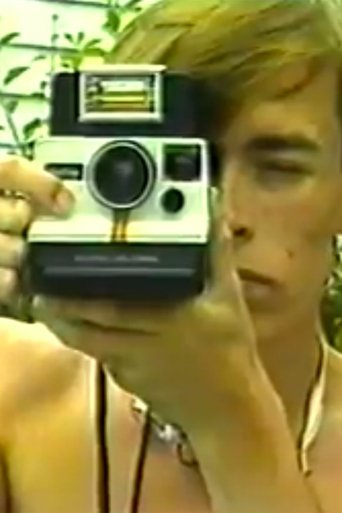
NR"For those who came of age in the 1960s and 70s, glamour received its highest expression in fashion magazines like Vogue, where the representation of lives and those who lived them achieved perfection on every page. Prime Cuts is a work premised on the notion that the lives of magazine models are real (much like another Vancouver artist, Ken Lum, who as a child believed that the bedroom suites in the furniture store flyers that landed on his doorstep were real bedrooms). In exploring the lives of models (some of whom the Mainstreeters worked with through commercial projects), Prime Cuts does not so much imagine what these models get up to both before and after the lights, camera and action of the photo shoot casts them in amber, but extends the fantasy." – Allison Collins & Michael Turner, Mainstreeters: Taking Advantage, 1972-1982, Satellite Gallery, 2015
Prime Cuts
1981
 NR
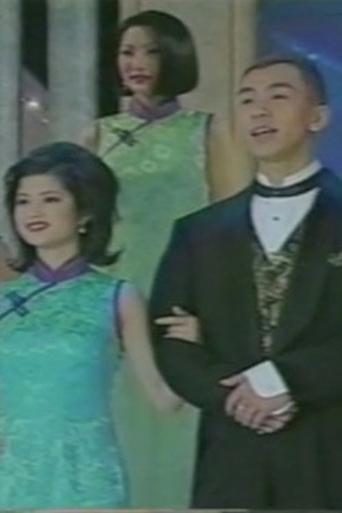
NRMiss Chinatown juxtaposes the views of eight subjects against the background image of a beauty pageant: the Miss Chinese-Vancouver 1996. The subjects are all full or part ethnic Chinese, together they represent a diverse face of the Chinese-Canadian community, they present different perspectives on identity, home, sex and race. The contestants are seen going through the paces in the cheong-san (traditional side slit dress) segment of the live television spectacle.
Miss Chinatown
1995
 NR
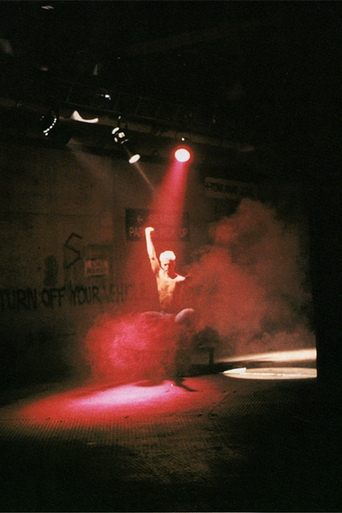
NRA skillful, sensual rendering of an intriguing performance orchestrated by the artist. Through a fog-laden atmosphere, iconic figures emerge to perform on a huge turntable. Our look at this garishly lit spectacle is mediated by the gaze of a female Red Guard. All flesh and brilliance, this tape appears to critique popular culture by robbing it of any ostensible content. Hollywood proverb says, beneath the surface of fake tinsel lies only the real tinsel – the detritus of our times.
Body Fluid
1987
 NR
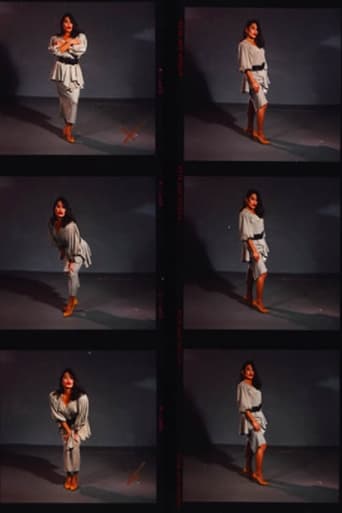
NRMixed Messages is a work that addresses the issues of race and sexuality. This mixed media installation consists of three life size photographs of Gina Gonzalez, who is subject of two 20 minute videotapes. Gina is a transsexual claiming to have undergone a sex change between the first taped interview, in 1990, and the second, in 1994. In the initial session Gina allows us to glimpse into her life as a prostitute; in the next she reacts to the first taping. We not only look at her or listen to her, but she is also present in the form of a life-size photo cutout. The artist explores the boundaries between the public and private, and between appearance and reality. Conventional behaviour patterns, attitudes, and stereotypes are challenged in a work that brings out a variety of voyeuristic reactions in the subject, the artist, and the viewer.
Mixed Messages
1995
NRA two-channel installation from the Modern Television Loop series. Rock Garden shows two continuous shots of stone piles. On one monitor we see a close-up of hands grasping stones off the pile and tossing them off until the pile dwindles. The second monitor is a long shot of tossing stones to yet another pile.
Rock Garden
1976
 NR
NRBased on slides shot in 1978 of the Austrian aktion artist Hermann Nitsch. Put away for 24 years, the color transparencies are spread out on a light table. The images are examined with a macro lens and captured with digital video. Not so much a reconstruction, or documentary of an event but a process of re-imagining. A hundred frames record a 12-hour, noon to midnight performance in an Roman amphitheatre in the center of Trieste in Northern Italy. Hermann Nitsch has been creating his unique rituals since the early 1970’s. The blood flows over naked bodies strapped on crosses, carried blindfolded, senses are tweaked with percussion sounds and blaring brass instruments. Religious iconography, operatic orchestrations of cast, crew, friends, and the public who eat, dance, drink.
Trieste
2002
 NR
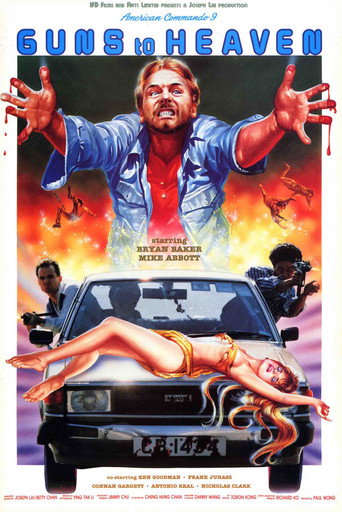
NRAfter losing on a bad investment and falling in debt with a loan shark, Peter Yang turns to gambling, but with the help of an honest gambler, Bobby Chu, starts to win big time. This infuriates a ruthless game player, Tommy Chao, who does everything in his power to cheat them.
American Commando 9: Guns to Heaven
1989
 NR
NRDennis and Barb McDonald are empty nesters from the suburbs. On this day they get legal possession of their new house. They have privately purchased the burned out house directly from its owner. John Jeffery grew up in this house. He has been living on the property since the fire destroyed the house a year ago. John is the last of the old families with deep roots still on the street. He is now surrounded by recent neighbours who are more interested in retrofitting character homes than the people who live in them.
EastVan 'John'
2008
NROn the occasion of his 21st birthday, Paul Wong walks southwest from his mother’s house at St. Catherines St. to the Quebec St. home of Kenneth Fletcher. Most remarkable about this video is not its careful camera work (shot entirely from a moving vehicle), but the driving that allowed for it – a feat that brings to mind the complementary (and collaborative) relationship between the shooter and the driver. On Becoming a Man was also the title of Paul’s 1995 solo exhibition at the National Gallery of Canada.
On Becoming a Man
1975
NRCrack induced euphoria amplifies a sexually charged environment. The cameraman is implicitly involved in the activities of two men in tightie-whities (one black/one white). Described by viewers as both horrific and so full of humanity. This work is not what-it-seems, or is it?
Chelsea Hotel Room 207
2008
 NR
NRA made for the camera video collaboration with Steve Paxton, a unique pas de deux between videographer and dancer.
Asteroid
1978
 NR
NRThe muse performs Dog Eat Dog. In altered and real-time he presents a dark and light side of innocence.
Dog Eat Dog
2008
 NR
NRA 4 channel video installation (Hill, Wall, Cliff, Roof). A video dance work based on the accumulation 24 movements. The multi-layered effect is structuralist and sculptural, exploring the elements of real, delayed, edited and inherent video time.
Amass
1976
 NR
NRInspired by the Australian Banyan tree commonly known as the Strangler Fig, the site-specific mash-up used appropriated material from popular culture related to strangulation, suffocation, hanging and auto-erotic asphyxiation.
Strangler Tree
2010
 NR
NRBlending Milk and Water: Sex in the New World is a cross-cultural, intergenerational, documentary about the diverse views of sex from twenty-two people. The recollections, fears and opinions of young people, professionals, healthworkers, educators, artists, community activists, and people living with AIDS are mixed.
Blending Milk and Water: Sex In the New World
1996
NRBlending Milk and Water: Sex in the New World is a cross-cultural, intergenerational, documentary about the diverse views of sex from twenty-two people. The recollections, fears and opinions of young people, professionals, healthworkers, educators, artists, community activists, and people living with AIDS are mixed.
Blending Milk and Water: Sex In the New World
1996
NRBlending Milk and Water: Sex in the New World is a cross-cultural, intergenerational, documentary about the diverse views of sex from twenty-two people. The recollections, fears and opinions of young people, professionals, healthworkers, educators, artists, community activists, and people living with AIDS are mixed.
Blending Milk and Water: Sex In the New World
1996
 2.0
2.0’4′ originated as a collaborative performance by Deborah Fong, Carol Hackett, Annastacia McDonald and Jeanette Reinhardt as the S.S. Girls, following events and activities of the women’s daily lives on Main Street. The performance was produced by Paul Wong and co-sponsored by the Video Inn. ’4′ explores the lives and personalities of four women as described by one another in the style of a feuding dysfunctional family. ’4′ was developed as a multimedia performance, first staged at Western Front in 1980, then followed by a tour across Canada and into the USA. The scripted multimedia presentations were later adapted to a video work.
'4'
1981
 NR
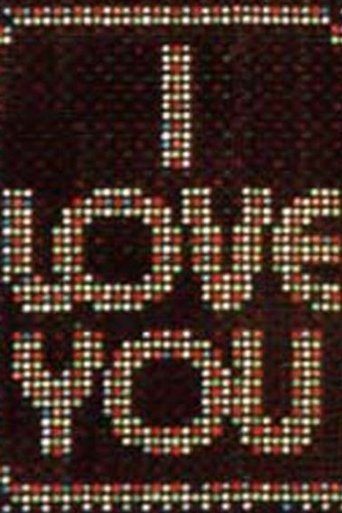
NRThis was a site-specific work for spectra-board urban screen located at BC Place stadium in Vancouver. This Day Without Art project, curated by Scott Watson, was launched on Dec. 1, 1993 as part of AIDS Awareness Day. I Love You appeared in four languages: English, French, Chinese, and Coast-Salish. The two spectra-boards on the exterior of the stadium is visible to commuters on two bridges and surrounding streets and buildings in downtown Vancouver.
I Love You
1993
 NR
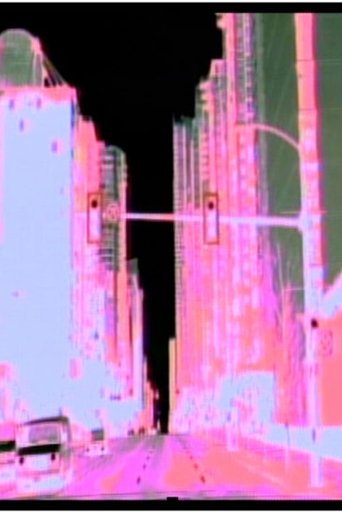
NRRecorded in Vancouver, Round Trip takes you on a car ride that starts on Main Street, goes through downtown, the west end, Stanley Park, and then retraces its route back to Main Street. Composed as a visual journey, Round Trip makes use of video mixing mimicking the visual qualities of the club-sound experience.
Round Trip
2010
 NR
NRTwo seminal moments of recent media history are presented side by side. The closing scene from the film Enter The Dragon* starring Bruce Lee are juxtaposed with the first segment from the Opening Ceremonies of the 2008 Beijing Summer Olympics.
Enter the Dragon 1973-2008
2010