
Writing
Adolf Paul
Born — Died
1863-01-06 — 1943-09-30
Place of birth
Bromö, Vänern, Sweden
Known for
Writing
Credits
12 titles
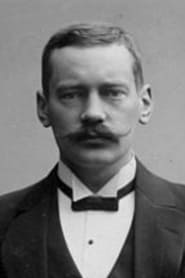
Adolf Georg Wiedersheim-Paul was a Swedish writer of novels/plays and an actor. In 1892 he published a collection of short stories called "The Ripper", in which one chapter entitled "Vanitas" concerns a homosexual liasion between a priest and a schoolboy in Weimar, Germany, while "Oedipus i Norden" is a mother-son incest story from Scandinavia. Adolf Paul lived most of his adult life in Berlin, Germany, where he was a close friend of Swedish writer August Strindberg, Finnish composer Jean Sibelius, and Norwegian painter Edvard Munch.
Known for
 7.0
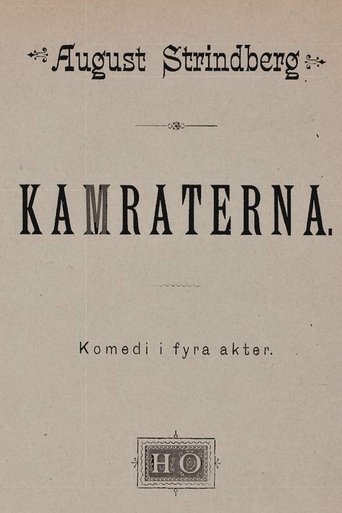
Axel and Bertha are a modern, emancipated artist couple in Paris. He is feminine and vain. She is financially independent, member of the women's association "Married's Women's right of ownership" and uses male nude models.
Kameraden
1919
No synopsis available yet.
Excellency Petticoat
1921
 7.2
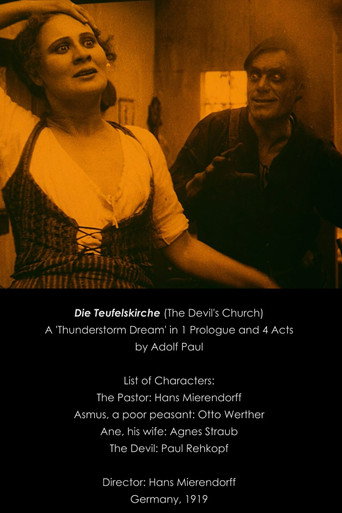
In a prologue and four acts (the prologue and the first act are lost so is necessary to describe what happens with title cards) the film depicts the terrible dream of Asmus wherein the devil joins the human world disguised as a tinker. He meets Frau Ane, Asmus' wife; Ane yearns to have a baby but in vain so the devil takes advantage of Frau Ane's motherly inner desire by making a deal with her but for his own purposes. As a result, the farmer's wife comes under the devil's spell and then seduces the local priest, giving the devil to chance to build his own church to replace the old church that has burned down.
The Devil's Church
1919
 5.4
A group of scientists, led by a Professor Ortmann, produce a living human child using scientific processes - a "homunculus." This creature is human in every way, except that he cannot experience love.
The End of the Homunculus
1918
 6.2
Part of the artificial-creature series encompassing Der Golem (1914 and 1920), Alraune (1918, 1928, 1930) and Metropolis (1926), 'Homunculus' was the most popular serial in Germany during World War I even influencing the dress of fashionable Berlin. Foenss, a Danish star, is the perfect creature manufactured in a laboratory by Kuehne. Having discovered his origins, that he has no 'soul' and is incapable of love, he revenges himself on mankind, instigating revolutions and becoming a monstrous but beautiful tyrant, relentlessly pursued by his creator-father who seeks to rectify his mistake.
The Artificial Man
1916
 7.7
No synopsis available yet.
The Mysterious Book
1916
Film credits
1910s · 7 titles
5.4A group of scientists, led by a Professor Ortmann, produce a living human child using scientific processes - a "homunculus." This creature is human in every way, except that he cannot experience love.
The End of the Homunculus
1918
6.2Part of the artificial-creature series encompassing Der Golem (1914 and 1920), Alraune (1918, 1928, 1930) and Metropolis (1926), 'Homunculus' was the most popular serial in Germany during World War I even influencing the dress of fashionable Berlin. Foenss, a Danish star, is the perfect creature manufactured in a laboratory by Kuehne. Having discovered his origins, that he has no 'soul' and is incapable of love, he revenges himself on mankind, instigating revolutions and becoming a monstrous but beautiful tyrant, relentlessly pursued by his creator-father who seeks to rectify his mistake.
The Artificial Man
1916
7.7No synopsis available yet.
The Mysterious Book
1916
 8.0
Attorney General Trevor's second wife is found stabbed to death in his safe. Due to a ring with the initials DG, which is also found in the safe, the suspicion initially falls on Donald Gordon, the fiancé of Trevor's daughter.
Mitternacht
1918
Richard Ortmann the artificial man (Homunculus) has become the head of the corporation that represents the capital and power of the country, but he has stopped believing in human love. All the more clear is his goal now: the annihilation of mankind.
The Revenge of the Homunculus
1917
 7.0
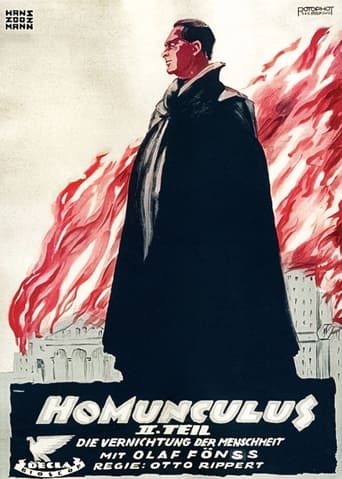
For a long time the homunculus had to hide from his pursuers. But now he mingles with humanity again and sows discord, strife and murder. One day, when he meets an orphaned girl, he takes her to the shepherd Rudolf's parents. His goal is to pair the two together in order to breed a new human race from them. To this end, he kidnaps her to a deserted island. But the plan fails because Rudolf tries to kill the homunculus after learning his true identity. In revenge, the homunculus destroys the entire island, including the young couple. His hitherto loyal companion Edgar Rodin is so horrified by this deed that he renounces the homunculus and threatens him with death.
The Destruction of Mankind
1917
 7.0
The homunculus and his companion Edgar Rodin make an invention that would allow the hateful homunculus to destroy the world. But first he wants to find out about love. When he observes how young Anna is rejected by her parents, he takes care of her and asks her parents for forgiveness - without success. He brings her to her seducer, who also rejects the girl. The homunculus then takes revenge by ruining the man financially and throwing Anna at his feet. But she still loves the villain and asks Homunculus for mercy. The homunculus cannot understand this feeling of love - he wants to try it out on himself. He puts a young woman who loves him to the hardest test, but she will do anything for him, sacrificing her fiancé and her parents. Only when he reveals his artificial nature to her, she leaves him. This experience confirms the homunculus in his intention to destroy mankind.
The Love Tragedy of the Homunculus
1916
Behind the camera
7.0Axel and Bertha are a modern, emancipated artist couple in Paris. He is feminine and vain. She is financially independent, member of the women's association "Married's Women's right of ownership" and uses male nude models.
Kameraden
1919
No synopsis available yet.
Excellency Petticoat
1921
7.2In a prologue and four acts (the prologue and the first act are lost so is necessary to describe what happens with title cards) the film depicts the terrible dream of Asmus wherein the devil joins the human world disguised as a tinker. He meets Frau Ane, Asmus' wife; Ane yearns to have a baby but in vain so the devil takes advantage of Frau Ane's motherly inner desire by making a deal with her but for his own purposes. As a result, the farmer's wife comes under the devil's spell and then seduces the local priest, giving the devil to chance to build his own church to replace the old church that has burned down.
The Devil's Church
1919
 10.0
About members of a Commedia dell'arte troupe . Initially cheerful, later tragic events in a triangular relationship consisting of the classic Commedia triumvirate Pierrot, Colombina and Arlecchino.
Das schwarze Los
1913
 3.8
Life, love, and the extensively depicted affairs of the dancer Barbara Campanini.
The Dancer Barberina
1920