
Acting
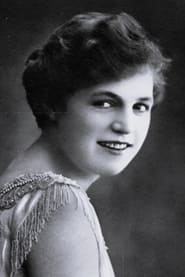
Aud Egede-Nissen
Born — Died
1893-05-29 — 1974-11-15
Place of birth
Bergen, Norway
Known for
Acting
Credits
46 titles
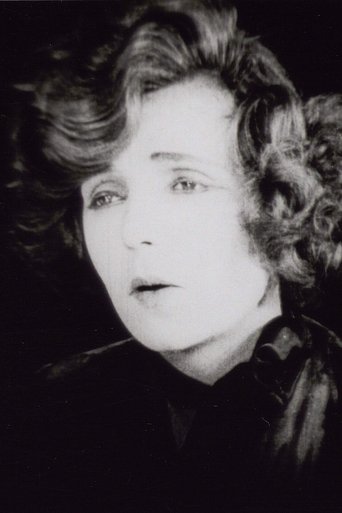
Aud Egede-Nissen was a Norwegian stage and screen actress, and producer. She made her acting debut on the Norwegian stage in 1911, appearing next in Norwegian director Bjørn Bjørnson's 1913 film "Scenens børn". She first moved to Denmark and later Bjørn Bjørnson invited her to Berlin, where there were opportunities in the rapidly expanding film industry.
Known for
 7.7
7.7Dr. Mabuse and his organization of criminals are in the process of completing their latest scheme, a theft of information that will allow Mabuse to make huge profits on the stock exchange. Afterwards, Mabuse disguises himself and attends the Folies Bergères show, where Cara Carozza, the main attraction of the show, passes him information on Mabuse's next intended victim, the young millionaire Edgar Hull. Mabuse then uses psychic manipulation to lure Hull into a card game where he loses heavily. When Police Commissioner von Wenk begins an investigation of this mysterious crime spree, he has little to go on, and he needs to find someone who can help him.
Dr. Mabuse, the Gambler
1922
 6.9
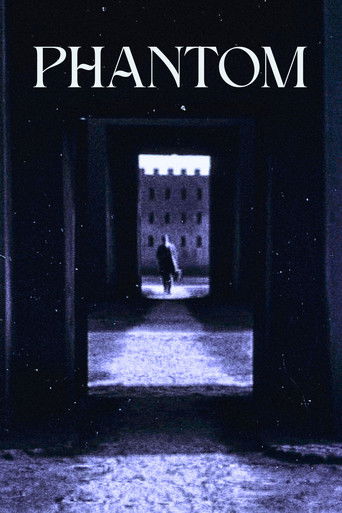
6.9Lorenz Lubota is a city clerk with no direction in life. One day on his way to work he is run over by a woman driving a chariot and he is immediately infatuated with her.
Phantom
1922
 6.1
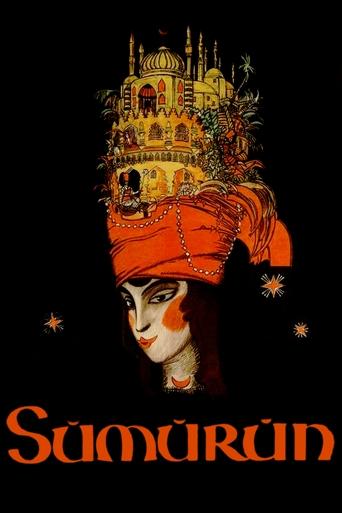
6.1The favorite slave girl of a tyrannical sheik falls in love with a cloth merchant. Meanwhile, a hunchback clown suffers unrequited love for a traveling dancer who wants to join the harem.
Sumurun
1920
 6.9
6.9The story of the ill-fated second wife of the English king Henry VIII, whose marriage to the Henry led to momentous political and religious turmoil in England.
Anna Boleyn
1920
 7.3
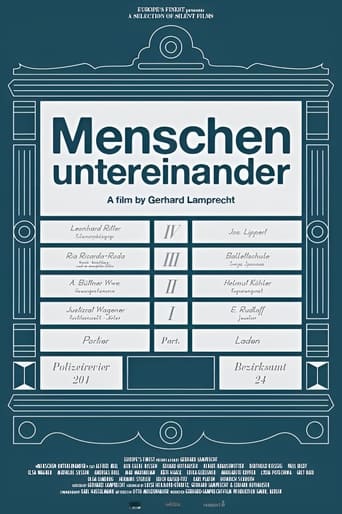
7.3Gerhard Lamprecht sketches a cross-section of Germany's new post-war society, with its winners, social climbers, and losers, represented by the social microcosm of an apartment building. The gossip-mad Frau Mierig from the rear building gives the newly-arrived Frau Kaminski, the janitor's wife, a lively initiation into the tenants and their peculiarities.
People Among Us
1926
No synopsis available yet.
Künstlerlaunen
1920
Film credits
1940s · 2 titles
Trysil-Knut is a Norwegian film from 1942. Directed by veteran Rasmus Breistein and is a ski themed melodrama about the legendary skier Trysil-Knut from Trysil. He is a powerful patriot, who in the early 1800s prevent that a war breaks out between Norway and Sweden using his skiing skills. While that goes on Knut is also preparing a court case of fraud to determine the ownership of his fathers old farm.
Trysil-Knut
1942
The young unknown Hansen stays at a pension, where they await a charmer with the same name. When the other Hansen escapes, the police arrest the wrong man.
Hansen og Hansen
1941
1930s · 1 titles
1920s · 26 titles
7.7Dr. Mabuse and his organization of criminals are in the process of completing their latest scheme, a theft of information that will allow Mabuse to make huge profits on the stock exchange. Afterwards, Mabuse disguises himself and attends the Folies Bergères show, where Cara Carozza, the main attraction of the show, passes him information on Mabuse's next intended victim, the young millionaire Edgar Hull. Mabuse then uses psychic manipulation to lure Hull into a card game where he loses heavily. When Police Commissioner von Wenk begins an investigation of this mysterious crime spree, he has little to go on, and he needs to find someone who can help him.
Dr. Mabuse, the Gambler
1922
6.9Lorenz Lubota is a city clerk with no direction in life. One day on his way to work he is run over by a woman driving a chariot and he is immediately infatuated with her.
Phantom
1922
6.1The favorite slave girl of a tyrannical sheik falls in love with a cloth merchant. Meanwhile, a hunchback clown suffers unrequited love for a traveling dancer who wants to join the harem.
Sumurun
1920
6.9The story of the ill-fated second wife of the English king Henry VIII, whose marriage to the Henry led to momentous political and religious turmoil in England.
Anna Boleyn
1920
7.3Gerhard Lamprecht sketches a cross-section of Germany's new post-war society, with its winners, social climbers, and losers, represented by the social microcosm of an apartment building. The gossip-mad Frau Mierig from the rear building gives the newly-arrived Frau Kaminski, the janitor's wife, a lively initiation into the tenants and their peculiarities.
People Among Us
1926
No synopsis available yet.
Künstlerlaunen
1920
 7.1
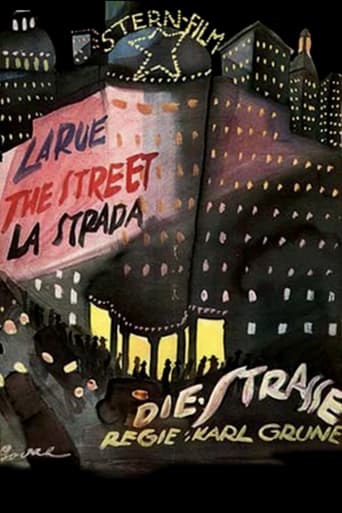
7.1The movie follows two distinct plot lines until the two eventually merge: the first is that of the bored middle-aged man seeking a departure from monotony in his life; the second is that of the blind man and the little boy, his grandson, who are interdependent. None of the characters have been given names and are therefore referred to only by description. The city is an expressionistic nightmare, a dangerous and chaotic place.
The Street
1923
No synopsis available yet.
Kaliber fünf Komma zwei
1920
The extended Steyer family lives together in a cottage in the mountains. The younger Steyer's wife Ludmilla wants money, and doesn't care if she must ruin the lives of the Steyer family to get it. Lost film.
The Expulsion
1923
 NR
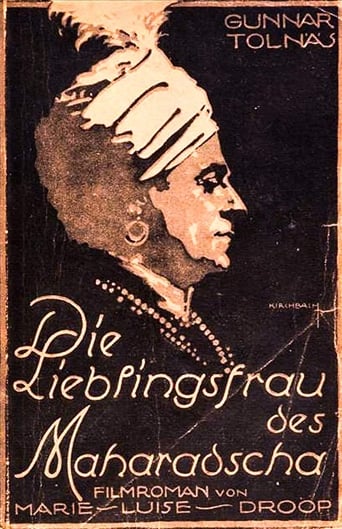
NRThe Maharaja of Odhapur goes on a trip to Europe and meet the young dancer Ellen Esmond. In her London accommodation, the Savoy Hotel, the Indian prince can prove to be a gallant gentleman and protect Ellen from an intrusive theatrical agent. The Maharaja asks the artist to entertain his guests the following evening with her dancing skills, including England's representatives in India. The maharaja is thrilled with both the person Ellen and her dance performances. His brother Bhima, who was always in the shadow of the Maharajah, drinks excessively and also is also magically attracted to Ellen Esmond.
Die Lieblingsfrau des Maharadscha
1921
 8.0
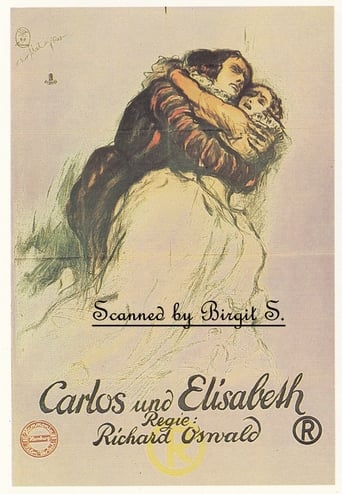
8.0Don Carlos, heir to the Spanish throne, and Princess Elisabeth of Valois are deeply in love but King Philip, Carlos's father, wants Elisabeth for himself.
Don Carlos und Elisabeth
1924
 4.9
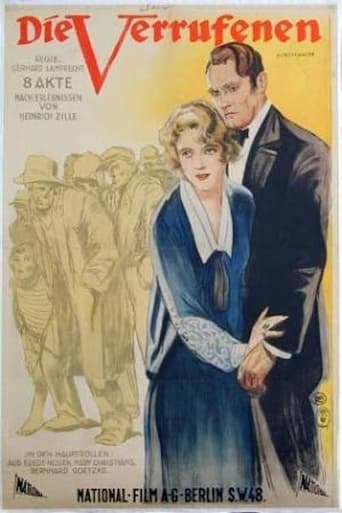
4.9It was not just the children who were treated badly by the wealthy Weimar republic. Robert Kramer is released from prison but struggles to adjust to civilian life. His father disowns him, his wife has left him for another man. There is no work. He eventually arrives in a shelter for the homeless, and seeks salvation through Emma, a prostitute.
In the Slums of Berlin
1925
 7.0
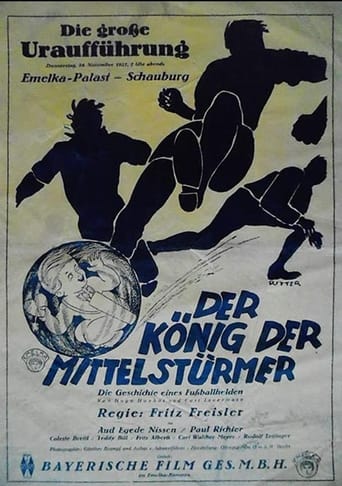
7.0König der Mittelstürmer / King of the Centre Forwards refers with the name of its hero to the German soccer legend of the twenties: Tull Harder, star of the Hamburger Sport Verein (HSV). But the story itself is completely fictitious: The son of a trade company's director falls in love with the daughter of a big American oil magnat. But she suspects him to be only interested in her money. So she buys his father's company to take revenge on him. The son's true love is soccer, and from the very first moment the soccer fever is present throughout the film. It starts with pictures of a soccer game and even an apple or a crumpled up paper must serve as substitute for a ball. Whereas Die elf Teufel promotes soccer as "the sport of the century", König der Mittelstürmer shows the hero's father who still has to be convinced from its importance. He hates soccer and blames everybody to be "soccer crazy".
King of the Centre Forwards
1927
No synopsis available yet.
Die Frau im Talar
1929
 10.0
10.0The Closed Chain (German: Die geschlossene Kette) is a 1920 German silent film directed by Paul L. Stein and starring Pola Negri, Aud Egede-Nissen, and Carl Ebert.
The Closed Chain
1920
 10.0
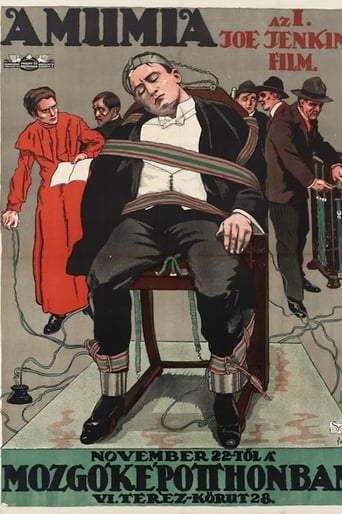
10.0No synopsis available yet.
Das Geheimnis der Mumie
1921
 7.0
7.0The owner of a Berlin villa invites 4 friends to stay with him and hires a baroness to supervise their affairs. Meanwhile an ex boxer released from prison becomes involved with the villa when he is arrested for a burglary there.
Die Villa im Tiergarten
1927
 7.0
7.0Film by Carl Boese.
Das Floß der Toten
1921
 8.0
8.0Directed by Lupu Pick, who died far too young, it was billed as a melodrama about a ring of counterfeiters on its first screening in New York City. Pick plays with the already well-established conventions of the detective genre for maximum effect and humor.
The Armored Vault
1926
No synopsis available yet.
Die da unten
1926
 6.2
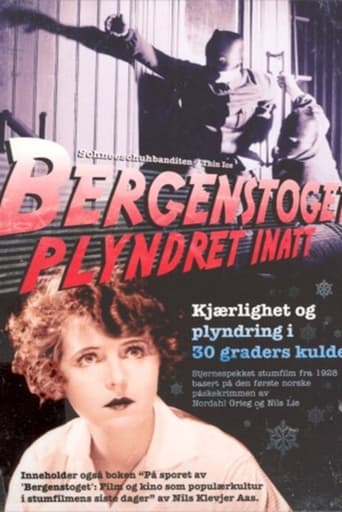
6.2The film tells the story of an ambitious young man, Tom, who loves Grete, daughter of the manager of the national railroads; but Grete's father prefers Lund, an upright and uptight army officer. To prove his worth, Tom organizes a daring robbery of the nightly Bergen Express in the hopes of outwitting his rival, who's been assigned to track down the thieves.
Thin Ice
1928
 8.0
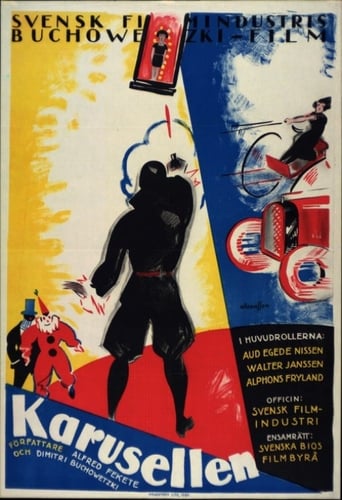
8.0Blanche Benton is out on her morning ride with horse and carriage, when an automobile shows up and scares the horse. The driver in the car manages to intervene and takes Blanche to her home.
The Whirlwind of Passion
1923
No synopsis available yet.
Schwester Veronica
1927
 9.0
9.0No synopsis available yet.
The Red Mouse
1926
No synopsis available yet.
In Treue stark
1926
 7.5
7.5No synopsis available yet.
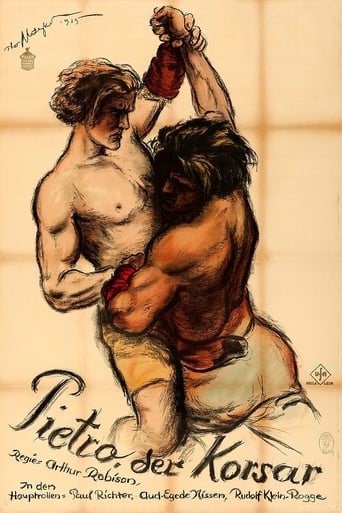
Pietro der Korsar
1925
1910s · 15 titles
 10.0
10.0No synopsis available yet.
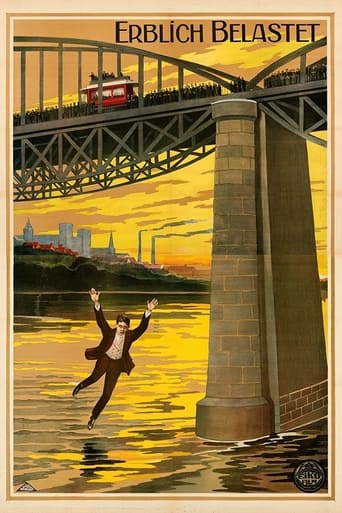
Erblich belastet?
1913
 5.4
5.4A group of scientists, led by a Professor Ortmann, produce a living human child using scientific processes - a "homunculus." This creature is human in every way, except that he cannot experience love.
The End of the Homunculus
1918
 7.7
7.7No synopsis available yet.
The Mysterious Book
1916
 6.2
6.2Part of the artificial-creature series encompassing Der Golem (1914 and 1920), Alraune (1918, 1928, 1930) and Metropolis (1926), 'Homunculus' was the most popular serial in Germany during World War I even influencing the dress of fashionable Berlin. Foenss, a Danish star, is the perfect creature manufactured in a laboratory by Kuehne. Having discovered his origins, that he has no 'soul' and is incapable of love, he revenges himself on mankind, instigating revolutions and becoming a monstrous but beautiful tyrant, relentlessly pursued by his creator-father who seeks to rectify his mistake.
The Artificial Man
1916
 7.0
7.0The homunculus and his companion Edgar Rodin make an invention that would allow the hateful homunculus to destroy the world. But first he wants to find out about love. When he observes how young Anna is rejected by her parents, he takes care of her and asks her parents for forgiveness - without success. He brings her to her seducer, who also rejects the girl. The homunculus then takes revenge by ruining the man financially and throwing Anna at his feet. But she still loves the villain and asks Homunculus for mercy. The homunculus cannot understand this feeling of love - he wants to try it out on himself. He puts a young woman who loves him to the hardest test, but she will do anything for him, sacrificing her fiancé and her parents. Only when he reveals his artificial nature to her, she leaves him. This experience confirms the homunculus in his intention to destroy mankind.
The Love Tragedy of the Homunculus
1916
Richard Ortmann the artificial man (Homunculus) has become the head of the corporation that represents the capital and power of the country, but he has stopped believing in human love. All the more clear is his goal now: the annihilation of mankind.
The Revenge of the Homunculus
1917
 7.0
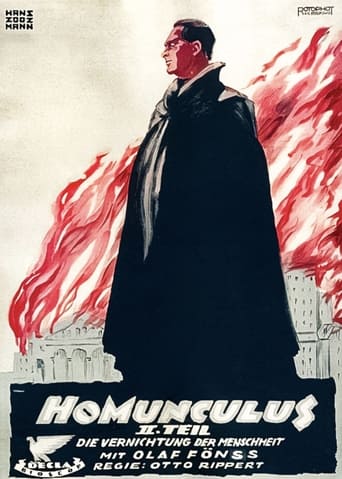
7.0For a long time the homunculus had to hide from his pursuers. But now he mingles with humanity again and sows discord, strife and murder. One day, when he meets an orphaned girl, he takes her to the shepherd Rudolf's parents. His goal is to pair the two together in order to breed a new human race from them. To this end, he kidnaps her to a deserted island. But the plan fails because Rudolf tries to kill the homunculus after learning his true identity. In revenge, the homunculus destroys the entire island, including the young couple. His hitherto loyal companion Edgar Rodin is so horrified by this deed that he renounces the homunculus and threatens him with death.
The Destruction of Mankind
1917
 10.0
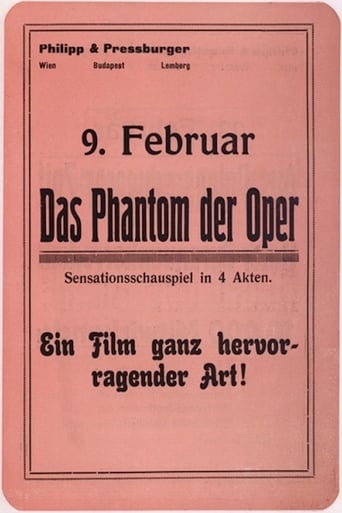
10.0Das Phantom der Oper was a 1916 silent film. The film, also known as Das Gespenst im Opernhaus, is notable for being the first film adaptation of the 1910 novel The Phantom of the Opera by Gaston Leroux. The film is now believed to be a lost film. No copies, photographs or even a poster of the film remain. All that is known is that it was made in Germany in autumn 1915, directed by Ernst Matray, starring Nils Chrisander as the Phantom and Aud Egede-Nissen as Christine, and Raul played by director Ernst Matray.[1]
The Phantom of the Opera
1916
Van Dola is a wealthy, enthusiastic young man who is completely infatuated with the mechanical work of art that is a doll modeled after a real woman named Felicitas.
Das Abenteuer des van Dola
1915
No synopsis available yet.
Das Rätsel von Sensenheim
1915
 7.0
7.0A mother is obsessed with pleasure and hates her child. Her cousin arrives and cares for the child. The mother is ailing but wants to attend a ball; however, she collapses and falls gravely ill. The Angel of Death appears at her bedside and grants her a final wish. She would give anything to be the queen of the ball once more.
Der Todestraum
1918
 7.0
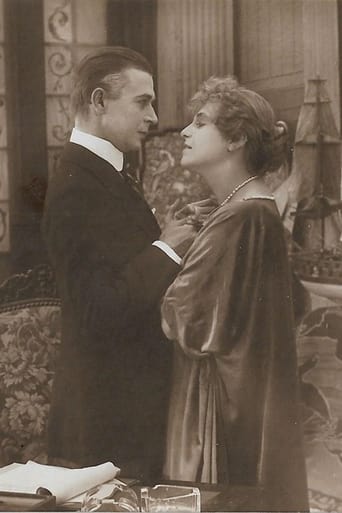
7.0No synopsis available yet.
Die lachende Seele
1919
 10.0
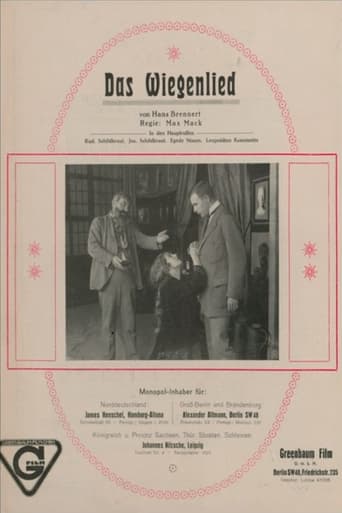
10.0A social drama set in the milieu of the arts.
Lullaby
1916
No synopsis available yet.
Leuchtende Punkte
1918
Produced by and starring Aud Egede-Nissen.
Heddys Meisterstreich
1918
Behind the camera
7.0A mother is obsessed with pleasure and hates her child. Her cousin arrives and cares for the child. The mother is ailing but wants to attend a ball; however, she collapses and falls gravely ill. The Angel of Death appears at her bedside and grants her a final wish. She would give anything to be the queen of the ball once more.
Der Todestraum
1918
Produced by and starring Aud Egede-Nissen.
Heddys Meisterstreich
1918