
Directing
Carlos Cárdenas
Known for
Directing
Credits
6 titles
Known for
 NR
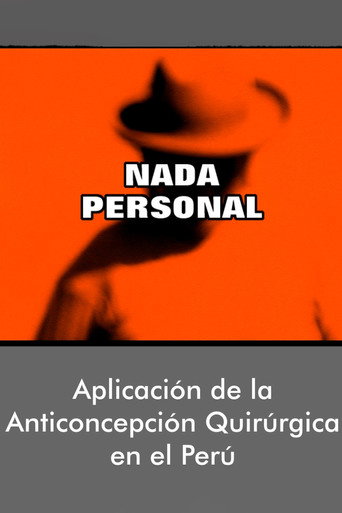
NRThe Latin American and Caribbean Committee for the Defense of Women's Rights (CLADEM) presents a report on the allegations of forced sterilizations that were carried out as a state policy in Peru from 1995 to 2000, during the government of Alberto Fujimori.
Nada personal
1997
 5.0
5.0Santiago de Lucanamarca, a remote farming community in the Peruvian Andes, is shaken by the presence of the Truth and Reconciliation Commission. They have come to open the tombs of the 69 people who died in the massacre of April 3, 1983. Twenty years later there is a chance to close old wounds, but distrust can also be felt in the streets of the town. Aren't we all Peruvians? asks one of the people affected. The history of Lucanamarca shows us how elusive justice can be.
Lucanamarca
2008
 NR
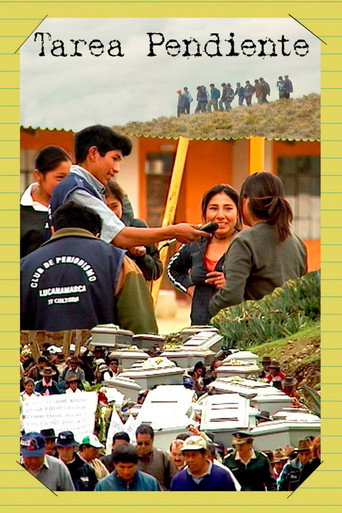
NRSantiago de Lucanamarca, Ayacucho, November 7, 2002. As part of the work of the Truth and Reconciliation Commission, the exhumations of 69 victims killed by Shining Path in 1983 began. At the same time, a group of students from the Augusto Salazar Bondy School in Lucanamarca, using a video camera, began an investigation based on two questions: What role did the school, its teachers, and students play in the massacre that occurred in their community? And why, despite what happened, has the topic never been addressed at their school? From their perspective, this group will try to find an explanation for these events.
Tarea Pendiente
2003
Documentary.
Desplazados
1993
 7.2
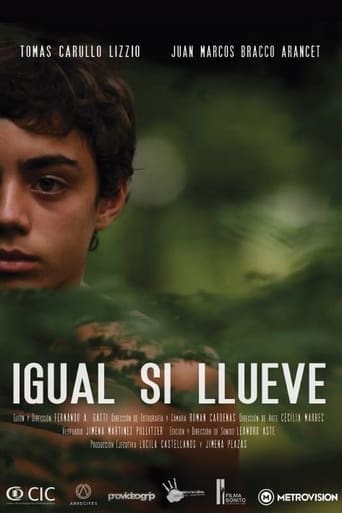
7.2As he sits on a present situation where his childhood's expiration date gives way to an uncertain adolescence, Agustín decides to create a small freedom spot far from his daily routine.
Even If It Rains
2012
Spanish is not a single language, but rather a collection of distinct linguistic varieties that differ in pronunciation, vocabulary, and grammar. However, the imposition of so-called standard Spanish as the only "correct" form relegates other varieties of Spanish and generates feelings of shame and marginalization in many Peruvians who feel culturally inferior for speaking supposedly incorrect varieties. This video presents the diversity of Spanish spoken in Peru and demonstrates that linguistic prejudice is a way—ideologically constructed as legitimate—of socially and culturally discriminating against people.
Los castellanos del Perú
2004
Film credits
Behind the camera
NRThe Latin American and Caribbean Committee for the Defense of Women's Rights (CLADEM) presents a report on the allegations of forced sterilizations that were carried out as a state policy in Peru from 1995 to 2000, during the government of Alberto Fujimori.
Nada personal
1997
5.0Santiago de Lucanamarca, a remote farming community in the Peruvian Andes, is shaken by the presence of the Truth and Reconciliation Commission. They have come to open the tombs of the 69 people who died in the massacre of April 3, 1983. Twenty years later there is a chance to close old wounds, but distrust can also be felt in the streets of the town. Aren't we all Peruvians? asks one of the people affected. The history of Lucanamarca shows us how elusive justice can be.
Lucanamarca
2008
NRSantiago de Lucanamarca, Ayacucho, November 7, 2002. As part of the work of the Truth and Reconciliation Commission, the exhumations of 69 victims killed by Shining Path in 1983 began. At the same time, a group of students from the Augusto Salazar Bondy School in Lucanamarca, using a video camera, began an investigation based on two questions: What role did the school, its teachers, and students play in the massacre that occurred in their community? And why, despite what happened, has the topic never been addressed at their school? From their perspective, this group will try to find an explanation for these events.
Tarea Pendiente
2003
Documentary.
Desplazados
1993
Spanish is not a single language, but rather a collection of distinct linguistic varieties that differ in pronunciation, vocabulary, and grammar. However, the imposition of so-called standard Spanish as the only "correct" form relegates other varieties of Spanish and generates feelings of shame and marginalization in many Peruvians who feel culturally inferior for speaking supposedly incorrect varieties. This video presents the diversity of Spanish spoken in Peru and demonstrates that linguistic prejudice is a way—ideologically constructed as legitimate—of socially and culturally discriminating against people.
Los castellanos del Perú
2004