
Acting
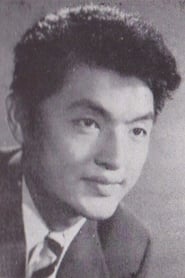
Yōichi Numata
Born — Died
1924-07-19 — 2006-04-29
Place of birth
Okayama, Japan
Known for
Acting
Credits
62 titles
Yōichi Numata (沼田 曜一 Numata Yōichi) was a Japanese film actor. He appeared in 27 films between 1949 and 2001.
Known for
 8.0
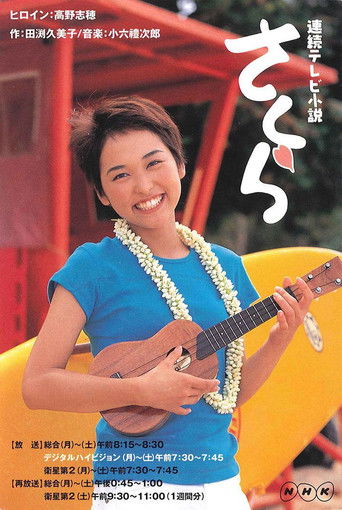
8.0Sakura is a Japanese serialized morning television drama that aired on NHK from April 1 to September 28 of 2002. The series totalled 156 episodes. It chronicles the life of Matsushita Sakura, a Sansei Japanese-American living in Hawaii. She moves to a small town in Japan to be an assistant language teacher for Japanese middle-school students. The show, lasting only 15 minutes long, is on every morning except Sunday, every week. Sakura first comes to Japan living with her grandparents; later, she moves because she has to teach English to the Japanese students. There she learns many valuable lessons and makes new friends.
Sakura
2002
 7.1
7.1A mysterious video has been linked to a number of deaths, and when an inquisitive journalist finds the tape and views it herself, she sets in motion a chain of events that puts her own life in danger.
Ring
1998
 NR
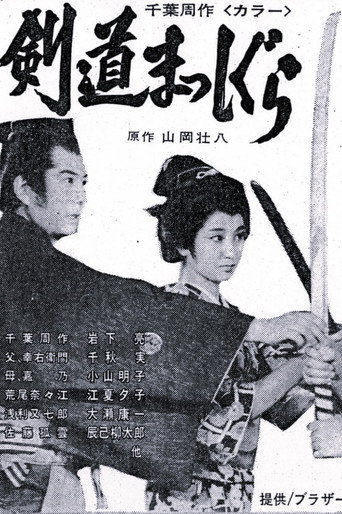
NRChiba Shusaku: Kendo Masshigura is a Japanese period drama that aired on the TBS network from November 2, 1970 to August 30, 1971 in the "Brother Gekijo" slot. It ran for 44 colour episodes of 30 minutes each. Based on Sohachi Yamaoka's novel "Chiba Shusaku", it depicts the youth of Chiba Shusaku, founder of the Hokushin Itto-ryu school of swordsmanship. A hot-blooded young man who calls himself Shusaku enters the dojo of Asari Matashichiro and, through encounters with all kinds of people, grows rapidly both in swordsmanship and in character. Produced by TBS and Shochiku. Rerun on the Japanese CS channel Jidaigeki Senmon Channel from March 17, 2025.
Chiba Shusaku: Kendo Masshigura
1970
 5.8
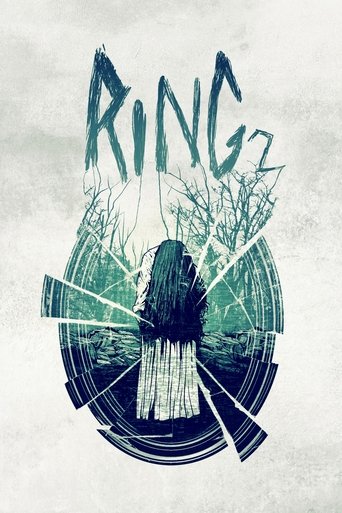
5.8While investigating the horrifying death of her boyfriend, Mai Takano learns about a videotape haunted by the spirit of a disturbing girl named Sadako, which kills anyone who watches it exactly one week later. When her boyfriend’s son, Yoichi, starts to develop the same psychic abilities as Sadako, Takano must find a way to keep the boy and herself from becoming the next victims.
Ring 2
1999
 7.1
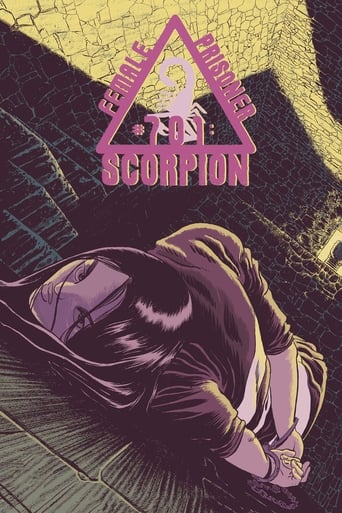
7.1After being cruelly set up and deceived by Sugimi, a detective in cahoots with the mob with whom she was whole-heartedly in love, Matsushima’s desire for revenge knows no bounds.
Female Prisoner #701: Scorpion
1972
 6.5
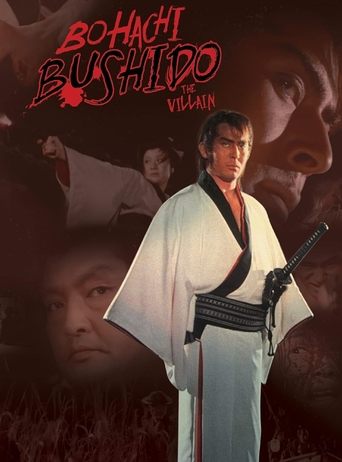
6.5The Bohachi Clan, the most vile, corrupt organization with ties deep in the Shogunate, have controlled the flesh trade in Japan for generations. When threatened by a competitor, they employ Saburai, a nihilistic ronin on the verge of self destruction. Blood gushes and limbs fly for anyone who stands against Saburai as he instills the Way of the Bohachi.
Bohachi Bushido: The Villain
1974
Film credits
1990s · 3 titles
7.1A mysterious video has been linked to a number of deaths, and when an inquisitive journalist finds the tape and views it herself, she sets in motion a chain of events that puts her own life in danger.
Ring
1998
5.8While investigating the horrifying death of her boyfriend, Mai Takano learns about a videotape haunted by the spirit of a disturbing girl named Sadako, which kills anyone who watches it exactly one week later. When her boyfriend’s son, Yoichi, starts to develop the same psychic abilities as Sadako, Takano must find a way to keep the boy and herself from becoming the next victims.
Ring 2
1999
 7.3
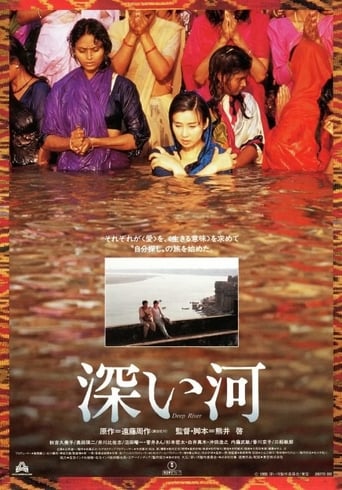
7.3A group of Japanese tourists try to forget their pasts and find themselves in India.
Deep River
1995
1980s · 2 titles
 9.0
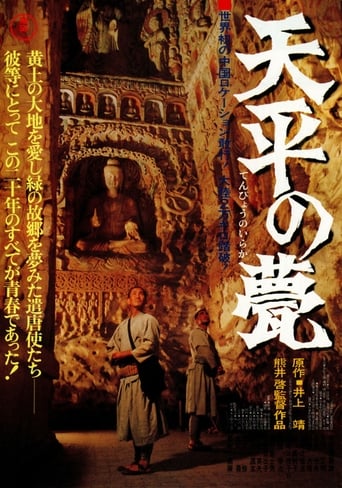
9.0Set in Japan's Tenpyou era (729-749 CE), four young monks are sent to China to study Buddhism and bring a high priest back to Japan with them. The film tells the tale of the four monks' youth and the life and times of the high priest Ganjin.
An Ocean to Cross
1980
 NR
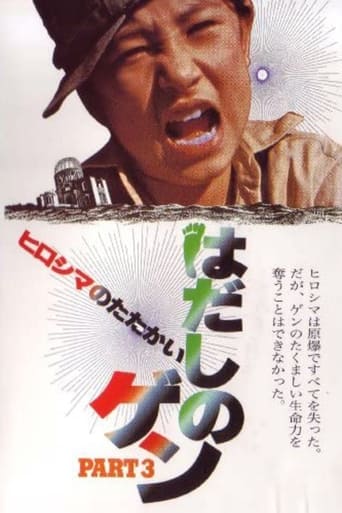
NRSecond live action "Barefoot Gen" sequel.
Barefoot Gen Part 3: Battle of Hiroshima
1980
1970s · 11 titles
7.1After being cruelly set up and deceived by Sugimi, a detective in cahoots with the mob with whom she was whole-heartedly in love, Matsushima’s desire for revenge knows no bounds.
Female Prisoner #701: Scorpion
1972
6.5The Bohachi Clan, the most vile, corrupt organization with ties deep in the Shogunate, have controlled the flesh trade in Japan for generations. When threatened by a competitor, they employ Saburai, a nihilistic ronin on the verge of self destruction. Blood gushes and limbs fly for anyone who stands against Saburai as he instills the Way of the Bohachi.
Bohachi Bushido: The Villain
1974
 7.3
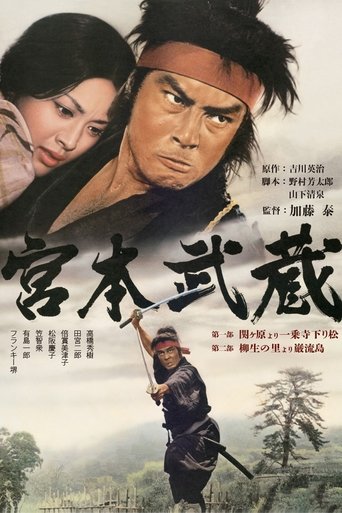
7.3In Part I we see the young would-be swordsman setting out to achieve greatness in war, achieving nothing because fighting on the losing side, & then beginning his long period of wandering & training, with the goal always in mind of his duel with Kojiro. Part II builds toward that great duel on Ganryu Island, with considerable focus on Musashi's planning & forethought as to how to gain an advantage.
Miyamoto Musashi
1973
 7.8
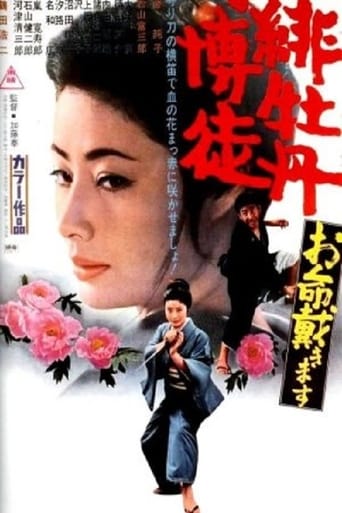
7.8The seventh chapter of the stunning Hibotan Bakuto series. Many years have passed since Oryu the Red Peony began her soul-searching journey after her father was killed. In her travels, she meets villagers whose crops and livelihoods are being destroyed by pollution from a local factory. They seem to work out an agreement, but Oryu must help the poor villagers when the greedy factory owner and corrupt politicians betray them…
Red Peony Gambler: Here to Kill You
1971
 6.7
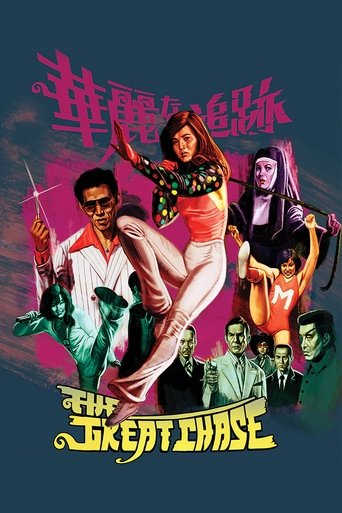
6.7Shihomi Etsuko plays a race car driver who also lends out her services to the Japanese Secret Service. Although there really isn't much of a "chase" to be seen, Shihomi does pursue a cartel of drug runners and assorted Japanese yakuza types. While the story is pure 70's exploitation and gritty crime drama, the best reason to see it is for the Martial Arts Action of Etsuko Shihomi. The action is over-the-top and at times hilarious (i.e. Shihomi battling the lead criminal atop a moving gondola or Shihomi battling a whip-wielding Catholic Nun).
The Great Chase
1975
 7.2
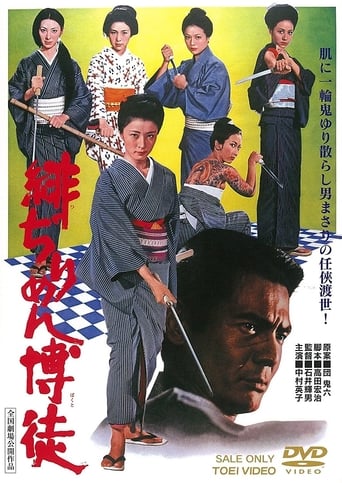
7.2With her first love that unfolded in the battlefield in her heart, and with a short sword and a pillbox as her weapons, female gambler Okatsu the Tiger Lily travels from gambling site to gambling site. Surrounding her are Omon, an outlaw star blind lone gambler; Onaka, a thief who’s after Okatsu to avenge her father’s death; Ohide, a tattoo artist whose back is covered by a dragon tattoo; and Oryu, a young girl sold as a prostitute to a gambling family.
The Red Silk Gambler
1972
 6.4
6.4Oryu searches for blind child she left behind and get involved in a Yakuza turf war that takes place in the Tokyo Theater.
Red Peony Gambler: Oryu's Return
1970
 NR
NRNo synopsis available yet.
Shōwa Gokudōshi
1972
 7.5
7.5The story of a lone wolf struggling with human compassion and duty.
Contemporary Tales of Chivalry: Forbidden Love
1971
 NR
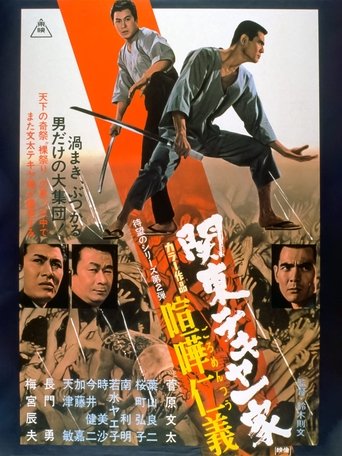
NRThe second film in the Kanto Street Peddlers Clan series starring Bunta Sugawara.
Kanto Street Peddlers: Clan Violent Loyalty
1970
 5.8
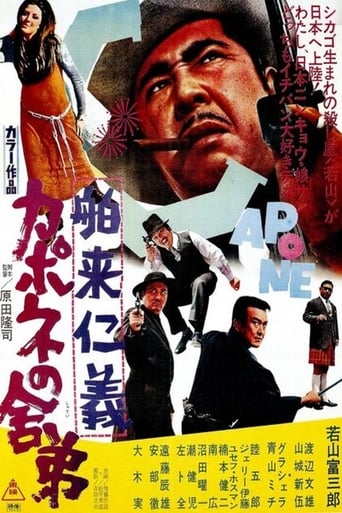
5.8Superbly entertaining action comedy with Tomisaburo Wakayama as Kuriyama Capone who learned his trade under Al Capone in Chicago. The film follows his first venture to Japan with gangster brothers Frank (Shingo Yamashiro) and Joe (Fumio Watanabe). And being chased by gangster and the FBI, including the granddaughter of Eliot Ness. The whole thing is a good amount of fun, the performances especially (Wakayama, Yamashiro, Watanabe in a rare heroic role), making this one of routine director Takashi Harada’s best pictures.
Brothers of Capones
1970
1960s · 14 titles
 6.3
6.3A group of sinners involved in interconnected tales of murder, revenge, deceit and adultery all meet at the Gates of Hell.
Jigoku
1960
 6.9
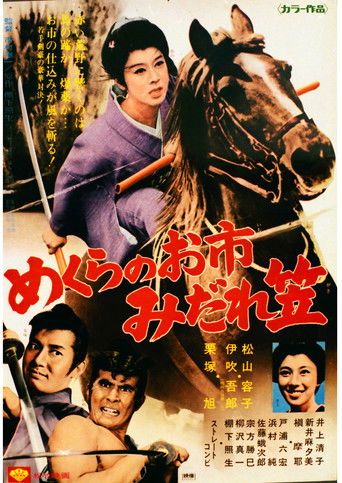
6.9A young female samurai comes upon a dying messenger and agrees to deliver the scroll he was carrying to its destination. However, unbeknownst to her, the scroll is actually a formula for a new kind of gunpowder. An evil clan that is planning to overthrow the Emperor is also after the scroll, and they try to take it from her.
Watch Out, Crimson Bat!
1969
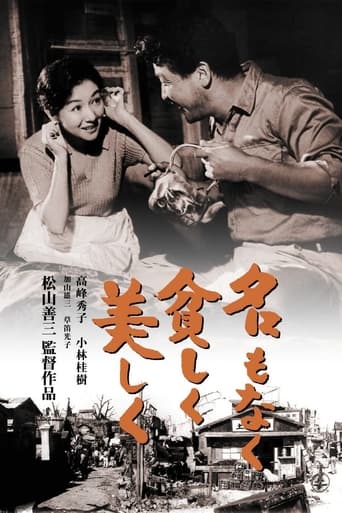 9.0
9.0The story is of two people. One is deaf, the other deaf and mute. They marry after meeting at a school reunion, and the film follows their trials and tribulations ... and joys.
Happiness of Us Alone
1961
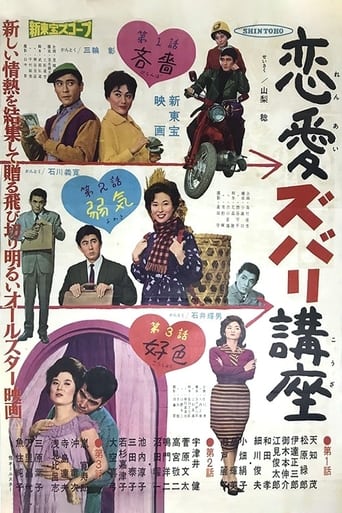 NR
NRA omnibus movie consisting of the three parts: "Kechinbo", "Yowak" and "Kōshoku".
Straight Talk on Romance: The Definitive Guide
1961
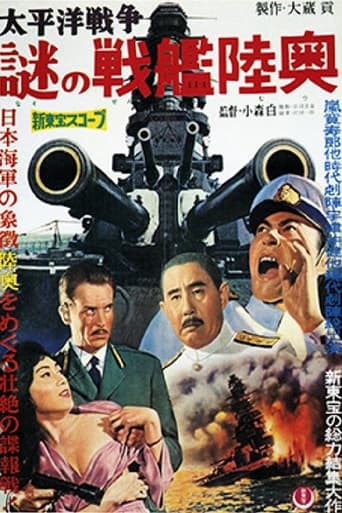 NR
NRDuring the naval battle of Midway in WWII, the battleship Mutsu was in its home port in Japan. The ship's officers and crew were frustrated at not being able to take part in the fighting. They had been held back by orders from the Naval Ministry, but there was also a plot by saboteurs, who were trying to prevent the sailing of the Mutsu. Director Komori developed a suspenseful plot by including a fictional adaptation of the Russian spy Richard Sorge, who had been captured in Japan and subsequently executed. Komori brings a fictional Russian spy to the screen by portraying him as a military attaché at the German embassy. As Germany was an ally of Japan in WWII, a secret agent being a mole in the German embassy is a perfect cover. The interaction of the saboteurs and the officers and crew of the Mutsu make an exciting story.
Enigmatic Explosion of the Battleship Mutsu
1960
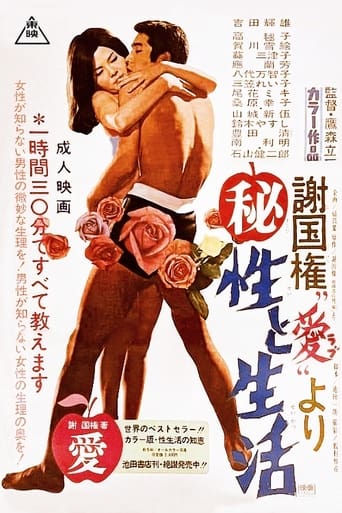 10.0
10.0Dr. Mikami is an elderly somewhat clumsy, very popular therapist, his patients turn to him with all possible and impossible questions. Because Dr. Mikami's specialty is sexual clarification... The world's best-selling sex literature was filmed here in a manner close to the original. And the openness of the image shows the shocking conflicts of young people in scenes that were never filmed. Shocking documents about sex life from the doctor's office.
Sex and Life
1969
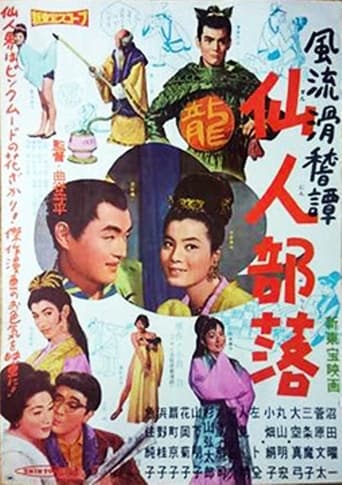 8.0
8.0Live-action adaptation of Ko Kojima's manga "Sennin buraku".
Invitation to the Enchanted Town
1961
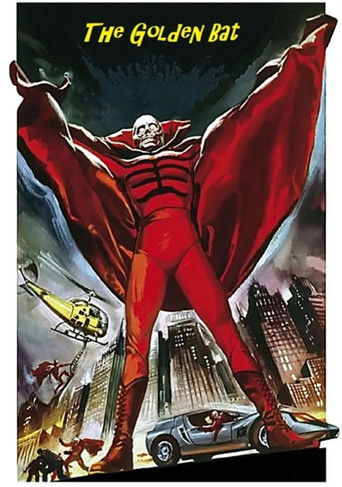 6.0
6.0A teenage boy discovers that the planet Icarus is on a collision course with Earth by gazing through his telescope. Scoffed at by the scientific establishment, the boy is kidnapped and brought to a secret UN base in the Japan alps. He is immediately inducted into the secret program whose mission is to finish the Super-Destruction Beam cannon and destroy Icarus. The cannon is missing a special mineral for the lens. The team heads for a mysterious island in the middle of the Pacific. There they find ancient ruins of Atlantis but they are suddenly attacked by a strange drill shaped metal squid spaceship. It's commanded by the evil being Nazu who has engineered the collision with Icarus! He doesn't want to share the universe with humans and he really doesn't want the cannon finished. The action is on and the team discovers the Golden Bat who has been asleep for over 10,000 years awaiting this very moment to save the earth!
The Golden Bat
1966
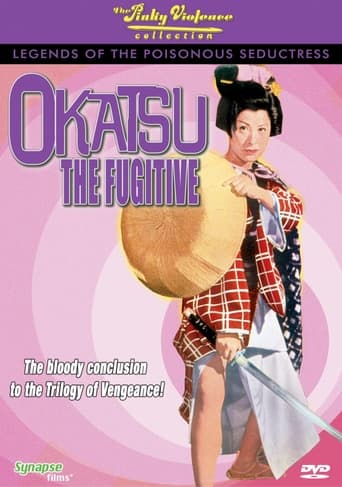 6.4
6.4Okatsu the Fugitive is the third film in the "Ohyaku/Okatsu" series. Okatsu; a "tomboy" who is good with a sword. Her father has found her a man to marry and actually she doesn't seem too upset about the situation. At the same time, a bunch of farmers are being slaughtered by a corrupt group running a tobacco smuggling ring. They're being investigated by a man who is documenting their crimes and when they find out about it, they torture him for information but get none. It's not long before he and Okatsu's mother wind up dead and she sets out for revenge.
Okatsu the Fugitive
1969
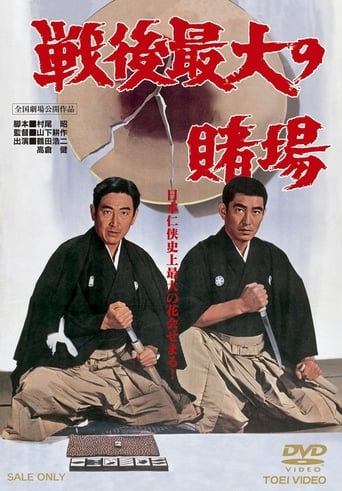 7.0
7.0When Honjo is selected as Kansai district's chairman, Iwasa of the rival gang asks Itsuki to do everything possible to have Honjo step down, which puts Itsuki between a rock and a hard place.
The Biggest Gamble
1969
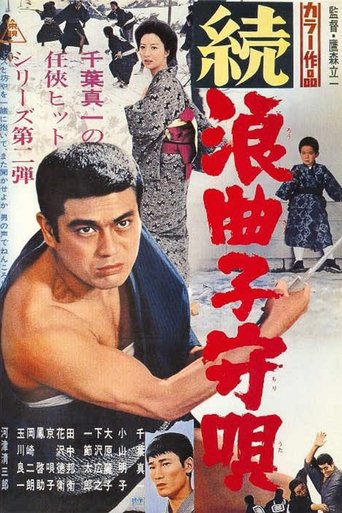 6.0
6.0Bungo is released from prison to find his son Kenichi in the care of strangers. Teruko, the woman originally looking after the boy, was forced to leave town and sell herself into prostitution. Bungo and Kenichi, in their search for Teruko, arrive in a new place and find work running a peddling stall for the upright Tatsumaki family. However, the drifting father and son soon find themselves caught up in a struggle for territory. Boss Negishi, the head of the yakuza family responsible for the death of the former Tatsumaki leader, will stop at nothing to take over the marketplace. Sickened by the injustice, Bungo takes on the rival boss knowing it might cost him his newly acquired freedom..
Game of Chance 2
1967
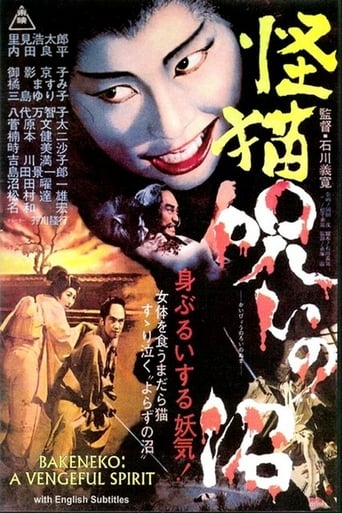 9.0
9.0Nabeshima Naoshige murders his lord, Ryuzoji Takafusa, seeking to gain power and steal his Lord’s wife. To avoid her fate, Lady Takafusa drowns herself along with her cat in a nearby marsh. A decade later, Naoshige’s efforts to steal another woman trigger a curse on him when she also commits suicide at the same marsh — forcing him to suffer the consequences of his past actions.
Bakeneko: A Vengeful Spirit
1968
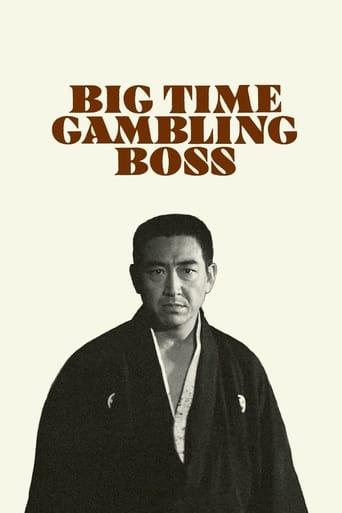 7.2
7.2Tokyo, 1934. The boss of the clan that controls gambling agonizes and some of his followers propose to Nakai to take his place, but he refuses the offer.
Big Time Gambling Boss
1968
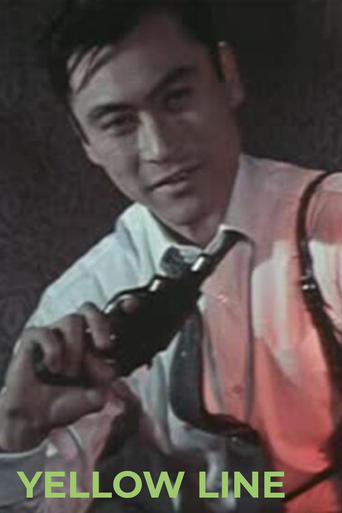 7.8
7.8The murder of the chief official of Kobe city's Customs triggers an investigation of a prostitution ring called the 'Yellow Line' that sells Japanese women. A hired assassin is betrayed by his organization, and kidnaps a woman who happens to be the girlfriend of a newspaper reporter.
Yellow Line
1960
1950s · 27 titles
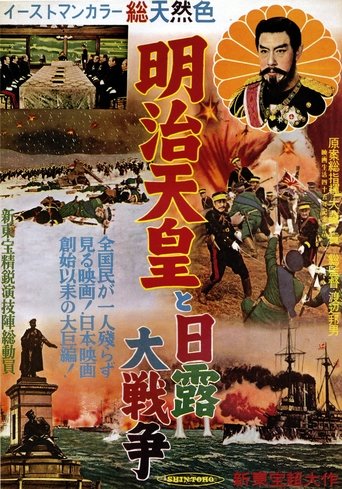 8.0
8.0Meiji Tenno portrays the buildup to the Russo-Japan War. In addition to showing the political events that led to war, it also shows the era from the story of a farm family in rural Japan that sends their son off to war. As such, it could be considered an anti-war movie, showing how, while war is devised by governments, the people do not really understand what war is, and its combatants often do not know what they are fighting for.
Emperor Meiji and the Great Russo-Japanese War
1957
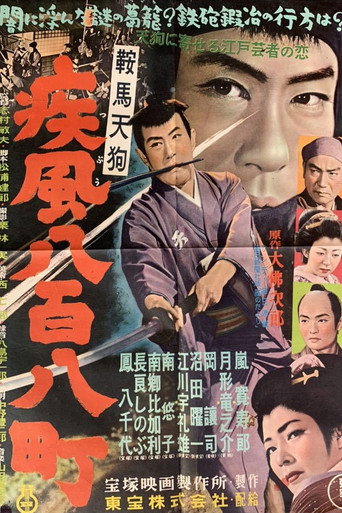 NR
NRKurama Tengu appears in the Great Edo, where conspiracies swirl. The righteous sword flashes as the mystery of a beautiful woman’s disappearance unfolds.
Tengu Kurama: A Strong Wind Through 808 Villages
1954
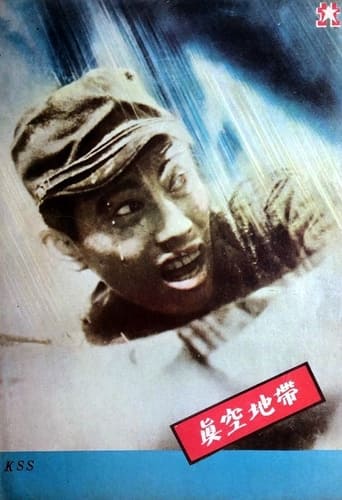 8.5
8.5Just before the end of the war, Japanese soldier Kitani is released from prison, having served his term for theft. Told in flashback, viewers learn about Kitani's past and reasons behind his prison sentence.
Vacuum Zone
1952
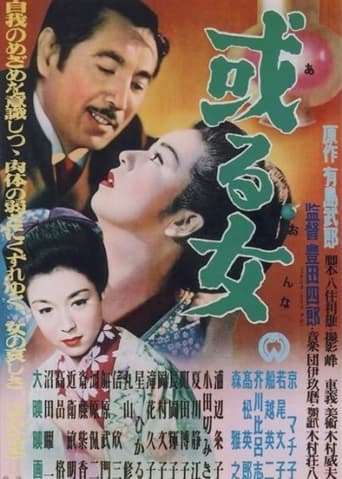 7.0
7.0No synopsis available yet.
A Certain Woman
1954
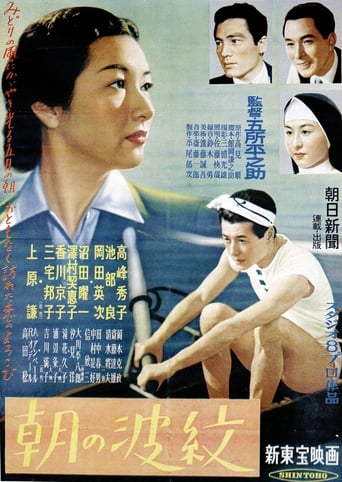 7.0
7.0Atsuko is an office secretary who is also her family's primary source of income and caretaker in postwar Japan.
A Ripple in a Morning
1952
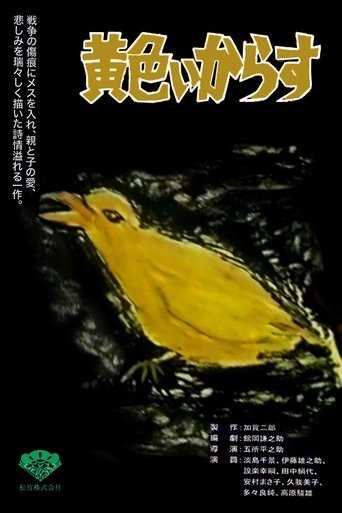 6.7
6.7Ichiro Yoshida, the father of the boy Kiyoshi, who has been repatriated from China, returns home after a ten-year separation. The father, who has been estranged from his son for many years, pays no attention to the boy, often punishes him unfairly, and gives all his tenderness to his little daughter, who was born after his return. The boy sees all the injustice of his father and, offended, leaves home. The father realized that he was wrong, that he was guilty before his son. The mother finds the boy and brings him home. The father and the son become friends from that day on.
Yellow Crow
1957
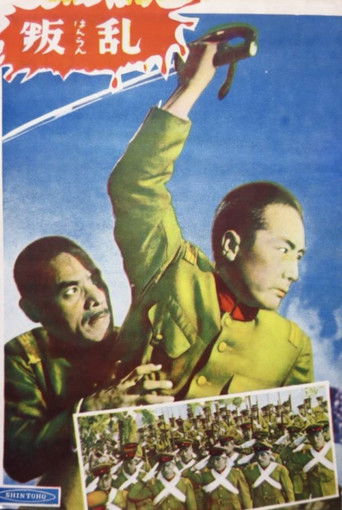 NR
NRNo synopsis available yet.
Hanran
1954
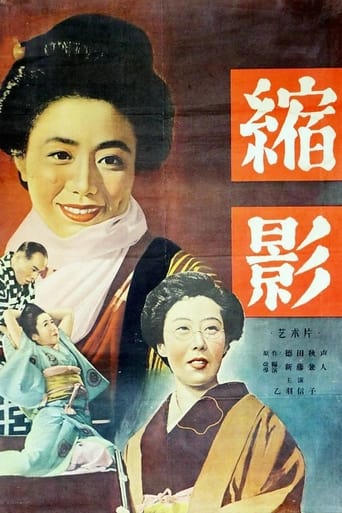 7.8
7.8Ginko, a poor cobbler's daughter, becomes a geisha to support her family. She passes from one geisha house to the next, trying to find love and hope in the process. No matter how hard she tries, she just can't escape her sad fate.
Miniature
1953
 NR
NRIn January 1904, the situation between Japan and Russia had grown tense. The Emperor Meiji is deeply concerned, for Russia has started to build an invincible fortress at Port Arthur, and the relations between two countries have become strained to breaking point. General Nogi has retired to the first reserve and is now a gentleman farmer, but he is prepared for sudden mobilization. Finally, Japan declares war against Russia and Emperor Meiji appoints General Nogi as the commander of the force to attack Port Arthur. However, in spite of several all-out attacks, the fortress is strong and the casualties increase among the Japanese. Because of these reverses, there are loud cries for a change in command. However, the Emperor places his confidence in General Nogi.
Emperor Meiji and General Nogi
1959
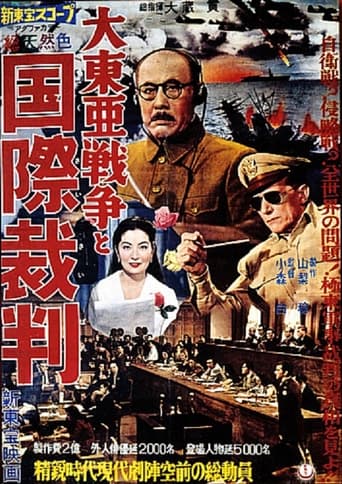 8.0
8.0In 1941, overpopulated Japan faces an economic boycott and its armed forces push further to the south. And despite negotiations between Japan and the U. S. A. war is declared with the attack on Pearl Harbour. Victories follow for Japan on land and sea and her forces push forward to the borders of India. But gradually the tide turns in favour of the Allies and after the atom bombings of Hiroshima and Nagasaki, Japan is compelled to accept the Potsdam Declaration and by the order of the Emperor agrees to unconditional surrender. Under the supervision of the occupation forces the International Military Tribunal opens in Tokyo to try the Japanese war leaders. Established in the cause of justice, and to prevent future aggressive wars the trials drag on for two and a half years. And on December 23, 1948, General Tojo and six other war leaders mount the thirteen steps to the gallows at Tokyo's Sugamo prison.
The Pacific War and the International Military Tribunal
1959
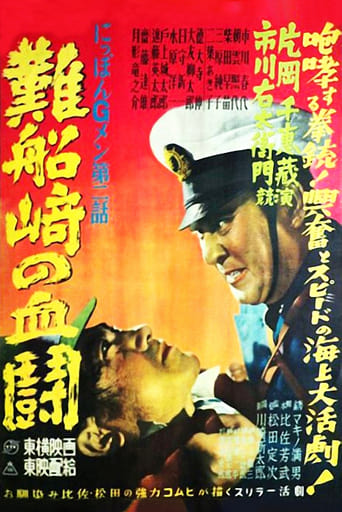 NR
NRThe second part of an action-packed action movie about the struggle between smugglers, the Japanese Coast Guard and G-men. Having caught a suspicious radio signal, the coast Guard discovers that a smuggling transaction is taking place and goes to the place. It was supposed to be a big catch, but they lose sight of the smugglers by finding and rescuing a woman drowning in the sea. The rescued woman says she jumped into the sea while escaping from a slaver's boat... A luxury version featuring the two main stars of the Toei company – Chiezo Kataoka and Utaemon Ichikawa.
G-men of Japan 2: Bloody Duel at Shipwreck Cape
1950
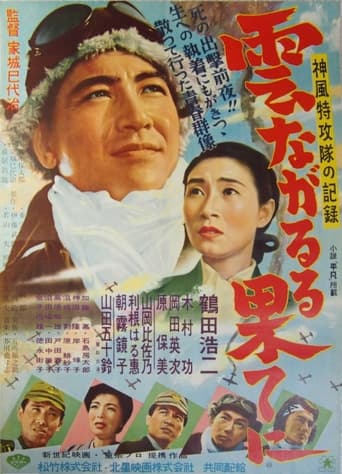 NR
NRA movie that depicts the tragic fate of many Yokaren flight-academy pilots.
At the End of the Clouds
1953
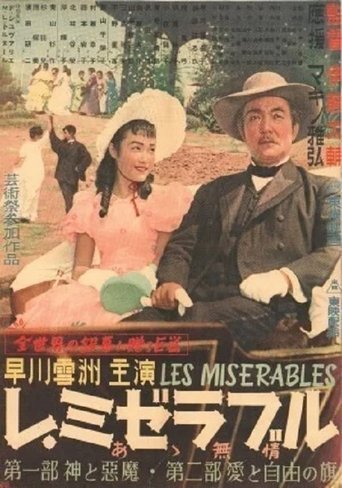 7.0
7.0No synopsis available yet.
Les Miserables II: Banner of Love and Freedom
1950
 9.0
9.0No synopsis available yet.
The Sacrifice of the Human Torpedoes
1955
9.0No synopsis available yet.
Les Miserables I: God and the Devil
1950
 NR
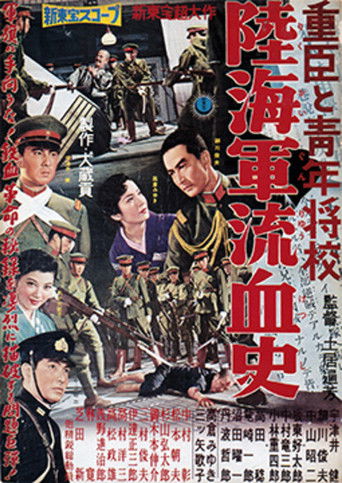
NRA historical film that portrays the fervent and violent actions of young Army and Navy officers, such as the February 26 and May 15 incidents, in a semi-documentary style.
Bloody History of Soldiers
1958
 NR
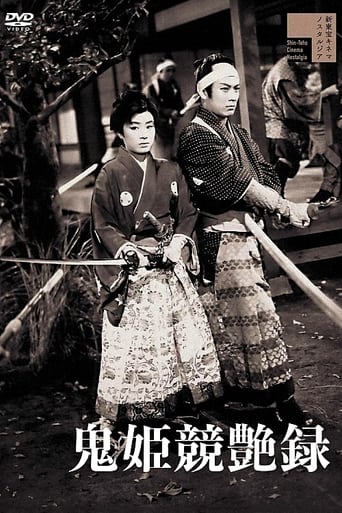
NRAn exciting historical drama in which a beautiful woman secretly solves the family problems of the Owari clan. Hibari Misora plays two roles: a charming princess and a dashing youngster, performs songs and dances throughout the film until the big decisive battle.
Devil Princess’ Beauty Competition
1956
 6.2
6.2Ryutaro is a spy employed by the shogun Tokugawa Iemitsu, who is the target of assassination attempts that aim to hand power over to his younger brother Tadanaga.
The Ceiling at Utsunomiya
1956
 7.0
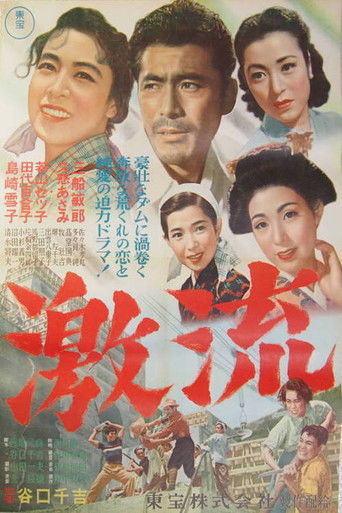
7.0The film follows a young civil engineer, played by Toshiro Mifune, who is assigned to the Tase Dam construction site in what is now Hanamaki City, Iwate Prefecture, and the human relationships involved in building the dam. A masterpiece by director Senkichi Taniguchi, who has worked on numerous films starring Mifune.
Swift Current
1952
 NR
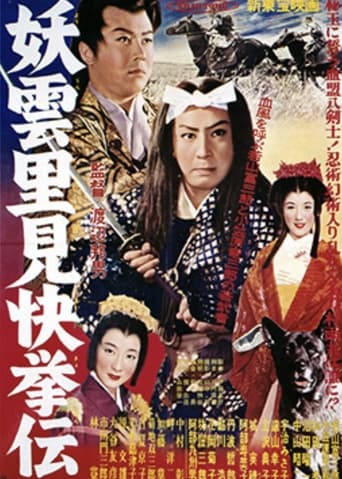
NRIn the first year of Chōroku, Satomi Yoshimi, lord of Takita Castle in Awa, faces defeat by neighboring lord Anzai Kagesuren. As the castle nears collapse, Anzai demands a seed from Yoshimi’s lineage, specifically from his wife, Fushihime. Outraged but facing annihilation, Yoshimi gives Fushihime a string of eight ancestral beads and urges her to escape to loyal retainer Inuda Kobungo. Instead, she goes alone to Anzai, followed by her dog, Hachibo. In a twist, Hachibo attacks and kills Anzai, allowing Fushihime to escape. She later reveals that the beads protected her and predicts that eight warriors bearing these beads will someday defend the Satomi family before passing away. Yoshimi finds one of the beads in Inuzuka Nobuno’s armor and convinces her to serve him. Meanwhile, Baka Daiki, plotting to overthrow Satomi, imprisons Inukawa Shosuke, who tries to intervene, under the watch of vassal Aminen Saomojiro.
Mysterious Clouds: Legend of Satomi's Heroic Deed
1957
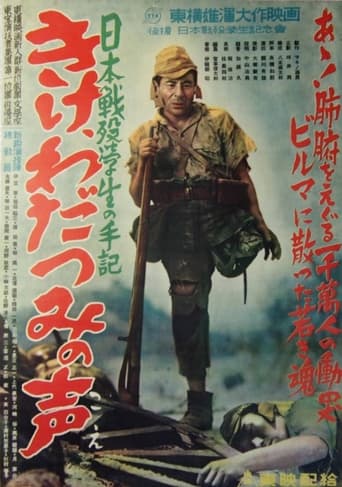 7.5
7.5This film is strongly anti-war film. The film is based on the collection of writings by Japanese student soldiers who died during World War II. The film is located to Burma. It shows the everyday problems of soldiers in contrast of their ideas and the cynicism of their commanders. Soldiers are also victims of military bullying by their commanders.
Listen to the Voices of the Sea
1950
 8.0
8.0Japanese drama.
Where's Paradise?
1956
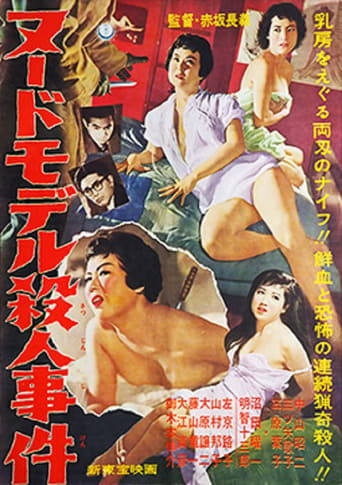 NR
NRNude models are being brutally murdered one after another. Is the painter with the dark sunglasses really the killer?
Nude Model Murder Case
1958
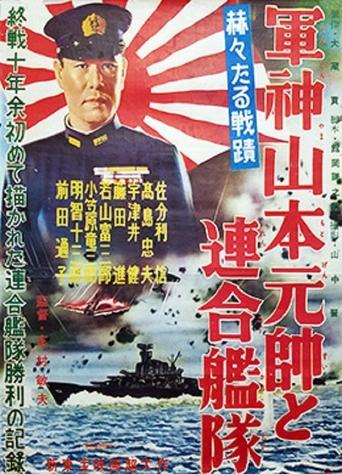 5.0
5.0Admiral Isoroku Yamamoto leads the Combined Fleet of the Imperial Japanese Navy to defeat the American Fleet.
Admiral Yamamoto and the Allied Fleets
1956
 7.0
7.0In May 1945, Japan's defeat was imminent after the attacks on Saipan, Iwo Jima, and the Philippines, and Tokyo was reduced to a sea of fire by another massive air raid. However, within the Ministry of the Army, there were still officers who were enthusiastic about a decisive battle on the mainland. Eventually, the Okinawa garrison was annihilated, and the US military was approaching the mainland, but on July 27th, the Potsdam Conference between the US, Britain, and the Soviet Union broadcast the Triple Joint Declaration, which set out the final terms of surrender for Japan.
日本敗れず
1954
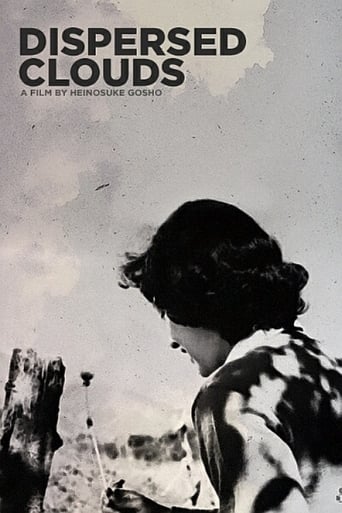 7.0
7.0Five women classmates from a college in Tokyo are on the first stretch of a walking tour when one of them, Masako, falls ill at a railway station. Osen, a middle-aged maid from a nearby inn, takes her in and nurses her, assisted by Dr. Minami, a young physician who diagnoses her illness as a mild case of pneumonia. With Masako in good hands and needing a few days to recuperate, her classmates continue their tour. Masako’s recovery, however, is hampered by her spoiled and immature nature and her determination to punish the world for the loss of her mother.
Dispersed Clouds
1951
 9.0
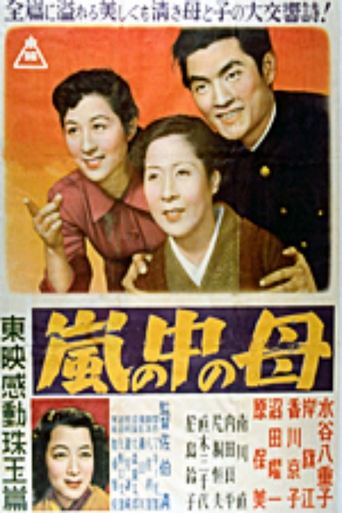
9.0Returning from wartime China, Keiichi reunites with his mother Inako and adopted sister Tomi. He becomes drawn to Tomi’s beauty, and his mother appears supportive. But Keiichi soon meets Tsuneko, a former wartime nurse who has borne his child. Faced with a summons to stand trial for wartime atrocities, he entrusts Tomi and his son to Inako, then voluntarily turns himself in—believing he must answer not just to Japan, but to the world’s conscience.
Man in the Storm
1952
1940s · 2 titles
Series credits
8.0Sakura is a Japanese serialized morning television drama that aired on NHK from April 1 to September 28 of 2002. The series totalled 156 episodes. It chronicles the life of Matsushita Sakura, a Sansei Japanese-American living in Hawaii. She moves to a small town in Japan to be an assistant language teacher for Japanese middle-school students. The show, lasting only 15 minutes long, is on every morning except Sunday, every week. Sakura first comes to Japan living with her grandparents; later, she moves because she has to teach English to the Japanese students. There she learns many valuable lessons and makes new friends.
Sakura
2002
NRChiba Shusaku: Kendo Masshigura is a Japanese period drama that aired on the TBS network from November 2, 1970 to August 30, 1971 in the "Brother Gekijo" slot. It ran for 44 colour episodes of 30 minutes each. Based on Sohachi Yamaoka's novel "Chiba Shusaku", it depicts the youth of Chiba Shusaku, founder of the Hokushin Itto-ryu school of swordsmanship. A hot-blooded young man who calls himself Shusaku enters the dojo of Asari Matashichiro and, through encounters with all kinds of people, grows rapidly both in swordsmanship and in character. Produced by TBS and Shochiku. Rerun on the Japanese CS channel Jidaigeki Senmon Channel from March 17, 2025.
Chiba Shusaku: Kendo Masshigura
1970