
Directing
Forensic Architecture
Born
2010-01-01 (16)
Known for
Directing
Credits
40 titles
Forensic Architecture (FA) is a research agency, based at Goldsmiths, University of London, investigating human rights violations including violence committed by states, police forces, militaries, and corporations. FA works in partnership with institutions across civil society, from grassroots activists, to legal teams, to international NGOs and media organisations, to carry out investigations with and on behalf of communities and individuals affected by conflict, police brutality, border regimes and environmental violence.
Known for
 NR
On 6 November 1985, a guerrilla group known as M19 stormed the Palace of Justice in Bogotá, taking state officials and members of the Colombian Supreme Court hostage. Security forces initiated a counter-siege that lasted two days, leaving over a hundred dead and large parts of the building burned. Instead of focusing on what happened inside the Palace between the guerrillas and the military, a new visual investigation by FA and the Truth Commission examines the logistics of the military in their counterinsurgency operation and what happened to certain individuals once they left the building. -FA
Cajas Negras
2021
 NR
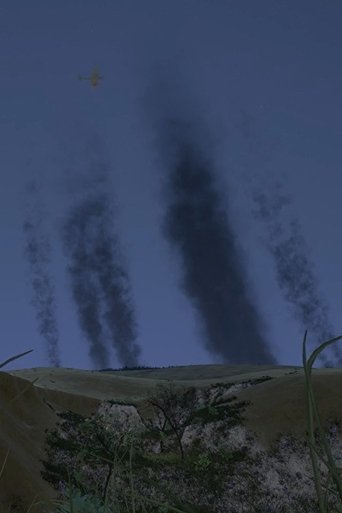
Clouds are always double. Seen from the outside they are measurable objects, seen from within they are experiential conditions of optical blur and atmospheric obscurity. Today’s clouds are both environmental and political. Their toxic fog is easily surrounded by lethal doubt. When ‘post-truth’ and denialism obscure acts of violence and compound the harm, we, the inhabitants of toxic clouds, must find new ways of resistance.
Cloud Studies
2021
 NR
On April 6, 2006, Halit Yozgat was murdered by the National Socialist Underground at an Internet café in Kassel. State intelligence officer Andreas Temme was in the café around the same time. An architectural dissection of his police statement.
77sqm_9:26min
2017
 NR
Along the coastline of the Gaza Strip, beneath layers of rubble, lies one of Palestine’s hidden treasures and one of the region’s most important archaeological sites. Repeated bombings, and the humanitarian disaster inflicted on Palestinian communities by the decades-long Israeli occupation and siege, as well as advancing coastal erosion and necessary development within the enforced densification of Gaza, have placed this unique site under existential threat. -FA
Living Archaeology
2022
 NR
On December 20, 2019, Chilean security forces used unprecedented amounts of tear gas within a relatively small area against people participating in a peaceful and unarmed demonstration. Using open source analysis and fluid dynamic simulations, we measured the concentration of tear gas in the air in that territory to estimate the scale of health risks inflicted on civilians that day.
Tear gas in Plaza de la Dignidad, Chile
2020
 NR
Since 2018, Forensic Architecture has been working with ‘synthetic images’-photorealistic digital renderings of 3D models-to train machine learning classifiers. Model Zoo includes a growing collection of 3D models of munitions and weapons, as well as the different classifiers trained to identify them making a catalogue of some of the most horrific weapons used in conflict today.
Model Zoo
2021
Behind the camera
NROn 6 November 1985, a guerrilla group known as M19 stormed the Palace of Justice in Bogotá, taking state officials and members of the Colombian Supreme Court hostage. Security forces initiated a counter-siege that lasted two days, leaving over a hundred dead and large parts of the building burned. Instead of focusing on what happened inside the Palace between the guerrillas and the military, a new visual investigation by FA and the Truth Commission examines the logistics of the military in their counterinsurgency operation and what happened to certain individuals once they left the building. -FA
Cajas Negras
2021
NRClouds are always double. Seen from the outside they are measurable objects, seen from within they are experiential conditions of optical blur and atmospheric obscurity. Today’s clouds are both environmental and political. Their toxic fog is easily surrounded by lethal doubt. When ‘post-truth’ and denialism obscure acts of violence and compound the harm, we, the inhabitants of toxic clouds, must find new ways of resistance.
Cloud Studies
2021
NROn April 6, 2006, Halit Yozgat was murdered by the National Socialist Underground at an Internet café in Kassel. State intelligence officer Andreas Temme was in the café around the same time. An architectural dissection of his police statement.
77sqm_9:26min
2017
NRAlong the coastline of the Gaza Strip, beneath layers of rubble, lies one of Palestine’s hidden treasures and one of the region’s most important archaeological sites. Repeated bombings, and the humanitarian disaster inflicted on Palestinian communities by the decades-long Israeli occupation and siege, as well as advancing coastal erosion and necessary development within the enforced densification of Gaza, have placed this unique site under existential threat. -FA
Living Archaeology
2022
NROn December 20, 2019, Chilean security forces used unprecedented amounts of tear gas within a relatively small area against people participating in a peaceful and unarmed demonstration. Using open source analysis and fluid dynamic simulations, we measured the concentration of tear gas in the air in that territory to estimate the scale of health risks inflicted on civilians that day.
Tear gas in Plaza de la Dignidad, Chile
2020
NRSince 2018, Forensic Architecture has been working with ‘synthetic images’-photorealistic digital renderings of 3D models-to train machine learning classifiers. Model Zoo includes a growing collection of 3D models of munitions and weapons, as well as the different classifiers trained to identify them making a catalogue of some of the most horrific weapons used in conflict today.
Model Zoo
2021
 NR
On 4 August 2011, Mark Duggan was shot to death by police in Tottenham, north London, after undercover officers forced the minicab in which he was travelling to pull over. As the vehicle came to a stop, Duggan opened the rear door, and leapt out. Within seconds, an advancing officer known only by his codename, V53, had fired twice. V53 would later tell investigators that he saw a gun in Duggan’s hand, and felt his life to be in danger. But following the shooting, the gun in question was found around seven metres away from where Duggan had been shot, on a nearby patch of grass.
The Killing of Mark Duggan
2020
 NR
On the evening of 16 March 2017, a US drone strike targeted Sayidina Omar Ibn al-Khattab Mosque in al-Jinah, in Aleppo province, Syria. According to witnesses, the strike took place when close to three hundred people were in the building. Most were gathering for the night prayer, while others remained in the smaller ‘winter prayer hall’ where a religious seminar had just finished. The Syrian Civil Defense, also known as the White Helmets, claimed to have recovered the bodies of thirty-eight civilians, including five children. The Syrian Observatory for Human Rights reported forty-two dead. -FA
Airstrikes on the al-Jinah mosque
2017
 NR
Return to al-Ma’in chronicles the multiyear collaboration between Forensic Architecture (FA) and Palestinian historian and Nakba survivor Salman Abu Sitta on the reconstruction of his birthplace, the lost village of Ma’in Abu Sitta (or al-Ma’in). Guided by the work and memories of Abu Sitta, FA-researchers reconstructed al-Ma’in’s occupation by Israeli forces on 14 May 1948, its subsequent demolition, and the settlements constructed on its ruins. The movie looks to the present moment and the connections between Israeli military’s conduct and appropriation of Palestinian land during and after 1948, and today in Gaza. The project looks back at the sophistication and sensitivity with which the Abu Sitta family cultivated their land, and the rich agricultural diversity that was lost when Israeli settlements were subsequently constructed over this landscape.
Return to al-Ma’in
2025
 NR
In the early hours of 9 January 2009, a missile struck the Salha family’s home in Beit Lahiya, Gaza. Under the direction of Fayez and Noor, we constructed a digital model of their home, helping father and son to reconstruct the events of the night. -FA
Knock on the Roof: Drone Strike in Beit Lahiya
2014
 NR
When US border agents fired tear gas grenades at civilians in November 2018, photographs showed that many of those grenades were manufactured by the Safariland Group, one of the world’s major manufacturers of so-called ‘less-lethal munitions’. The Safariland Group is owned by Warren B. Kanders, the vice chair of the board of trustees of the Whitney Museum of American Art.
Triple-Chaser
2019
NRWhen US border agents fired tear gas grenades at civilians in November 2018, photographs showed that many of those grenades were manufactured by the Safariland Group, one of the world’s major manufacturers of so-called ‘less-lethal munitions’. The Safariland Group is owned by Warren B. Kanders, the vice chair of the board of trustees of the Whitney Museum of American Art.
Triple-Chaser
2019
 NR
Commissioned by Adalah Legal Center for Arab Minority Rights in Israel, this investigation reveals new evidence about massacres conducted in the Palestinian village of Tantura by Israeli forces after its occupation on 22-23 May 1948 and subsequent depopulation. Launched on the 75th anniversary of the Nakba, it brings together testimonies and photographic evidence to locate several mass graves in which the victims were buried—including one previously unidentified.
Executions and Mass Graves in Tantura
2023
 NR
Between 1960 and 1996, Guatemala was consumed by conflict between an increasingly militarized state and a widespread rural insurgency. The state's counterinsurgency efforts peaked in the late 1970s, when security forces pursued guerrillas into the country's highlands. According to a 1999 report by Guatemala's Commission for Historical Clarification (CEH), a UN-backed body established toward the end of the conflict, more than 200,000 people were killed or disappeared during more than three decades of violence. FA was commissioned by a Guatemalan NGO, the Center for Human Rights Legal Action (CALDH), to support its efforts to gather evidence for the trial of the country's former dictator Efrain Rios Montt, whose brief military regime lasted from March 1982 to August 1983, and senior members of his security apparatus. Montt would eventually be convicted of genocide and crimes against humanity.
Genocide in the Ixil Triangle
2014
On 28 October 2015, a migrant boat left the coast of Western Turkey heading to the closest European coast – the Greek island of Lesvos. The shipwreck resulted in the death of at least 43 people, making it the deadliest incident of that period, also known as “the long summer of migration.” One of the survivors, the artist Amel Alzakout, recorded the journey and the shipwreck on a waterproof camera attached to her wrist. This footage – which also forms the basis of her subsequent film Purple Sea – provides a unique situated perspective on this tragic event at the threshold of Europe.
Shipwreck at the Threshold of Europe, Lesvos, Aegean Sea: 28 October 2015
2020
 NR
In late summer of 2014, the Ukrainian Armed Forces battled pro-Russian separatists for control of the town of Ilovaisk, in the border region of Donetsk, eastern Ukraine. By September, the separatists had won a resounding victory, routing the retreating Ukrainian army. Even as the battle was ongoing, however, allegations swirled that regular units of the Russian army had joined the battle on the side of the separatists, tipping the balance decisively in their favour. Russia denied the charges. But, in what became a watershed moment for open source investigation, communities of researchers, reporters, and citizen journalists gathered substantial and compelling open source evidence for the presence of the Russian military in the region. This video is a documentary piece that ventures both into the realms of science and politics (it’s part of the body of evidence submitted to the European Court of Human Rights in the form of an interactive platform).
The Battle of Ilovaisk: Verifying Russian Military Presence in Ukraine
2019
 NR
The village of al-Araqib in the northern Naqab desert has been demolished over 170 times over the past sixty years. Israeli authorities argue that the village did not exist prior to the 1948 establishment of the state of Israel, and that as such, the Bedouin villagers are trespassers, and their settlements illegal. Since 2015, Forensic Architecture has worked alongside the families of al-Araqib to provide historical and juridical evidence not only to support their own claims to their land, but on behalf of communities throughout the illegalised Palestinian Bedouin villages at the northern threshold of the Naqab desert. - FA
Destruction and Return in al-Araqib
2016
The Beirut port explosion on 4 August 2020 ripped through the city, destroying 70,000 homes and much of the port area and leaving over 300,000 people homeless. Caused by the detonation of vast quantities of ammonium nitrate improperly stored in a warehouse by the port, the blast sent powerful shockwaves through the city. The silos, located just 75 metres from the epicentre of the explosion, became a site of ruin. Since the explosion, these ruins have loomed large in the city’s skyline as a constant reminder of the devastation that followed the blast. For some, the ruins of the silos also evoke the persistent lack of accountability for the tragedy, and are a potential source of valuable evidence.
The Beirut Port Explosion: Destruction of Destruction
2023
 NR
When a leaking petrochemical tank at the Marathon Petroleum refinery in Louisiana's 'Cancer Alley' caught fire, it produced a thick plume of toxic smoke that spread for miles over neighbouring communities. Authorities claimed that nearby residents were unaffected, even as reports of severe health impacts emerged. Fearing a cover-up, some of those residents asked FA to investigate.
Chemical Fire At Marathon Refinery
2024
Shortly after 6:00pm on 4 August 2020, an explosion ripped through the port of Beirut. It killed more than two hundred people, wounded over 6,500, and destroyed large parts of the city. Forensic Architecture was invited by Mada Masr to examine open source information including videos, photographs, and documents to provide a timeline and a precise 3D model to help investigate the events of that day.
The Beirut Port Explosion
2020
 NR
A stretch of the Mississippi River once called "Plantation Country" is now the "Petrochemical Corridor", known to those who breathe its toxic air as "Death Valley". Using advanced cartography and fluid dynamics techniques, we work to support local demands for liability and repair.
If toxic air is a monument to slavery, how do we take it down?
2021
 NR
On 2 June 2020, the PPB deployed large amounts of tear gas in an attempt to force protestors to withdraw from the streets and squares of downtown Portland, unleashing a highly toxic cloud of airborne chemicals onto the same citizens it was tasked with protecting. That day would become known locally as ‘Tear Gas Tuesday’. Drawing on publicly available information, we counted, located and identified the different munitions used that night by the PPB, and created a simulation of the toxic tear gas cloud in order to measure the exposure, spread, and concentration of tear gas throughout the city. -FA
'Tear Gas Tuesday' in Downtown Portland
2023
 NR
Shortly before dawn on 18 January 2017, police raided the Bedouin village of Umm al-Hiran, in the northern Naqab/Negev desert. During the raid, two people were killed: a villager, Yaqub Musa Abu alQi’an, and a policeman, Erez Levi. Israeli officials described the death of Levi as a ‘terror attack’, and suggested that Abu alQi’an was connected to the terror group ISIS. But local residents and activists told a different story: police had fired at Abu alQi’an without provocation. Our work pitted us directly against Israeli politicians and police chiefs, and exposed inconsistencies in the official account of the event, as well as mishandling of evidence after the fact. -FA
Killing in Umm al-Hiran
2019
 NR
On 17 October 2023, a devastating explosion took place in the car park of al-Ahli Hospital in Gaza City. British-Palestinian doctor and distinguished reconstructive surgeon Dr Ghassan Abu-Sittah was working at Ahli Hospital at the time of the blast. In April 2024, Forensic Architecture (FA) began working with Dr Abu-Sittah to reconstruct the events of the night as he experienced them. Using an interview practice called ‘situated testimony’, FA worked with Dr Abu-Sittah to retrace his steps through a 3D reconstruction of the hospital compound, in which FA had geolocated and ‘photomatched’ visual evidence recorded by survivors of the blast, including Dr Abu-Sittah himself, and journalists.
'When It Stopped Being A War': The Situated Testimony of Dr Ghassan Abu-Sittah
2024
 NR
A stretch of the Mississippi River once called "Plantation Country" is now the "Petrochemical corridor", known to those who breathe its toxic air ad "Death Valley". Using advances techniques in cartography and fluid dynamics, FA worked to support local demands for accountability and reparations.
Environmental Racism in Death Alley, Louisiana
2021
 NR
Since Jair Bolsonaro assumed the presidency of Brazil in 2019, vast tracts of the Amazon rainforest and the indigenous communities that live in and care for it have been subjected to increasing violence and a rapid increase in illegal gold mining, encouraged by his administration's rhetoric and policies. The research had three interrelated dimensions: the policies adopted by the Bolsonaro administration, the violent attacks against Yanomami villages, and the destruction of the environment. The evidence strongly suggested that the policies and rhetoric of the Bolsonaro administration before and during his presidential term correspond with the rapid increase in environmental destruction and violence against indigenous peoples throughout the Amazon.
Gold Mining and Violence in the Amazon Rainforest
2022
 NR
Building on Forensic Architecture’s previous investigation into herbicidal warfare and its effects on Palestinian farmers along the eastern perimeter of the occupied Gaza Strip, this investigation marks Land Day in Palestine by examining the systematic targeting of orchards and greenhouses by Israeli forces since October 2023. Our analysis reveals that this destruction is a widespread and deliberate act of ecocide that has exacerbated the ongoing catastrophic famine in Gaza and is part of a wider pattern of deliberately depriving Palestinians of critical resources for survival.
No Traces of Life
2024
 NR
On 1 December 2018, on the margins of a gilets jaunes protest in Marseille, 80-year-old Zineb Redouane was struck in the face by a tear gas grenade as she was standing at the window of her fourth-floor apartment. The following day, she died in hospital. In May 2020, a new element was added to judicial investigation that was ongoing: the report of a ballistics expert, intended to establish whether the officer who fired the shot, a member of France’s CRS riot police, had followed procedure. The report clears the officer, who has still not been identified. Using elements of that report, and a detailed 3D model of the scene, Disclose and Forensic Architecture re-examined the case, reconstructing the precise sequence of events before, during, and after the killing.
The Killing of Zineb Redouane
2020
 NR
On 27 February 2020, the Turkish government opened its borders with Greece in an attempt to exert political pressure on the EU over Syria. Thousands of migrants and refugees were funneled to a single point on the land border between the two countries, the border fence near Kastanies/Pazarkule, with the promise of an open route to Europe. The Greek government responded by deploying its police and military to the region. It warned migrants not to cross, and suspended its asylum system. On 4 March, violence escalated near the border crossing. Reports emerged of shootings, and casualties. Our analysis shows that it is highly probable that the shots that killed Gulzar and, in all likelihood, wounded the remaining six casualties were fired from the Greek side of the border. -FA
The Killing of Muhammad Gulzar
2020
 NR
On 4 October 2010, a home on the outskirts of Mir Ali, North Waziristan, was struck by several missiles. The attack killed five people, including some who were suspected of involvement acts of terrorism. Together with the witness, we reconstructed a digital model of her house, according to her descriptions. This virtual environment then became a medium for testimony: by positioning the witness’ point-of-view within the digital model, we helped her to ‘walk’ through it as if it were her own house. In this way, this project saw the genesis of a new element of FA’s practice, a new mode of witness interviewing, that we call ‘situated testimony’. -FA
Drone Strike in Mir Ali
2013
The August 2020 explosion in the port of Beirut—understood to be one of the biggest non-nuclear explosions in recorded history—killed over 200 people and injured over 6,500, while devastating large parts of the city. Lebanese and international authorities quickly came to the same conclusion: The vast quantities of ammonium nitrate stored in warehouse 12 were detonated by a fire that was the consequence of shoddy welding work that had been carried out by Syrian workers on site earlier in the day. Building on our previous investigation with Mada Masr into this deadly explosion, in which we mapped the progression of the fire, the epicentre of the blast, and the layout of the contents stored inside the warehouse, Forensic Architecture and the FFA Investigative Unit looked into the validity of these widely circulated claims about the origins of the fire.
The Beirut Port Explosion: The Welders
2023
 NR
Vaca Muerta, Argentina, is one of the world's largest shale oil and gas deposits, that deposit is also home to the indigenous Mapuche people. In 2013, a new deal saw U.S. energy giant Chevron (energy) enter Vaca Muerta, opening the region for the first time to the international oil and gas industry. In collaboration with The Guardian, FA investigated a local Mapuche community's claim that the oil and gas industry has damaged their ancestral land, eroded their traditional ways of life and irreversibly damaged the environment.
Oil and Gas Pollution in Vaca Muerta
2019
 NR
Omar Bin Abdul Aziz Hospital, also known as M2, was subject to fourteen strikes by the Syrian military or its allies between June and December 2016, according to the Syrian American Medical Society (SAMS). -FA
Airstrikes on M2 Hospital
2017
 NR
On 8 March 2015, three bombs landed near the Turkey-Syria border, between the town of Atimah, Syria and a nearby internally displaced persons (IDP) camp, where more than thirty thousand civilians were sheltered. No military force claimed responsibility for the attack. Forensic Architecture (FA) and Airwars together determined it was likely to be a US strike on al-Qaeda militants who operated in the area. -FA
Airstrikes in Atimah
2016
 NR
The region, on Colombia’s northwestern Caribbean coast, is the heartland of the country’s banana industry. Urabá is known for extreme political violence, which has gripped the region since the 1980s. Massacres and paramilitary groups have driven away thousands, who left behind their homes and agricultural land. The project shows how dispossession occurred in the shadow of armed repression, massacres, and terror spread by private paramilitary forces, serving local and international banana producers under the protection of the Colombian military. It exposes how these producers benefited from the dispossession of campesinos. -FA
Dispossession and the Memory of the Earth: Land Dispossession in Nueva Colonia
2021
 NR
On July 14 2018, in Gaza City, in the Occupied Palestinian Territories, two Palestinian teenagers climbed onto the rooftop of the al-Katibah building. A short time later the pair, Luai Kahil and Amir al-Nimrah, were killed by a missile fired from an Israeli aircraft. Forensic Architecture (FA) was commissioned by the Israeli NGO B’Tselem to investigate the circumstances of the boys’ death.
Lethal Warning: The Killing of Luai Kahil and Amir a-Nimrah
2018
 NR
Since 2014, the clearing and bulldozing of agricultural and residential lands by the Israel military close to the eastern border of Gaza has been complemented by the unannounced aerial spraying of crop-killing herbicides. Our investigation sought to answer the following questions: how do airborne herbicides travel into Gaza? How far into Gaza does it enter? What is the concentration of the herbicide that drifts into Gaza? And what is the damage to the farmland on the Gazan side of the border? -FA
Herbicidal Warfare in Gaza
2019
 NR
On 6 November 2017, a rescue vessel operated by the NGO Sea Watch (SW) and a patrol vessel of the Libyan coastguard were both en route towards a migrants’ boat, in distress in international waters. The boat, a few hours out of Tripoli, was carrying between 130 and 150 passengers. A confrontational rescue operation ensued, and while SW was able to rescue fifty-nine passengers, bringing them to safety in Italy, at least twenty died before or during the incident, while forty-seven passengers were ultimately ‘pulled back’ to Libya, where several faced grave human rights violations – including being detained, beaten, and sold to another captor who tortured them to extract ransom from their families. -FA
Sea Watch vs the Libyan Coast Guard
2018
 NR
On Monday 15 January 2018, Venezuelan security forces raided a house on the outskirts of El Junquito, 20 kilometers west of Caracas. The target of what came to be known as ‘Operation Gideon’ was Óscar Pérez, the leader of a small rebel group acting against the government of President Nicolás Maduro. Nine people were killed, including Pérez and six other members of his group. All but one were found to have injuries consistent with being shot in the head. Two members of the Venezuelan armed forces were also killed. In order to understand the events that took place that day, FA and Bellingcat analysed material recorded by citizens, security forces, and by Pérez himself, as well as official statements, and leaked audio of police communications. -FA
Standoff in El Junquito
2018
 NR
On the evening of 1 June 2018, a large group of Palestinian protesters gathered at one of the five principal protest sites, near the village of Khuzaa. At 6:31pm, a shot was fired from beyond the border fence into the crowd. The bullet killed Rouzan al-Najjar, 21, a volunteer medic. Two of her fellow medics, Mohammed Shafee and Rami Abo Jazar, were wounded at the same time. The death of al-Najjar, who was widely revered among the protesters, sent shockwaves throughout Palestine. Forensic Architecture was commissioned by the New York Times to undertake spatial analysis of the scene of al-Najjar’s death. By digitally recreating the protest site from video evidence, we used the precise location of the three gunshot victims as a means to derive the trajectory of the bullet, and trace its ‘cone of fire’ back to its origin, a sniper’s berm at the border fence. -FA
The Killing of Rouzan al-Najjar
2019