
Production
Musindo Mwinyipembe
Known for
Production
Credits
5 titles
Known for
 7.1
For decades, the National Geographic Society has presented specials on nature, foreign culture, scientific breakthroughs, and things which fall under the general category of "neat stuff." Each special is self-contained.
National Geographic Specials
1965
 NR
A documentary illustrating the black community's understanding of, and response to, racism in Britain. It presents from a black working class perspective, an analysis of racism within the context of British history and the post-war crisis of the British economy. At the same time the film reflects the increasingly militant response within the black community to the continuing attacks upon it, both by organised fascist elements on the streets, and by the state itself.
Blacks Britannica
1978
 5.0
In October 1952 the British government declared a State of Emergency in Kenya. Its object: the defeat of "Mau Mau." In the war that followed, fewer than 40 of Kenya's 40,000 white settlers were killed while more than 15,000 Africans lost their lives, and hundreds of thousands more were arrested and subjected to a humiliating and often brutal process of "rehabilitation." But what was Mau Mau? A movement based, according to the British Colonial Secretary, on a "perverted nationalism and a sort of nostalgia for barbarism"? Or the Land Freedom Army, an organized political and military response to repression and armed aggression? Using newsreel and previously inaccessible archive footage, and drawing on interviews with participants on both sides, Mau Mau examines the myth and the reality of Africa's first modern guerrilla war.
Mau Mau
1973
 NR
Jomo Kenyatta's death in 1978 brought to an end a political career that encompassed more than 50 years of African history. Kenyatta entered politics in the mid-1920s and then spent 17 years in exile in Europe. He returned to Kenya in 1946, and was elected president of the nationalist movement, the Kenya African Union. Arrested and imprisoned in 1952 for allegedly leading 'Mau Mau', he was released in 1961 and two years later became Kenya's first Prime Minister. In power, the man whom European settlers had once reviled as "the leader to darkness and death" was eulogized by them as a pillar of stability, while former allies challenged him by creating a left-leaning political opposition. Kenyatta weaves archival and contemporary images with interviews with friends and relatives, comrades and opponents, to create a biographical portrait of a key figure in 20th century politics, and a case study of what Frantz Fanon called the pitfalls of nationalism as a political force in Africa.
Kenyatta
1973
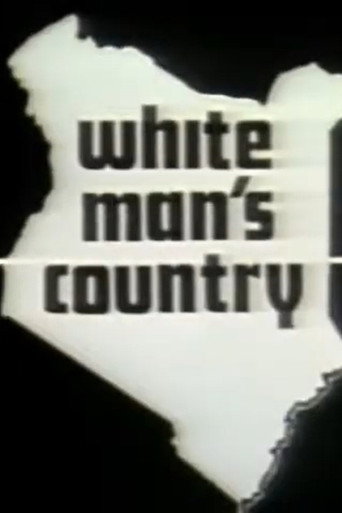 NR
In the late 19th century, Britain, France, Germany and other European states agreed on the division of Africa into a patchwork of colonies, and set about exploring and exploiting their new possessions. White Man's Country combines period photographs and contemporary location footage with the testimony of African and European witnesses, to examine both sides of Europe's "civilizing mission" in Africa.
White Man's Country
1973
Film credits
1970s · 3 titles
5.0In October 1952 the British government declared a State of Emergency in Kenya. Its object: the defeat of "Mau Mau." In the war that followed, fewer than 40 of Kenya's 40,000 white settlers were killed while more than 15,000 Africans lost their lives, and hundreds of thousands more were arrested and subjected to a humiliating and often brutal process of "rehabilitation." But what was Mau Mau? A movement based, according to the British Colonial Secretary, on a "perverted nationalism and a sort of nostalgia for barbarism"? Or the Land Freedom Army, an organized political and military response to repression and armed aggression? Using newsreel and previously inaccessible archive footage, and drawing on interviews with participants on both sides, Mau Mau examines the myth and the reality of Africa's first modern guerrilla war.
Mau Mau
1973
NRJomo Kenyatta's death in 1978 brought to an end a political career that encompassed more than 50 years of African history. Kenyatta entered politics in the mid-1920s and then spent 17 years in exile in Europe. He returned to Kenya in 1946, and was elected president of the nationalist movement, the Kenya African Union. Arrested and imprisoned in 1952 for allegedly leading 'Mau Mau', he was released in 1961 and two years later became Kenya's first Prime Minister. In power, the man whom European settlers had once reviled as "the leader to darkness and death" was eulogized by them as a pillar of stability, while former allies challenged him by creating a left-leaning political opposition. Kenyatta weaves archival and contemporary images with interviews with friends and relatives, comrades and opponents, to create a biographical portrait of a key figure in 20th century politics, and a case study of what Frantz Fanon called the pitfalls of nationalism as a political force in Africa.
Kenyatta
1973
NRIn the late 19th century, Britain, France, Germany and other European states agreed on the division of Africa into a patchwork of colonies, and set about exploring and exploiting their new possessions. White Man's Country combines period photographs and contemporary location footage with the testimony of African and European witnesses, to examine both sides of Europe's "civilizing mission" in Africa.
White Man's Country
1973