

Known for
 NR
No synopsis available yet.
Black Crows
1917
 NR
No synopsis available yet.
Doctor Krainskii
1917
 NR
A Jewish family grapples with issues of identity as local prejudice turns to violence. Adaptation of Yevgeny Chirikov's 1904 play The Jews.
We Are Not to be Blamed for Their Blood
1917
 NR
No synopsis available yet.
Mother-in-law in the Harem
1915
 NR
No synopsis available yet.
Mowed Sheaf in the Harvest of Love
1917
 10.0
No synopsis available yet.
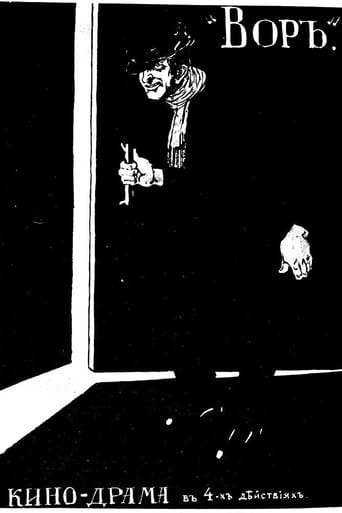
Thief
1917
Behind the camera
NRNo synopsis available yet.
Black Crows
1917
NRNo synopsis available yet.
Doctor Krainskii
1917
NRA Jewish family grapples with issues of identity as local prejudice turns to violence. Adaptation of Yevgeny Chirikov's 1904 play The Jews.
We Are Not to be Blamed for Their Blood
1917
NRNo synopsis available yet.
Mother-in-law in the Harem
1915
NRNo synopsis available yet.
Mowed Sheaf in the Harvest of Love
1917
10.0No synopsis available yet.
Thief
1917
 NR
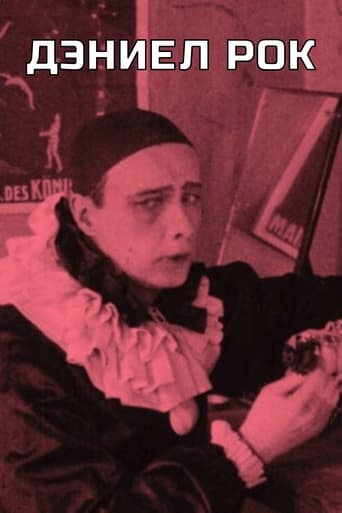
The film discovered in 1916, is the second part of two circus-themed films released in the same year. Daniel Rok is pulp fiction, one of the many attempts to create an action film, following the footsteps of the Danish, the French, and the Americans. A good quarter of Russian pre-revolutionary film industry consisted of pictures like this. A circus drama was almost a sub-genre of its own. What distinguishes this film is the involvement of actual circus performers, some of the biggest names in the industry, many of them having never made another film. One could only wish that all of them would perform their signature acts, like Sergei Alperov and his son Dmitry Alperov, the legendary acrobats. Instead, Williams Truzzi, arguably the most famous Russian circus jockey of his time, plays the villain, Tamara Gamsakurdia, a horseback dancer, appears as his innocent victim, and Nikolai Nikitin, who would soon become the owner and director of the Moscow circus, becomes the noble hero.
Daniel Rok
1916
NRThe film discovered in 1916, is the second part of two circus-themed films released in the same year. Daniel Rok is pulp fiction, one of the many attempts to create an action film, following the footsteps of the Danish, the French, and the Americans. A good quarter of Russian pre-revolutionary film industry consisted of pictures like this. A circus drama was almost a sub-genre of its own. What distinguishes this film is the involvement of actual circus performers, some of the biggest names in the industry, many of them having never made another film. One could only wish that all of them would perform their signature acts, like Sergei Alperov and his son Dmitry Alperov, the legendary acrobats. Instead, Williams Truzzi, arguably the most famous Russian circus jockey of his time, plays the villain, Tamara Gamsakurdia, a horseback dancer, appears as his innocent victim, and Nikolai Nikitin, who would soon become the owner and director of the Moscow circus, becomes the noble hero.
Daniel Rok
1916