
Directing
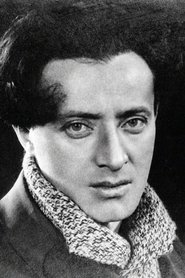
Fridrikh Ermler
Born — Died
1898-05-13 — 1967-07-12
Place of birth
Rezekne, Latvia
Known for
Directing
Credits
36 titles
Fridrikh Markovich Ermler[a] (13 May 1898 – 12 July 1967) was a Soviet film director, actor, and screenwriter. He was a four-time recipient of the Stalin Prize (in 1941, twice in 1946, and in 1951). After studying pharmacology, he joined the Czarist army in 1917 and soon took part in the October Revolution on the side of the Bolshevists. Captured and tortured by the White army, he only became a full party member at the end of the Civil War. From 1923 to 1924 Ermler studied at the Cinema Academy. In 1932 he took part in creating one of the first Soviet talkies – the movie Vstrechny (The Counterplan). He also was one of the founders of the Creative Association KEM (together with E. Ioganson)…
Known for
 3.9
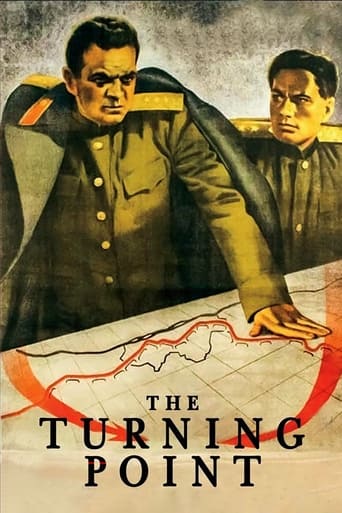
3.9The film tells the story of those who took part in the Battle of Stalingrad in 1942, which became a turning point in the Great Patriotic War. For five months, the city resisted the Nazi offensive. Surrendering Stalingrad to the enemy would have meant losing the war, but holding on to the city seemed almost impossible.
The Turning Point
1945
 5.6
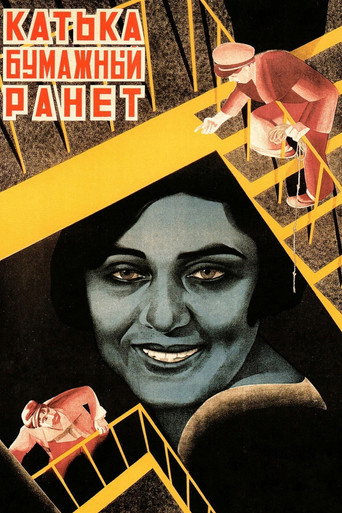
5.6A young country girl who becomes an apple seller is seduced and abandoned. She finds a protector but when he is arrested for theft she finds honest work in a factory.
Katka's Reinette Apples
1926
 5.7
5.7Director Frederick Ermler’s last silent feature and the last of four collaborations with actor Fiodor Nikitin. Nikitin plays an officer who spends a decade after the Great War as a shell-shocked amnesiac, until a glimpse of a woman through a train window sparks the return of his memory. He makes his way back to St. Petersburg, now Leningrad, a man out of time who struggles to make sense of the new society brought about by the revolution.
Fragment of an Empire
1929
An adaptation of Evgenii Zamiatin’s short story “The Cave,” about a musician dying of hunger in his large, unheated Petersburg apartment because he was not needed in the revolutionary city.
House in the Snow-Drifts
1928
 3.0
3.0A docudrama presenting the events which explain how and why Charles Spencer Chaplin made alterations to his original ending of the famous movie “Modern Times” following his encounter with the Soviet director Fridrikh Ermler.
Smile!
2024
 3.3
3.3Short propaganda film released to raise army morale during first months of war. Civil War hero and Red Army commander Vasily Chapayev (killed in 1919 by White Army officers then drowned in the Ural river) swims ashore but it's the summer of 1941. Chapayev asks who are Soviets fighting off this time, hears that it's Germans once again and then gives an inspiring speech. He is played by Boris Babochkin who famously portrayed Chapayev in 1934 biopic.
Chapayev is with Us
1941
Film credits

1940s · 1 titles
Behind the camera
3.9The film tells the story of those who took part in the Battle of Stalingrad in 1942, which became a turning point in the Great Patriotic War. For five months, the city resisted the Nazi offensive. Surrendering Stalingrad to the enemy would have meant losing the war, but holding on to the city seemed almost impossible.
The Turning Point
1945
5.6A young country girl who becomes an apple seller is seduced and abandoned. She finds a protector but when he is arrested for theft she finds honest work in a factory.
Katka's Reinette Apples
1926
5.7Director Frederick Ermler’s last silent feature and the last of four collaborations with actor Fiodor Nikitin. Nikitin plays an officer who spends a decade after the Great War as a shell-shocked amnesiac, until a glimpse of a woman through a train window sparks the return of his memory. He makes his way back to St. Petersburg, now Leningrad, a man out of time who struggles to make sense of the new society brought about by the revolution.
Fragment of an Empire
1929
5.7Director Frederick Ermler’s last silent feature and the last of four collaborations with actor Fiodor Nikitin. Nikitin plays an officer who spends a decade after the Great War as a shell-shocked amnesiac, until a glimpse of a woman through a train window sparks the return of his memory. He makes his way back to St. Petersburg, now Leningrad, a man out of time who struggles to make sense of the new society brought about by the revolution.
Fragment of an Empire
1929
An adaptation of Evgenii Zamiatin’s short story “The Cave,” about a musician dying of hunger in his large, unheated Petersburg apartment because he was not needed in the revolutionary city.
House in the Snow-Drifts
1928
3.3Short propaganda film released to raise army morale during first months of war. Civil War hero and Red Army commander Vasily Chapayev (killed in 1919 by White Army officers then drowned in the Ural river) swims ashore but it's the summer of 1941. Chapayev asks who are Soviets fighting off this time, hears that it's Germans once again and then gives an inspiring speech. He is played by Boris Babochkin who famously portrayed Chapayev in 1934 biopic.
Chapayev is with Us
1941
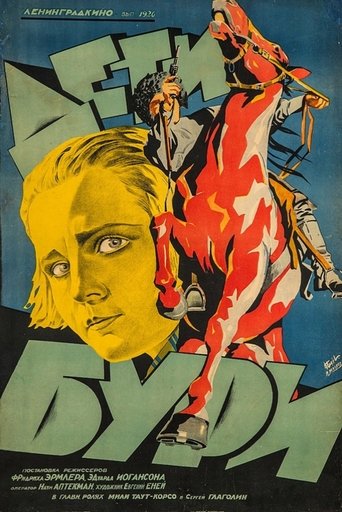 NR
NRLost movie.
Children of the Storm
1927
 NR
NRNo synopsis available yet.
To the Sounds of Dombras
1943
Directed by Fridrikh Ermler.
Skarlatina
1924
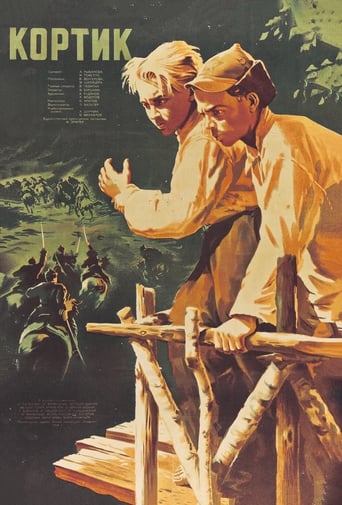 4.4
4.4The teenager Misha Polyakov, being with his mother in a Ukrainian village on vacation with his grandmother and about to return home to Petrograd, offers his best friend Genka to go with him. Suddenly, a white gang of Nikitsky bursts into the village and attacks Misha’s house, where Commissioner Polevoy lives. The purpose of Nikitskiy (aka Nikolskiy) is a dagger located at Polevoy. Saving the commissioner, Misha learns from him the history and secret of the weapon, and receives it for storage with a request to solve the secret. Having returned with adventures to Petrograd, Misha Polyakov with friends begins to unravel the riddle of the dagger, in the handle of which is encrypted text.
The Cutlass
1954
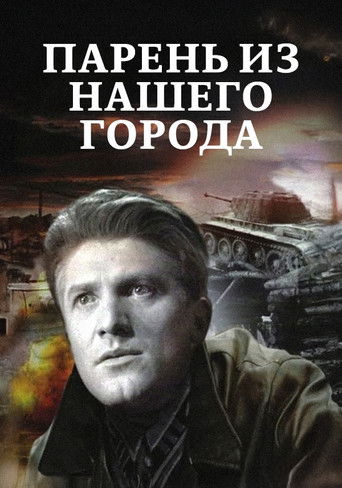 5.0
5.0In the summer of 1932, Sergei Lukonin, a young man from Saratov, leaves his hometown for the distant city of Omsk to attend tank school. His fiancée, Varenka, who soon became an actress, remained in Saratov. In 1936, Sergei went to fight in the Spanish Civil War. He was wounded, taken prisoner, escaped, and returned to training battles, with June 1941 looming ahead.
Lad from Our Town
1942
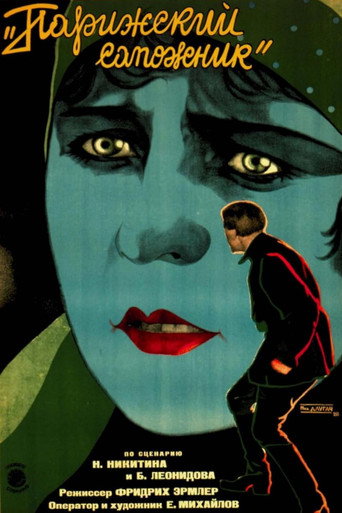 5.9
5.9Komsomol girl Katya Karnakova, a darling of the small provincial town Old Lopsha, is seriously smitten with a fellow Komsomol and does not even try to hide this from others. After some time as a result of their affair, she becomes pregnant.
The Parisian Cobbler
1927
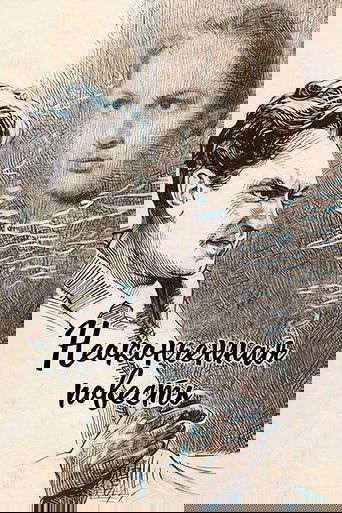 5.3
5.3The local doctor Yelizaveta Maksimovna is a beautiful woman and a wonderful sympathetic person. She is lonely, although she is cared for by a confident and promising colleague. Yelizaveta Maksimovna has one patient, a manly, full-energy ship builder Yershov, chained to the bed with a paralysis of both legs. All doctors recommend him rest, and Elizaveta Maksimovna advises to work and not feel sorry for herself. Yershov with all his heart falls in love with his doctor, and she loves him, but she does not dare to say her feelings. Ershov thinks that he has no hopes, but...
Unfinished Story
1955
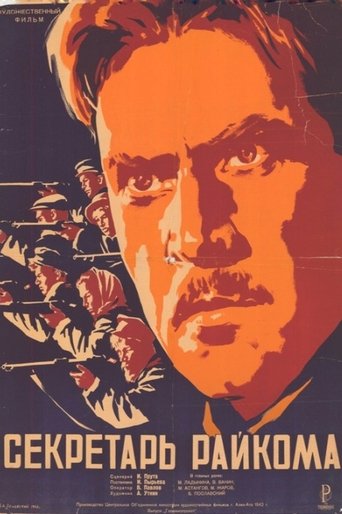 4.7
4.7A story about a Secretary of the Communist Party District Committee who is leading partisans in their fight with the Nazis during WWII.
The District Secretary
1942
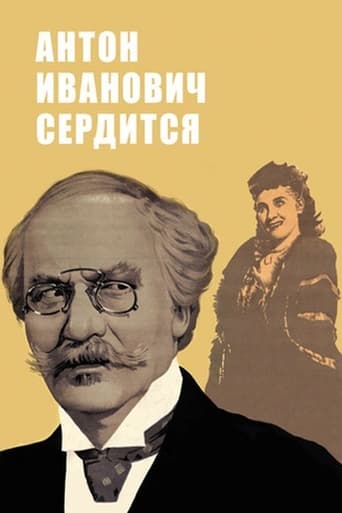 7.0
7.0Anton Ivanovich Voronov is a highly respected professor at the Moscow Conservatoire, who places the music of Bach above everything else and regards it as the ultimate yardstick by which other musical accomplishments must be measured. His daughter, Serafima, is an aspiring singer with great potential, and her father’s anger is aroused when she begins singing in the operetta composed by Aleksei Mukhin, thus abandoning what he considers the higher calling of opera. Mukhin’s work, however, demands a high level of ability from his soloist, and Anton Ivanovich is persuaded of the legitimacy of operetta as a musical genre when, in a dream, he is visited by Johann Sebastian Bach himself, who tells him that ‘people need all kinds of music’.
Anton Ivanovich Gets Angry
1941
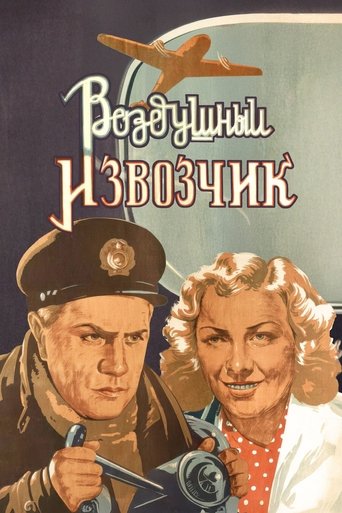 5.7
5.7A musical romantic comedy set in Soviet Union during the first years of WWII.
Air Taxi
1943
 7.0
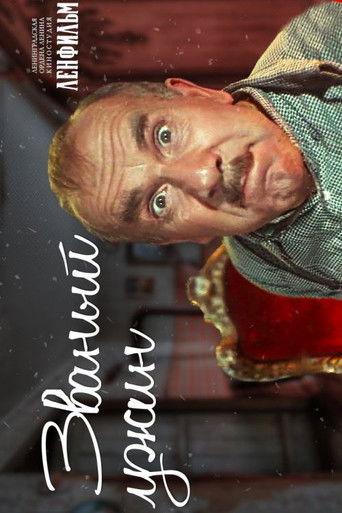
7.0A man invites people to a dinner party, but a dream and his forgetfulness get in the way.
Dinner Party
1953
7.0A man invites people to a dinner party, but a dream and his forgetfulness get in the way.
Dinner Party
1953
 7.5
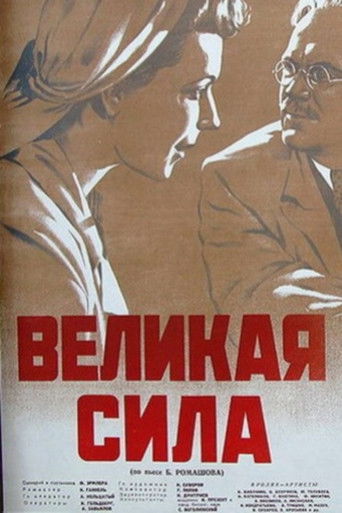
7.5Professor Lavrov, a student and follower of Michurin, is trying to refute the discoveries of the theory of heredity and is successfully working on developing a new breed of chickens with high egg production and productivity. The brave experimenter is supported by the Central Committee of the CPSU in the person of Comrade, who arrived at the experimental poultry farm.
The Great Force
1950
7.5Professor Lavrov, a student and follower of Michurin, is trying to refute the discoveries of the theory of heredity and is successfully working on developing a new breed of chickens with high egg production and productivity. The brave experimenter is supported by the Central Committee of the CPSU in the person of Comrade, who arrived at the experimental poultry farm.
The Great Force
1950
No synopsis available yet.
First Day
1958
 9.7
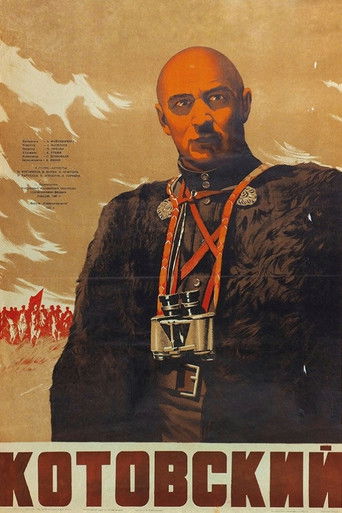
9.7Kotovsky, who went a long revolutionary way and became the recognized military commander of the cavalry troops: commander, brigade commander, commander. Six times he escaped from prison, was sentenced to death, and again escaped to become one of the most ardent warriors of the revolution. His famous equestrian brigade fought with the enemy near Kiev and the Belaya Tserkov, at Nikolaev and Odessa, and did not know defeat anywhere.
Kotovsky
1943
 4.6
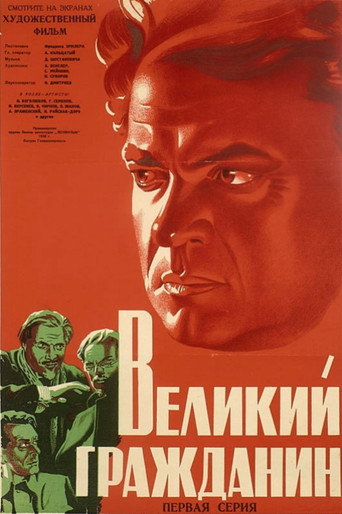
4.6A biography drama about Sergey Kirov, a prominent early Bolshevik leader in the Soviet Union.
Great Citizen
1938
4.6A biography drama about Sergey Kirov, a prominent early Bolshevik leader in the Soviet Union.
Great Citizen
1938
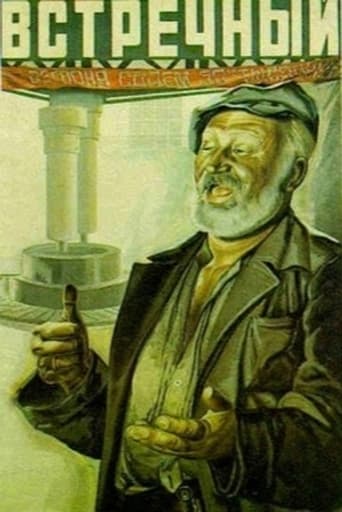 5.0
5.0The story of an effort to catch "wreckers" at work in a Soviet factory. The film’s title-song called "The Song of the Counterplan", composed by Dmitri Shostakovich, became world famous and was adapted into "Au-devant de la vie", a notable song of the French socialist movement of the 1930s.
Counterplan
1932
5.0The story of an effort to catch "wreckers" at work in a Soviet factory. The film’s title-song called "The Song of the Counterplan", composed by Dmitri Shostakovich, became world famous and was adapted into "Au-devant de la vie", a notable song of the French socialist movement of the 1930s.
Counterplan
1932
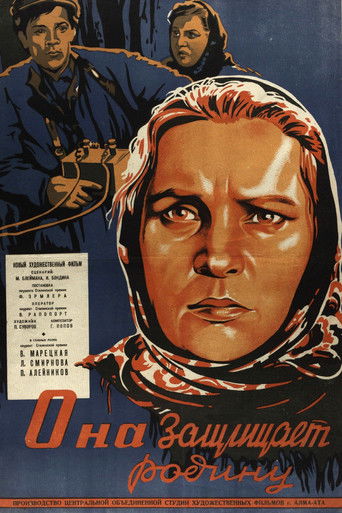 5.8
5.8The first day of the war brings tragedy to a peasant woman, Pasha. Her husband and her toddler son die before her eyes. She and the other villagers leave to go into the woods. Pasha leads the villagers to fight some German troops. Coming out victories, the partisans become a feared opponent of the Germans, with the leadership of Comrade P.
No Greater Love
1943
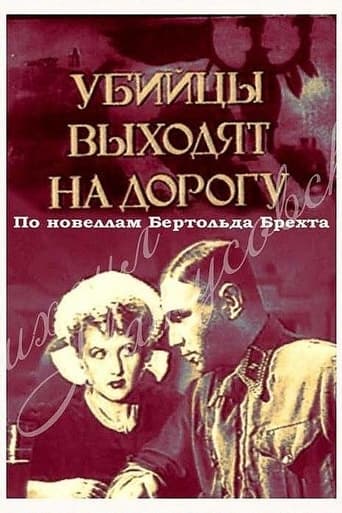 5.4
5.4Brecht's play Fear and Misery of the Third Reich consists of a series of playlets, portraying National Socialist Germany of the 1930s as a land of poverty, violence, fear and pretence. Nazi antisemitism is depicted in several of the sketches, including "the Physicist", "Judicial Process", and "the Jewish Wife".
The Murderers Are Coming
1942
 4.5
4.5A story of true love set during the WWII.
Wait for Me
1943
 5.8
5.8Director Fridrikh Ermler brings together monarchist Vasiliy Shulgin with a nameless historian who accompanies the right wing politician on a stroll through Leningrad, confronting him with his past.
Facing the Judgement of History
1965
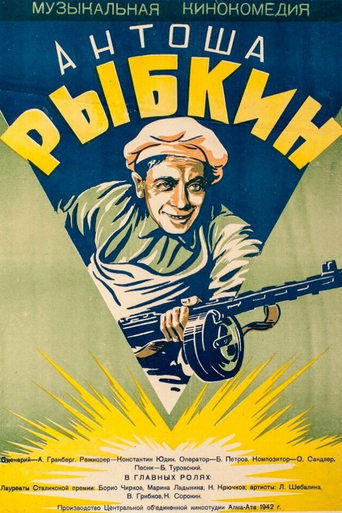 6.0
6.0Before the attack on the village, captured by the Nazis, the commander decides to carry out a distraction — a concert of the front-line brigade of artists. Chef Antosha Rybkin is assigned to play the role of... a German corporal. Dressed in an enemy uniform, he gets to the rear of the enemy and helps his liberate the village.
Antosha Rybkin
1941
 6.4
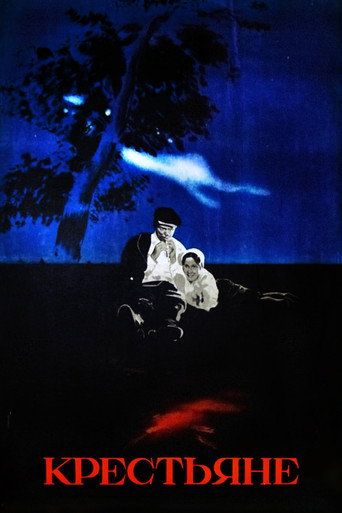
6.4The peaceful life of an exemplary collective farm is being rent asunder by shortages and dissent, and a commissar is sent to uncover the source of the problems, unaware that their is actual sabotage involved.
Peasants
1935
6.4The peaceful life of an exemplary collective farm is being rent asunder by shortages and dissent, and a commissar is sent to uncover the source of the problems, unaware that their is actual sabotage involved.
Peasants
1935