
Directing
Wojciech Has
Born — Died
1925-04-01 — 2000-10-03
Place of birth
Kraków, Poland
Known for
Directing
Credits
41 titles
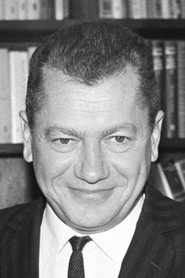
Wojciech Jerzy Has (April 1, 1925 – October 3, 2000) was a Polish film director, screenwriter and film producer. Wojciech Jerzy Has was born in Kraków, with Jewish origin on his father's side, and Roman Catholic on his mother's. During the wartime German occupation of Poland, Has studied at the Kraków Business and Commerce College and later clandestine underground classes at the Kraków Academy of Fine Arts - until it was disbanded in 1943. When the war ended, he went on to study at the reconstituted Academy of Fine Arts in Kraków. In 1946, Has completed a one-year course in film and began producing educational and documentary films at the Warsaw Documentary Film Studio, and in the 1950s mov…
Known for
 7.7
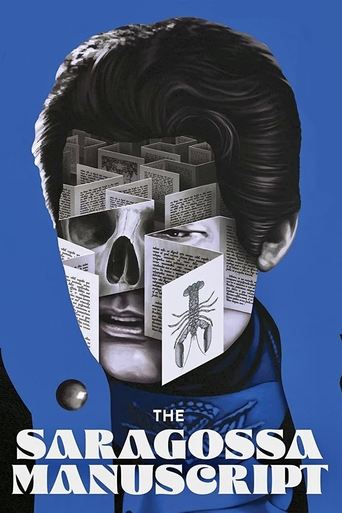
7.7During the Napoleonic wars, a Spanish officer and an opposing officer find a book written by the former's grandfather.
The Saragossa Manuscript
1966
 7.5
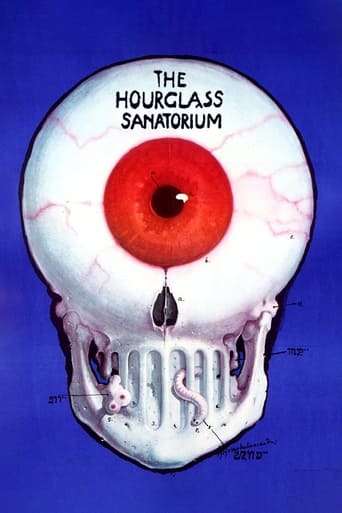
7.5Józef visits a dilapidated sanatorium to see his father, undertaking a strange journey through its many rooms, each of which conjures worlds composed of his memories, dreams, and nightmares.
The Hourglass Sanatorium
1973
 6.6
6.6Set in the 19th century Warsaw. The indolence of aristocrats who, secure with their pensions, are too lazy to undertake new business risks, frustrates Wokulski. His ability to make money is respected but his lack of family and social rank is condescended to. Because of his "help" (in secret) to "the doll's" impecunious but influential father, the girl becomes aware of his affection.
The Doll
1968
A multi-dimensional portrait of one of the most distinctive artists in the history of Polish cinematography. Wojciech Jerzy Has always hovered over the line where the mainstream met the avant-garde and his biography was marked by moments of artistic triumphs and personal tragedies.
Description Found Years Later
2023
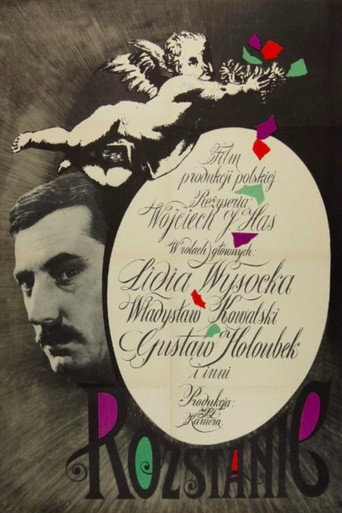 6.7
6.7An actress visits her hometown to attend the funeral of her grandfather. She realizes that the places and people from her past differ from her cherished memories.
Goodbye to the Past
1961
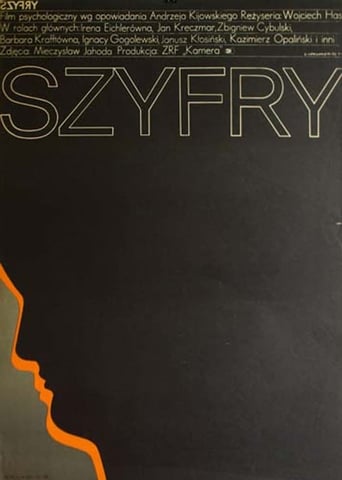 6.9
6.9An elderly man returns to Poland to find his long-lost son, missing since World War II. In his quest the man is forced to contemplate the elusive and coded nature of truth itself.
The Codes
1966
Film credits
2010s · 1 titles
1990s · 2 titles
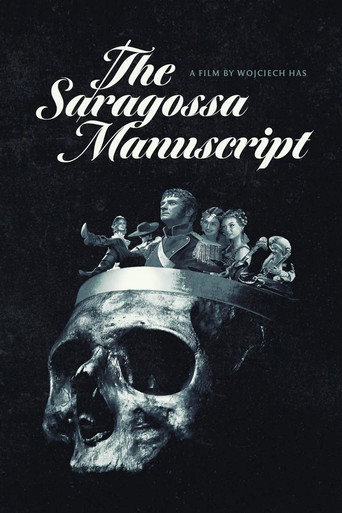 NR
NRMaking-of documentary made for Polish television on The Saragossa Manuscript
Saragossa
1998
The documentary talks about the origins, development and achievements of the Polish film school. People from the environment of the "Filmówka" in Łódź, among others. Wanda Jakubowska, Jerzy Kawalerowicz, Antoni Bohdziewicz, Janusz Morgenstern or Kazimierz Kutz. The film is richly illustrated with archival materials and the first films of the school. The beginnings of the Łódź Film Festival begin in Krakow with the Young Film Workshop; On May 6, 1945, at Józefitów 16 production facility of the Polish Film Production Company, an inaugural meeting is held. After numerous transformations, in July 1946 the Young Film Workshop and the Film Training Course began activities, which can be considered as the beginning of state film education in post-war Poland. The later fate of the school is already connected with Łódź; July 16, 1948, the act of establishing the Film School was signed.
Polish School
1997
Behind the camera
7.7During the Napoleonic wars, a Spanish officer and an opposing officer find a book written by the former's grandfather.
The Saragossa Manuscript
1966
7.5Józef visits a dilapidated sanatorium to see his father, undertaking a strange journey through its many rooms, each of which conjures worlds composed of his memories, dreams, and nightmares.
The Hourglass Sanatorium
1973
7.5Józef visits a dilapidated sanatorium to see his father, undertaking a strange journey through its many rooms, each of which conjures worlds composed of his memories, dreams, and nightmares.
The Hourglass Sanatorium
1973
6.6Set in the 19th century Warsaw. The indolence of aristocrats who, secure with their pensions, are too lazy to undertake new business risks, frustrates Wokulski. His ability to make money is respected but his lack of family and social rank is condescended to. Because of his "help" (in secret) to "the doll's" impecunious but influential father, the girl becomes aware of his affection.
The Doll
1968
6.6Set in the 19th century Warsaw. The indolence of aristocrats who, secure with their pensions, are too lazy to undertake new business risks, frustrates Wokulski. His ability to make money is respected but his lack of family and social rank is condescended to. Because of his "help" (in secret) to "the doll's" impecunious but influential father, the girl becomes aware of his affection.
The Doll
1968
6.7An actress visits her hometown to attend the funeral of her grandfather. She realizes that the places and people from her past differ from her cherished memories.
Goodbye to the Past
1961
6.9An elderly man returns to Poland to find his long-lost son, missing since World War II. In his quest the man is forced to contemplate the elusive and coded nature of truth itself.
The Codes
1966
A film about the Song and Dance Ensemble at the J. Strzelczyk Mechanical Works in Łódź.
Our Team
1955
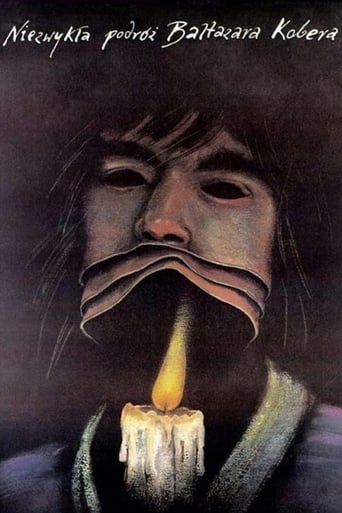 6.6
6.6Story about the young Balthazar thrown from one remarkable event to the other. On his way through a plague hit the landscape, he meets the Kabbalists, priests — and himself.
The Tribulations of Balthazar Kober
1988
6.6Story about the young Balthazar thrown from one remarkable event to the other. On his way through a plague hit the landscape, he meets the Kabbalists, priests — and himself.
The Tribulations of Balthazar Kober
1988
 6.3
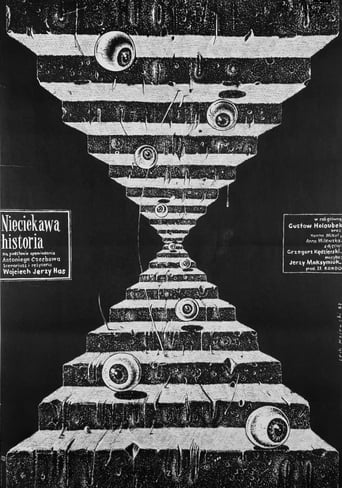
6.3A well-known professor of medicine finding himself at the threshold of autumn of his life, takes stock of his achievements and experiences. "In the end it ends with what has been known for a long time: that conscious life without a fixed worldview is not life, but torment, horror. - wrote Anton Chekhov in one of his letters summarizing "An Uninteresting Story". The protagonist, Professor Nikolai Stepanovich, is a character characteristic of Chekhov's entire oeuvre - a Russian intellectual from the late nineteenth century, depressed by boredom and a sense of his own uselessness and the meaninglessness of his existence.
An Uneventful Story
1983
6.3A well-known professor of medicine finding himself at the threshold of autumn of his life, takes stock of his achievements and experiences. "In the end it ends with what has been known for a long time: that conscious life without a fixed worldview is not life, but torment, horror. - wrote Anton Chekhov in one of his letters summarizing "An Uninteresting Story". The protagonist, Professor Nikolai Stepanovich, is a character characteristic of Chekhov's entire oeuvre - a Russian intellectual from the late nineteenth century, depressed by boredom and a sense of his own uselessness and the meaninglessness of his existence.
An Uneventful Story
1983
 5.6
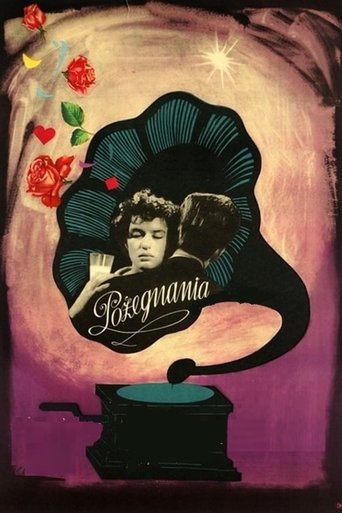
5.6The story takes place before World War II and centers on Pawel, a member of a conservative, middle-class family, and his love for Lidka, a taxi dancer. Social conventions and the lovers' inability to defy those forces Pawel and Lidka benefit. Times change, war breaks out, leading to Pawel sent to Auschwitz while Lidka marry his cousin. Their love has survived and conventions are no longer the issue.
Farewells
1958
5.6The story takes place before World War II and centers on Pawel, a member of a conservative, middle-class family, and his love for Lidka, a taxi dancer. Social conventions and the lovers' inability to defy those forces Pawel and Lidka benefit. Times change, war breaks out, leading to Pawel sent to Auschwitz while Lidka marry his cousin. Their love has survived and conventions are no longer the issue.
Farewells
1958
 6.9
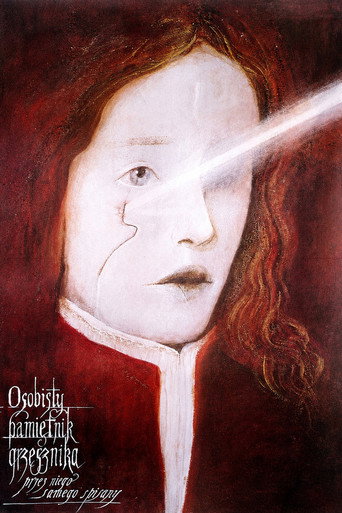
6.9A recently resurrected corpse recounts his life story, focusing on his strange relationship with a murderous alter-ego.
Memoirs of a Sinner
1986
The son of a poor shoemaker dreams of the titular accordion. He is ready to give up his shoes, jacket, and savings in order to get the instrument displayed in an antique shop.
Accordion
1947
The son of a poor shoemaker dreams of the titular accordion. He is ready to give up his shoes, jacket, and savings in order to get the instrument displayed in an antique shop.
Accordion
1947
A miniature parable about a young boy who misunderstands the function of a bird feeder.
Janek’s Feeder
1952
 7.1
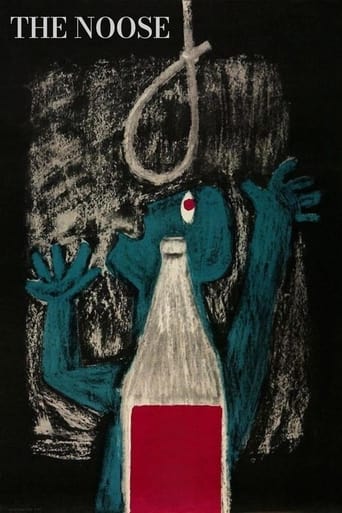
7.1A day in the life of an alcoholic. With the help of his girlfriend Krysia, Kuba attempts to regain control of his life.
The Noose
1958
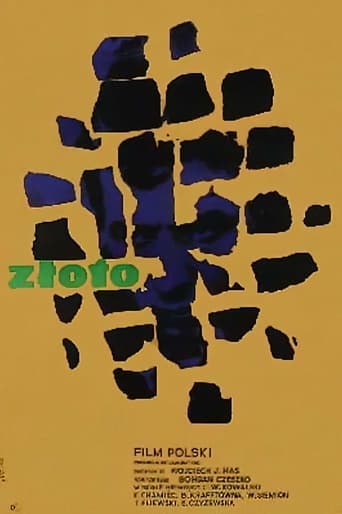 5.8
5.8The inability of a truck driver to relate to normal life after an accident for which he feels himself responsible.
Gold Dreams
1962
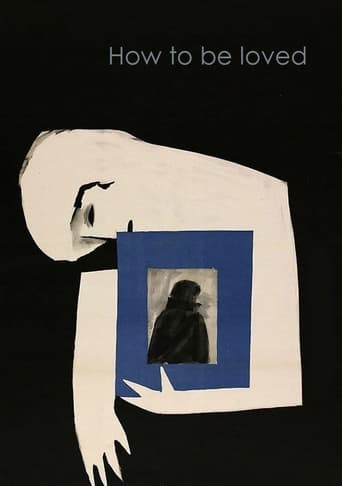 7.4
7.4An actress travels from Warsaw to Paris and during the trip reflects on the last few years of her life. It goes back to the German occupation and her hiding of a fellow actor who has supposedly killed a collaborator.
How to Be Loved
1963
Documentary about the life of farmers in Poland.
The First Crop
1950
Documentary about the life of farmers in Poland.
The First Crop
1950
Students at a school in Podkarpacie spend the entire spring and summer collecting herbs, and in the fall they enjoy the projector they earned themselves.
Herbalists of the Stony Valley
1952
Students at a school in Podkarpacie spend the entire spring and summer collecting herbs, and in the fall they enjoy the projector they earned themselves.
Herbalists of the Stony Valley
1952
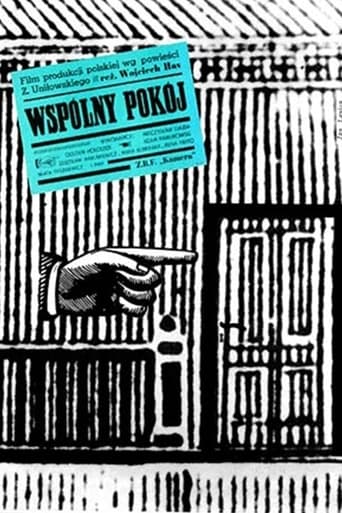 6.1
6.1A subjective adaptation of a well-known autobiographical novel by Zbigniew Unilowski (screenplay by Wojciech Jerzy Has with dialogues by Stanislaw Dygat). The adventures of the tenants of a sublet room in a Warsaw townhouse inhabited mostly by students and novice writers, presented against the social context of the 1930s.
One Room Tenants
1960
6.1A subjective adaptation of a well-known autobiographical novel by Zbigniew Unilowski (screenplay by Wojciech Jerzy Has with dialogues by Stanislaw Dygat). The adventures of the tenants of a sublet room in a Warsaw townhouse inhabited mostly by students and novice writers, presented against the social context of the 1930s.
One Room Tenants
1960
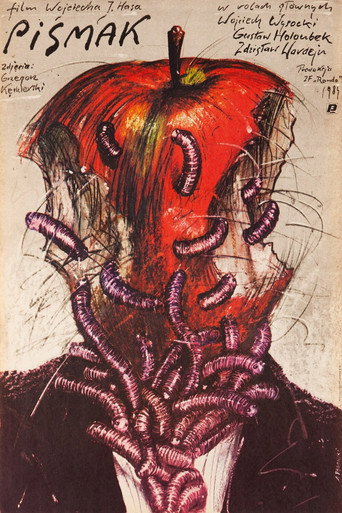 6.7
6.7A young journalist is arrested for freethinking ideas and placed in a cell with a famous safe-breaker and a former cleric, who murdered his mistress' husband.
Write and Fight
1985
 5.0
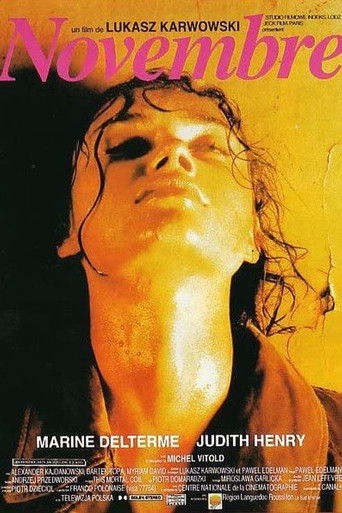
5.0Medical student Sara has visions; she notices telekinesis abilities in herself. She is afraid to admit to anyone that after each loss of consciousness she finds traces of the murders and mutilations she has committed....
November
1992
Documentary about the hometown of Wojciech Has.
My City
1950
Report on the Meeting of Young Builders of People's Poland, which took place in July 1952 in Warsaw.
Scouts at a Rally
1952
 5.8
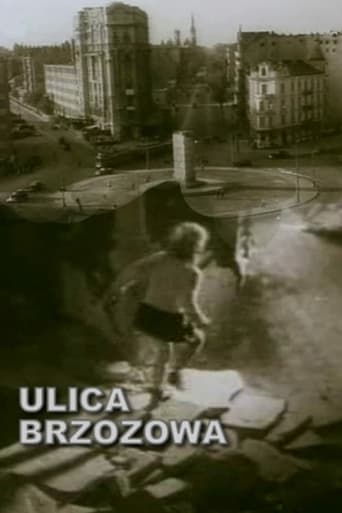
5.8Battered Warsaw is getting back to life after the WW2 destruction. The ruins of the Old Town become homes once again.
Brzozowa Street
1947
5.8Battered Warsaw is getting back to life after the WW2 destruction. The ruins of the Old Town become homes once again.
Brzozowa Street
1947
A kind of early documentary tour of a museum of musical instruments.
Cultural Review 2/53
1953
Short documentary on Poland's first steam locomotive.
Steam Locomotive Pt 47
1949
 7.0
7.0This short documentary fascinatingly depicts a seldom-captured but economically fundamental process: the production and distribution of sugar.
Centralized Control of Production Flow – Sugar
1951