
Directing
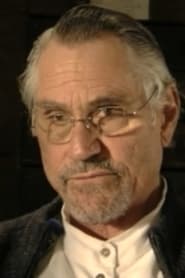
Lawrence Jordan
Born
1934-01-01 (92)
Place of birth
Denver, Colorado, USA
Known for
Directing
Credits
48 titles
Known principally as a maverick spirit in the world of avant-garde American cinema, Lawrence Jordan played an important role in the late 1950s and early 1960s San Francisco art scene. Jordan has made over seventy experimental films, including a number of fanciful, filmic animations made from collaged cut outs of Victorian engravings. The animations extend dreamlike imagery of collaged landscape into a cinematic realm of transformation and free form symbolism. Jordan seeks to delve into the deep structures and Jungian connotations of the mythological images his films reference. His alchemical approach to imagery creates what he has called the “theater of the mind, which you construct. That is…
Known for
 6.0
6.0"Human qualities migrate through light and shadow... Like flames and waves, the dead and the living course through this world... without weight through space and time."
Spectre Mystagogic
1957
 NR
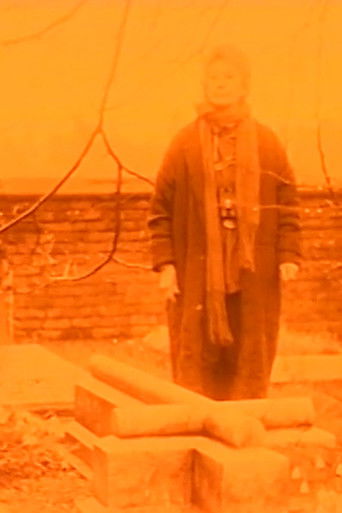
NRThe Grove is the second part of Lawrence Jordan's H.D. Trilogy. It continues what began with THE BLACK OUD (again featuring Joanna McClure as the catalyst) and concludes in STAR OF DAY.
The Grove
1993
 7.0
7.0Jonas Mekas assembles 160 portraits, appearances, and fleeting sketches of underground and independent filmmakers captured between 1955 and 1996. Fast-paced and archival in spirit, the film celebrates the avant-garde as its own “nation of cinema,” a vital community existing outside the dominance of commercial film.
Birth of a Nation
1997
 5.9
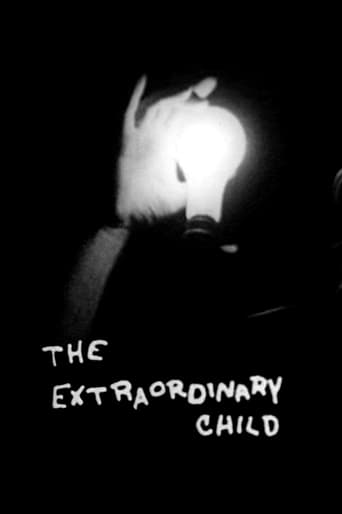
5.9The Extraordinary Child applies his developing style to broad slapstick. His friends from the previous films and the director himself play out a riotous farce about an overgrown baby who steals his father’s cigars. Everyone mugs hilariously. The movie could be taken as another example of the Romantic notion of the artist as a monstrous child or misfit, or a parody of the same rather than the personal confessional statement seen so often in these film movements.
The Extraordinary Child
1954
 8.8
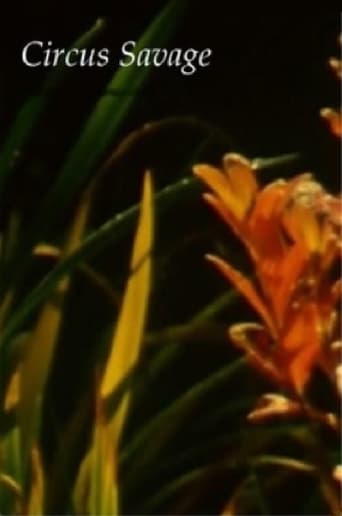
8.8If there is such an old-fashioned thing as "stream of consciousness" in cinema, I suppose this is it. It certainly felt like a flowing stream or river while I was editing day after day, fitting found-sound to found (out-take) footage accumulated over almost sixty years of filmmaking. All the images and sounds buried on reels and spools in the studio came into the light. I felt singularly blessed to be making a non-linear visual autobiography; for it is a fact that most of my life in film is there. The one guiding principle for the construction of the film was the ancient Russian proposal: "instead of canned plays, see a rose, hear a bomb." - Lawrence Jordan
Circus Savage
2009
 6.0
6.0First shown on January 30, 1967, FOR LIFE AGAINST THE WAR was an open-call, collective statement from American independent filmmakers disparate in style and sensibility but united by their opposition to the Vietnam War. Part of the protest festival Week of the Angry Arts, the epic compilation film incorporated minute-long segments which were sent from many corners of the country, spliced together and projected. The original presentation of the works was more of an open forum with no curation or selection, and in 2000 Anthology Film Archives preserved a print featuring around 40 films from over 60 submissions.
For Life, Against the War
1967
Film credits
1970s · 1 titles
1950s · 4 titles
5.9The Extraordinary Child applies his developing style to broad slapstick. His friends from the previous films and the director himself play out a riotous farce about an overgrown baby who steals his father’s cigars. Everyone mugs hilariously. The movie could be taken as another example of the Romantic notion of the artist as a monstrous child or misfit, or a parody of the same rather than the personal confessional statement seen so often in these film movements.
The Extraordinary Child
1954
 6.8
6.8An anatomy of violence. Four young men and two young women are on a drive. There's a rivalry between two guys for one of the girls. On a remote road, the car stalls. The driver hitchhikes for help. Led by the intrepid girl, the others walk toward abandoned buildings, perhaps a mining operation. One of the three guys sits and reads. The intrepid one explores the building and sees something that scares her. She screams; the two rivals and the second girl run to find her. Something she says starts a fight between her two suitors. The one reading a book walks away in disgust. After stopping the fight, the two young women follow. How can this end? Preserved by the Academy Film Archive in 2005.
Unglassed Windows Cast a Terrible Reflection
1953
Wedding gift from Maya Deren to Geoffrey Holder; Stan Brakhage and Larry Jordan made film of wedding at Maya Deren’s invitation, told to be “as free as possible”
Untitled Film of Geoffrey Holder's Wedding
1955
 5.5
5.5Four young men and a young woman sit in boredom. She smokes while one strums a lute, one looks at a magazine, and two fiddle with string. The door opens and in comes a young man, cigarette between his lips, a swagger on his face. The young woman laughs. As the four young men continue disconnected activities, the other two become a couple. When the four realize something has changed, first they stare at the couple who have kissed and now are dancing slowly. The four run from the house in a kind of frenzy and return to stare. The power of sex has unnerved them.
Desistfilm
1954
Behind the camera
6.0"Human qualities migrate through light and shadow... Like flames and waves, the dead and the living course through this world... without weight through space and time."
Spectre Mystagogic
1957
NRThe Grove is the second part of Lawrence Jordan's H.D. Trilogy. It continues what began with THE BLACK OUD (again featuring Joanna McClure as the catalyst) and concludes in STAR OF DAY.
The Grove
1993
8.8If there is such an old-fashioned thing as "stream of consciousness" in cinema, I suppose this is it. It certainly felt like a flowing stream or river while I was editing day after day, fitting found-sound to found (out-take) footage accumulated over almost sixty years of filmmaking. All the images and sounds buried on reels and spools in the studio came into the light. I felt singularly blessed to be making a non-linear visual autobiography; for it is a fact that most of my life in film is there. The one guiding principle for the construction of the film was the ancient Russian proposal: "instead of canned plays, see a rose, hear a bomb." - Lawrence Jordan
Circus Savage
2009
6.0First shown on January 30, 1967, FOR LIFE AGAINST THE WAR was an open-call, collective statement from American independent filmmakers disparate in style and sensibility but united by their opposition to the Vietnam War. Part of the protest festival Week of the Angry Arts, the epic compilation film incorporated minute-long segments which were sent from many corners of the country, spliced together and projected. The original presentation of the works was more of an open forum with no curation or selection, and in 2000 Anthology Film Archives preserved a print featuring around 40 films from over 60 submissions.
For Life, Against the War
1967
 6.0
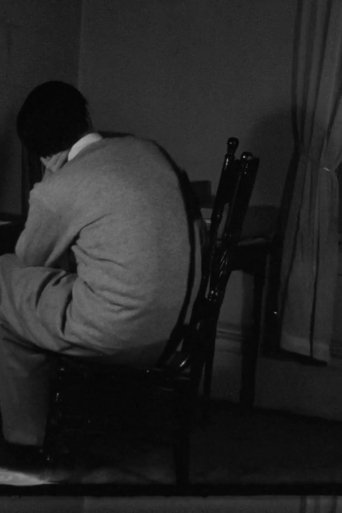
6.0The young man, played by Stan Brakhage, gets himself into a seriously comic mix-up by indulging in semi-sexual fantasies, and allowing the fantasies to take over. This is the best of my very early films and includes my first footage.
The One Romantic Venture of Edward
1956
 5.8
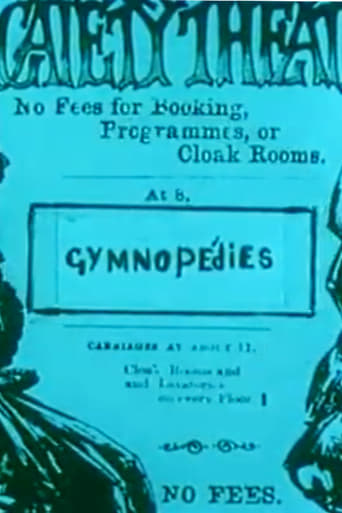
5.8Animation. The theme is Weightlessness. Objects and characters are cut loose from habitual meanings, also from tensions and gravitational limitations. A lyric Eric Satie track accompanies the film. Such a portrait seems necessary from time to time to remind us that equilibrium and harmony are possible, and that we will not dissolve into a jelly if we allow ourselves to relax into them: A horseman rides through the landscape, through the town, but never arrives anywhere in particular. An acrobat swings on a rope above a canal in Venice, and is content just to swing there. Nothing threatens to disturb them. This film is a total contrast to the Kafka-like oddities of Eastern European animation. —Canyon Cinema
Gymnopédies
1965
 7.5
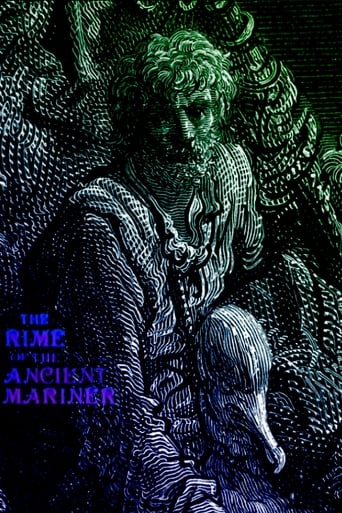
7.5Orson Welles reads the poem especially for this film by Larry Jordan, which is dedicated to the late Wallace Berman, and is made possible by a grant from The National Endowment Of The Arts.
The Rime of the Ancient Mariner
1977
7.5Orson Welles reads the poem especially for this film by Larry Jordan, which is dedicated to the late Wallace Berman, and is made possible by a grant from The National Endowment Of The Arts.
The Rime of the Ancient Mariner
1977
7.5Orson Welles reads the poem especially for this film by Larry Jordan, which is dedicated to the late Wallace Berman, and is made possible by a grant from The National Endowment Of The Arts.
The Rime of the Ancient Mariner
1977
 NR
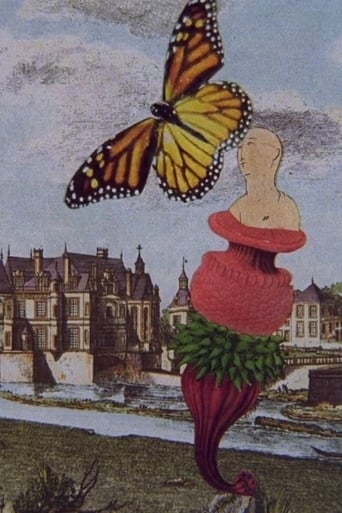
NRA series of vaudeville acts inserted in images of reality, meant to demonstrate the ephemeral nature of all things.
Entr'Acte
2014
A 'found-footage' film, original too shrunk to print on 16mm, it was made as one of four films for a project called GRAVITY SPELLS, an album of film and new music by John Davis, my collaborator in sound. The title derives from a title in the footage: THESE DRIVING DEMONS START YOUNG, and proceeds to show soap box derby races. I made a soap box racer and drove it in the official derby when I was about nine years old. The footage goes on to show various race cars, races, collisions, road cars racing and strange mobile contraptions, including rocket cars and exploding motorcycles. And of course mad drivers. All in the 1920s.
Driving Demons
2014
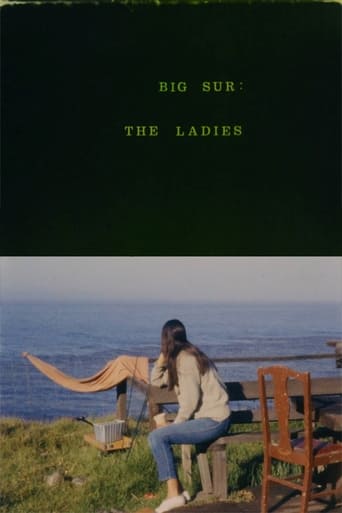 6.0
6.0Against the coastline of the Big Sur country the camera catches swiftly shifting fragments of the nude women at the baths, playing the guitar, cutting the hair, sleeping. The camera movement is used to slightly smear the images onto the film emulsion in a manner parallel with the use of broad different medium from music or painting.
Big Sur: The Ladies
1966
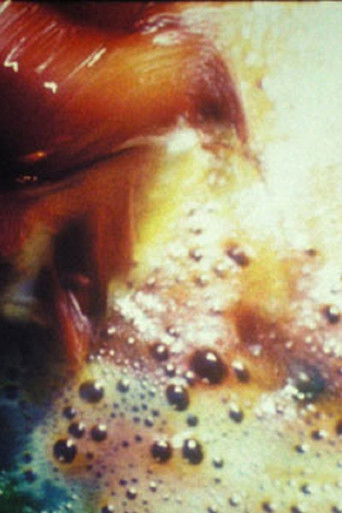 NR
NR(Now) famous sculptor artist George Herms displays drawings on butcher paper as the filmmaker’s daughter plays with colors of light.
Jewel Face
1964
In describing the basis for TRIPTYCH IN FOUR PARTS, artist Lawrence Jordan writes, "Part one is the Portrait of a North Beach artist, John Reed. Part two and three take place in the desert of the Southwestern United States and Mexico, where I went in quest of, and found, the natural habitat of the peyote cactus. I watched this sacred plant cut and dried for the Indians of the Native American Church. I consumed peyote on numerous occasions. In later years when I red Castineda’s books on the teachings on Don Juan I realized that Mescalito was not a figment of Don Juan’s imagination, and that there is a spirit world whether we like it or not. Part four is a document of the time, and exemplifies the poetry that was in me at that time."
Triptych in Four Parts
1958
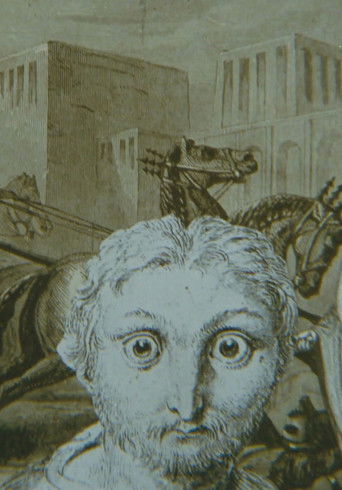 NR
NREverything new is old again (with Lawrence Jordan and Erik Satie in another visual-and-audible collaboration across the decades).
Hommage
2024
Lawrence Jordan's portrait of the reclusive artist Joseph Cornell.
Cornell, 1965
1978
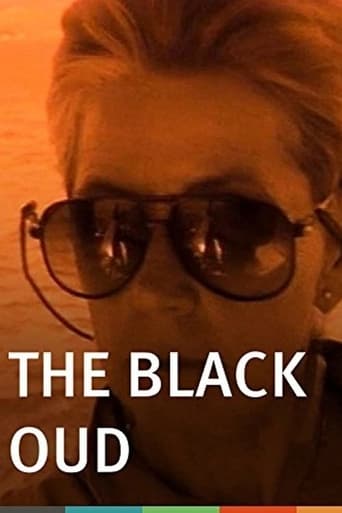 NR
NRThe Black Oud represents a subtle new direction in documentary. I have used the term 'bio-documentary' to describe this slight, though essential, difference between my film and the majority of personal or experimental documentaries made in the last decade.
The Black Oud
1992
 NR
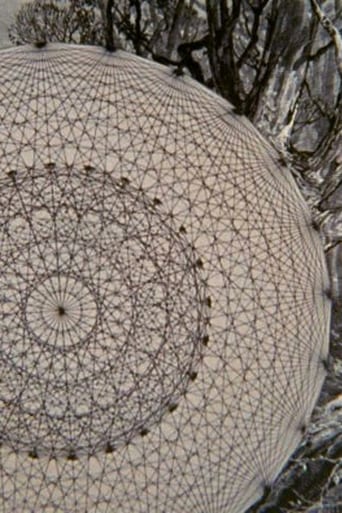
NRThis is a classing Jordan animation, primarily in B/W, with touches of color. Actually, the engraved art work was film on color negative, so that subtle variations in tone are recorded. The mood--enhanced by John Davis' original music--is dream-like. It is both lyric and crackling, producing a kind of anticipatory tension. The scenes, in the usual Jordan manner, follow the surreal principle of placing objects and people where the ought not to be, and making movements that in the waking world are impossible. Each scene is a kind of drama from another world.
Night Light
2016
 10.0
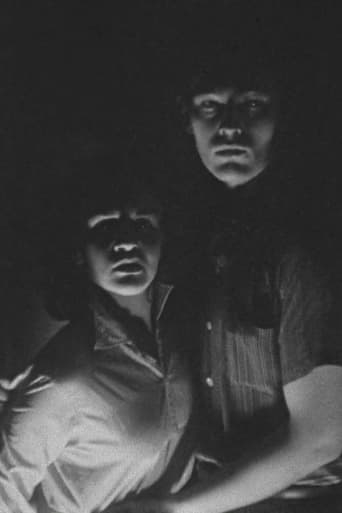
10.0In the rarely-seen THREE, one begat three became two and then one again.
Three
1956
 8.0
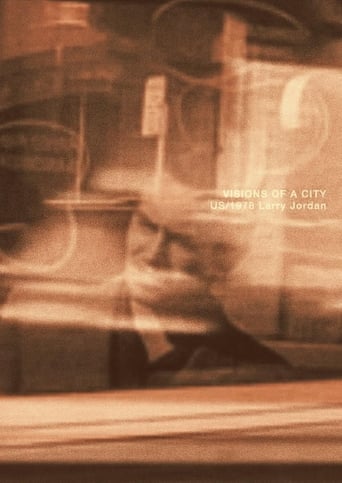
8.0Sepia toning lends a romantic (even wistful) quality to Larry Jordan's film Visions of a City, which he shot in San Francisco in 1957 and edited in 1978. The pace is un-irritating, in contrast to the San Francisco of today; but unlike the equal weight Helen Levill gives to all her subjects, there is an internal evolutionary development in the Jordan film that ultimately delivers a story. Until the introduction of the human protagonist, poet Michael McClure, we are treated to an extravagant display of visual delights.
Visions of a City
1978
 NR
NRTwo distinct idylls: one of summer, one of winter. Accompanied by appropriate music (the sonatas are not silent), each one moves through a period of time and place. Summer takes place in my first primarily annual garden. Joanna McClure is seen moving among the brilliant annual flower colors. Winter is a misty, mood-filled exploration of the Sonoma County hills and small lakes. The time is somewhere around 1985 and is a true document of a part of what was happening in my life at that time (Canyon Cinema)
Silent Sonatas
2007
 NR
NRA full production: sync-sound drama with cast, crew, color neg., and 16mm wide screen cut-off (normal projector and lens). My intention was to follow James Agee's idea to present "an imaginary story against a background of reality." The imaginary story is of Paul Rose and his past incarnation as a woman in classical Greek times. I collaborated with George Kuchar, who did special sets for the film.
The Apparition
1976
 4.0
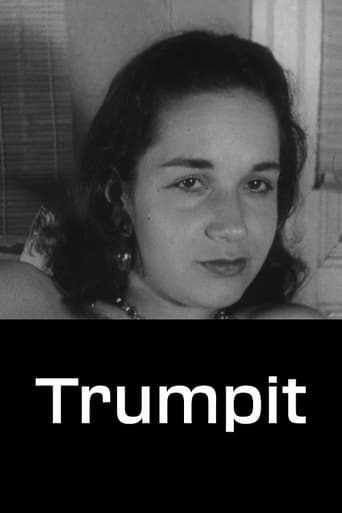
4.0Featuring a card game played on the body of a naked woman, Lawrence Jordan portrays male sexual frustration while slyly satirizing Hollywood reaction shots.
Trumpit
1956
 8.0
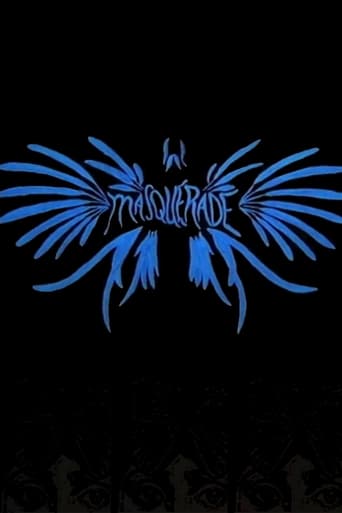
8.0For the first time I am animating hand-painted engraved cut-outs on a full-color background. The film is mood-filled: A duel scene in a snowy forest, obviously the morning after a masquerade ball. Harlequin lies dying, while Red Indian walks away with the wings of victory. The woman between them appears, cat-masked. The mask dissolves away. Her spirit passes into the face of the sun upon the sun upon the sun flower. But Harlequin cannot escape death. The blue world engulfs him.
Masquerade
1981
The wanderings (and Lawrence Jordan's "Odyssey" triptych) begin in the late 1950s when the filmmaker joined the U.S. Merchant Marines and sailed through stormy and serene weather to the Orient. WATER LIGHT is an impression of that far wandering.
Water Light
1956
 4.0
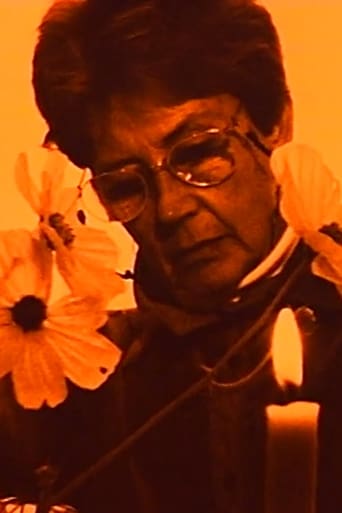
4.0The film is simply the internal, subliminal (poetic) thoughts of an aging woman poet as she travels the world, alone, probably for the last time, thinking of a friend she has lost. Finally, she returns home to write ("write or die"). These story elements are all included in the last long poem of H.D. when she was in her 80s. - Lawrence Jordan
Star of Day
1993
"The strangeness of this film is laced with carefully moulded apocalypses as the filmmaker explores a vision of life beyond death – the Elysian fields of Homer, Dante’s Purgatorio, de Chirico’s stitched plain. A moving single picture. Evolving the structure or script for the film involved a process of controlled hallucination, whereby I sat quietly without moving, looking at the background until the pieces began to move without my inventing things for them to do. I found that, given the chance, they really did have important business to attend to, and my job was to furnish them with the power of motion. I never deviated from this plan." —Canyon Cinema
Hamfat Asar
1965
One of Lawrence Jordan's earliest animated films, PINK SWINE is an energetic and playful mix of various animation styles. Described as "an anti-art dada collage film," this free-form short presents cut-out images animated across old photos (a style picked up by Terry Gilliam a few years later) and found objects that dance to the beat of the rock-and-roll soundtrack. He produced this short during a summer spent with Joseph Cornell and Jordan edited the film entirely in camera, making the upbeat visual rhythm of this delightful lark even more impressive. –Sean Axmaker
Pink Swine!
1963
 NR
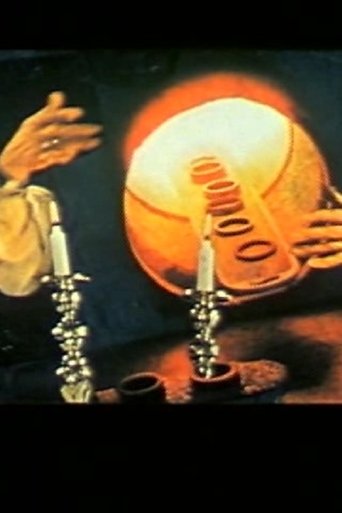
NRPainter and collage artist, Jess (Collins) performs 41 (now lost) collages to (his) selected sound bits in the manner of a turn-of-the-century nickelodeon.
The Forty and One Nights
1961
 5.3
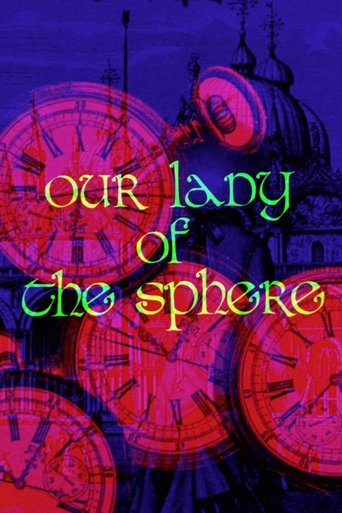
5.3Our Lady of the Sphere uses cut-out animation to craft a bizarre science fiction experiment. Moving spheres, such as balloons and bubbles, are superimposed on static backgrounds to suggest travel and discovery.
Our Lady of the Sphere
1969
 NR
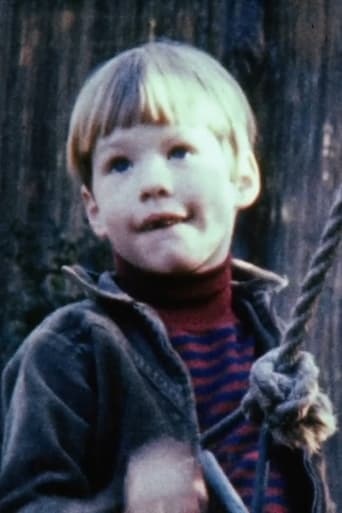
NRA little boy swings, breaks sticks, looks up into the sky, himself a cherub, while on the soundtrack Chad and Jeremy sing "and if a hundred boys should die, we can send a hundred more." An anti-war film made in the Vietnam era.
Johnnie
1964
 NR
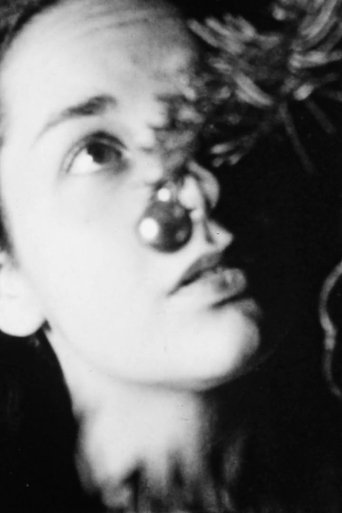
NRFantasy/psycho-drama of the cat, the candle and the Christmas tree.
Undertow
1955
 NR
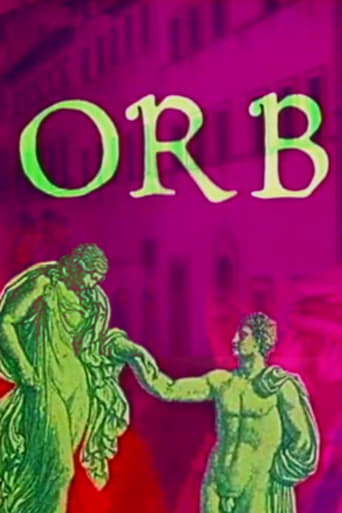
NRA compact, full-color cut-out animation as ephemeral as the colors swimming on the surface of a soap bubble. The eternal round shape, the orb (sun, moon, symbol of the whole self) balloons its inimitable and joyous course through scene after scene of celestial delight, fixing at last as the mystical globe encasing the lovers whose course it has paralleled throughout the film.
Orb
1973
 9.0
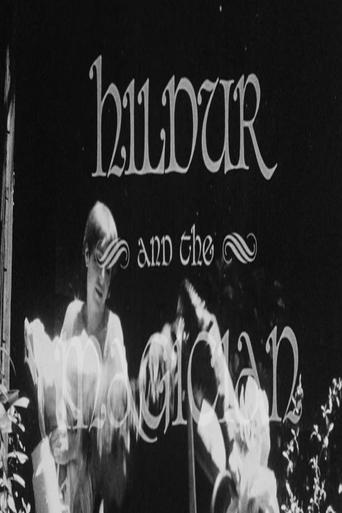
9.0In a woodland, a foolish, bungling magician prepares a potion to aid Hildur, the fairy queen, in rescuing her ward, a princess, who has been abducted by a gnome. The wicked "mortal queen" has threatened the princess with death. By an accident, the magician's potion causes Hildur to become mortal, although subliminal recollections of her mystic existence remain to haunt her.
Hildur and the Magician
1970
9.0In a woodland, a foolish, bungling magician prepares a potion to aid Hildur, the fairy queen, in rescuing her ward, a princess, who has been abducted by a gnome. The wicked "mortal queen" has threatened the princess with death. By an accident, the magician's potion causes Hildur to become mortal, although subliminal recollections of her mystic existence remain to haunt her.
Hildur and the Magician
1970
9.0In a woodland, a foolish, bungling magician prepares a potion to aid Hildur, the fairy queen, in rescuing her ward, a princess, who has been abducted by a gnome. The wicked "mortal queen" has threatened the princess with death. By an accident, the magician's potion causes Hildur to become mortal, although subliminal recollections of her mystic existence remain to haunt her.
Hildur and the Magician
1970
 NR
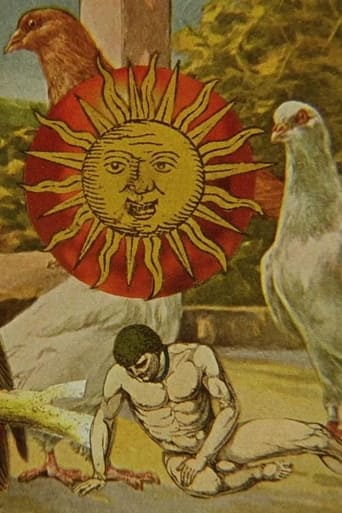
NRThis short piece is somewhat romantic, despite its title. We do see the ogre however. He inverts himself into the action throughout the film. As usual, the action is partly symbolic, partly surreal.
The Ogre's Garden
2019
Avant-garde short by Lawrence Jordan.
Rodia-Estudiantina
1966
Dante's fantasy of hell, and his yearning after the Epic Poetry form of Virgil, the Latin poet. Again the magnificent illustrations of Gustav Dore, the actual inspiration for the film. Presented on each of the seventy-six illustrated first edition plates, a fast-moving condensed version of INFERNO takes place, with a voice speaking the appropriate lines of Dante, according to the Lawrence Grant White English translation.
Inferno
2014
 10.0
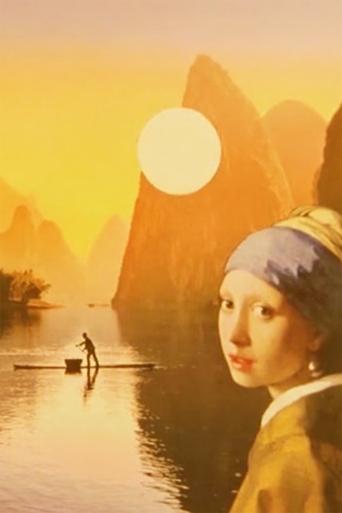
10.0A new and original collage film by Lawrence Jordan.
Oz
2019