
Known for
No synopsis available yet.
Balladyna
1984
No synopsis available yet.
Na baňu klopajú
1981
No synopsis available yet.
Americká tragédia
1977
No synopsis available yet.
Parížski mohykáni
1972
 9.0
9.0No synopsis available yet.
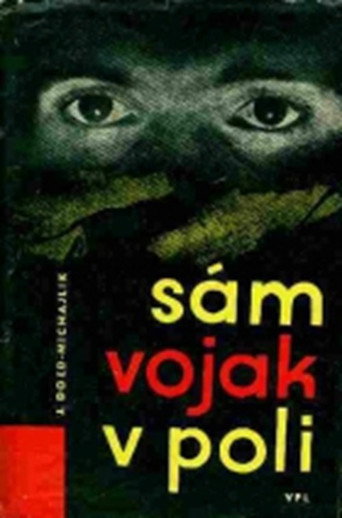
Sám vojak v poli
1964
No synopsis available yet.
Ľudia z kanálovej štvrte
1975
Film credits
1980s · 3 titles
 6.0
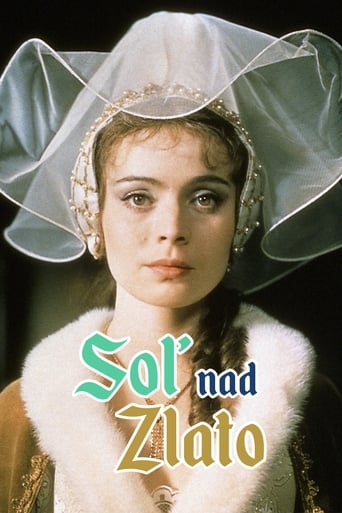
6.0A fairy-tale about the power of love. The old king Pravoslav feels it is time to entrust the rule over his kingdom to one of his three daughters - the one that loves him the most. The youngest, Maruška, fails her father's expectations about proving how deep her love him is. He misunderstands her and she is made to leave the castle. She faces many dangers on the way to her loved one, the Salt Prince.
Salt & Gold
1983
Biographical film about the work of the young Klement Gottwald. The story depicts his stay in Banská Bystrica, where he edited the Slovak communist press and helped organise the communist revolutionary movement.
Zrelá mladosť
1983
No synopsis available yet.
Klenovič Ján
1980
1970s · 19 titles
 10.0
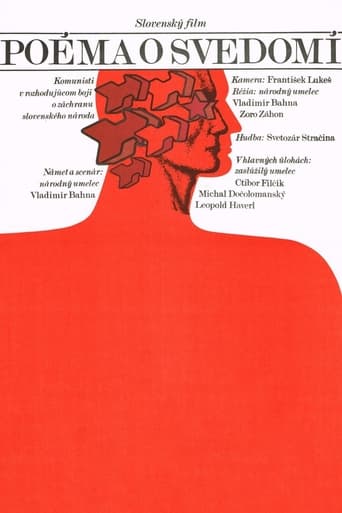
10.0Historical reconstruction of the events of the anti-fascist struggle in Slovakia in 1943 and 1944.
Poéma o svedomí
1979
A television adaptation of Shakespeare's tragedy about the destructive power of wealth. Timon, a rich and generous Athenian citizen, gives gifts to his friends generously and magnanimously. He helps everyone in need, regardless of their status. However, he is surrounded by false friends who refuse to help him when his coffers are empty and his barrels no longer overflow with wine. The attitude of his friends shakes his faith in the goodness of humanity, and he retreats to a cave on the seashore, where he dies by his own hand, cursing the entire human race. Even the famous warrior Alcibiades knows the ingratitude of Athens. When he speaks on behalf of a soldier sentenced to death for a minor offense, the senators expel him from the city. Alcibiades, a man of action, does not give up, defeats Athens, and conquers it. However, he finds Timon already dead.
Timon Aténsky
1973
No synopsis available yet.
Meridián
1976
No synopsis available yet.
Dravý prúd
1977
No synopsis available yet.
Koruna lásky a smrti
1977
No synopsis available yet.
Desatinka citu
1973
A group of drivers paid according to their performance are struggling with hard work in a large quarry, somewhere where foxes say good night. A new worker, Marek Orban, joins the team of foreman Peter Hotka, known as Maco. Deep down, he is a deeply moral person, although he was given a suspended sentence for bodily harm. He beat up his wife's lover, to whom he must also pay compensation. Marek hides this from the other members of the group because he is ashamed. Maco, out of friendship with Marko, attributes non-existent trucks to the group, which, of course, backfires. However, the team eventually shows its strength and works off the undeserved reward.
Dosť dobrí chlapi
1972
The plot takes place in the revolutionary year of 1848. It takes us to Príbelice, where Janko Kráľ returns from Pest after the March Revolution, to acquaint the Slovak people with the famous Twelve Points, together with his friend, teacher Ján Rotarides. They were voted on at the last Hungarian Diet in Bratislava with the promise of freedom and equality for Slovaks.
Príbelská vzbura Janka Kráľa
1978
No synopsis available yet.
Život je sen
1979
The poverty of Slovak workers during the Great Depression during the Masaryk Republic reached such a level that it led to a well-organized strike. The capitalists and their minions tried by all means to break it. Even the workers who had not yet been elected soon recognized their place and supported the initiative of the communists, who selflessly led the strike movement. The poster-like, purely ideological story succumbs to paper-like dialogues and plots, and the narrative portrayal hardly convinces of the credibility of the whole story.
Nie
1978
No synopsis available yet.
Vassa Železnovová
1970
 NR
NRThe drama of a man driven to crime by the mechanism of violence in an American prison. It is an indictment of American justice and the barbarically cruel methods of prison staff. Based on Jack London's novel "The Star Rover".
Dynamit
1973
The myth of the anti-fascist resistance in Slovakia was one of the important themes of normalization cinema, of course, treated with an emphasis on the leading role of the communists. This primitively illustrative film depicts the heroic enthusiasm shown by the members of the resistance group, heroically and with constant commitment of life fighting against the treacherous police of the Slovak state and ultimately against the German Gestapo.
Do posledného dychu
1976
No synopsis available yet.
Čenkovej deti
1975
No synopsis available yet.
Kráľ sa zabáva
1971
No synopsis available yet.
Nový systém
1974
No synopsis available yet.
Kazko Vlasko
1978
No synopsis available yet.
Jaríkovský kostol
1974
No synopsis available yet.
Španielska gitara
1976
1960s · 14 titles
 7.8
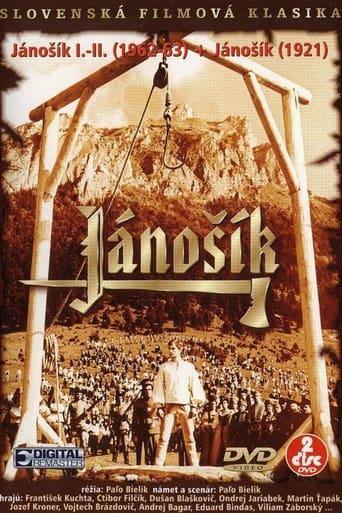
7.8This film is one of the most popular pictures of Slovak cinema and relates the story about the legendary folk hero and brigand Juro Jánošík [1688-1713] and the social situation in Slovakia of the late 17th and early 18th centuries. The first part talks about Jánošík's childhood, studies and return to his native village. In the second part Jánošík leaves for the hills, where he organizes his band of brigands and starts an anti-feudal resistance. The film concludes with Jánošík's execution.
Jánošík
1963
No synopsis available yet.
Polnoc bude o päť minút
1962
 NR
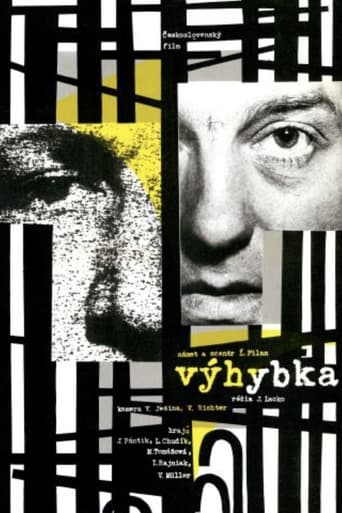
NRA story of two old friends, who after ten years - one as the deputy director and the other as the chairman of the party organization - meet on a large construction site.
Výhybka
1963
 7.0
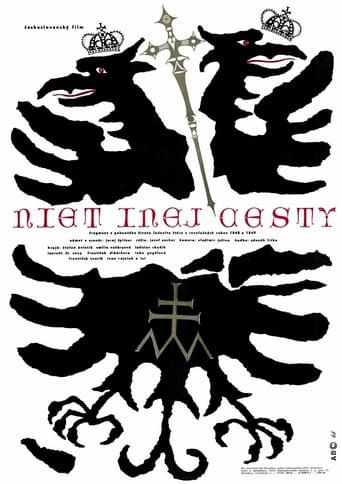
7.0A biographical film about the Slovak nationalist Ľudovít Štúr. It captures the revolutionary events of 1848 in Austria-Hungary, when Štúr, as a member of the Diet, led the fight for the national rights of the Slovak people.
Niet inej cesty
1968
No synopsis available yet.
Francois Villon – spor o básnika
1967
No synopsis available yet.
Skaly a ľudia
1960
No synopsis available yet.
Hernani
1967
 7.0
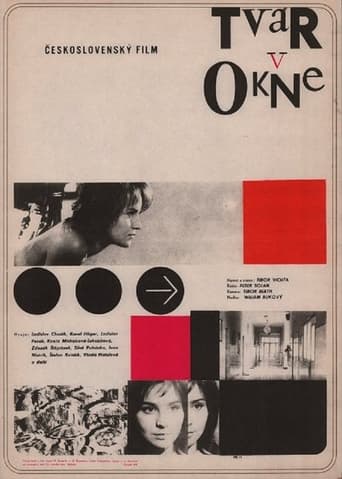
7.0A movie built up of three stories about life in a small Slovak town. The Prosecutor: the district attorney is a jazz orchestra soloist at the same time and that is much disliked by the local provincial society. The Defender: is about a young doctor's relation to his patient, who is open about his reactionary opinions. The Judge: it is only after long years that the old judge realizes that his own marriage is in jeopardy.
A Face in the Window
1963
No synopsis available yet.
Marína Havranová
1964
No synopsis available yet.
Keď chybí trombón
1962
No synopsis available yet.
Smoliarka
1964
No synopsis available yet.
Stratený list
1965
No synopsis available yet.
Pred súdom
1966
No synopsis available yet.
Vráťte mi školné
1963
1950s · 5 titles
 7.9
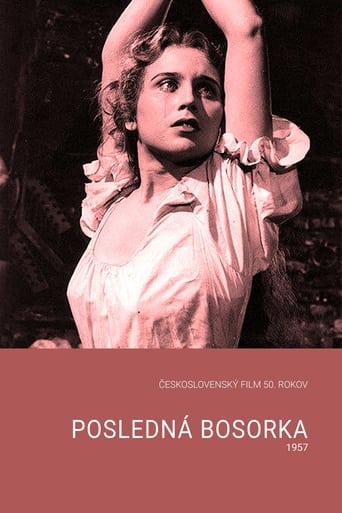
7.9This dramatic story is situated in the town of Trnava of the 18th century. Painter Peter paints an altar-piece of the Martyrdom of St. Juliet and his model is a young girl. This is much disliked by the clergy who unjustly accuse the girl of witchcraft. She is saved from being burnt at a stake by the students of the Trnava University.
The Last Witch
1957
 7.0
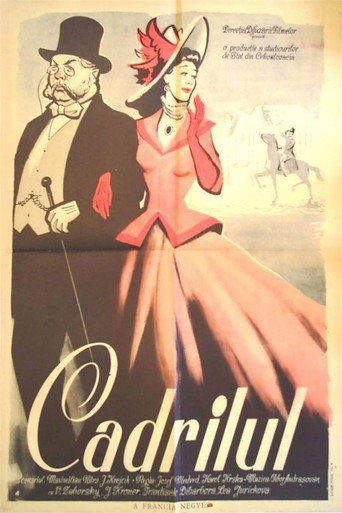
7.0A comedy film taking an ironic view of the bourgeois period prior to the First World War.
Štvorylka
1955
 5.4
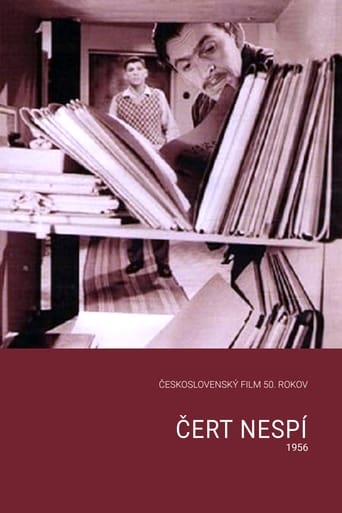
5.4Episodic film consisting of three satirical shorts ('Smutný káder', 'Typický prípad' and 'Vel'korysá kampaň') comically exposing the shortcomings of society. In the interval between each short, a committee recognising themselves in the characters on screen, voice their approval or disapproval of each film.
The Devil Does Not Sleep
1957
 6.0
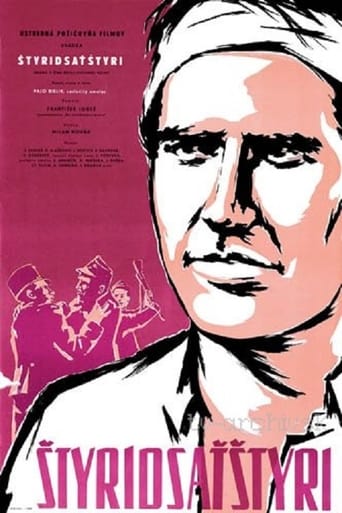
6.0Drama about the rebellion of the Trencín Infantry Regiment against its superior officers in the Serbian city of Kragujevac, at the end of the First World War. It was the biggest and deadliest rebellion in the Austro-Hungarian army.
Štyridsaťštyri
1958
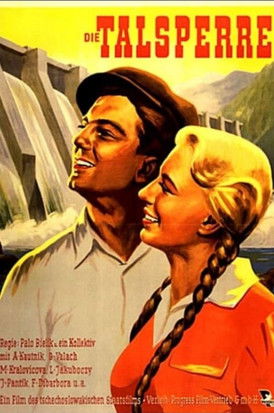 5.0
5.0The construction of a large dam in Slovakia is hindered by the influence of small farmers on the landowner Bujna, on whom they depend for help with the harvest and for monetary loans.
Priehrada
1950
1940s · 4 titles
A young doctor and a group of injured are hiding in an underground shelter and are liberated by Soviet soldiers.
White Darkness
1948
No synopsis available yet.
Lož má krátke vlny
1949
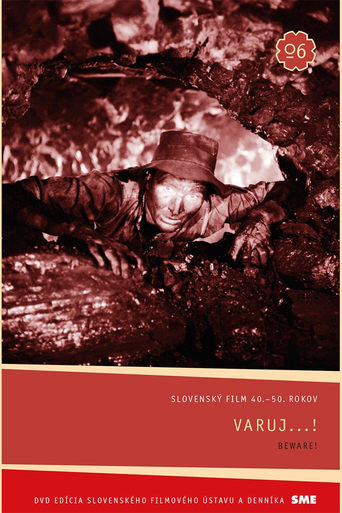 7.5
7.5A drama about Slovaks who emigrated before WW I. It is focused on the life of Ondrej Muranica. He emigrates to America because of the hard life that is partly caused by Hungarian landowners. His dreams and hopes for a happier life are destroyed by a disaster in the mines where he works. Ondrej is declared missing.Years later he returns to his home country and finds out his wife married his best friend.
Beware!
1947
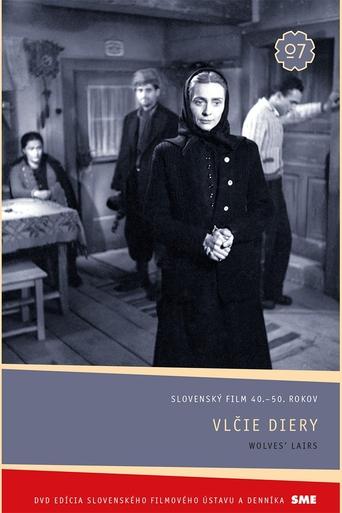 6.6
6.6This drama from the times of Slovak National Uprising is situated in a small Slovak village. It is the tragical story of a widow and her four sons who fight alongside the partisans against the German occupants.
Wolves' Lairs
1948
Series credits
No synopsis available yet.
Balladyna
1984
No synopsis available yet.
Na baňu klopajú
1981
No synopsis available yet.
Americká tragédia
1977
No synopsis available yet.
Parížski mohykáni
1972
9.0No synopsis available yet.
Sám vojak v poli
1964
No synopsis available yet.
Ľudia z kanálovej štvrte
1975
This five-part TV film tells the story of Jan Daňo, a shepherd, and his two daughters.
Nepokojná láska
1975
No synopsis available yet.
Miesto v dome
1973
No synopsis available yet.
Štipku soli
1977
No synopsis available yet.
Zrkadlo občana Pokorného
1967
No synopsis available yet.
Rembrandt van Rijn
1981
No synopsis available yet.
Prípad jasnovidca Hanussena
1970
No synopsis available yet.
Mŕtve duše
1971
No synopsis available yet.
Divadlo v dome
1975