
Acting
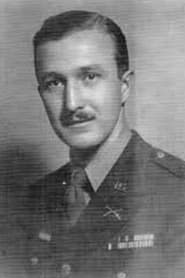
Faubion Bowers
Born — Died
1917-01-29 — 1999-11-17
Place of birth
Miami, Oklahoma, USA
Known for
Acting
Credits
3 titles
Faubion Bowers was an American academic and writer in the area of Asian Studies, especially Japanese theatre. After the surrender of Japan, he was the interpreter for the advance party of 150 US personnel which flew into the Atsugi airfield on August 28, 1945. As MacArthur's interpreter he lived at the American Embassy with the MacArthur family, and served as interpreter at the initial meeting between MacArthur and Emperor Hirohito.
Known for
A documentary on the Romantic era of ballet narrated by Erik Bruhn and featuring performances by legendary ballerinas Alicia Alonso, Eva Evdokima, Carla Fracci, and Ghislaine Thesmar.
The Romantic Era
1972
Overview of the life and art of sculptor Isamu Noguchi. Film of many of his sculptures, designs, stage sets, fountains, public spaces, drawings, etc. Filmed in his studio in Long Island City, NY. With scenes of the artist at work and reflecting on his aesthetics. Noguchi is interviewed by art writer Faubion Bowers.
Portrait of Isamu Noguchi
1974
Two of the greatest stars of Japan’s kabuki theater reveal what has only rarely been seen: the actual acting techniques used in this most difficult and splendid of theater forms. Onoe Shoroku II and Onoe Baiko VII discuss and demonstrate their craft in conversation with the well-known author of works on Asian arts, Faubion Bowers. Includes film of great kabuki performances of the past. These great kabuki actors make the mechanics of theater kata (poses) clear and show some of the gestures and nuances of body language that communicate specific emotions and situations. Baiko, a famous player of women’s roles, performs a classic woman’s speech in full costume and heavy white-face make-up, and then does the same scene again in plain face and simple clothes. He shows how the Japanese fan speaks in its own language. He and Shoroku act out a fight scene; Shoroku demonstrates one of kabuki’s elaborate exit walk sequences, and compares different ways of making stylized gestures.
Kabuki Techniques
1969