
Directing
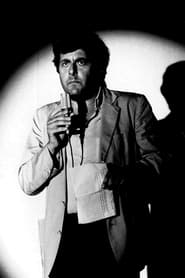
Sirio Luginbühl
Place of birth
Verona, Italy
Known for
Directing
Credits
34 titles
Sirio Luginbühl, a keen observer of the international avant-garde and an informed witness of his age, is a key figure in the field of experimental cinema and cinéma d’auteur. Over the course of his varied production Luginbühl was able to bring together avant-garde, irony and eroticism. He was an attentive and at times mischievous observer of reality: from politics to sexual liberation, from class struggle to feminism. Luginbühl has translated some of the topical themes characterizing the period between the sixties and seventies into an innovative, modern and controversial language.
Known for
 NR
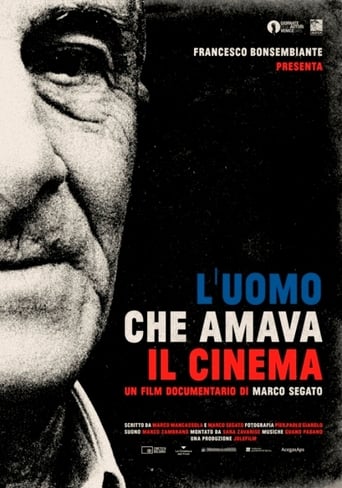
NRPiero Tortolina has been a point of reference for a whole generation of film lovers. Pioneer of cinema-clubs and great film collector, he has been an invisible protagonist in the history of italian cinema.
L'uomo che amava il cinema
2012
 NR
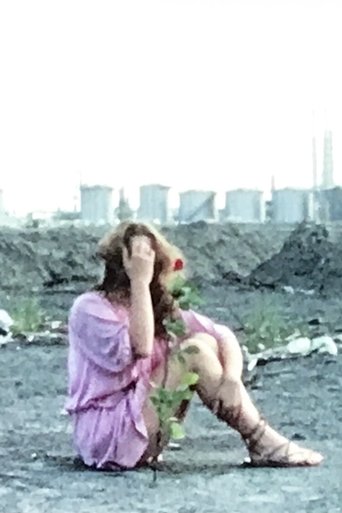
NRA reference to the anarchist Giuseppe Pinelli, who died mysteriously on December 15, 1969, while held at the Milan Police Headquarters for an investigation following a bomb explosion.
Arpeggio (In Ricordo Di Giuseppe Pinelli)
1971
 NR
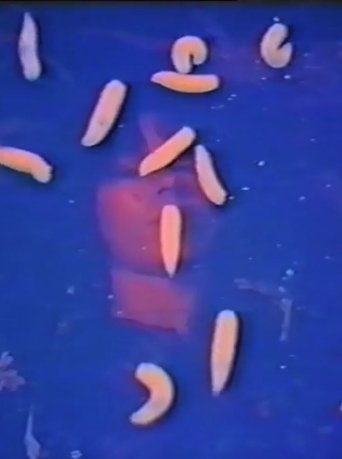
NRA young woman dedicates to a solitary pleasure surrounded by precious cushions. Larvae of flies appear in superimposition moving briskly and multiplying until they conquer the entire frame. Numerous signs, scratches and holes deliberately made on the film follow. On this images a tricolor ribbon is again superimposed, which start to burn together with the worms. "Common people’ succumbs to the massacres of the state and to the terrorist attacks that infect Italy.
Italian Portrait
1973
 NR
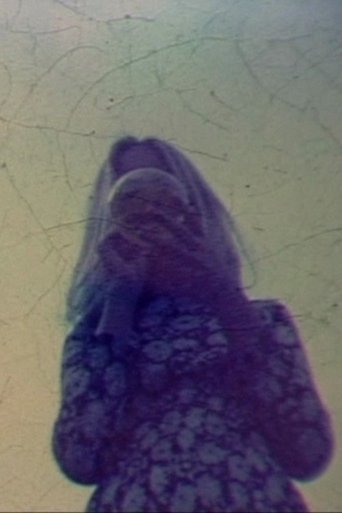
NRThe film took place at Villa Pisani (Stra-Venezia), near Venice’s lagoon in Porto Marghera (VE) and in a car cemetery. A beautiful girl covered with a semi-transparent gauze and with a gas mask.
Crepacuore
1969
 NR
NRI dreamt of finding myself naked sitting in a café. On the table was a cactus. I was watching it. The cactus also looked at me - and the more it looked at me, the more it was blushing.
Film Verde
1987
 NR
NRA re-edit of outtakes from the 1973 film "Ritratto Dell'Artista (Da Narcisso).
Limbo: Travestito
1988
Film credits
Behind the camera
NRA reference to the anarchist Giuseppe Pinelli, who died mysteriously on December 15, 1969, while held at the Milan Police Headquarters for an investigation following a bomb explosion.
Arpeggio (In Ricordo Di Giuseppe Pinelli)
1971
NRA young woman dedicates to a solitary pleasure surrounded by precious cushions. Larvae of flies appear in superimposition moving briskly and multiplying until they conquer the entire frame. Numerous signs, scratches and holes deliberately made on the film follow. On this images a tricolor ribbon is again superimposed, which start to burn together with the worms. "Common people’ succumbs to the massacres of the state and to the terrorist attacks that infect Italy.
Italian Portrait
1973
NRThe film took place at Villa Pisani (Stra-Venezia), near Venice’s lagoon in Porto Marghera (VE) and in a car cemetery. A beautiful girl covered with a semi-transparent gauze and with a gas mask.
Crepacuore
1969
NRI dreamt of finding myself naked sitting in a café. On the table was a cactus. I was watching it. The cactus also looked at me - and the more it looked at me, the more it was blushing.
Film Verde
1987
NRA re-edit of outtakes from the 1973 film "Ritratto Dell'Artista (Da Narcisso).
Limbo: Travestito
1988
 NR
NRA film centered on the graphic and pictorial works of the artist Paolo Sardina, whose images have been painted and scratched directly onto the film.
Sardina Sauvage
1989
 NR
NRAnimations of abstract shapes on « carton coupé » using the technique of stop-motion.
Biostoria 3
1968
 NR
NROuttakes from a lost film made by the director in 1968.
La Scala
1968
 NR
NRAnimations of abstract shapes on « carton coupé » using the technique of stop-motion.
Biostoria 2
1968
 NR
NRAnimations of abstract shapes on « carton coupé » using the technique of stop-motion.
Biostoria 1
1968
 NR
NRThe camera focuses on the face of a model whose body is being rubbed by a vibrating tool shaped like a spider.
Vibratore
1968
 NR
NRThe film begins with a shot on the countryside near Padua. A young man goes slowly towards the camera carrying a big red flag, referring to the student revolts of 1968. The camera follows the protagonist ..
La Bandiera
1970
 NR
NRSome scenes in black and white show Venice, Piazza San Marco, people who walk, feed pigeons and paint. The film records the gestures of boys hugging each other, touching each other; then childhood and provocative scenes alternate. Venice is dying.
Passeggiata Veneziana
1970
 NR
NRExperimental short filmed between 1987 and 2002.
Art-Usi
2002
 NR
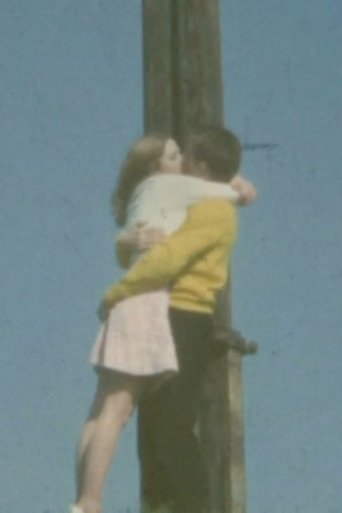
NRImages of everyday life: a walk, the village fair with the carousel and children playing alternate with scenes in which the young couple kisses passionately in a little church, spied by the indiscreet eye of the camera.
Festa grande di Maggio del territorio padovano consacrato al cuore di Maria Santissima
1969
 NR
NRThe film is a denunciation of Western capitalist society, which exploits the poorest regions in the world's Orient. The film opens with a closeup on a newspaper article that reads, « What Italian industry offers Asia. Modern manufacturing, sophisticated technology and willingness to do business with the East ». The following sequence is set on a beach, where musicians play Arabic music, and a dancer moves sensually. At a certain point the director, Luginbühl, interrupts the scene, even slapping the dancer's face. This is clearly an allegory of how Western capitalism exploits and enslaves the East.
Le Palme e Tangeri
1972
 NR
NRExperimental short.
Secreti Amori
1993
 NR
NRA particular shot, made with a lens that breaks up the image field into fragments and reproduces the optics of a fly, explores a room where there is a girl with a guitar. The shot, back to normal, shows a container with the fly and a jar of honey. The girl than performs various actions: she plays the guitar, collects honey from the jar with a finger, reads a book while the buzzing becomes insistent. In this way, an ambiguous and unusual relationship with the insect arises.
Anna and the Fly
1979
 NR
NRExperimental interpretation of the Narcissus myth.
Portrait of the Artist (as Narcissus)
1973
 NR
NRThe film is dedicated to Vittorio and Silvio Loffredo who, in the second half of the 1930s in Paris, using film excerpts found at flea markets, created a memorable collage film
E’ Mezzanotte, Monsieur Cinema
1984
 NR
NRThe film is set in an industrial landfill in the Petrochemical area of Porto Marghera (Venice). Here, among the toxic residues, a happening takes place: a boy and a girl without knowing each other before are invited to undress and kiss in front of ‘fake’ journalists, photographers and operators. The soundtrack is composed by different environmental noises. The director denounces in this way the pollution and the landscape changing, focusing on the vision of two beautiful bodies kissing.
Loving in Marghera (The Kiss)
1970
 NR
NRA tribute to experimental cinema of the '60s and '70s.
L'Immaginazione Ribelle. Vicina L'Ora. Frammenti Degli Anni Sessanta
1986
 NR
NRThis « comic strip » of alienation takes place within the walls of a bourgeois house, in a valley created by the toxic red-violet waste of a large chemical industry. In the background, popular songs from the '60s.
Azriel, Seguivano Gli Angeli
1969
 NR
NRIn an abandoned house, behind a wall, a series of photographs appears, a collage that brings back to the past.
Zona Quarta. Progetto Per Uno Spettacolo.
1969
 NR
NRContrast between different portraits of women, between the public and the intimate.
Ritratti di Rose
1974
 NR
NRA young woman comes home and discovers that she has her period. She is forced to change her sanitary napkins continuously, while her husband eats eggs in the kitchen. Towels invade the room, then the apartment, then fall into the streets of the city. The chosen places are the headquarters of financial, political, police and religious power. They are centers of oppression.
The Astral Conjunction
1977
 NR
NRThe film portrays the political environment between the end of the '60s and the beginning of the '70s in Italy. Images of a wandering young girl are alternated with those of a man's corpse in front of an industrial landscape. The man's corpse is a metaphor of the worker forced to work dehumanizing hours. The girl, on the other hand, is the symbol of innocence. This is Luginbühl's accusation directed at a passive and powerless society. However, hope is represented in the final sequences, where Luginbühl's child, Cecilia, is shown as the embodiment of future generations.
Senza Seguito Senza Seguito
1969
 NR
NRExperimental short by Sirio Luginbühl.
Damned Little Angels
2000
 NR
NRThe director films a woman being tortured.
Frammento Rosso (Rossario)
1970
 NR
NR1971 / 8mm / color / sound
Il Sorriso Della Sfinge
1971
 NR
NRA girl is taking pictures on the notes of "1970" by The Stooges, but it’s only in the end that we’re allowed to see the subject of her photos.
Valeria Fotografa (Playtime)
1970
 NR
NRThe film aims to show the fall of revolutionary ideals and broken ideologies.
Gilette o Juliette
1978
 NR
NRThe protagonist is a girl here, like Alice in the Pays des Merveilles, intrigued by the particularity of the story, coming from the garden of PaRDeS, search for research, connaissance, inspiration.
Elena in PaRDeS
2010