

Directing
Yuko Mohri
Place of birth
Kanagawa, Japan
Known for
Directing
Credits
3 titles
B. 1980 in Kanagawa, Japan. Lives and works in Tokyo. Mohri is an installation artist who recasts reconfigured everyday items and machine parts collected in cities around the world into self-contained ‘ecosystems,’ channelling and conducting intangible energies such as magnetism, gravity, temperature and light. With an artistic background in new-media art, Mohri’s practice engages with circuits and connectivity. She states that: ‘I prefer gravity, magnetism, light, and wind to control my work.’ Mohri positions forces such as gravity and electricity as otherworldly and unpredictable, and her installations insist on the powers of the nonhuman and the uncontrollable. The artist establishes he…
Known for
 5.0
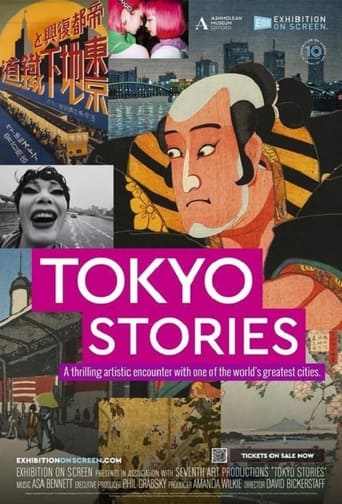
Based on a major exhibition at the Ashmolean in Oxford, Tokyo Stories spans 400 years of incredibly dynamic art – ranging from the delicate woodblock prints of Hokusai and Hiroshige, to Pop Art posters, contemporary photography, Manga, film, and brand-new artworks that were created on the streets. The exhibition was a smash-hit five-star success and brought a younger and more diverse audience to the museum. The film uses the exhibition as a launchpad to travel to Tokyo itself, and explore the art and artists of the city more fully. A beautifully illustrated and richly detailed film, looking at a city which has undergone constant destruction and renewal over its 400-year history, resulting in one of the most vibrant and interesting cities on the planet…
Tokyo Stories
2023
 NR
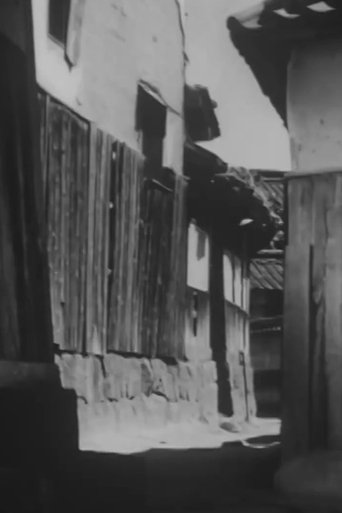
Yuko Mohri is best known for her sculpture and installations comprising found objects and kinetics, often incorporating aspects of chance. Here she splices together scenes in Yasujirō Ozu’s acclaimed film Tokyo Story (1953) where no humans are present. Ozu’s film tells the story of an elderly couple visiting their children, who are now adults and whom pay their elderly parents scant attention. Much of it is set within small domestic interiors, with fixed camera shots and with much of the ‘action’ taking place off camera, such that its tempo, setting and themes all strongly resonate with our current circumstances, as does Mohri’s eerie subversion.
Everything Flows - distance
2020
 NR
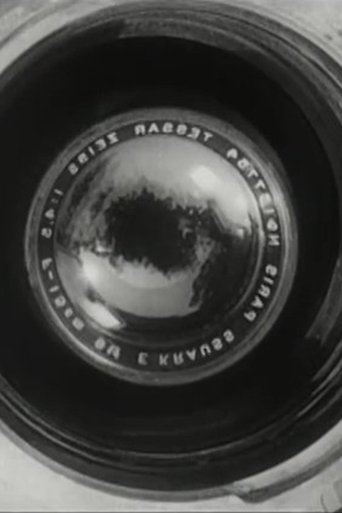
Everything Flows – interval (2018) extracts a sequence of various objects swaying from Dziga Vertov’s documentary film Man with a Movie Camera (1929).
Everything Flows - interval
2018
Film credits
Behind the camera
NRYuko Mohri is best known for her sculpture and installations comprising found objects and kinetics, often incorporating aspects of chance. Here she splices together scenes in Yasujirō Ozu’s acclaimed film Tokyo Story (1953) where no humans are present. Ozu’s film tells the story of an elderly couple visiting their children, who are now adults and whom pay their elderly parents scant attention. Much of it is set within small domestic interiors, with fixed camera shots and with much of the ‘action’ taking place off camera, such that its tempo, setting and themes all strongly resonate with our current circumstances, as does Mohri’s eerie subversion.
Everything Flows - distance
2020
NREverything Flows – interval (2018) extracts a sequence of various objects swaying from Dziga Vertov’s documentary film Man with a Movie Camera (1929).
Everything Flows - interval
2018