
Acting
Paul De Vree
Known for
Acting
Credits
5 titles
Known for
 10.0
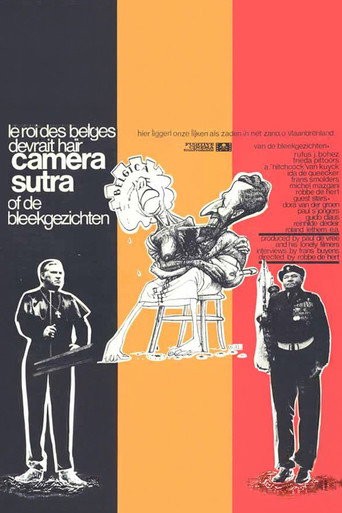
10.0The Herts Camera Sutra or The Palefaces (1973) is a militant and visually fragmented critique of Belgian bourgeois society, blending documentary collage with semi-autobiographical fiction. De Hert attacks the distractions of nationalism, religion, and popular culture while exposing capitalism, social injustice, and postcolonial exploitation. The film’s second half shifts to a disillusioned group of rebellious youths, revealing the uncertainty and emotional paralysis behind revolutionary ideals. Both politically fierce and deeply self-questioning, the film captures the tension between radical ambition and powerlessness.
Camera Sutra (or the Pale Faces)
1973
 9.0
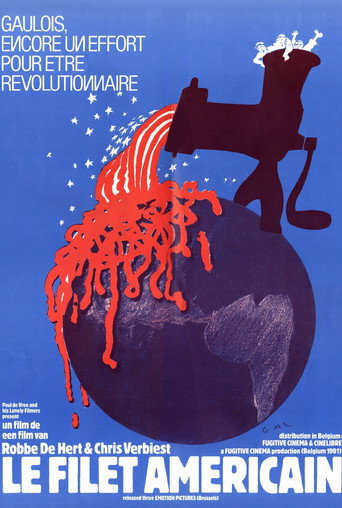
9.0The documentary's legacy lies in its unapologetic fusion of agitprop and satire, a signature style of De Hert’s Fugitive Cinema collective. By juxtaposing Mandel’s economic theories with absurd military parades, the film exposes the contradictions of a society preparing for war while its social fabric decays. De Hert employs rapid montage, pop music, and street-level interviews to strip away the facade of state authority.Decades later, Le Filet Américain remains a vital historical document. It captures a specific era of Belgian polarization, marked by economic crises and the rise of the gendarmerie. The metaphor of the meat grinder endures as a powerful critique of how institutional systems compromise individual dignity for corporate profit.
Le Filet Américain
1981
 10.0
10.0A three independent parts sci-fi drama. In the first, entitled The Bomb, a story of a garage mechanic is told who finds an atomic bomb by accident. The second part, entitled The Last Judgment, deals with the consequences of a military convoy carrying biological weapons going mad. In the third part, entitled Experts Of Evil, there is an accident at a chemical plant when a,pressurized container with dioxin explodes resulting in leakage.
Gejaagd door de winst (of het A.B.C. van de moderne samenleving)
1977
The wife of a local dictator gets a miscarriage during a failed assault by rebels. The dictators' brother suggesst to present the newly born baby of one a the dead rebels as his posterity.
De geboorte en dood van Dirk Vandersteen jr.
1968
Essentieel (1964) is a short experimental film made by Belgian abstract painter Jef Verheyen in collaboration with poet Paul De Vree. A cinematic equivalent of Verheyen’s attempts in representing the warmth and vibrations of light in his monochrome or ‘essentialist’ paintings of the late 1950s and 1960s, the film plays on the tensions between abstract color surfaces and natural elements.
Essential
—
Film credits
Behind the camera
10.0The Herts Camera Sutra or The Palefaces (1973) is a militant and visually fragmented critique of Belgian bourgeois society, blending documentary collage with semi-autobiographical fiction. De Hert attacks the distractions of nationalism, religion, and popular culture while exposing capitalism, social injustice, and postcolonial exploitation. The film’s second half shifts to a disillusioned group of rebellious youths, revealing the uncertainty and emotional paralysis behind revolutionary ideals. Both politically fierce and deeply self-questioning, the film captures the tension between radical ambition and powerlessness.
Camera Sutra (or the Pale Faces)
1973
9.0The documentary's legacy lies in its unapologetic fusion of agitprop and satire, a signature style of De Hert’s Fugitive Cinema collective. By juxtaposing Mandel’s economic theories with absurd military parades, the film exposes the contradictions of a society preparing for war while its social fabric decays. De Hert employs rapid montage, pop music, and street-level interviews to strip away the facade of state authority.Decades later, Le Filet Américain remains a vital historical document. It captures a specific era of Belgian polarization, marked by economic crises and the rise of the gendarmerie. The metaphor of the meat grinder endures as a powerful critique of how institutional systems compromise individual dignity for corporate profit.
Le Filet Américain
1981
Essentieel (1964) is a short experimental film made by Belgian abstract painter Jef Verheyen in collaboration with poet Paul De Vree. A cinematic equivalent of Verheyen’s attempts in representing the warmth and vibrations of light in his monochrome or ‘essentialist’ paintings of the late 1950s and 1960s, the film plays on the tensions between abstract color surfaces and natural elements.
Essential
—