
Known for
No synopsis available yet.
Profesor Bernhardi
1993
No synopsis available yet.
Svadba bez nevesty
1980
No synopsis available yet.
Miesto v dome
1973
No synopsis available yet.
Jedenáste prikázanie
1977
A television adaptation of William Shakespeare's classic drama. The story of the virtuous Isabella, who must save her brother from execution at the cost of her own honor. Through the story of the seductive Angelo and the beautiful Isabella, Claudio, and Julia, the author expresses the idea that moral principles are binding on everyone and that adhering to them is a matter of honor for every human being.
Oko za oko
1984
No synopsis available yet.
Na pochode sa vždy nespieva...
1961
Film credits
1990s · 2 titles
No synopsis available yet.
Útrapy z rozumu
1991
In the early 20th century, in the surroundings of a luxurious boarding house and casino, the story of a mature woman and an immature young man unfolds. He is obsessed with gambling, she with the desire to save him with her love. It happened twenty years ago. The elderly noble lady recalls her experience in her youth and, with the benefit of hindsight, explains and defends it.
Dvadsaťštyri hodín zo života istej ženy
1994
1980s · 6 titles
A television adaptation of William Shakespeare's classic drama. The story of the virtuous Isabella, who must save her brother from execution at the cost of her own honor. Through the story of the seductive Angelo and the beautiful Isabella, Claudio, and Julia, the author expresses the idea that moral principles are binding on everyone and that adhering to them is a matter of honor for every human being.
Oko za oko
1984
No synopsis available yet.
Tomáš a Zuzana
1983
 NR
NRNo synopsis available yet.
Vlci
1982
No synopsis available yet.
Druhovia
1980
No synopsis available yet.
Najatý klaun
1981
No synopsis available yet.
Mizantrop
1981
1970s · 15 titles
 7.4
7.4A funny outlaw tale inspired by traditional folk humour. Pacho is no ordinary outlaw. He detests injustice and feudal oppression and he copes with each troublesome situation with the help of his cleverness and wit.
Pacho, the Brigand of Hybe
1976
No synopsis available yet.
Strieborný prach
1975
 8.0
8.0The story of a young lawyer who finds herself in a difficult situation when she encounters troubles in her burgeoning career and complications in private her life.
The Lawyer
1978
A group of drivers paid according to their performance are struggling with hard work in a large quarry, somewhere where foxes say good night. A new worker, Marek Orban, joins the team of foreman Peter Hotka, known as Maco. Deep down, he is a deeply moral person, although he was given a suspended sentence for bodily harm. He beat up his wife's lover, to whom he must also pay compensation. Marek hides this from the other members of the group because he is ashamed. Maco, out of friendship with Marko, attributes non-existent trucks to the group, which, of course, backfires. However, the team eventually shows its strength and works off the undeserved reward.
Dosť dobrí chlapi
1972
No synopsis available yet.
Ešte sa nevraciam
1976
No synopsis available yet.
Vládca Oidipus
1978
 NR
NRA satirical story about a young teacher, Josefína, who resolutely embarks on a fight against a group of bricklayers who demand exorbitant prices for their dubious and poor-quality services and, under the pretext of helping, rob the inhabitants of a western Slovak village...
Pozor, ide Jozefína...
1977
No synopsis available yet.
Zbojníci
1978
No synopsis available yet.
Do zbrane, kuruci
1974
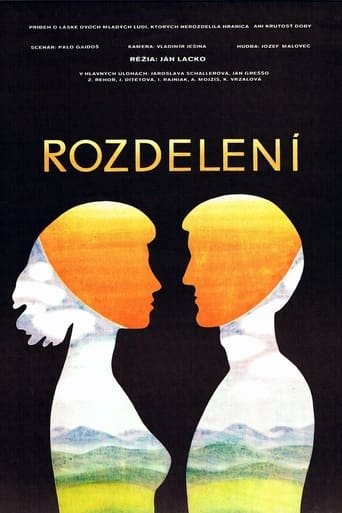 8.0
8.0A story about the love of two young people who were not divided by borders or the cruelty of time.
Rozdelení
1977
No synopsis available yet.
Kean
1975
No synopsis available yet.
Havária
1974
No synopsis available yet.
Blízke diaľavy
1979
At the beginning of normalization, stories emphasizing civic awareness once again prevailed. The hero here is a teacher from a small village in the foothills, whose inhabitants help the partisans in their fight against fascism. The hero, the only intellectual among them, agrees with them and educates not only his students in this spirit, but is also prepared to lay down his life for his ideals. When German soldiers occupy the village and force the teacher to cooperate, the model situation escalates.
Človek na moste
1972
No synopsis available yet.
Krásna Pramíla
1977
1960s · 17 titles
No synopsis available yet.
Na pochode sa vždy nespieva...
1961
In Slovakia, they also created a pair of investigators who have appeared in several films. Volanie démonov is the third of them. The police officers, one Maigret-like, thoughtful, the other humorously hasty, this time solve a fire in a furniture factory and the deaths of two employees - one burned himself, the other fell into a dry well. The investigation of the complicated case takes a long time, but in the end it turns out that revenge can be extraordinarily strong and persistent.
Volanie démonov
1968
On Christmas Eve, 1944, in Nazi-occupied Slovakia, the Kubiš family grapples with survival amidst brutal reprisals. Marián collaborates as a fascist guard leader, while his sister Angela has an affair with their Nazi lodger, Major Brecker. The situation escalates when their younger son, Juraj, a former partisan fighter, returns home wounded. As Germans search homes for escapees, Juraj hides in the attic, while an unsettling Christmas dinner unfolds below with Major Brecker present.
Midnight Mass
1962
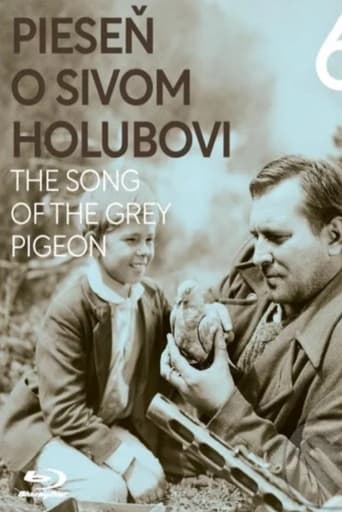 6.7
6.7An unusual children's film set during World War II in Czechoslovakia, this compelling drama unfolds five different segments that present the war through the eyes of three youngsters. The three have a series of adventures which include saving a soldier from being captured by the Germans, helping out the resistance fighters, and meeting up with a young Russian woman trained in guerrilla warfare. As they learn more about life and danger, various circumstances constantly recall the reality of war itself. The title comes from a wounded pigeon under the care of one of the youngsters.
The Song of the Grey Pigeon
1961
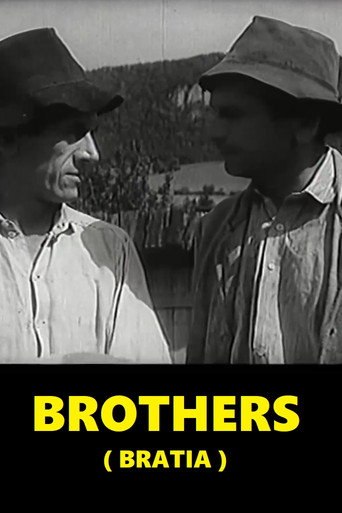 9.0
9.0A bricklayer, Jozef Haviar, decides to live with his family on the small farm of his father through the difficult years of the economic crisis. But on his return to his father's house he gets into a conflict with his brother. The life-and-death conflict between the two brothers documents the difficult situation of Slovak country life in the 1930s, the time of economic depression.
Brothers
1962
No synopsis available yet.
Tisíc podpisov za obžalovaného
1964
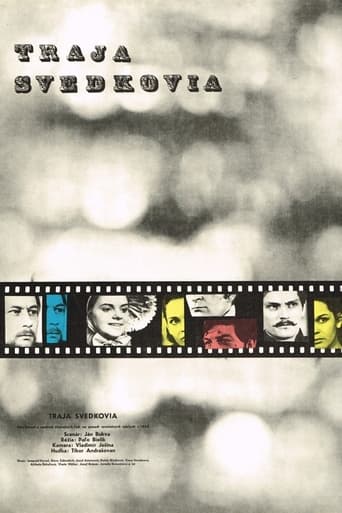 10.0
10.0A historical drama set in the revolutionary times of 1848.
Traja svedkovia
1969
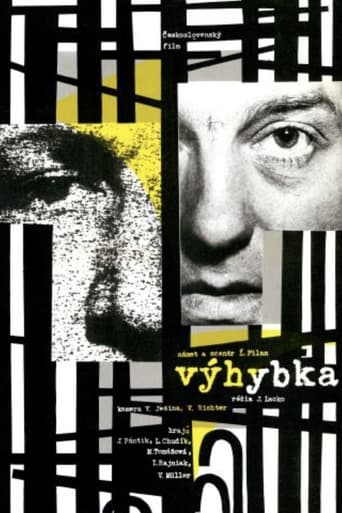 NR
NRA story of two old friends, who after ten years - one as the deputy director and the other as the chairman of the party organization - meet on a large construction site.
Výhybka
1963
No synopsis available yet.
Skaly a ľudia
1960
No synopsis available yet.
Volpone
1969
No synopsis available yet.
Hernani
1967
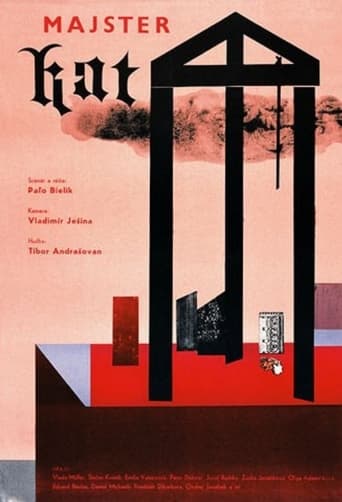 5.2
5.2A dramatic story about two friends - fisherman Richardus and municipal executioner Emil Targo takes place at the river Danube, in places that used to be targets of Ottoman raids. But their attraction to the same woman and Emil’s betrayal change their indissoluble friendship to an equally strong hatred. And as it usually goes - after twenty years by a trick of fate Richardus’ daughter Agajka becomes the wife ofthe sun of his sworn enemy.
Master Executioner
1966
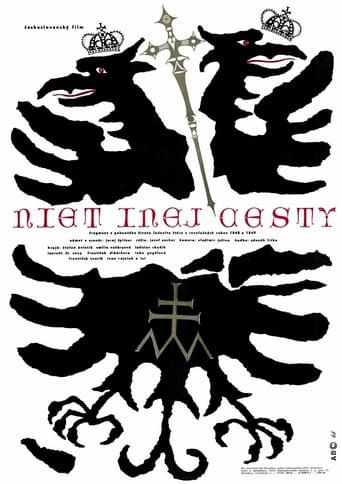 7.0
7.0A biographical film about the Slovak nationalist Ľudovít Štúr. It captures the revolutionary events of 1848 in Austria-Hungary, when Štúr, as a member of the Diet, led the fight for the national rights of the Slovak people.
Niet inej cesty
1968
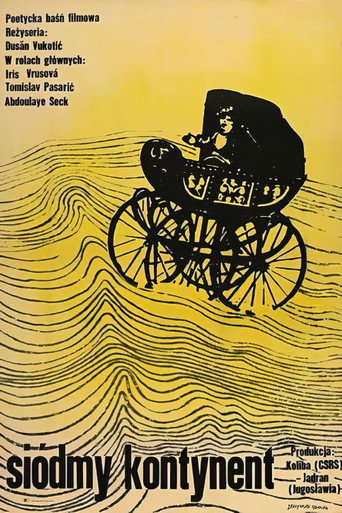 6.7
6.7A group of children discover the new continent of the world, uninhabited by adults. Soon, many other children are joining them in that new paradise, leaving their parents and other adults baffled on all remaining continents.
The Seventh Continent
1966
No synopsis available yet.
Keď chybí trombón
1962
No synopsis available yet.
12 mesiačkov
1962
No synopsis available yet.
Marína Havranová
1964
1950s · 4 titles
 5.7
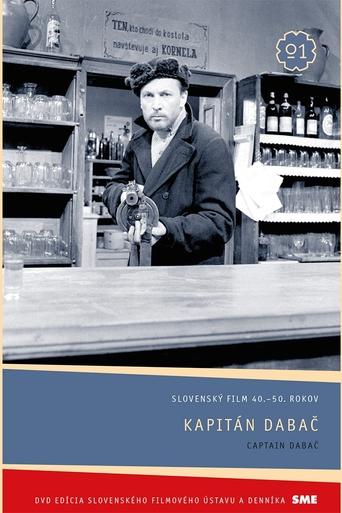
5.7The drama of a young Slovak army officer who gradually realises the horrors of fascism during the fighting in Ukraine. On his return to Slovakia, he joins the SNP. However, he cannot overcome his loner attitude or his doubts about the meaning of partisan activity.
Kapitán Dabač
1959
No synopsis available yet.
Mladé srdcia
1953
Slovak movie is based on the novel by the prominent representative of Slovak prose František Hečka, who was in 1952 awarded the State Prize. The novel and the movie successfully capture the development of Slovak village after the liberation in 1945. The narrative is centred around the characters of the old Púplava, who after the liberation begins to organise a new village life, and his struggle for the construction of settlements Mrzáčky, burnt by the fascists. It is centred around the conflict, greatly reflecting the situation of the countryside at this time: the conflict between the rural poor and the rural rich. In the movie, a rich personal and emotional life of other heroes pulsate besides the main storyline. The movie ends with the final defeat of the reactionary forces by Communists in February 1948, taking over all power in the state of workers and peasants. - "The Wooden Village" is released in celebration of the 7th anniversary of the Communist February Victory.
The Wooden Village
1955
 6.0
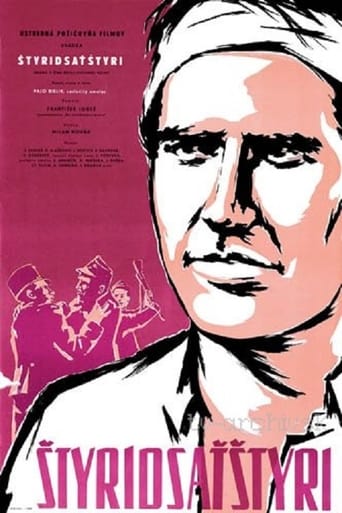
6.0Drama about the rebellion of the Trencín Infantry Regiment against its superior officers in the Serbian city of Kragujevac, at the end of the First World War. It was the biggest and deadliest rebellion in the Austro-Hungarian army.
Štyridsaťštyri
1958
Series credits
No synopsis available yet.
Profesor Bernhardi
1993
No synopsis available yet.
Svadba bez nevesty
1980
No synopsis available yet.
Miesto v dome
1973
No synopsis available yet.
Jedenáste prikázanie
1977
No synopsis available yet.
Bašta
1970