

Production
Moïra Chappedelaine-Vautier
Born
1978-01-01 (48)
Place of birth
France
Known for
Production
Credits
3 titles
Moïra Chappedelaine-Vautier was born in 1978 and grew up between Brittany and Montreuil. She began her career in film production, first producing short films and then documentaries for several production companies. She then directed her first documentary in 2006 in Colombia, Bogotrax, Red Sonante. She continued her career as a producer and joined Ciaofilm in 2011, with which she produced documentaries for theaters and developed fiction projects. At the same time, she worked on the preservation and restoration of her father's film collection, filmmaker René Vautier, with a genuine desire to revive and share his politically engaged cinema. In 2014, she co-directed her third documentary, Hist…
Known for
 9.0
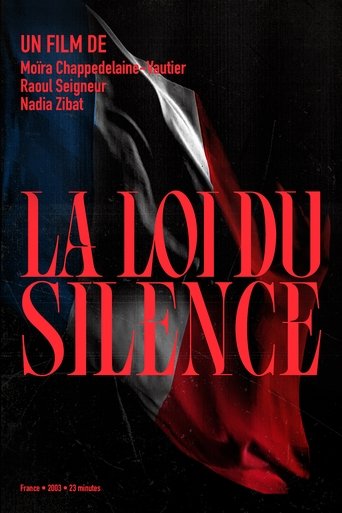
The Law of Silence, a final-year documentary by Moïra Chappedelaine-Vautier at Femis, examines the 1963 Amnesty Law and the consequences it had on studies of the Algerian War. It brings together interviews conducted in 2002 with Henri Alleg, editor of the daily newspaper Alger Républicain from 1951 to 1955, and Pierre Vidal-Naquet, historian and essayist. It also features incredible statements from General Massu and lawyers unraveling the various legal defenses of people like Jean-Marie Le Pen. Not only does Moïra have her father, René Vautier, speak, but she also includes footage he himself filmed forty years earlier. A very interesting report, which notably reminds us that the Amnesty is not a pardon but the erasure of the sentence and also of the crime itself.
The Law of Silence
2003
 6.0
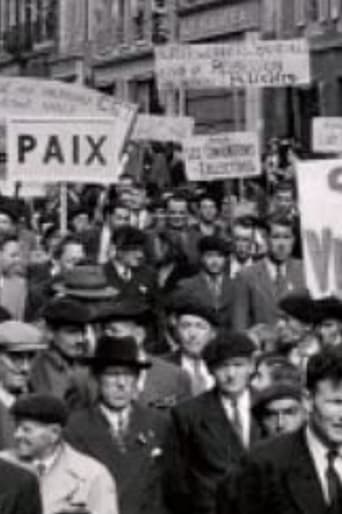
In 1950, in full reconstruction, the workers of Brest went on strike. It will last more than a month and will be bloody. Edouard Mazé, a 26-year-old worker from Brest, will die during the demonstration on April 17, dozens of his comrades will be injured and one of them, Pierre Cauzien, will be amputated five days later. The city is under siege. René Vautier, a 20-year-old filmmaker, goes clandestinely to Brest, at the call of the CGT, to shoot a film on the reasons for anger. The trace of these events is now tenuous and carried by witnesses whose words are gradually dying out. This film proposes to find the traces of these events, to collect the words of the witnesses, to search their personal archives, to exhume the forgotten photograms, to open the official files hitherto protected, to delve into the depths of individual memories to understand. In 1950, a man died... But who still remembers?
Histoires d’images, images d’Histoire
2014
Behind the camera
9.0The Law of Silence, a final-year documentary by Moïra Chappedelaine-Vautier at Femis, examines the 1963 Amnesty Law and the consequences it had on studies of the Algerian War. It brings together interviews conducted in 2002 with Henri Alleg, editor of the daily newspaper Alger Républicain from 1951 to 1955, and Pierre Vidal-Naquet, historian and essayist. It also features incredible statements from General Massu and lawyers unraveling the various legal defenses of people like Jean-Marie Le Pen. Not only does Moïra have her father, René Vautier, speak, but she also includes footage he himself filmed forty years earlier. A very interesting report, which notably reminds us that the Amnesty is not a pardon but the erasure of the sentence and also of the crime itself.
The Law of Silence
2003
6.0In 1950, in full reconstruction, the workers of Brest went on strike. It will last more than a month and will be bloody. Edouard Mazé, a 26-year-old worker from Brest, will die during the demonstration on April 17, dozens of his comrades will be injured and one of them, Pierre Cauzien, will be amputated five days later. The city is under siege. René Vautier, a 20-year-old filmmaker, goes clandestinely to Brest, at the call of the CGT, to shoot a film on the reasons for anger. The trace of these events is now tenuous and carried by witnesses whose words are gradually dying out. This film proposes to find the traces of these events, to collect the words of the witnesses, to search their personal archives, to exhume the forgotten photograms, to open the official files hitherto protected, to delve into the depths of individual memories to understand. In 1950, a man died... But who still remembers?
Histoires d’images, images d’Histoire
2014