
Directing
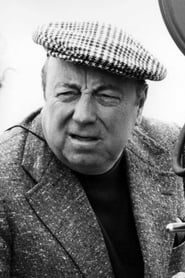
Marcel Carné
Born — Died
1906-08-18 — 1996-10-31
Place of birth
Paris, France
Known for
Directing
Credits
46 titles
Born in Paris, France, the son of a cabinet maker whose wife died when their son was five, Marcel Carné began his career as a film critic, becoming editor of the weekly publication, Hebdo-Films, and working for Cinémagazine and Cinémonde between 1929 and 1933. In the same period he worked in silent film as a camera assistant with director Jacques Feyder. By age 25, Carné had already directed his first short film, Nogent, Eldorado du dimanche (1929). He assisted Feyder (and René Clair) on several films through to La kermesse héroïque (1935). Feyder accepted an invitation to work in England for Alexander Korda, for whom he made Knight Without Armour (1937), but made it possible for Carné to t…
Known for
 9.5
9.5Marcello Mastroianni, Isabelle Adjani, Alain Delon, Martin Scorsese, Woody Allen... the biggest stars in cinema were welcomed by Christian Defaye on his show Spécial cinéma. Between intimate confessions from actors and immersion in the world of the greatest filmmakers, Christian Defaye took viewers on a journey into the fascinating world of cinema for nearly thirty years.
Spécial cinéma
1974
 6.8
6.8No synopsis available yet.
Champs-Elysées
1982
 9.0
9.0Midi Première is a French variety show presented by Danièle Gilbert, directed by Jacques Pierre and broadcast from January 6, 1975 until January 1, 1982 on TF1. The program was generally broadcast between 12:15 p.m. and 12:55 p.m., then giving way to the 1:00 p.m. TV news. However, the broadcast schedule could change, depending on the guests, and the setting where the recording of the program was shot. Certain performances by artists who have become cult like the one where Ringo jostles with a demonstrator in interpretation (1977), that of Dalida with the title There is always a song with the soundtrack that does not start, twice, at the right speed (1978), Claude François and his Clodettes, who, in the provinces, are unable to join "the set" in order to interpret his song, the latter being taken by the crowd of delirious fans (summer 1977) . The group Supertramp performed there with the title "Dreamer" on March 8, 1975.
Midi Première
1975
 8.5
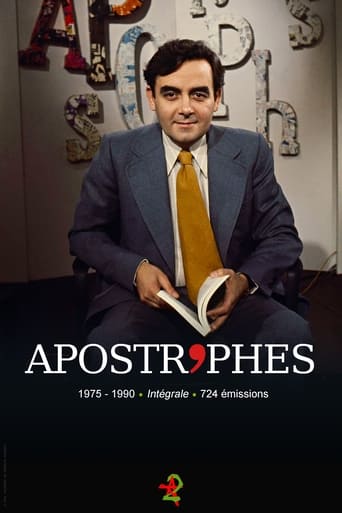
8.5Apostrophes was a live, weekly, literary, prime-time, talk show on French television created and hosted by Bernard Pivot. It ran for fifteen years (724 episodes) from January 10, 1975, to June 22, 1990, and was one of the most watched shows on French television (around 6 million regular viewers). It was broadcast on Friday nights on the channel France 2 (which was called "Antenne 2" from 1975 to 1992). The hourlong show was devoted to books, authors and literature. The format varied between one-on-one interviews with a single author and open discussions between four or five authors.
Apostrophes
1975
 NR
NRNo synopsis available yet.
Le monde est à vous
1987
 6.0
6.0A talk show presented by Michel Drucker
Les Rendez-vous du dimanche
1975
Film credits

2010s · 2 titles
 9.0
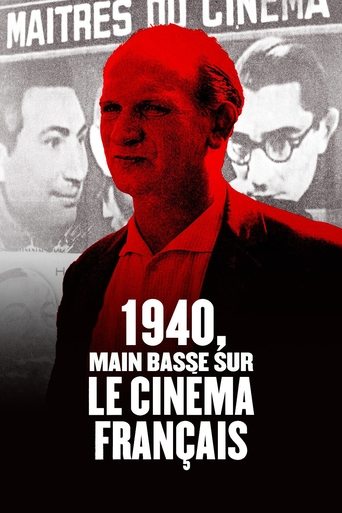
9.0Paris, 1940. German occupation forces create a new film production company, Continental, and put Alfred Greven – producer, cinephile, and opportunistic businessman – in charge. During the occupation, under Joseph Goebbels’s orders, Greven hires the best artists and technicians of French cinema to produce successful, highly entertaining films, which are also strategically devoid of propaganda. Simultaneously, he takes advantage of the confiscation of Jewish property to purchase film theaters, studios and laboratories, in order to control the whole production line. His goal: to create a European Hollywood. Among the thirty feature films thus produced under the auspices of Continental, several are, to this day, considered classics of French cinema.
1940: Taking over French Cinema
2019
 NR
NRNo synopsis available yet.
Carné, Prévert : drôle de duo
2019
1990s · 1 titles
Series credits
9.5Marcello Mastroianni, Isabelle Adjani, Alain Delon, Martin Scorsese, Woody Allen... the biggest stars in cinema were welcomed by Christian Defaye on his show Spécial cinéma. Between intimate confessions from actors and immersion in the world of the greatest filmmakers, Christian Defaye took viewers on a journey into the fascinating world of cinema for nearly thirty years.
Spécial cinéma
1974
6.8No synopsis available yet.
Champs-Elysées
1982
9.0Midi Première is a French variety show presented by Danièle Gilbert, directed by Jacques Pierre and broadcast from January 6, 1975 until January 1, 1982 on TF1. The program was generally broadcast between 12:15 p.m. and 12:55 p.m., then giving way to the 1:00 p.m. TV news. However, the broadcast schedule could change, depending on the guests, and the setting where the recording of the program was shot. Certain performances by artists who have become cult like the one where Ringo jostles with a demonstrator in interpretation (1977), that of Dalida with the title There is always a song with the soundtrack that does not start, twice, at the right speed (1978), Claude François and his Clodettes, who, in the provinces, are unable to join "the set" in order to interpret his song, the latter being taken by the crowd of delirious fans (summer 1977) . The group Supertramp performed there with the title "Dreamer" on March 8, 1975.
Midi Première
1975
8.5Apostrophes was a live, weekly, literary, prime-time, talk show on French television created and hosted by Bernard Pivot. It ran for fifteen years (724 episodes) from January 10, 1975, to June 22, 1990, and was one of the most watched shows on French television (around 6 million regular viewers). It was broadcast on Friday nights on the channel France 2 (which was called "Antenne 2" from 1975 to 1992). The hourlong show was devoted to books, authors and literature. The format varied between one-on-one interviews with a single author and open discussions between four or five authors.
Apostrophes
1975
NRNo synopsis available yet.
Le monde est à vous
1987
6.0A talk show presented by Michel Drucker
Les Rendez-vous du dimanche
1975
 6.0
6.0No synopsis available yet.
Midi trente
1972
 8.7
8.7No synopsis available yet.
Cinépanorama
1956
Produced for television by Claude-Jean Philippe, the « Encyclopédie audiovisuelle du cinéma », recounts the history of French cinema from its birth to the beginning of the 1960s. With commentary read by Jean Rochefort.
Encyclopédie audiovisuelle du cinéma
1978
Behind the camera
 8.0
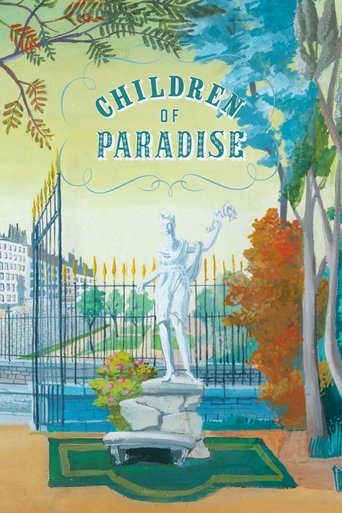
8.0In a chaotic 19th-century Paris teeming with aristocrats, thieves, psychics, and courtesans, theater mime Baptiste is in love with the mysterious actress Garance. But Garance, in turn, is loved by three other men: pretentious actor Frederick, conniving thief Lacenaire, and Count Edouard of Montray.
Children of Paradise
1945
 7.6
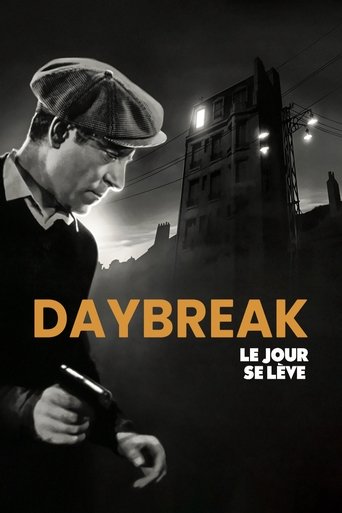
7.6After committing a murder, a man locks himself in his apartment and recollects the events that led him to the killing.
Daybreak
1939
 7.4
7.4Down a foggy, desolate road to the port city of Le Havre travels Jean, an army deserter looking for another chance to make good on life. Fate, however, has a different plan for him, as acts of both revenge and kindness render him front-page news.
Port of Shadows
1938
 6.8
6.8At the end of the 15th century, a man and a woman, posing as traveling minstrels, are sent by the Devil to a castle to seduce its inhabitants.
The Devil's Envoys
1942
 7.1
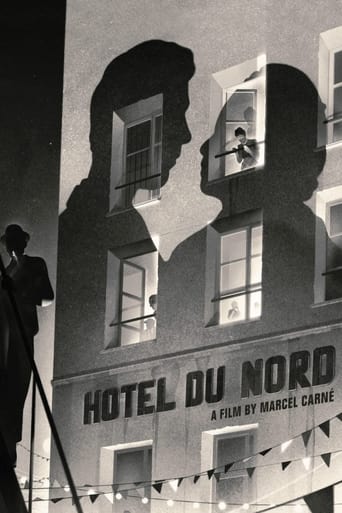
7.1On the meandering Canal St. Martin, at the Parisian Hôtel du Nord, a nearly fatal gunshot separates a dejected young couple. But, amid a sad but beautiful panorama of lively characters, love has the final say. Can life be a fairy tale?
Hôtel du Nord
1938
 5.5
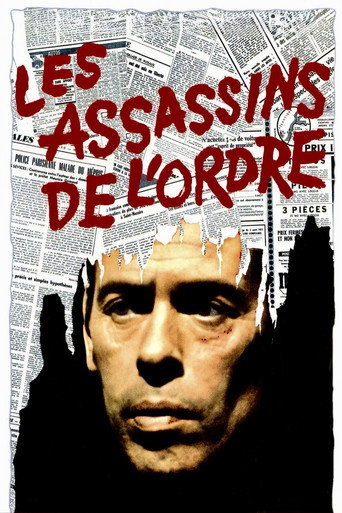
5.5A judge investigating police corruption finds that the deeper he digs, the more roadblocks he finds.
Law Breakers
1971
5.5A judge investigating police corruption finds that the deeper he digs, the more roadblocks he finds.
Law Breakers
1971
 5.2
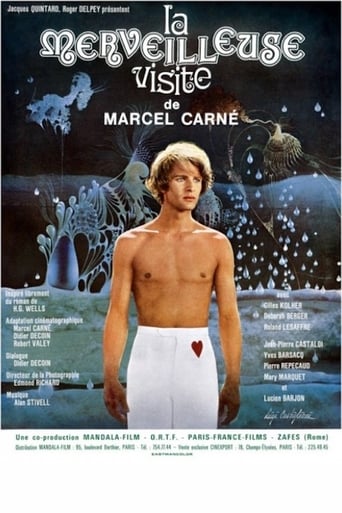
5.2In a small French village, an angel appears disguised as a beautiful young blond.
The Marvelous Visit
1974
5.2In a small French village, an angel appears disguised as a beautiful young blond.
The Marvelous Visit
1974
 6.1
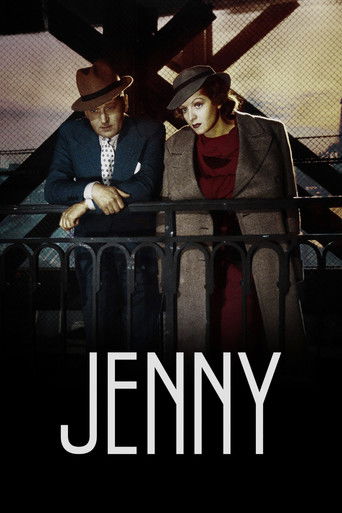
6.1When her fiancé breaks off their engagement, Danielle leaves London and returns to her mother, Jenny, in Paris. With her business partner Benoît, Jenny runs what appears to be a respectable nightclub – it is in fact a place where wealthy men can buy the favours of attractive young women. Oblivious to her mother's professional and personal life, Danielle meets a handsome young man named Lucien, and falls in love with him – not realising that he is Jenny's lover...
Jenny
1936
 5.7
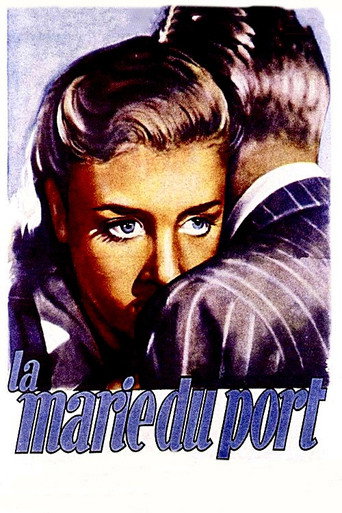
5.7Henri Chatelard is well into his forties, owns a restaurant and a cinema in the city, and appreciates women. When he meets Marie, an 18-ish strong-head who just lost her father in a small fishing village, it is not clear who is the hunter and who is the prey.
Marie of the Port
1950
5.7Henri Chatelard is well into his forties, owns a restaurant and a cinema in the city, and appreciates women. When he meets Marie, an 18-ish strong-head who just lost her father in a small fishing village, it is not clear who is the hunter and who is the prey.
Marie of the Port
1950
 6.2
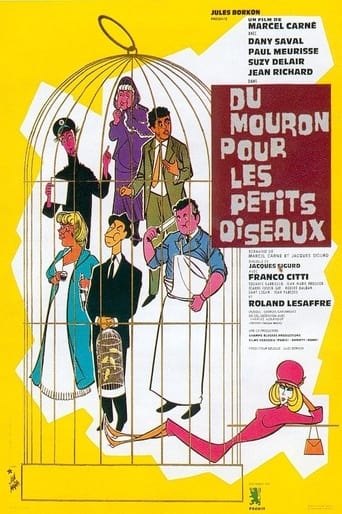
6.2In a building close to the Place de la Contrescarpe in Paris, a tale of criss‑crossings in turn romantic, gourmet, interested or mystical, between an Italian gigolo and a nightclub hostess, a family of butchers and an apprentice rocker, a mystic tailor, a writer sending himself telegrams, an alert paralytic woman, a thoughtful concierge, a bird breeder and a just‑out‑of‑jail hooligan. Little by little each one discovers each other’s more or less troubled history… when a mysterious death introduces the Police within this huis clos, hastens disclosure of well‑kept secrets and ruffle this little World.
Chicken Feed for Little Birds
1963
6.2In a building close to the Place de la Contrescarpe in Paris, a tale of criss‑crossings in turn romantic, gourmet, interested or mystical, between an Italian gigolo and a nightclub hostess, a family of butchers and an apprentice rocker, a mystic tailor, a writer sending himself telegrams, an alert paralytic woman, a thoughtful concierge, a bird breeder and a just‑out‑of‑jail hooligan. Little by little each one discovers each other’s more or less troubled history… when a mysterious death introduces the Police within this huis clos, hastens disclosure of well‑kept secrets and ruffle this little World.
Chicken Feed for Little Birds
1963
 7.0
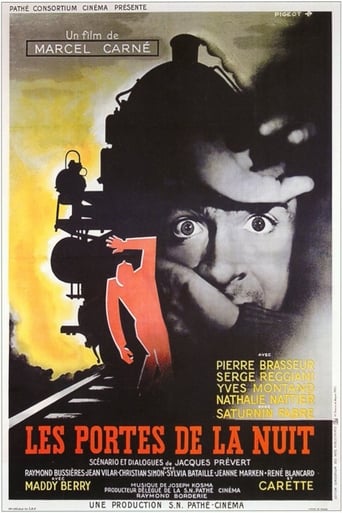
7.0In post-Liberation Paris, a man reunites with a friend and meets the woman of his dreams, only to discover her brother's dark past.
Gates of the Night
1946
 6.2
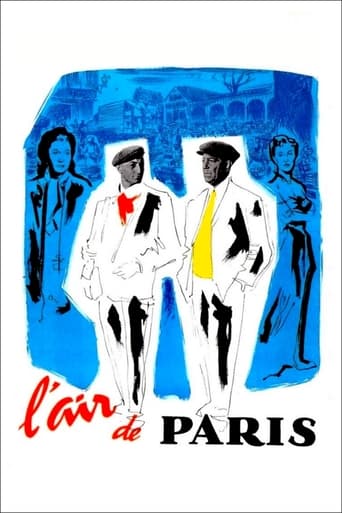
6.2Victor Le Garrec, a former boxer, runs a gym in Paris while dreaming of finding an aspiring champion who will reach the goals he was never able to achieve.
Air of Paris
1954
6.2Victor Le Garrec, a former boxer, runs a gym in Paris while dreaming of finding an aspiring champion who will reach the goals he was never able to achieve.
Air of Paris
1954
 4.4
4.4Alain, "a young wolf", elegant and racy, is maintained by the princess Linzani. At the same time, he goes out with a girl of his age, Sylvie, who despite her bold attitude has never had a lover.
Young Wolves
1968
4.4Alain, "a young wolf", elegant and racy, is maintained by the princess Linzani. At the same time, he goes out with a girl of his age, Sylvie, who despite her bold attitude has never had a lover.
Young Wolves
1968
 6.8
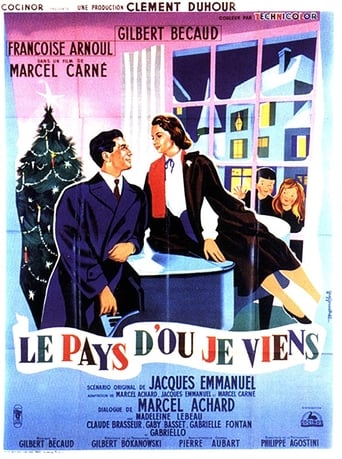
6.8One Christmas Eve, a carefree young man, Eric, arrives in a small provincial town. Here, he meets Julien, a bar pianist who is his exact double. Julien is in love with Marinette, a pretty waitress, but he is too shy to make any romantic overtures. Eric decides to give the course of true love a helping hand by pretending to be Julien. Meanwhile, Eric’s fabulously wealthy uncle has sent his minions out to bring him back home, so that he may celebrate Christmas in the bosom of his family.
The Country I Come From
1956
6.8One Christmas Eve, a carefree young man, Eric, arrives in a small provincial town. Here, he meets Julien, a bar pianist who is his exact double. Julien is in love with Marinette, a pretty waitress, but he is too shy to make any romantic overtures. Eric decides to give the course of true love a helping hand by pretending to be Julien. Meanwhile, Eric’s fabulously wealthy uncle has sent his minions out to bring him back home, so that he may celebrate Christmas in the bosom of his family.
The Country I Come From
1956
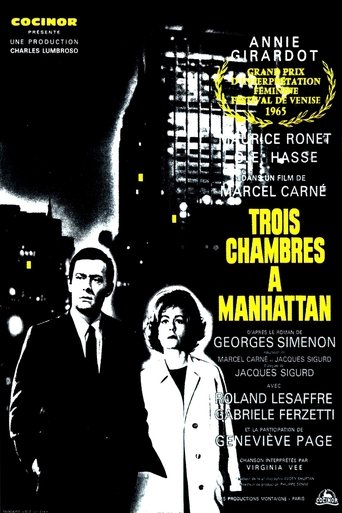 6.1
6.1When his wife leaves him, a young French actor, François Combe, moves to New York to work for a television company. One evening, he meets an attractive young woman, Kay Larsi, in a bar.
Three Rooms in Manhattan
1965
6.1When his wife leaves him, a young French actor, François Combe, moves to New York to work for a television company. One evening, he meets an attractive young woman, Kay Larsi, in a bar.
Three Rooms in Manhattan
1965
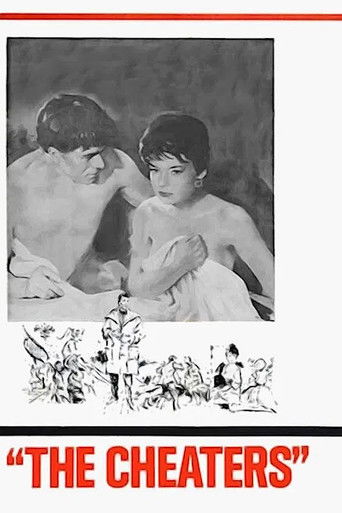 6.5
6.5Bob Letellier, a good looking rich kid who studies science, makes the acquaintance of Alain, a cynical and immoral young man. The latter introduces him to the existentialist circles of Saint-Germain-des-Prés. Bob is invited to a party and becomes Clo's lover, a rich heiress.
The Cheaters
1958
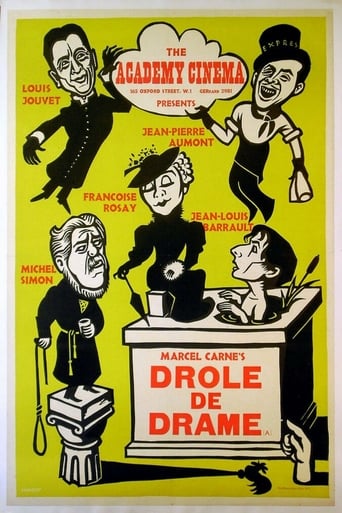 7.0
7.0A French farce set in Victorian London where a botanist and his wife get into trouble when they pretend to go missing in order to hide from their sanctimonious cousin – an Anglican bishop who is leading a campaign against such writing.
Bizarre, Bizarre
1937
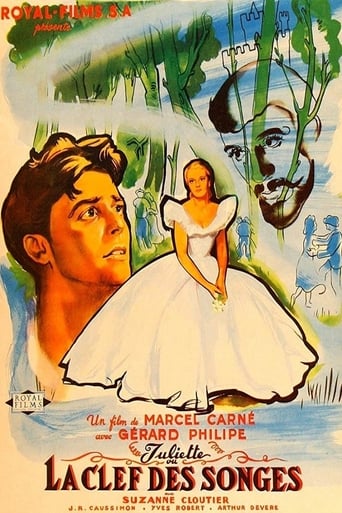 7.0
7.0Michel has stolen from his employer, Mr Bellanger, for the love of Juliette. He is now in jail. One night, while sleeping in his cell, he wakes up all of a sudden, the gates open and he finds himself in a strange village where all the inhabitants have lost their memory. There, meets Juliette again who seems to agree to marry a powerful man, who might well be Bluebeard...
Juliette, or Key of Dreams
1951
 6.6
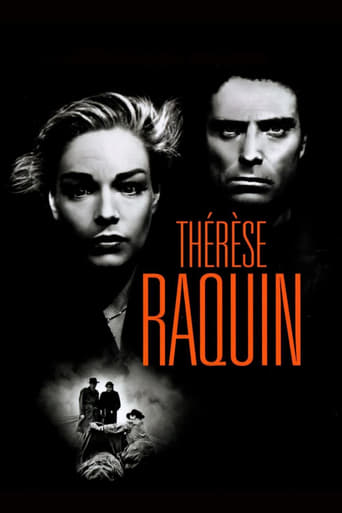
6.6Star-crossed lovers Thérèse and Laurent think they've gotten away with murder after Thérèse's weakling husband "falls" from a speeding train. But when forced to contend with a blackmailer's demands and the mute accusations of Thérèse's mother-in-law, it's only a matter of time before the law, their passion or blind chance trips them up.
Thérèse Raquin
1953
 6.5
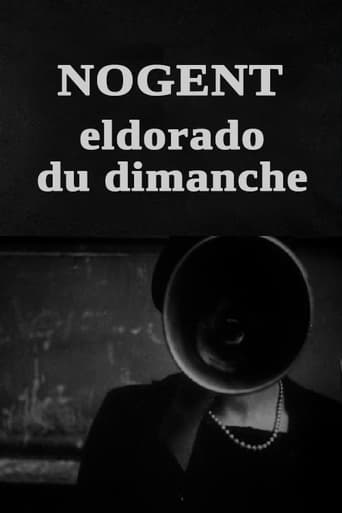
6.5A short, early travel documentary about Nogent. The film starts with images of trains, buses, and railway tracks, which are juxtaposed to shots of deserted Paris streets, empty factories, and typewriters packed in slipcovers. It is a natural landscape organized by industrial infrastructure and populated by the urban crowds who are swimming, rowing, canoeing, sailing, fishing, or biking.
Nogent, Eldorado du dimanche
1929
 6.1
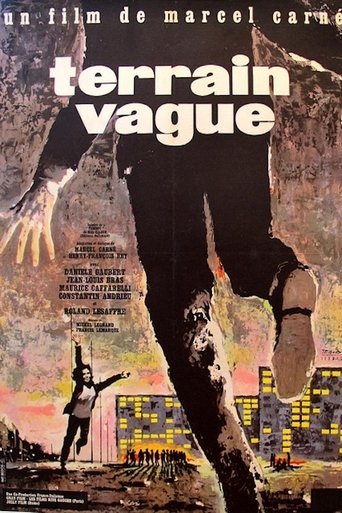
6.1On the outskirts of Parisian council housing estates lies a vast wasteland that still retains its mysteries in this day and age, and serves as a refuge for people who, in their spare time, escape or are often ejected from their overcrowded dwellings. They form small, rather harmless bands, share their first secrets, build up their "treasures" and submit to strict rituals. The sanctity of their rebellions is underscored by initiation through blindfolded jumping and a blood test. An impossible love story is born between two members of the same clan, Dan, a beautiful, tomboyish girl, and Lucky, a sweet but feisty boy.
Wasteland
1960
6.1On the outskirts of Parisian council housing estates lies a vast wasteland that still retains its mysteries in this day and age, and serves as a refuge for people who, in their spare time, escape or are often ejected from their overcrowded dwellings. They form small, rather harmless bands, share their first secrets, build up their "treasures" and submit to strict rituals. The sanctity of their rebellions is underscored by initiation through blindfolded jumping and a blood test. An impossible love story is born between two members of the same clan, Dan, a beautiful, tomboyish girl, and Lucky, a sweet but feisty boy.
Wasteland
1960
 5.2
5.2The Basilica of Monreale, near Palermo in Sicily acts as subject and springboard of Carné's final film; Its hundreds of gorgeous and intricate tiled mosaics vividly depict scenes from the Bible. Kinetic camerawork and dramatic narration of each scene compliment these stunning pieces in order to retell the Holy Book's age-old Story.
The Bible
1977
5.2The Basilica of Monreale, near Palermo in Sicily acts as subject and springboard of Carné's final film; Its hundreds of gorgeous and intricate tiled mosaics vividly depict scenes from the Bible. Kinetic camerawork and dramatic narration of each scene compliment these stunning pieces in order to retell the Holy Book's age-old Story.
The Bible
1977