
Directing
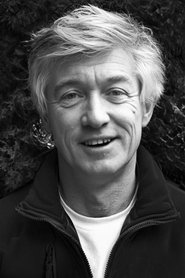
Denis Ducroz
Born
1949-04-01 (77)
Place of birth
Chamonix-Mont-Blanc, Haute-Savoie, France
Known for
Directing
Credits
19 titles
Denis Ducroz, born in 1949, is a French Chamonix-based mountain guide, filmmaker, director, and writer. He has established himself as one of the most active filmmakers in the field of high mountain and expeditions, both as a cameraman and director, collaborating on numerous films dedicated to the mountain world. His audiovisual output has expanded over time to include social, economic, environmental, and cultural themes, while remaining focused on the world's mountains and their populations. Among the most notable is "Les inconnus du Mont-Blanc" (1986), a film that recreates the first ascent of Mont Blanc by Jacques Balmat and Michel Paccard, immersing the viewer in the minds of the mountai…
Known for
 9.0
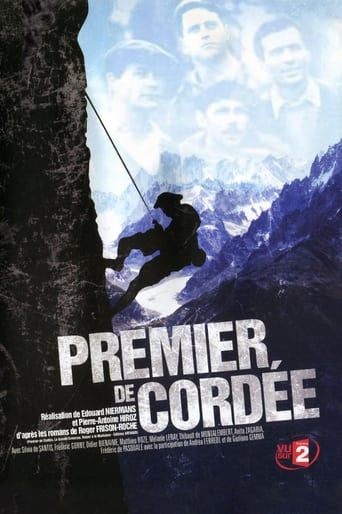
9.0Chamonix in the 1930s was a resort where a cosmopolitan, fashionable and sporting society thronged, in search of novelties and thrills found in mountaineering. These people rub shoulders with the Chamoniards but do not meet except on the trails of Mont-Blanc. The accident of Joseph, the patriarch of Servettaz, guides from generation to generation, marked the spirits. It is his son Zian who decides to take up the torch. Married to Bianca, the daughter of the wealthy Milanese industrialist who was partly responsible for her father's death, Zian lives out her great love story - a threesome - with the mountain always remaining the most demanding mistress. Tired of the agonizing expectations and loneliness during her husband's ascents, Bianca returns to Italy, Zian joins her, but society life is not his world, he returns to Chamonix. During an outing in the mountains, Zian falls into a crevasse. Bianca, alerted by a presentiment, returns to the one she loves above all...
First On The Rope
1999
 10.0
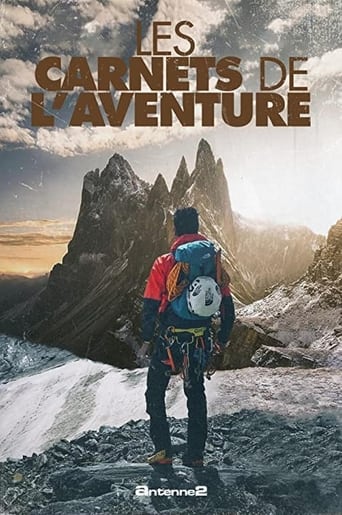
10.0Les Carnets de l'Aventure is a cult French television program of adventure and extreme sports documentaries broadcast on Saturday afternoons on Antenne 2 (France 2) between 1980 and 1989. At the beginning of the 80s, in full transformation of mountain activities into high level sports, Les Carnets de L'Aventure revealed from to the country that invented alpinism to the whole world the "French-Touch" of these talents of the new approach to the mountains and its new disciplines. Patrick Edlinger and solo free climbing with the film La Vie au Bout des Doigts, directed by Jean-Paul Janssen in 1982. But also his brother in arms Patrick Berhault, Christophe Profit in the solo ascent of Les Drus, the trilogies of Jean-Marc Boivin in hang-gliding, the Himalayan expoits of Marc Batard but also those of Patrick Gabarrou, opener of routes in the Alps and elsewhere, Patrick Vallencant and his extreme skiing, Paul-Émile Victor and many others...
Les Carnets De L'Aventure
1977
 8.3
8.3Several mountaineers attempt to climb La face de l'Ogre near Chamonix. Their starting point is a small mountain hotel from where many tourists observe them. Among these is Hélène, who has been staying there for a few weeks but who is excluded by the other tourists. Then she meets a city girl named Marion and they immediately become friends. She tells him that she is waiting for her husband who has tried to climb the mountain and should be back any day. But then the weather turns sour, which causes hope to wane but also brings women together in anxiety. Finally the weather improves and Marion's husband comes back but not Hélène's and she must finally accept the truth.
La Face de l'Ogre
1988
 10.0
10.0A team of 12 men, 5 sailors, a doctor, a writer, a film crew, and 3 mountaineers, Jean-Marc Boivin, Thierry Leroy, and Dominique Marchal, set off by sailboat from Mar del Plata in Argentina to reach Riso Patron in Chile, via the Strait of Magellan, the Patagonian Channels, and Falcon Fjord. Their goal is to climb Riso Patron and then make the first crossing of the Campo de Hielo Sur glacier, or Hielo Continental Patagónico, to meet up with the sailors in Puerto Williams on Navarino Island in Chile, a village at the end of the world. After three attempts and an accident for Leroy, who was repatriated, they gave up, crossed the glacier and rejoined the boat, to set off for Cape Horn to climb the South face, knowing that the weather was good one day a month... On January 20, 1983, Jean-Marc Boivin and Dominique Marchal succeeded in making the first ascent of the South face of Cape Horn.
Patagonie Force 10
1983
 10.0
10.0Mont Blanc, the highest peak in the Alps, rises to 4,810 m and was first climbed on August 8, 1786. Chamonix natives Jacques Balmat and Michel Paccard set out on the afternoon of August 7 and returned victorious on the morning of the 9th, after two nights spent outdoors. This film is a staging that reconstructs this great event with all the problems it created and resolved, thus contributing to the emergence of the modern concept of mountaineering. Denis Ducroz, guide and filmmaker, immerses us in the minds and times of these two men, 224 years later.
The Unfamous of Mont Blanc
1986
 10.0
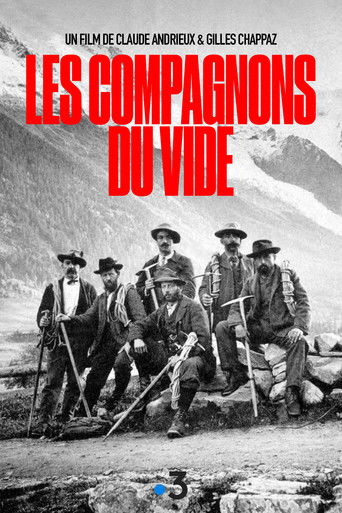
10.0"Les Compagnons Du Vide" (The Companions of the Void) is a documentary made in 1989 by Claude Andrieux and Gilles Chappaz, broadcast in two parts on the FR3 program "Montagne." The film explores the history of the mountain guide profession through portraits of mountain guides, showcasing the diversity of this high-risk occupation. It also delves into the intimate relationship between the climbing team and the client, using the example of prestigious guides. The documentary follows these teams on major climbs around Chamonix, on Mont Blanc, and on La Meije in the Écrins massif.
The Companions Of The Void
1989
Film credits

1980s · 4 titles
8.3Several mountaineers attempt to climb La face de l'Ogre near Chamonix. Their starting point is a small mountain hotel from where many tourists observe them. Among these is Hélène, who has been staying there for a few weeks but who is excluded by the other tourists. Then she meets a city girl named Marion and they immediately become friends. She tells him that she is waiting for her husband who has tried to climb the mountain and should be back any day. But then the weather turns sour, which causes hope to wane but also brings women together in anxiety. Finally the weather improves and Marion's husband comes back but not Hélène's and she must finally accept the truth.
La Face de l'Ogre
1988
10.0A team of 12 men, 5 sailors, a doctor, a writer, a film crew, and 3 mountaineers, Jean-Marc Boivin, Thierry Leroy, and Dominique Marchal, set off by sailboat from Mar del Plata in Argentina to reach Riso Patron in Chile, via the Strait of Magellan, the Patagonian Channels, and Falcon Fjord. Their goal is to climb Riso Patron and then make the first crossing of the Campo de Hielo Sur glacier, or Hielo Continental Patagónico, to meet up with the sailors in Puerto Williams on Navarino Island in Chile, a village at the end of the world. After three attempts and an accident for Leroy, who was repatriated, they gave up, crossed the glacier and rejoined the boat, to set off for Cape Horn to climb the South face, knowing that the weather was good one day a month... On January 20, 1983, Jean-Marc Boivin and Dominique Marchal succeeded in making the first ascent of the South face of Cape Horn.
Patagonie Force 10
1983
10.0"Les Compagnons Du Vide" (The Companions of the Void) is a documentary made in 1989 by Claude Andrieux and Gilles Chappaz, broadcast in two parts on the FR3 program "Montagne." The film explores the history of the mountain guide profession through portraits of mountain guides, showcasing the diversity of this high-risk occupation. It also delves into the intimate relationship between the climbing team and the client, using the example of prestigious guides. The documentary follows these teams on major climbs around Chamonix, on Mont Blanc, and on La Meije in the Écrins massif.
The Companions Of The Void
1989
 10.0
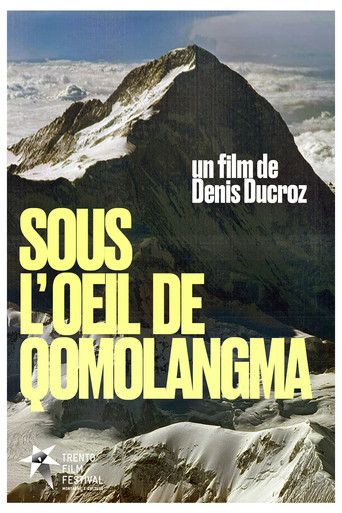
10.0The French High Mountain Military Group (G.M.H.M.) expedition to Everest in 1981, led by General Pierre Astorg, took place on the north face of the mountain. Fifteen military climbers participated in this expedition, which lasted approximately ninety days. Their goal was to reach the summit by following a siege approach, but despite their efforts, the expedition failed to reach the summit. The French military, engaged since the beginning of March on the north face of Everest (8,848 meters), gave up less than 300 meters from the summit. The climbers, Jean-Claude Mosca, Hervé Sachetat, and Hubert Giot, gave up on setting up Camp 7, the last planned intermediate camp, at 8,600 meters. Poor weather conditions and the physical condition of the expedition members were the reasons for the failure of this meticulously prepared expedition...
Under The Eye Of Qomolangma
1981
Series credits
9.0Chamonix in the 1930s was a resort where a cosmopolitan, fashionable and sporting society thronged, in search of novelties and thrills found in mountaineering. These people rub shoulders with the Chamoniards but do not meet except on the trails of Mont-Blanc. The accident of Joseph, the patriarch of Servettaz, guides from generation to generation, marked the spirits. It is his son Zian who decides to take up the torch. Married to Bianca, the daughter of the wealthy Milanese industrialist who was partly responsible for her father's death, Zian lives out her great love story - a threesome - with the mountain always remaining the most demanding mistress. Tired of the agonizing expectations and loneliness during her husband's ascents, Bianca returns to Italy, Zian joins her, but society life is not his world, he returns to Chamonix. During an outing in the mountains, Zian falls into a crevasse. Bianca, alerted by a presentiment, returns to the one she loves above all...
First On The Rope
1999
10.0Les Carnets de l'Aventure is a cult French television program of adventure and extreme sports documentaries broadcast on Saturday afternoons on Antenne 2 (France 2) between 1980 and 1989. At the beginning of the 80s, in full transformation of mountain activities into high level sports, Les Carnets de L'Aventure revealed from to the country that invented alpinism to the whole world the "French-Touch" of these talents of the new approach to the mountains and its new disciplines. Patrick Edlinger and solo free climbing with the film La Vie au Bout des Doigts, directed by Jean-Paul Janssen in 1982. But also his brother in arms Patrick Berhault, Christophe Profit in the solo ascent of Les Drus, the trilogies of Jean-Marc Boivin in hang-gliding, the Himalayan expoits of Marc Batard but also those of Patrick Gabarrou, opener of routes in the Alps and elsewhere, Patrick Vallencant and his extreme skiing, Paul-Émile Victor and many others...
Les Carnets De L'Aventure
1977
Behind the camera
10.0A team of 12 men, 5 sailors, a doctor, a writer, a film crew, and 3 mountaineers, Jean-Marc Boivin, Thierry Leroy, and Dominique Marchal, set off by sailboat from Mar del Plata in Argentina to reach Riso Patron in Chile, via the Strait of Magellan, the Patagonian Channels, and Falcon Fjord. Their goal is to climb Riso Patron and then make the first crossing of the Campo de Hielo Sur glacier, or Hielo Continental Patagónico, to meet up with the sailors in Puerto Williams on Navarino Island in Chile, a village at the end of the world. After three attempts and an accident for Leroy, who was repatriated, they gave up, crossed the glacier and rejoined the boat, to set off for Cape Horn to climb the South face, knowing that the weather was good one day a month... On January 20, 1983, Jean-Marc Boivin and Dominique Marchal succeeded in making the first ascent of the South face of Cape Horn.
Patagonie Force 10
1983
10.0Mont Blanc, the highest peak in the Alps, rises to 4,810 m and was first climbed on August 8, 1786. Chamonix natives Jacques Balmat and Michel Paccard set out on the afternoon of August 7 and returned victorious on the morning of the 9th, after two nights spent outdoors. This film is a staging that reconstructs this great event with all the problems it created and resolved, thus contributing to the emergence of the modern concept of mountaineering. Denis Ducroz, guide and filmmaker, immerses us in the minds and times of these two men, 224 years later.
The Unfamous of Mont Blanc
1986
10.0Mont Blanc, the highest peak in the Alps, rises to 4,810 m and was first climbed on August 8, 1786. Chamonix natives Jacques Balmat and Michel Paccard set out on the afternoon of August 7 and returned victorious on the morning of the 9th, after two nights spent outdoors. This film is a staging that reconstructs this great event with all the problems it created and resolved, thus contributing to the emergence of the modern concept of mountaineering. Denis Ducroz, guide and filmmaker, immerses us in the minds and times of these two men, 224 years later.
The Unfamous of Mont Blanc
1986
10.0The French High Mountain Military Group (G.M.H.M.) expedition to Everest in 1981, led by General Pierre Astorg, took place on the north face of the mountain. Fifteen military climbers participated in this expedition, which lasted approximately ninety days. Their goal was to reach the summit by following a siege approach, but despite their efforts, the expedition failed to reach the summit. The French military, engaged since the beginning of March on the north face of Everest (8,848 meters), gave up less than 300 meters from the summit. The climbers, Jean-Claude Mosca, Hervé Sachetat, and Hubert Giot, gave up on setting up Camp 7, the last planned intermediate camp, at 8,600 meters. Poor weather conditions and the physical condition of the expedition members were the reasons for the failure of this meticulously prepared expedition...
Under The Eye Of Qomolangma
1981
10.0The French High Mountain Military Group (G.M.H.M.) expedition to Everest in 1981, led by General Pierre Astorg, took place on the north face of the mountain. Fifteen military climbers participated in this expedition, which lasted approximately ninety days. Their goal was to reach the summit by following a siege approach, but despite their efforts, the expedition failed to reach the summit. The French military, engaged since the beginning of March on the north face of Everest (8,848 meters), gave up less than 300 meters from the summit. The climbers, Jean-Claude Mosca, Hervé Sachetat, and Hubert Giot, gave up on setting up Camp 7, the last planned intermediate camp, at 8,600 meters. Poor weather conditions and the physical condition of the expedition members were the reasons for the failure of this meticulously prepared expedition...
Under The Eye Of Qomolangma
1981
 10.0
10.0In 1979, aboard the Basile, a Damien II type ship (Joubert design), French sailors and mountaineers sailed in the footsteps of the explorer Ernest Shackleton, considered one of the main figures of the heroic age of exploration in Antarctica, towards South Georgia, where they climbed Mount Paget, which is part of the Allardyce range and peaks at an altitude of 2,935 metres.
Where Are You Going Basile?
1980
10.0In 1979, aboard the Basile, a Damien II type ship (Joubert design), French sailors and mountaineers sailed in the footsteps of the explorer Ernest Shackleton, considered one of the main figures of the heroic age of exploration in Antarctica, towards South Georgia, where they climbed Mount Paget, which is part of the Allardyce range and peaks at an altitude of 2,935 metres.
Where Are You Going Basile?
1980
 10.0
10.0This documentary is a reconstruction, based on archive footage, testimonies, and filmed reconstructions, of the Vincendon / Henry tragedy. December 1956: Jean Vincendon and François Henry, two young mountaineers, aspire to join the High Mountain Group. Lacking experience, they set out to climb Mont Blanc via the Brenva spur in the middle of winter. The weather conditions deteriorated, and they decided to give up before meeting Walter Bonatti and Sylvano Gheser. They then decided to continue the climb and set off in two different roped parties. Bonatti decided to take refuge at the Vallot refuge higher up, rather than descend. The two young mountaineers, overcome by the poor weather conditions and fatigue, remained stuck for several days at 4,000 meters. What followed was a completely disorganized rescue operation that became, for more than ten days, a spectacle for all of France and a national tragedy.
The Castaways Of Mont Blanc
2002
10.0This documentary is a reconstruction, based on archive footage, testimonies, and filmed reconstructions, of the Vincendon / Henry tragedy. December 1956: Jean Vincendon and François Henry, two young mountaineers, aspire to join the High Mountain Group. Lacking experience, they set out to climb Mont Blanc via the Brenva spur in the middle of winter. The weather conditions deteriorated, and they decided to give up before meeting Walter Bonatti and Sylvano Gheser. They then decided to continue the climb and set off in two different roped parties. Bonatti decided to take refuge at the Vallot refuge higher up, rather than descend. The two young mountaineers, overcome by the poor weather conditions and fatigue, remained stuck for several days at 4,000 meters. What followed was a completely disorganized rescue operation that became, for more than ten days, a spectacle for all of France and a national tragedy.
The Castaways Of Mont Blanc
2002
 10.0
10.0For the documentary series Les Ascensions Célèbres, Denis Ducroz has created this historical reconstruction of the first ascent of the Meije, exploring etymology, physical geography, and the history of the emergence of mountaineering in the Oisans massif. The first ascent of the Grand Pic was made on August 16, 1877, by Emmanuel Boileau de Castelnau with Pierre Gaspard and son; the rope party moved along the Promontoire ridge on the south face to the Glacier Carré, where Jean-Baptiste Rodier, the second porter, separated from the three climbers who managed to overcome ice and granite to open the famous "normal route" to the summit.
The Conquest Of La Meije
1986
10.0For the documentary series Les Ascensions Célèbres, Denis Ducroz has created this historical reconstruction of the first ascent of the Meije, exploring etymology, physical geography, and the history of the emergence of mountaineering in the Oisans massif. The first ascent of the Grand Pic was made on August 16, 1877, by Emmanuel Boileau de Castelnau with Pierre Gaspard and son; the rope party moved along the Promontoire ridge on the south face to the Glacier Carré, where Jean-Baptiste Rodier, the second porter, separated from the three climbers who managed to overcome ice and granite to open the famous "normal route" to the summit.
The Conquest Of La Meije
1986
 10.0
10.0The documentary chronicles the journey and climbs of a group of young French people on the cliffs rising above Wadi Rum, in the desert south of Jordan, guided by two very athletic local Bedouins. The climbers set out to discover new, isolated places, fueled by a spirit of adventure. These places were little known, at least as climbing areas in 1988.
Vertical Nomads
1988