
Directing
Alain Jaubert
Known for
Directing
Credits
40 titles
Known for
 10.0
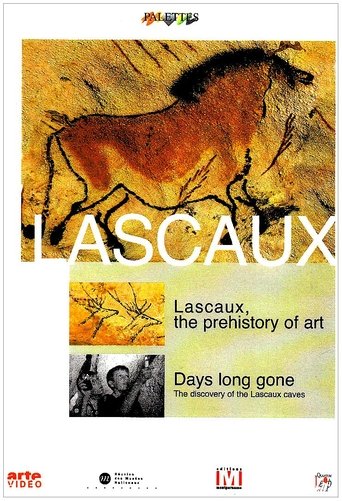
10.0Documentary of a network of caves discovered in 1940 in France. Inside are hundreds of depictions of animals painted approximately 17,000 years ago. The site is no longer open to the public, but can be seen here.
Lascaux: The Prehistory of Art
1995
 NR
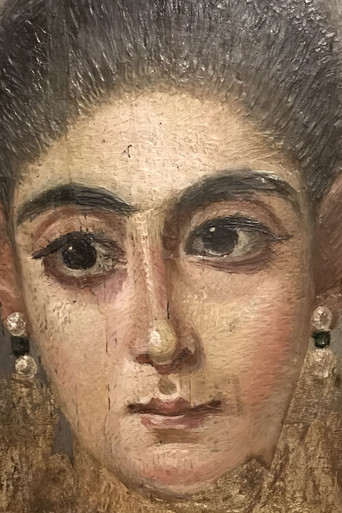
NRUsing a funerary portrait from the Fayum preserved at the Louvre Museum, this documentary explores the art of portrait painting in Roman Egypt during the 2nd and 3rd centuries AD. These strikingly realistic faces, painted on wooden panels and placed on mummies, reveal a multicultural society shaped by Egyptian, Greek, and Roman traditions. Through this single portrait, the film reflects on identity, memory, and the human relationship to death.
Le Dernier Regard – L’Européenne, portrait du Fayoum
1998
 NR
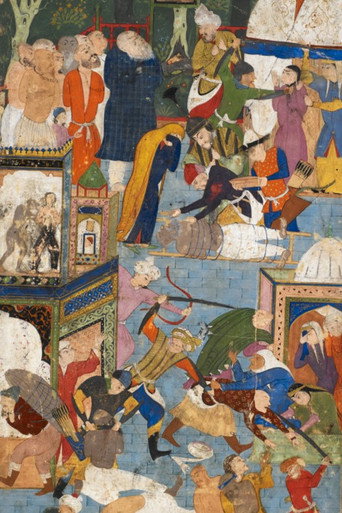
NRFrom the Bagdad School (14th century) to the Qadjar School (19th century), Persian painting has always preserved an extraordinary vitality. Court art essentially involving book illustrations, it had its schools, its royal ateliers, its secret techniques, its great masters. The focus of this film is one of the finest work from the department of oriental manuscripts at the Bibliothèque nationale de France, a collection of Five Poems (Khamse) by the great 12th century Persian poet Nezâmi. The examination of papermaking techniques, make-up, calligraphy, drawing and painting affords an opportunity to discover a fascinating civilization
Miniature persane « Les Jardins du Paradis »
1997
 NR
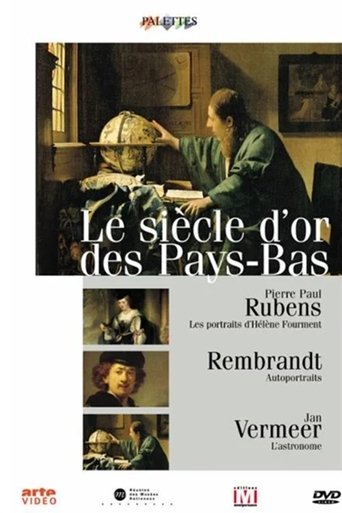
NRNo synopsis available yet.
Le siècle d'or des Pays-Bas
2002
 NR
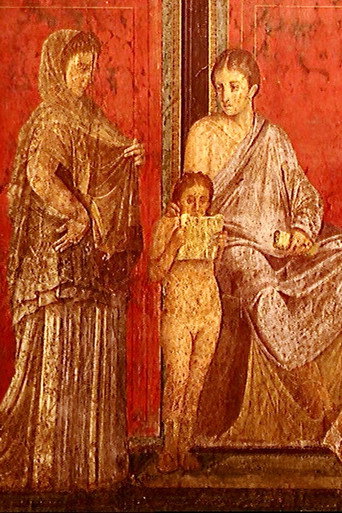
NRIn 79 AD, the eruption of Mount Vesuvius buried the city and inhabitants of Pompeii under volcanic debris and preserved—until excavations in 1909—a vast fresco painted a century and a half earlier in a suburban villa. Populated by twenty-nine life-size figures against a vivid red background, this decoration, as famous as it is enigmatic, has given rise to several interpretations, which this film seeks to clarify with the help of documentary evidence.
Pompéi « Cérémonies secrètes »
2002
 NR
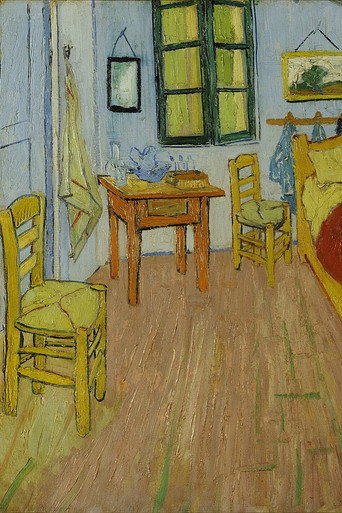
NRIn october 1888 Vincent Van Gogh who has been living for eight months in Arles, paints his room. A year later, when he is at the Saint-Paul de Mausole Hospice near Saint-Rémy, he feels compelled to paint two copies of this picture which he is especially fond of. It is deliberately simple and yet seems very strange. Vincent wanted to see it as a symbol of rest but the objects in it seem to retreat and space seems to become deformed. Detailed researchs, as in the series "Palettes" has made it possible to reconstitute exactly the room in Arles. Vincent painted it in fact with the detail which fascinated him in the work of the old Dutch Masters. But he brought to it the extraordinary gift of his brush stroke and his new range of colours. That autumn, between the sunflowers, the harvest and the room in Arles Vincent reached the "higt note in yellow".
Van Gogh « La haute note jaune »
1994
Behind the camera
10.0Documentary of a network of caves discovered in 1940 in France. Inside are hundreds of depictions of animals painted approximately 17,000 years ago. The site is no longer open to the public, but can be seen here.
Lascaux: The Prehistory of Art
1995
NRUsing a funerary portrait from the Fayum preserved at the Louvre Museum, this documentary explores the art of portrait painting in Roman Egypt during the 2nd and 3rd centuries AD. These strikingly realistic faces, painted on wooden panels and placed on mummies, reveal a multicultural society shaped by Egyptian, Greek, and Roman traditions. Through this single portrait, the film reflects on identity, memory, and the human relationship to death.
Le Dernier Regard – L’Européenne, portrait du Fayoum
1998
NRFrom the Bagdad School (14th century) to the Qadjar School (19th century), Persian painting has always preserved an extraordinary vitality. Court art essentially involving book illustrations, it had its schools, its royal ateliers, its secret techniques, its great masters. The focus of this film is one of the finest work from the department of oriental manuscripts at the Bibliothèque nationale de France, a collection of Five Poems (Khamse) by the great 12th century Persian poet Nezâmi. The examination of papermaking techniques, make-up, calligraphy, drawing and painting affords an opportunity to discover a fascinating civilization
Miniature persane « Les Jardins du Paradis »
1997
NRNo synopsis available yet.
Le siècle d'or des Pays-Bas
2002
NRNo synopsis available yet.
Le siècle d'or des Pays-Bas
2002
NRIn 79 AD, the eruption of Mount Vesuvius buried the city and inhabitants of Pompeii under volcanic debris and preserved—until excavations in 1909—a vast fresco painted a century and a half earlier in a suburban villa. Populated by twenty-nine life-size figures against a vivid red background, this decoration, as famous as it is enigmatic, has given rise to several interpretations, which this film seeks to clarify with the help of documentary evidence.
Pompéi « Cérémonies secrètes »
2002
NRIn october 1888 Vincent Van Gogh who has been living for eight months in Arles, paints his room. A year later, when he is at the Saint-Paul de Mausole Hospice near Saint-Rémy, he feels compelled to paint two copies of this picture which he is especially fond of. It is deliberately simple and yet seems very strange. Vincent wanted to see it as a symbol of rest but the objects in it seem to retreat and space seems to become deformed. Detailed researchs, as in the series "Palettes" has made it possible to reconstitute exactly the room in Arles. Vincent painted it in fact with the detail which fascinated him in the work of the old Dutch Masters. But he brought to it the extraordinary gift of his brush stroke and his new range of colours. That autumn, between the sunflowers, the harvest and the room in Arles Vincent reached the "higt note in yellow".
Van Gogh « La haute note jaune »
1994
 NR
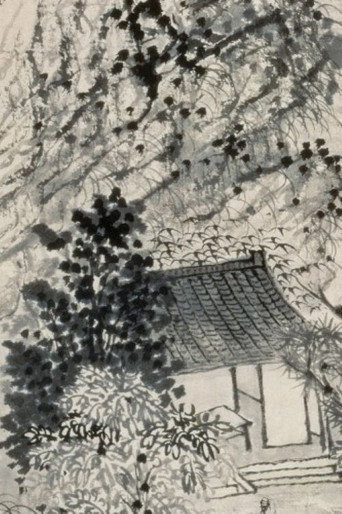
NRShitao, one of the most skilled painters of his time, was deeply imbued with Buddhist spirituality, as he was forced to take refuge in monasteries from a very young age. His painting relies on the simplicity of line and the pure white of the paper. Here, a mountain landscape is rendered in ink on rice paper mounted on a silk scroll. Beneath the apparent simplicity of the subject unfolds a whole universe of hidden correspondences that one must learn to decipher.
Shitao « L’Unique trait de pinceau »
1999
 NR
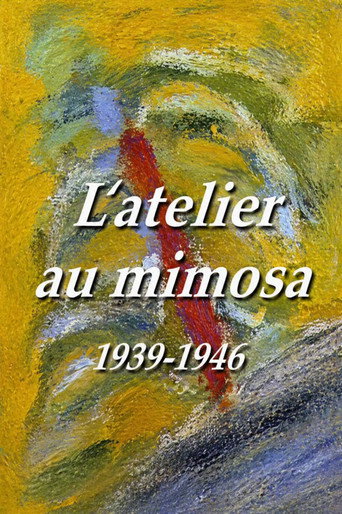
NRA square format market by the rhythms of its many obliques (the frame of the glass window, the guardrail in the foreground) and its brilliant colours (ultramarine, emerald, orange, pink and the bright yellow of the mimosa), L'Atelier is one of Bonnard's last great paintings. It is also one of his masterpieces, magnificient and enigmatic, meriting in itself a detailed analysis.
Pierre Bonnard « Le mimosa mimétique »
1998
Born in Aix-en-Provence, Cézanne returned to settle there after some travels. The nearby Sainte-Victoire mountain became his subject, which he would depict more than sixty times in different styles and in every season. This strange obsession warranted further investigation.
The Violence of Motif
1995
 NR
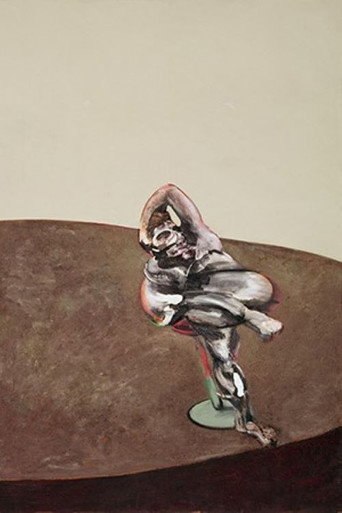
NRA plunge into the strange and fascinating world of Francis Bacon, whose painting struggles to exorcise violence and death. The anguished and very intimate universe of one of the greatest 20th century painters reveals multiple allusions to classical painting.
Bacon « Les figures de l’excès »
1995
An analysis of the 54 paintings in the Water Lilies series, begun by Monet in 1895 and continued until his death in 1926. A meticulous study of their structure shows that the apparent spontaneity of these works is in fact the result of highly complex labor. The concept of the series, redefined by Monet, would go on to influence all of modern art.
La couleur de l'instant: La série des bassins aux nymphéas
1990
 NR
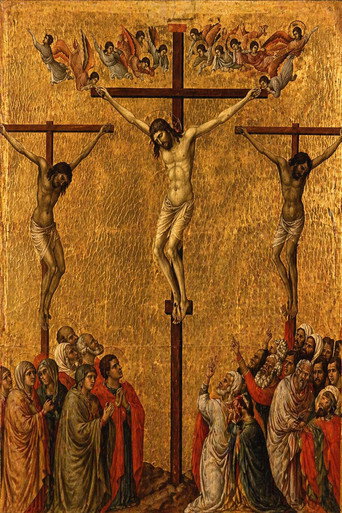
NRThe Crucifixion is a rather surprising painting of Picasso's. The painter has in fact very rarely painted religious subjects. And, in the place of a convertional representation of Calvary it shows very strange figures. The sacrifice becomes a sort of initiation ceremony or one of exorcism. Picasso uses, for him, unusual colours, reds, yellows, raw greens which combine in mingled shapes with violent contrasts of colours. Once again the graphic palette and special effects used in the film help to interpret the painting. The work is made up like a puzzle full of allusions and references to the profound personal crisis Picasso was living through at the time. His private and intimate life is joined to the universal drama.
Pablo Picasso « Les couleurs de la passion »
1993
 NR
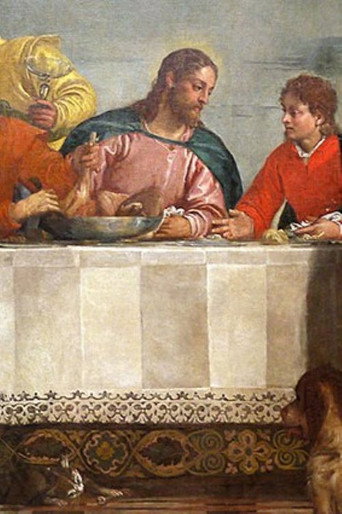
NRA study of Veronese’s painting The Feast in the House of Levi (1573), originally conceived as a representation of the Last Supper. By transforming the traditional space and spirit of the subject into a grand Venetian banquet, the painter was accused of heresy by the Inquisition (reconstructed here through a voice-over of his dialogue with the judges). Ordered to correct the work, Veronese changed only its title.
Véronèse « Un tableau en procès »
1989
 NR
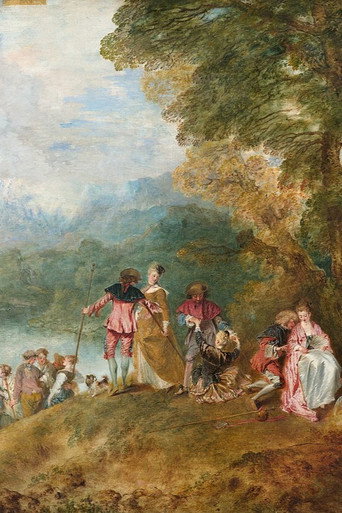
NRThe Pilgrimage to Cythera's island is one of the glories of the Louvre Museum. Praised by Baudelaire, Nerval and Proust, copied by countless painters, continually analysed, it is both legend and utopia. What are those dancing couples doing ? Are they leaving for or coming back from the island of love ?
Jean Antoine Watteau « Le pèlerinage à l’île de Cythère, Les secrets de la fête galante »
1995
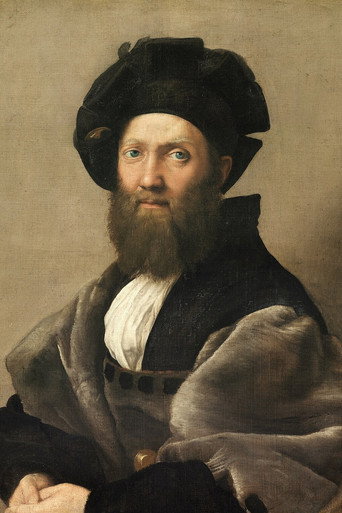 NR
NRRaphael strives to capture the open and sympathetic face of his friend and deliberately simplifies his composition. Yet the image is filled with clues and can be interpreted today using both traditional laboratory analysis and historical archives. The technical details of the pictorial surface, the choice of colors, and the hidden symmetries of the image already reveal how the painting was created. But the clothing, the hairstyle, the materials used, and even the model’s gaze—or the way the reflections are placed in his eyes—each carry a precise meaning within this composition.
Rafaello Sanzio dit Raphaël « Portrait de l’ami en homme de cour, Portrait de Baldassare Castiglione »
1994
 NR
NRNo synopsis available yet.
Le Temps des Titans
—
NRNo synopsis available yet.
Le Temps des Titans
—
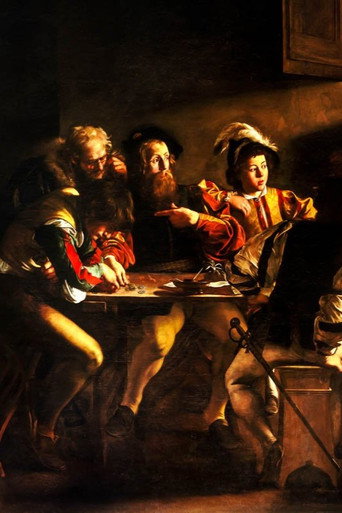 NR
NRIt was a French prelate who commissioned the decoration of the Contarelli Chapel in the Church of Saint Louis of the French in Rome, dedicated to his patron saint, Matthew. But he died long before he could know that the result would be three paintings, executed with astonishing speed around 1600 by a young Lombard painter known as Caravaggio, who was thereby creating his first religious cycle. The faithful enter between two large canvases facing one another: The Calling and The Martyrdom of Saint Matthew. On the high altar is a third, smaller work: Saint Matthew and the Angel. Three episodes intended to edify the Catholic conscience of the French pilgrim and to inspire emulation through the power of the image, in accordance with the principles of the Counter-Reformation during this era of religious wars.
Le Caravage « Anges et bourreaux »
1998
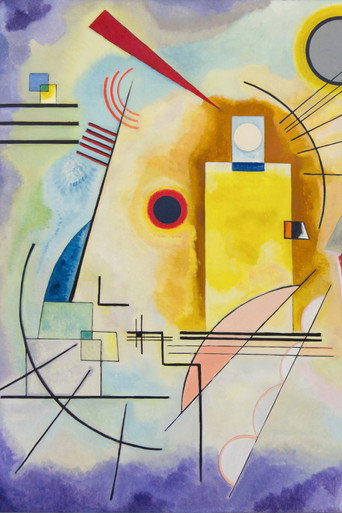 NR
NRAt the time Wassily Kandinsky painted Yellow-Red-Blue (1925), he was a professor at the Bauhaus. In this work, the painter applies the principles of color and analytical drawing that he also taught to his students and developed in several theoretical writings. The paintings of this period are highly colorful and highly geometric. The three primary colors and the artist’s favored shapes—triangle, square, circle—become true epic characters. “Form is the outward expression of inner content,” Kandinsky said.
Kandinsky « Figures de l’invisible »
1994
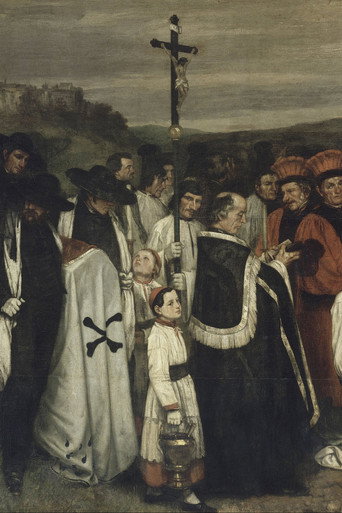 NR
NRWho were they burying that day in Ornans ? A gathering of ordinary people, a priest, altor boys, all inhabitants of Courbet's native village. The secrets of a simple funeral ceremony which nevertheless created a scandal in the 1851 Salon.
Courbet « La place du mort »
1996
No synopsis available yet.
Le Subtil Oiseleur
2021
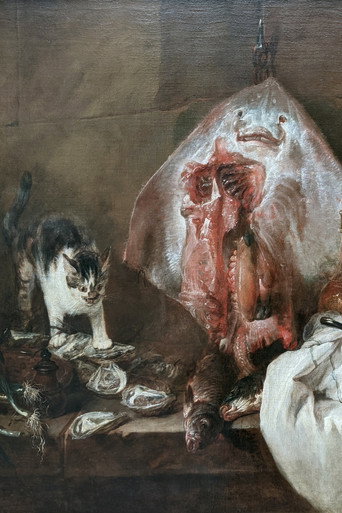 NR
NRA still life featuring a large fish, painted in the Dutch manner, The Ray immerses us in the quiet life of familiar objects that the artist took pleasure in depicting. The careful search for the exact placement of each kitchen utensil and each piece of fruit was a long and meticulous process through which Chardin gave his work symbolic or historical meaning.
Jean-Baptiste Siméon Chardin « La saveur de l’immobile, La Raie »
1995
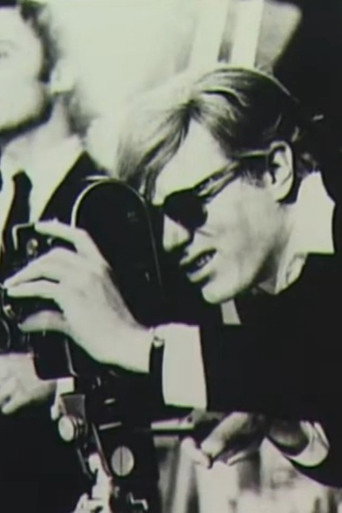 NR
NRTen similar faces are printed in black, in two rows, on a big canvas measuring 5,65 meters long by 2 high. Similar, these faces ? Not quite : the viewer can distinguish many little differences, like the variations that might come from a same mould. He can also recognise the face of a famous actress, Elizabeth Taylor, "Liz". Andy Warhol composed this picture in 1963 from a photo of the star and by repeating it ten times thanks to a screen-printing screen. Why this face ? Why this repetition ? Warhol does not reveal the keys to his work easily. He became a painter by chance and seems to choose his motifs arbitrarily. Working in New York in the 1960s, at the heart of the "pop art" movement, could he be a sort of negative reflection of consumer society ? A picture like this, which seems to break with traditional portrait art, can however be deciphered just as well as a more ancient painting...
Andy Warhol « Ten Lizes »
1999
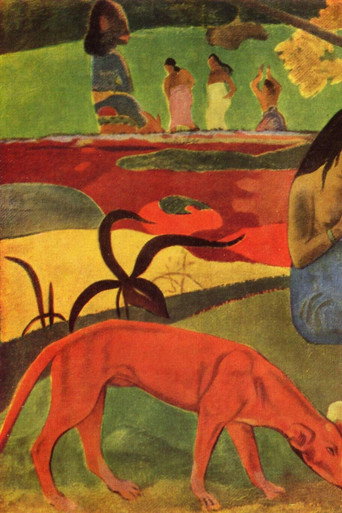 NR
NRGauguin was a sailor and then a stockbroker at the money market. Husband of a young Danish woman, Mette Gad, he became a father. Then, he started painting. In order to reach his “shades’ poetry”, he got around in Brittany, Panama, West Indies, “lands of primal liberties”. Always looking for human beings that hadn’t been “spoiled by progress yet” and were marked by “archaic religiosity”, he’d give the best of his painting in Polynesia. The Arearea (“Amusements”) painting was painted during his first stay in Tahiti. The red dog was a particular source of curiosity during the exhibition at Durand-Ruel’s place in 1893.
Gauguin « Harmonies sauvages »
2003
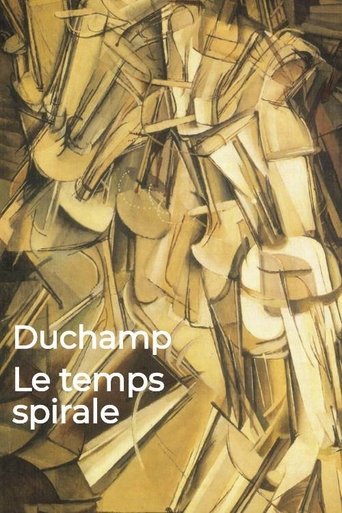 NR
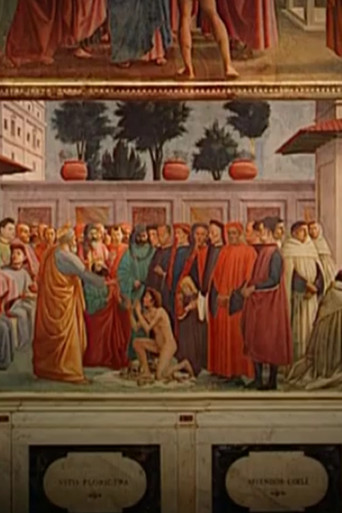
NRIt is with regard to the painting "Nude descending the staircase" that Alain Jaubert has chosen to evoke the work of Marcel Duchamp. It is 1913, in New York, and the work of this 25-year-old young man, which depicts different moments of the action of the same character, is causing a stir. Cubists do not recognize it as one of their own, and traditionalists see it as a dangerous iconoclast.
Duchamp. Le temps spirale
1993
 NR
NRFrom his very first paintings, Rembrandt stages himself. Thereafter, at least a hundred times, he would take his own face as the sole subject of an engraving, drawing, or painting. Such persistence, unique in the history of art, has been interpreted in many different ways. Some of Rembrandt’s self-portraits might appear to express an extravagant man. Yet the objects depicted in them can often be deciphered in quite another way. Through canvases and panels, one can indeed follow the entire history of Rembrandt’s face, but also read the full symbolism of a humanist Europe undergoing profound transformation.
Rembrandt« Le miroir des paradoxes »
1991
 NR
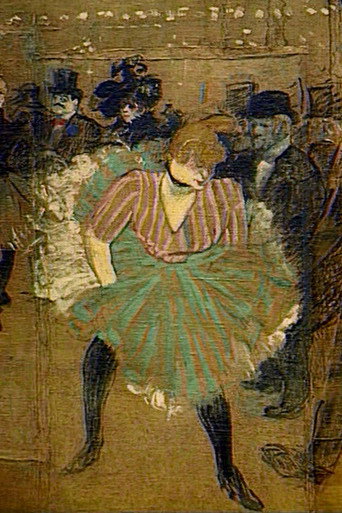
NRLa Goulue, the famous cancan dancer at the Moulin Rouge and queen of Belle Époque Paris nightlife, had somewhat fallen from grace. She was now performing at the Foire du Trône. She commissioned her friend Toulouse-Lautrec (1864–1901) to create two panels to decorate her booth. These two works, the largest paintings produced by the artist (1895), would have a dramatic fate. Resold and cut into pieces by a dishonest dealer, they were reassembled in 1929, shortly after La Goulue’s death. Like Manet and Degas, the painter used the technique of painting with essence: the pigments, deprived of oil, are very matte but also much more fragile. The canvases have lost some of their original brilliance, yet they still depict a cast of characters who, like the gods of Olympus and of classical painting, have become truly legendary figures.
Henri de Toulouse-Lautrec « Une légende fin de siècle »
1992
 NR
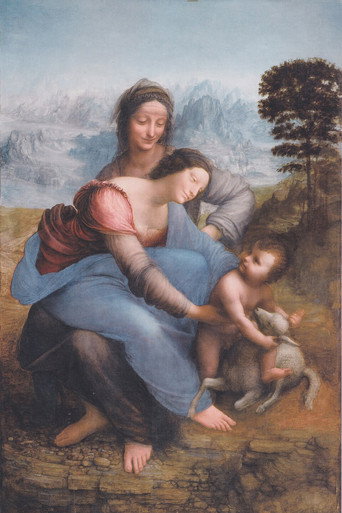
NROn the right, a very dark tree clings to the slope of a hill. At the center stands Saint Anne. She wears her hair in braids, her eyes lowered, smiling. Seated on her knees is the Virgin Mary, dressed in a low-cut, billowing pink gown. She leans toward the Child Jesus, a two- or three-year-old baby. Naked and very curly-haired, he is stepping over a rearing lamb. Behind them, the landscape reveals mountain peaks and glaciers from which roaring waters emerge. Anne seems to envelop Mary; Mary wraps her arms around Jesus, yet he escapes from his mother’s embrace, as if symbolizing a new birth. Painted between 1500 and 1515, The Virgin, the Child Jesus, and Saint Anne accompanied Leonardo da Vinci when he settled in Amboise in 1517 at the invitation of Francis I. The painting never returned to Italy and entered the Louvre in 1801.
Léonard de Vinci « Le sourire et l’entrelacs, La Vierge, l’enfant Jésus et Sainte Anne »
1989
 NR
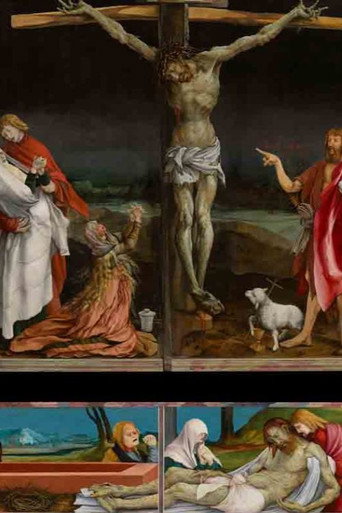
NRAround 1515, Master Mathis added painted panels arranged as double wings to a sculpted altarpiece created twenty years earlier for the convent-hospital of Isenheim in Alsace. Dedicated to Saint Anthony the Abbot, the work was intended for patients afflicted by ergotism—the “St. Anthony’s fire”—a scourge of poorly nourished Europe that the Order of the Antonines sought to combat under the spiritual protection of their healing patron saint.
Grünewald « Le retable des Ardents »
1999
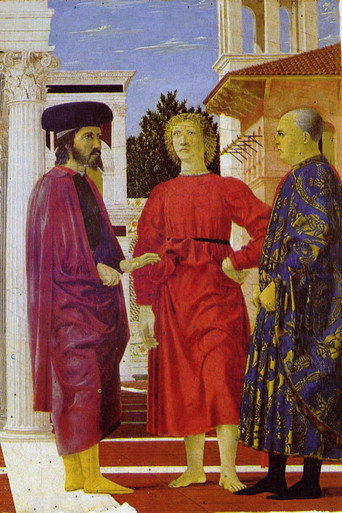 NR
NRThis is certainly the most mysterious painting of all the history of painting. Thirty different attempts of finding out the hidden meaning of it have been made without success. The Flagellation is not only the masterpiece of a great artist telling an enigmatic story, it is also the expression of Renaissance's new ideas and art. Piero had a great reputation as a painter and as a mathematician. A few of his paintings show his vast knowledge of perspective. The architecture, the paving, the ceiling, the whole setting of The Flagellation - up to its smallest details - is governed by the laws of perspective. By computing all these datas, it was possible to recreate in three dimensions the exact space that Piero had imagined.
Piero Della Francesca « Le rêve de la diagonale, La Flagellation »
1993
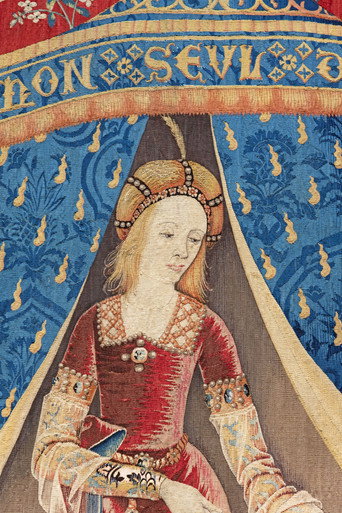 NR
NRA hanging composed of the six most famous tapestries in the world. These pictures, reproduced everywhere and in all possible forms, have become the emblems of a certain form of romantic art of the late Middle Ages. Beautiful ladies, fabulous animals, abundant flowers, sparkling colours, everything in these tapestries brings pleasure to the eyes. But once the first marvelling is past, the visitor asks questions. What are these blasons that are so obstinately repeated ? What scenes exactly are these hieratic ladies playing ? Why is there each time a lion and a unicorn ? What do these trees, flowers, various animals scattered all over the surface mean ? And who had these splendours woven ? And for what use? Which artist designed the models ? Questions burst out everywhere. Several of them have surprising answers.
La Dame à la Licorne « Le sixième sens »
1997
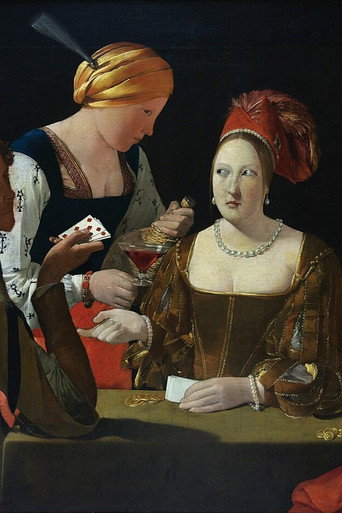 NR
NRThree cards in hand, gold on the table—we are in the middle of a game of prime, a precursor to poker. Eight gold coins lie before the female player, about a dozen before the young man: the stakes are very high. This painting depicts three card players and a servant; their mouths are closed, their gestures and gazes suspended. The cheat looks directly at the viewer, an ace of diamonds hidden in his belt—his face alone is fully illuminated. His diamond cards suggest money and sexual commerce, while those of his opponent, spades, evoke misfortune and a struggle against fate. In La Tour’s time, several edicts were issued against dice cheats and swindlers. This painting, like The Fortune Teller, illustrates a saying common at the time: “Love, wine, and gambling have ruined more than one man.”
Georges de La Tour « Le tricheur à l’as de carreau »
1989
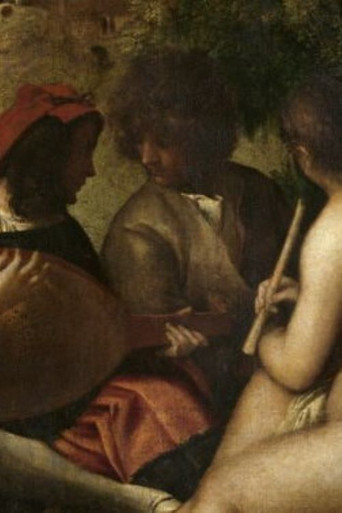 NR
NRIs the painting by Giorgiorne or by Titien ? It is difficult to distinguish the work of Giorgione (who died in 1510 at the age of 33) from the early works of Titien (who, for his part died in 1576 at a great age). The Rural Concert which for a long time was attributed to the former is now more willingly attributed to the latter. Analysis of the style, scientific analyses may allow for the hand of one or the other. The mysteries of the scene have done more for the fame of the painting than its uncertain authorship. Why these two naked women beside the two clothed men ? What is the meaning of their gestures ? What music are they playing ? Why that landscape and that flock of sheep ? In order to understand the story and its allusions one must penetrate the learned culture of Venice at the beginning of the 16th century. And also perhaps to compare it with the somewhat contradictory interpretations which modern painters have given such as Manet with his Partie de campagne.
Tiziano Vecellio dit Titien « Un souvenir d’Arcadie, Le Concert Champêtre »
1994
 NR
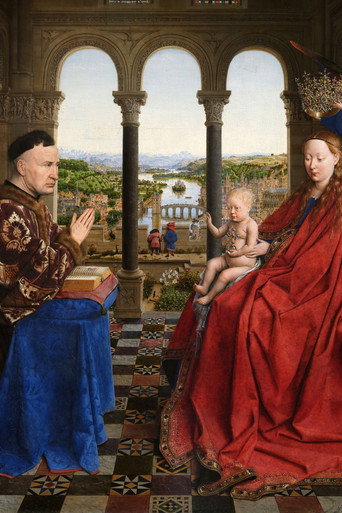
NRLet us travel back to the 15th century and imagine the interior of the workshop of the painter Jan van Eyck: a porter delivers a wooden panel, one assistant grinds pigments, another mixes them with linseed oil, and a third arranges them on palettes. It is in this environment that Jan van Eyck was able to paint The Virgin and Child with Chancellor Rolin, a small-scale work depicting the Virgin Mary seated on a blue cushion embroidered with gold, holding the Christ Child on her lap, facing a man in his sixties who clasps his hands in prayer.
Van Eyck « Miracle dans la loggia »
1989
 NR
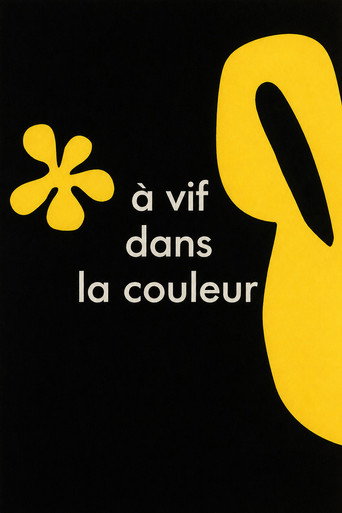
NRComposed in Nice, at the Hôtel Régina where the painter had been living since 1949, The Sadness of the King, a 1952 painting nearly four meters by three, is one of the last great works of Matisse. It was created using the cut-paper technique: the painter, immobilized by illness, cuts shapes from sheets of paper previously coated with gouache. He directs an assistant who pins them and moves them on the wall until the desired balance is achieved. Scissors, handled with dexterity, thus henceforth replace pencils and brushes. The pure tones used in the composition eliminate all shading and allow the painter to play solely on the relationships between colors and, above all, on contrasts: black and white (considered by Matisse as colors in their own right), red and blue, green and yellow...
Henri Matisse « A vif dans la couleur »
1995
 NR
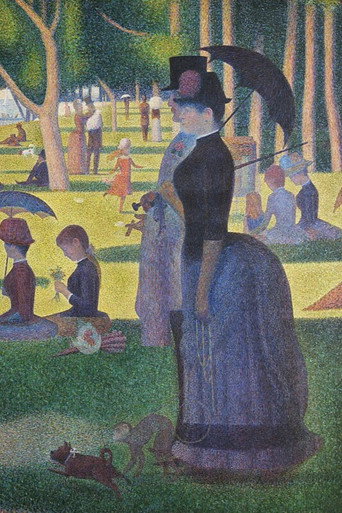
NRA century later, Alain Jaubert rediscovered the exact location where Seurat prepared his painting, as well as the studio where he completed it. In March 1886, the eighth and final Impressionist exhibition took place. A 26-year-old unknown artist, Georges Seurat, exhibited a very large canvas there, A Sunday Afternoon on the Island of La Grande Jatte. A striking light—born of a long reflection on the origins of color perception—a multitude of tiny dots, a landscape treated in a classical manner yet populated with caricature-like figures: the painting caused a scandal. It would give rise to the Neo-Impressionists, or more commonly, “pointillists.” Above all, it would leave a lasting mark on later generations—Fauves, Cubists, and Futurists. Van Gogh himself was deeply influenced by the discovery of Seurat.
Georges Seurat « l’Utopie orange vert pourpre »
1991
 NR
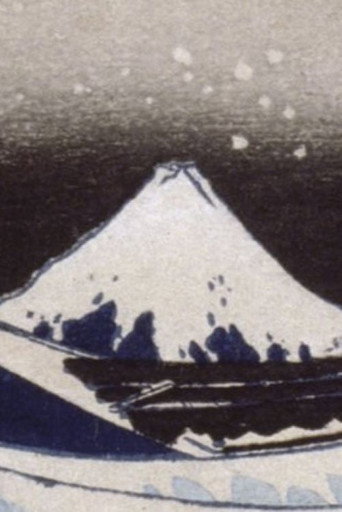
NRThe silhouette of a giant wave about to engulf fragile boats: this image of suspended fate has traveled the world in the form of postcards, posters, and advertisements. Why such success? How did an image so deeply rooted in a specific culture—that of Japanese prints—come to achieve such universality?
Hokusai « La Menace suspendue »
1999
 NR
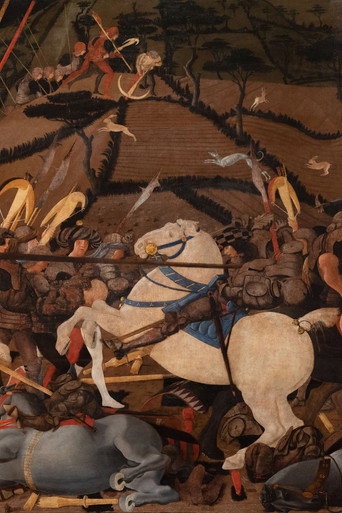
NRThese three very big panels scattered in three different museums (London, Paris and Florence) are considered to be a sort of manifesto of the new art of the 15th century. The rediscovery of the principles of perspective of the ancient Greek treatises, the innovations of an architect like Brunelleschi or a goldsmith like Ghiberti were put to good use by painters to render space and depth. But, in Uccello’s work, in addition there is, besides the passionate quest for perspective, an intense curiosity for geometric shapes, for colour and above all for movement. The subject of The Battles of San Romano : an obscure battle in the Tuscan hills, in 1432, between the mercenaries of Florence and those of Sienna. Paolo made it into a feast for the eyes and the mind and invented paradoxical images which had consequences right up to the cubist and surrealist painters.
Paolo Uccello « Vacarmes en Toscane, La Bataille de San Romano »
1999
 NR
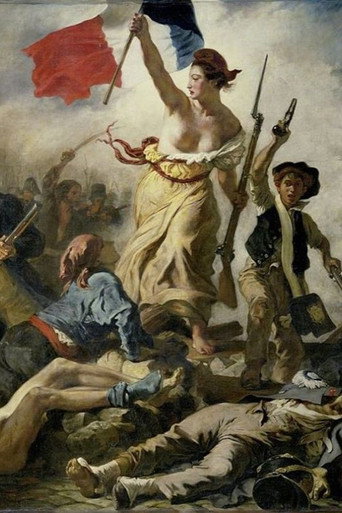
NRAlain Jaubert uncovers the details, interprets the symbols, and analyzes the composition. Why did the painting spark such controversy when it was presented in 1831? Was it the nudity of this armed woman? Or the triumphant people depicted in a realistic staging?
Delacroix « Sous les pavés l’image »
1989