
Writing
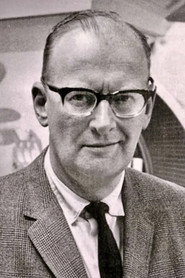
Arthur C. Clarke
Born — Died
1917-12-16 — 2008-03-19
Place of birth
Minehead, Somerset, England, UK
Known for
Writing
Credits
29 titles
Sir Arthur Charles Clarke CBE FRAS (16 December 1917 – 19 March 2008) was an English science-fiction writer, science writer, futurist, inventor, undersea explorer, and television series host. He co-wrote the screenplay for the 1968 film 2001: A Space Odyssey, one of the most influential films of all time. Clarke was a science fiction writer, an avid populariser of space travel, and a futurist of a distinguished ability. He wrote many books and many essays for popular magazines. In 1961, he received the Kalinga Prize, a UNESCO award for popularising science. Clarke's science and science-fiction writings earned him the moniker "Prophet of the Space Age". His science-fiction writings in partic…
Known for
 7.5
7.5Horizon tells amazing science stories, unravels mysteries and reveals worlds you've never seen before.
Horizon
1964
 6.8
6.8The Dick Cavett Show has been the title of several talk shows hosted by Dick Cavett on various television networks.
The Dick Cavett Show
1968
 5.6
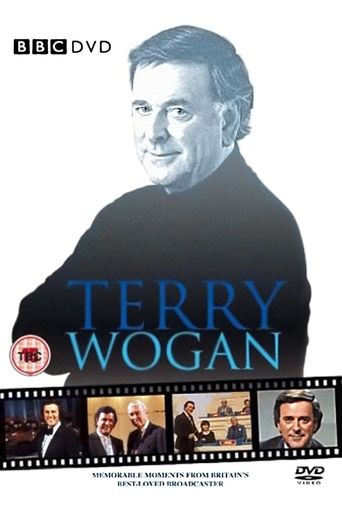
5.6Chat show hosted by Terry Wogan, featuring live studio interviews with famous and notable personalities.
Wogan
1982
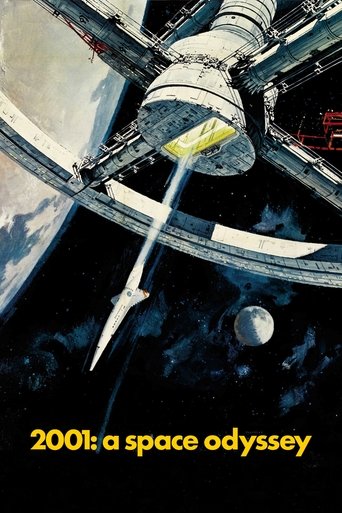 8.0
8.0Humanity finds a mysterious object buried beneath the lunar surface and sets off to find its origins with the help of HAL 9000, the world's most advanced super computer.
2001: A Space Odyssey
1968
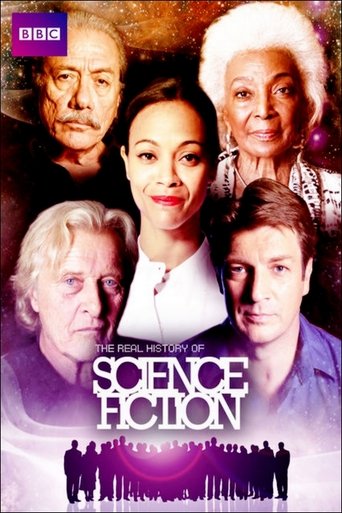 6.8
6.8The series heads to the very frontiers of space and science to produce the definitive television history of science fiction, told through its impact on cinema, television and literature, with the help of filmmakers, writers, actors, and graphic artists. Each episode will explore one of the enduring themes of science fiction: time travel; the exploration of space; robots and artificial intelligence; and aliens.
The Real History of Science Fiction
2014
 8.0
8.0Exhaustive 13-part survey of the television medium from its hesitant beginnings in the 1920s to the multi-million dollar extravaganzas of today and the cable and satellite technologies of the future [relative to 1985]. Tackling the medium as a worldwide phenomenon, the series examines each of the principal areas of programming - news, drama, documentaries, and light entertainment - and the unique impact of "live" coverage.
Television
1985
Film credits
2020s · 2 titles
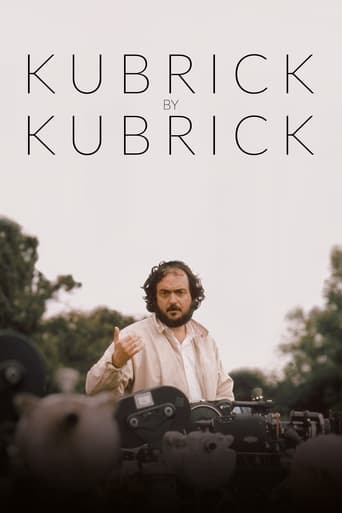 7.3
7.3American filmmaker Stanley Kubrick (1928–1999), one of the greatest in history, but also one of the most reserved, gave few interviews throughout his long career, and none of them were filmed. A first-person journey through his life and work, based on a recorded conversation with French film critic Michel Climent.
Kubrick by Kubrick
2020
 6.0
6.0Legendary NASA robotics engineer and best-selling science fiction author, Gentry Lee, has spent a lifetime seeking an answer to the ultimate cosmic question: Are we alone in the universe? At age 82 he has come to a revelatory conclusion.
Starman
2025
2010s · 3 titles
 6.3
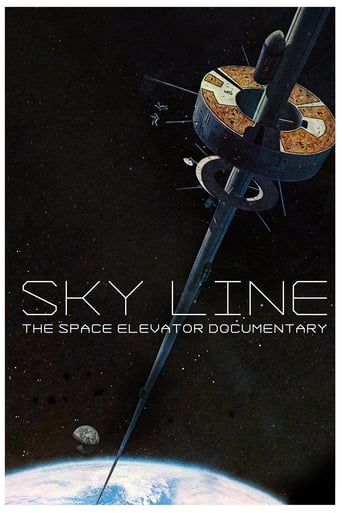
6.3The concept of an elevator to space is not new. In the world of Arthur C. Clarke, it is a natural progression. What most people don't know is that men and women around the world are working hard to build it right this moment. Some want to solve the energy crisis, some want easier access to raw materials in the solar system, and some just want to travel to space and gaze upon their home planet. For all of them though, the elevator is more than just a science fiction plot, it is a way of life. Discover what happens when egos and passions collide in a quest to build the impossible.
Sky Line
2015
 6.0
6.0An examination of the evidence surrounding the events of September 11, 2001 that took the lives of thousands of innocent victims, and left our entire planet fundamentally changed. The examination follows the events, evidence, data, and science onward to the use of Directed Energy Weapons and holograms.
9/11 Alchemy: Facing Reality
2018
 NR
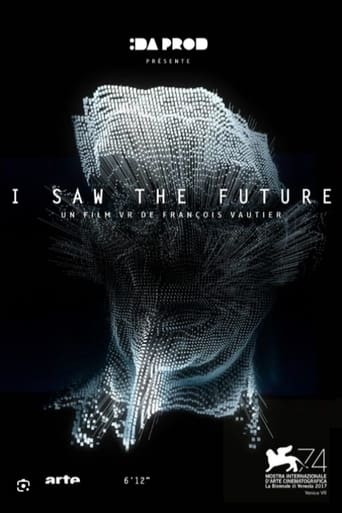
NRIn a dark expanse that could be the cosmos, we hear the voice of Arthur C. Clarke, whose face - taken from a BBC archive dating back to the 1960s - appears in the distance. His features quickly dematerialize into a multitude of shimmering pixels, creating an enveloping and immersive space out of which the thoughts of the famed author of «2001: A Space Odyssey» emerge. At the heart of this spectral environment, and with a magnetic voice sending us back to the time of cathode ray tubes and the golden age of television broadcasting, A C. Clarke tells us about the arrival of digital revolution, decades ahead of his time. This film is an invitation to travel, and a crepuscular form of poetry to be experienced immersively.
I Saw the Future
2017
2000s · 5 titles
 6.6
6.6The making of Stanley Kubrick's classic space epic, presented by James Cameron, including unseen footage.
2001: The Making of a Myth
2001
 6.0
6.0This documentary about "2001: A Space Odyssey" looks at some of the things that seemed fanciful in 1968, which don't seem quite as much anymore.
Vision of a Future Passed: The Prophecy of 2001
2007
 5.0
5.0Keir Dullea, interspersed with archive clips of Arthur C. Clarke, discusses the probability of extraterrestrial life.
2001: A Space Odyssey – What Is Out There?
2007
 8.0
8.0Author Arthur C. Clarke and the cast and crew of Stanley Kubrick's 1968 masterpiece "2001: A Space Odyssey" star in this documentary, released in the film's long-anticipated title year. The origins of the production are traced as we see how the early days of the space race influenced Kubrick and Clarke's vision of a far more optimistic 21st century than we've managed to achieve - at least so far.
2001 and Beyond
2001
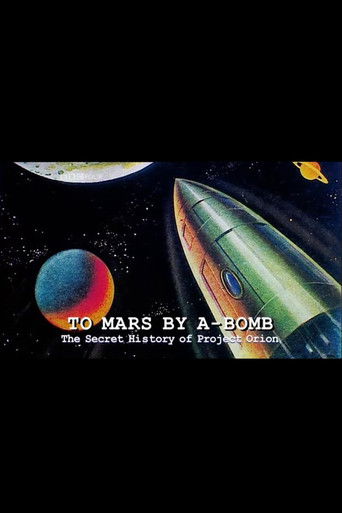 8.0
8.0Top scientists want to build a nuclear bomb-powered spaceship to visit Mars and the planets.
To Mars by A-Bomb: The Secret History of Project Orion
2003
1990s · 3 titles
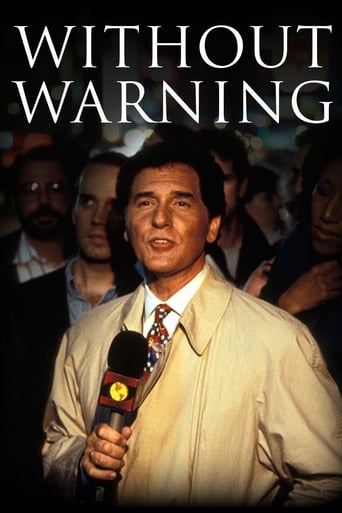 6.8
6.8A television program is interupted by a news network announcing that three meteors have hit the United States, France and China. At first it seems natural but after interviews by scientists and eyewitness seems to suggest that it is not. Three more meteors are coming and the various Earth governments combine forces to stop them.
Without Warning
1994
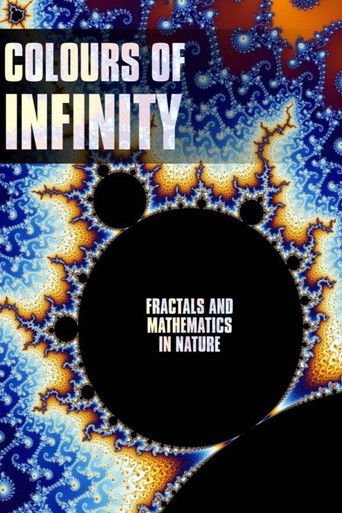 6.5
6.5Explores the revolutionary world of Fractal Geometry - its far-reaching and often unexpected implications - its powerful and revolutionary applications.
Fractals: The Colors of Infinity
1995
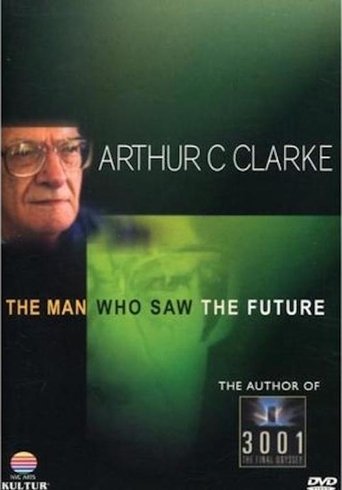 7.0
7.0Profile of the author of 2001 looking at his life and his latest novel: 3001.
Arthur C. Clarke: The Man Who Saw the Future
1997
1980s · 4 titles
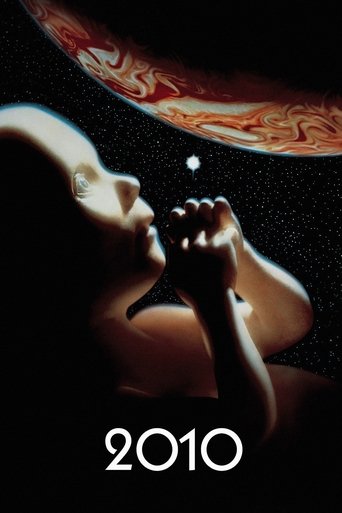 6.7
6.7While planet Earth poises on the brink of nuclear self-destruction, a team of Russian and American scientists aboard the Leonov hurtles to a rendezvous with the still-orbiting Discovery spacecraft and its sole known survivor, the homicidal computer HAL.
2010
1984
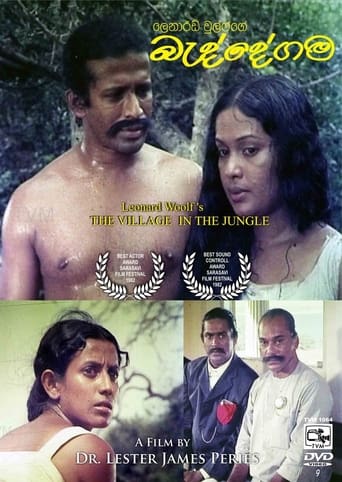 6.6
6.6Baddegama or, more correctly, Beddegama is a 1980 award winning Sinhalese language film directed by Lester James Peries that follows the lives of village people in British Colonial Sri Lanka. The film is based on the 1913 book titled as "The Village in the Jungle" by Leonard Woolf. Silindu is a hunter in a small village where he and his family endure a life of hardships. After facing disease and poverty under colonial rule, the final blow comes when Silindu is tried for murder.
Baddegama
1980
 10.0
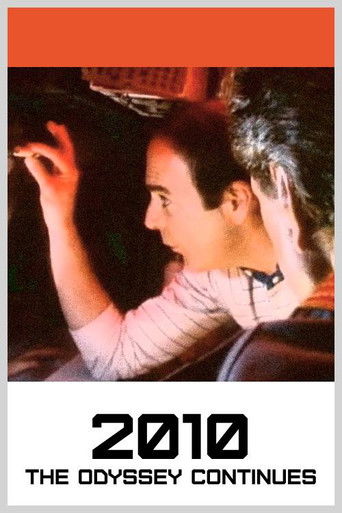
10.0This promotional short for 2010 (1984) shows moviegoers how some of the film's visual effects were created. This includes makeup for Keir Dullea's character, how the astronauts float in space, and the construction of the spaceship in which the astronauts carry out their mission. The vehicle is so large, the two largest sound stages on the MGM lot were used to construct it.
2010 : The Odyssey Continues
1984
 6.1
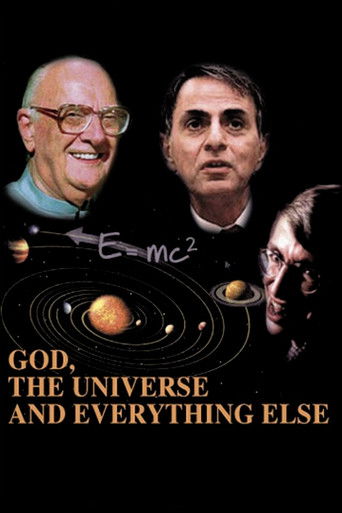
6.1In a studio setting, Stephen Hawking, Arthur C. Clarke and Carl Sagan (who joins them via satellite) discuss the Big Bang theory, God, our existence as well as the possibility of extraterrestrial life.
God, the Universe and Everything Else
1988
Series credits
7.5Horizon tells amazing science stories, unravels mysteries and reveals worlds you've never seen before.
Horizon
1964
6.8The Dick Cavett Show has been the title of several talk shows hosted by Dick Cavett on various television networks.
The Dick Cavett Show
1968
5.6Chat show hosted by Terry Wogan, featuring live studio interviews with famous and notable personalities.
Wogan
1982
6.8The series heads to the very frontiers of space and science to produce the definitive television history of science fiction, told through its impact on cinema, television and literature, with the help of filmmakers, writers, actors, and graphic artists. Each episode will explore one of the enduring themes of science fiction: time travel; the exploration of space; robots and artificial intelligence; and aliens.
The Real History of Science Fiction
2014
8.0Exhaustive 13-part survey of the television medium from its hesitant beginnings in the 1920s to the multi-million dollar extravaganzas of today and the cable and satellite technologies of the future [relative to 1985]. Tackling the medium as a worldwide phenomenon, the series examines each of the principal areas of programming - news, drama, documentaries, and light entertainment - and the unique impact of "live" coverage.
Television
1985
 7.5
7.5Arthur C. Clarke's Mysterious World is a thirteen part British television series looking at unexplained phenomena from around the world. It was produced by Yorkshire Television for the ITV network and first broadcast in September 1980. Each program is introduced and book-ended by science fiction writer Arthur C. Clarke in short sequences filmed in Sri Lanka. The bulk of the episodes are narrated by Gordon Honeycombe. The series was produced by John Fanshawe, John Fairley and directed by Peter Jones, Michael Weigall and Charles Flynn. It also featured a unique soundtrack composed by British artist Alan Hawkshaw. In 1981, Book Club Associates published a hardcover book with the same name, authored by Fairley and Welfare, where the contents of the show were further explored. It featured an introduction written by Clarke as well as his remarks at the end of each chapter or topic. In 1985, a paperback of this book was released by HarperCollins Publishers. The series was followed by Arthur C. Clarke's World of Strange Powers in 1985 and Arthur C. Clarke's Mysterious Universe in 1994.
Arthur C. Clarke's Mysterious World
1980
 7.7
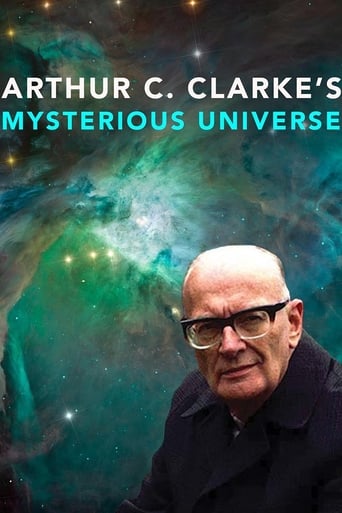
7.7Arthur C. Clarke's Mysterious Universe was a popular eighteen part television series looking at unexplained phenomena across the universe. It was first broadcast in the United Kingdom by independent television network ITV. It premiered on July 15, 1994. It was the sequel to Arthur C. Clarke's Mysterious World and Arthur C. Clarke's World of Strange Powers. The series is introduced by acclaimed science fiction writer Arthur C. Clarke in short sequences filmed at his home in Sri Lanka. However, individual episodes are narrated by Carol Vorderman. The series was produced by John Fairley and directed by Peter Jones, Michael Weigall and Charles Flynn.
Arthur C. Clarke's Mysterious Universe
1994
 7.2
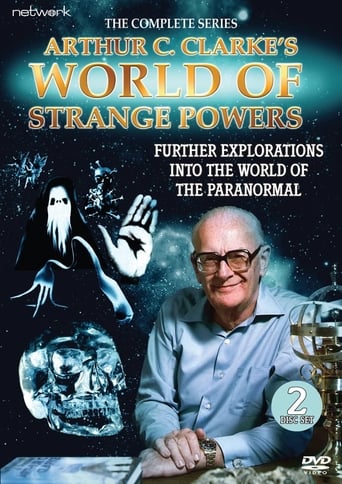
7.2Arthur C. Clarke's World of Strange Powers is a popular thirteen-part British television series looking at strange worlds of the paranormal. It was produced by Yorkshire Television for the ITV network and first broadcast in 1985. It was the sequel to the 1980 series Arthur C. Clarke's Mysterious World. The series is introduced by science fiction writer Arthur C. Clarke in short sequences filmed at his home in Sri Lanka. Individual episodes are narrated by Anna Ford. The series was produced by John Fairley and directed by Peter Jones, Michael Weigall and Charles Flynn. It was followed by Arthur C. Clarke's Mysterious Universe, broadcast in 1994.
Arthur C. Clarke's World of Strange Powers
1985
 7.0
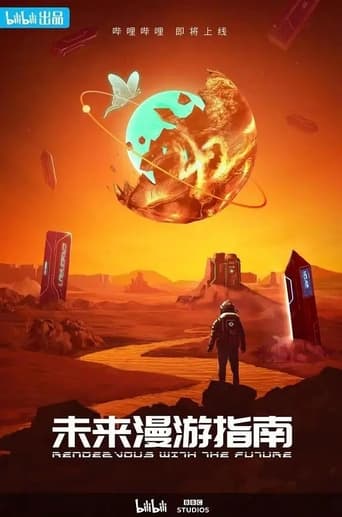
7.0Documentary series exploring the science behind the science fiction of the award-winning writer Liu Cixin, author of "The Three-Body Problem".
Rendezvous with the Future
2022
Behind the camera
8.0Humanity finds a mysterious object buried beneath the lunar surface and sets off to find its origins with the help of HAL 9000, the world's most advanced super computer.
2001: A Space Odyssey
1968
 NR
NRThe movie is about the discovery of an underwater treasure. It involves a mixture of ancient legends, human treachery and romance.
Island of Treasures
1962