

Directing
Abbott Meader
Known for
Directing
Credits
36 titles
Abbott Meader is an American painter, filmmaker and retired Professor of art. Born In the Brooklyn area of New York City, his roots and many generations of ancestors are to be found in the northern, rural state of Maine, where he and his wife Nancy have lived since the 1960s. He is a Phi Beta Kappa graduate of Dartmouth College, and while in graduate school at the University of Colorado he became a friend of noted filmmaker Stan Brakhage, who encouraged him to explore film as well as painting and drawing. Meader’s early films reveal the influence of Brakhage, while clearly moving toward a distinctive personal vision. His work has been shown frequently in film festivals – in Brussels, Rome, R…
Known for
 NR
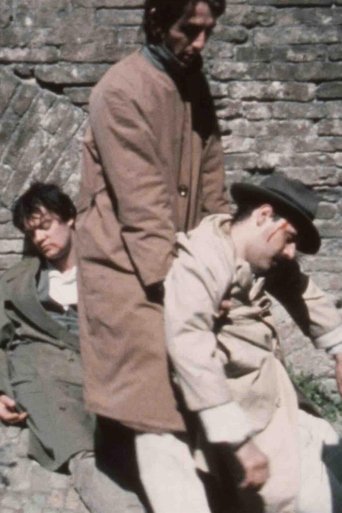
Collective manifesto by the members of C.C.I. It is a collective film, the result of an operation devoid of any aesthetic purpose: to verify the existence of any harmony between a fairly large group (twelve people) of members of the independent Cooperative. Someone, who had the idea, turned 60 meters of Ektachrome according to the moods –or discontent – of the moment and gave them to others to see. The others reacted, each with their own piece. It was then thought to call the film “circular letter”. It was not so simple and so quick: the operation, which started in June of ’68, ended in March of ’69.
Tutto, tutto nello stesso istante
1969
 6.0
First shown on January 30, 1967, FOR LIFE AGAINST THE WAR was an open-call, collective statement from American independent filmmakers disparate in style and sensibility but united by their opposition to the Vietnam War. Part of the protest festival Week of the Angry Arts, the epic compilation film incorporated minute-long segments which were sent from many corners of the country, spliced together and projected. The original presentation of the works was more of an open forum with no curation or selection, and in 2000 Anthology Film Archives preserved a print featuring around 40 films from over 60 submissions.
For Life, Against the War
1967
 NR
South Slope: What Love Tells Me is a 16mm film made in 1978-1980 by the artist Abbott Meader. It is a dramatic portrait of a piece of land in Maine as seen through the seasons filmed over a period of two years. It is both a documentary and a film poem structured to respond to the 6th Movement of Gustav Mahler's 3rd Symphony as performed by the Portland (Maine) Symphony Orchestra, which kindly donated the performance recording for use in this film. Mahler's subtitle for the 6th Movement is "What Love Tells Me."
South Slope: What Love Tells Me
1980
In wilderness I am trying to take images that have been intuitively sought and found—images that center in personal living, in family and physical surroundings—and build these into a structure whose overall imagery and formal character will yield a general appeal and whose content will strike poetic overtones of meaning in others. A self-portrait, a family portrait, and an image of land. Explorative montage, cutting, and superimposition for expressive purposes.
Wilderness
1967
 NR
"The title of the film is that of the great 40 voice part motet by Thomas Tallis, (1505 -1585) which he composed around 1575, rather recently in geological time. The imagery is a personal response to the music, which soars in its entirety over the duration of the film. The opening line of the motet, translated from Latin, reads as 'I have never put my hope in any other than thee'. Each person will have a unique personal conception of 'Thee', and so it is in life - this mysterious gift that we say we are living - this unrequested gift, this task and calling that we may either accept, avoid, or reject." —Abbott Meader
Spem in Alium
1982
 NR
American Odyssey is a look at Orff-Schulwerk in America in 1979. Filmed in 17 schools in 7 states, it documents the creative process in music, movement, dance, theater, and the spoken word, involving students and teachers from kindergarten through community chorus and orchestra. Running throughout are the poem "Sky Dwellers" by Marcia Lunz and the poetic camerawork of Abbott Meader.
American Odyssey
1979
Behind the camera
NRCollective manifesto by the members of C.C.I. It is a collective film, the result of an operation devoid of any aesthetic purpose: to verify the existence of any harmony between a fairly large group (twelve people) of members of the independent Cooperative. Someone, who had the idea, turned 60 meters of Ektachrome according to the moods –or discontent – of the moment and gave them to others to see. The others reacted, each with their own piece. It was then thought to call the film “circular letter”. It was not so simple and so quick: the operation, which started in June of ’68, ended in March of ’69.
Tutto, tutto nello stesso istante
1969
6.0First shown on January 30, 1967, FOR LIFE AGAINST THE WAR was an open-call, collective statement from American independent filmmakers disparate in style and sensibility but united by their opposition to the Vietnam War. Part of the protest festival Week of the Angry Arts, the epic compilation film incorporated minute-long segments which were sent from many corners of the country, spliced together and projected. The original presentation of the works was more of an open forum with no curation or selection, and in 2000 Anthology Film Archives preserved a print featuring around 40 films from over 60 submissions.
For Life, Against the War
1967
NRSouth Slope: What Love Tells Me is a 16mm film made in 1978-1980 by the artist Abbott Meader. It is a dramatic portrait of a piece of land in Maine as seen through the seasons filmed over a period of two years. It is both a documentary and a film poem structured to respond to the 6th Movement of Gustav Mahler's 3rd Symphony as performed by the Portland (Maine) Symphony Orchestra, which kindly donated the performance recording for use in this film. Mahler's subtitle for the 6th Movement is "What Love Tells Me."
South Slope: What Love Tells Me
1980
In wilderness I am trying to take images that have been intuitively sought and found—images that center in personal living, in family and physical surroundings—and build these into a structure whose overall imagery and formal character will yield a general appeal and whose content will strike poetic overtones of meaning in others. A self-portrait, a family portrait, and an image of land. Explorative montage, cutting, and superimposition for expressive purposes.
Wilderness
1967
NR"The title of the film is that of the great 40 voice part motet by Thomas Tallis, (1505 -1585) which he composed around 1575, rather recently in geological time. The imagery is a personal response to the music, which soars in its entirety over the duration of the film. The opening line of the motet, translated from Latin, reads as 'I have never put my hope in any other than thee'. Each person will have a unique personal conception of 'Thee', and so it is in life - this mysterious gift that we say we are living - this unrequested gift, this task and calling that we may either accept, avoid, or reject." —Abbott Meader
Spem in Alium
1982
NRAmerican Odyssey is a look at Orff-Schulwerk in America in 1979. Filmed in 17 schools in 7 states, it documents the creative process in music, movement, dance, theater, and the spoken word, involving students and teachers from kindergarten through community chorus and orchestra. Running throughout are the poem "Sky Dwellers" by Marcia Lunz and the poetic camerawork of Abbott Meader.
American Odyssey
1979
 NR
"Snake Dance was shown in United States Embassies in Africa in the late 1970s and early 1980s to show the American culture was not all Jim Crow and race riots. Arthur Hall came to Maine as a movement specialist for the National Endowment for the Arts, and the Maine Arts Commission was so impressed they called in filmmakers. We looked in on a Wednesday and filmed all day the next Friday, using all the film we had - color and both negative and reversal black and white." —Bruce Williams
Snake Dance Teacher Dance
1978
 NR
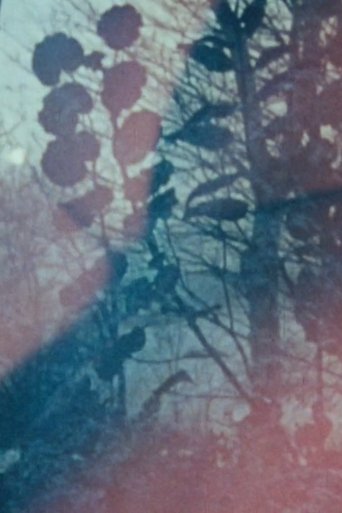
"The film may suggest the fear of losing a loved one. Desire. Yearning. Anger. Doubt. A female nude. A reiterated breast. A child with a bicycle. The dead stump of a great tree. A blood- red sundown sky. A stick washed back and forth by the sea. And also, near the ending, an old 'Rhythm and Blues' song in which the male voice sings of his fear that he may lose his beloved. He finally closes with 'I wonder …if we’ll ever be…married…..I sometimes wonder…if you still love me?…. or if you’ve let me go?'. I use multiples of several shots. Perhaps it gives a feeling that life is both always the same and yet never the same? I superimpose different material over those shots each time, so that the actual imagery and their impact are always different. It challenges, perhaps, the well known French observation that 'Plus ca change, plus c’est la meme chose'." –Abbott Meader
Lovetape Film
1973
 NR
Film by Abbott Meader and Walter Easton 16mm, 24:44 minutes, color, sound, 2000
Trout Fly Deep Trout Too
2000
No synopsis available yet.
Winter Spring
—
"Thematically, it echoes the nature of the first film, but is ultimately quite different and more tightly constructed. I try to select some perhaps archetypal situations and things and present them as part of, and/or in relationship to physical interiors and exteriors and to abstract images in such a way that they all merge into complex 'inscape' that treats on man's bonding to his environment — with the very nature of the formal structure lifting the whole business out of time. The key to locking up the whole shebang comes individually to the viewer when he contemplates his own idea of Summer. If the film reminded people of, among other things, man's power to live both past and future in a moment, I'd feel that that was a great deal of what it was about." -A. M.
A Looking for Summer
1963
 NR
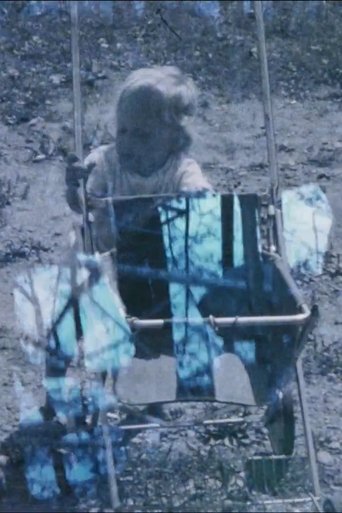
"Nancy and I were aware that our daughter Jennifer was getting ready to walk. She'd push her stroller around with great determination, and so I did some 'home movie' filming to document her efforts. On impulse, I also shot some images of Nancy, along with bits of our living surround, and built a curious little B&W film comprised of both 'positive' and 'negative' images. Something about worlds of the adults and the infant as different. Maybe that. Got it printed. Decided it needed more. Shot some color footage. Re-edited. This went on and off for a few years. Moments and moments of it. Finally I decided it had some cohesiveness. You might agree, or not. And Jennifer now teaches third graders and has two kids in college. Oohblah -di - Oohbla- dah!" —Abbott Meader
Moments Ago
1969
A film by Abbott Meader and Walter Easton 16mm, 43:43 minutes, color, sound, 1981
Deep Trout
1981
"It is really a rather simple film — a sensuous response to mid-winter, playing off light and dark, moving and still, animate and inanimate through the daydreaming of a one-eyed cat." — A. M.
Bone
1963
 NR
"This dates from 1972 and 73. Frustration and anger in the nation and the world. Nothing new about that. The eternal return, and yet a reality unknown to a child. I have featured children in many of my films and the 'Loss of Innocence' theme is often present or implied. The film involves sound that goes both forward and backward, images of American football violence, a lot of scraps going around and around to nowhere. There is also a child, (our daughter Rebekah) and a tricycle. Each viewer will have a unique response. Eye of the beholder." –Abbott Meader
Racetrack
1972
 6.0
"I feel that some of the silent pieces might be seen as visual music. Perhaps a bit pretentious to say that, but such pieces as ISOLATION are something of the sort. This is a film that every time I see it I want to re-edit it, just for fun. Its like a jazz improv, and could be different during the next set – the rhythms, the pauses, perhaps with longer passages and variations in visual tonality, theme and variation, recapitulations – all sorts of musical terms might be applied. There is no real narrative development here. The film suggests that a boy in a rowboat sees glimpses of the world around him. The boy whose image you see is our son, Darmon, and long ago I was a similar boy as well." –Abbott Meader
Isolation
1974
 NR
"This film, which dates from 1964, has always satisfied me. I believe the footage was completed before the assassination of Kennedy – an event that changed many things. I had made only silent films until I made THE ELMS, which followed upon this one. SSP is a film whose form I had in mind from the outset. It was to be a visual piece structured in a 'musical' manner. It would have three movements in differing visual 'tempi'. Rhythms, counterpoint, theme and variation, and so on were to be in mind as I filmed and edited. The thematic material would develop slowly, and there would be recapitulations and so on. The three sections are entitled 'Barn', 'Summer Storm', and 'Bird'. A sense of place, shelter, and fertility. A welcoming of the necessary summer storm of birthing. A child’s wonder and excitement at experiencing the vast unfolding world." –Abbott Meader
Summer Storm Passage
1965
 NR
"SHADOWS FROM THE WESTERN WALL involves footage from Rome, the Eternal City, and from the woodlands of rural Maine. There is a bit of spoken English. A voice says, 'Just a man' A second voice says 'An ancient race. Only at the point of dying'. And the first voice replies 'I know'. The film reflects my vision of the Western Empire at the time. I also thought of Shelley’s 'Ozymandias'. The sculptured heads seen in the film are mostly anonymous relics from the past – powerful images that arise from the historical graveyard and live on to teach us some important lessons. Shadows FROM, not ON, the Western Wall. [...] Much of the imagery in Rome is qualified by insertions of Maine’s water, trees, and sky – realities that came before and will remain in some form after the 'Eternal City' is long gone." –Abbott Meader
Shadows from the Western Wall
1974
 NR
Film by Abbott Meader and Walter Easton 16mm, 20:18 minutes, color, sound, 1983-1985
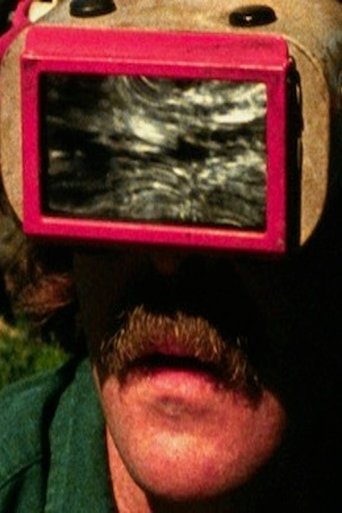
Prologue to Echo Me
1985
 NR
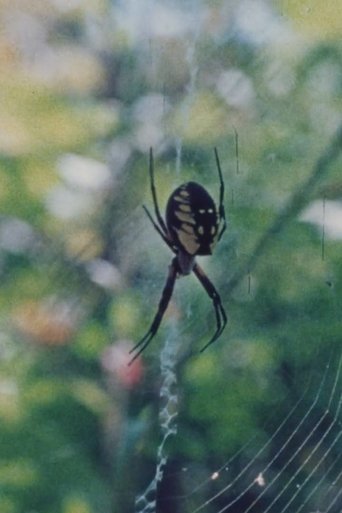
A 16mm film by Abbott Meader, made as a visual response to the poem "Standing Here," by Karen Andersen Woodard.
Wind in the Web
1978
16mm film by Abbott Meader
Flipping Out
1976
 NR
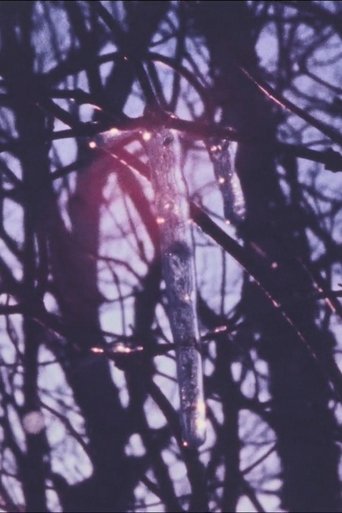
"A fence to contend with winter storms. Auld Lang Syne. Memories of green. 'Benigne fac, Domine, in bona voluntate'. The organ at Fenway park on Yaz' last day. Saturn, bringer of old age, and a meditation on that long, unrelenting road and enduring the weight of the journey." —Abbott Meader
Winter Fence
1984
 9.0
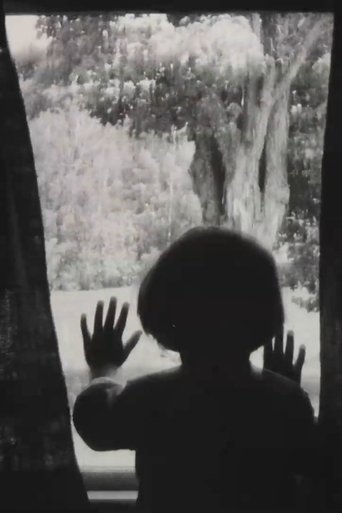
"No English language issues here. The title refers to Siva/Shiva – god of the dance – who dances the world into both destruction and rebirth, and Charivari, pronounced 'Shivaree', a rude serenade to mock wedding couples -i.e. mocking the concept of passion in balance with serenity. The film’s dancing child is our daughter Jennifer, now a middle aged school teacher and a likely Bodhisattva. She dances to escape and dispel the fragmentary seductions of TV, with its chaos of sound and image. Moving toward a window and the light, she sees and ponders the wind in the trees, as the final notes of Bill Evans’ 'Peace Piece' linger and fade." –Abbott Meader
Shiva Ree
1968
 6.0
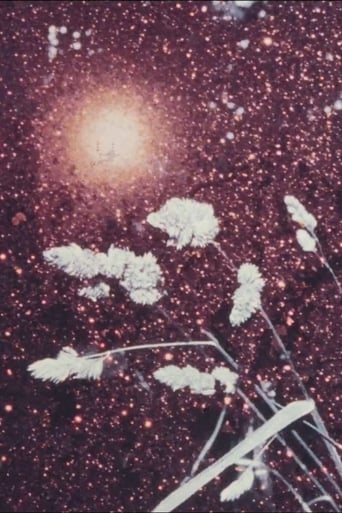
"A black one-eyed cat -does he dream of summer and having two eyes? A faceless snowman thrives in winter's starkness. There is frost and winter light. A glass light-catcher radiates color. Passing trains. Flame and smoke rise from a barrel. Fragments of music. Somewhere someone is picking out phrases from Randall Thompson's 'Alleluia'. A lot goes on, but not much happens. It is winter. Finally the snowman announces the coming of spring, and the piano plays its closing chords." —Abbott Meader
Winter Li
1981
 NR
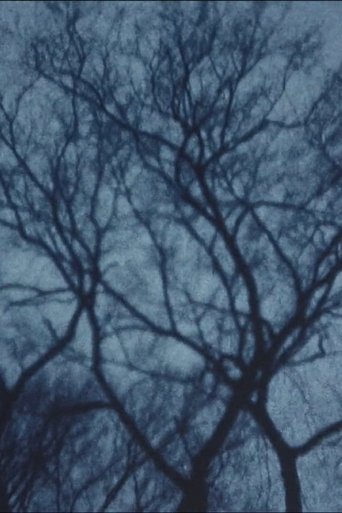
"THE ELMS was my first sound film, in 1964, made after the assassination of JFK. I hoped that the title might bring to mind the American Elm tree, which was seen to be doomed by way of disease. The assassination of Kennedy in 1963 was a tremendously emotional blow and omen of things to come. The whole country watched the funeral ceremonies play out on TV, and I taped everything I could of those events – music, words, prayers, the killing of Lee Harvey Oswald , and more. I needed to make a film that would incorporate some of those sounds, but I also wanted to introduce other components. Some people assumed I was making an homage to JFK. That is not the case. I think it should be clear that what I was concerned about was the evolving state of our nation." –Abbott Meader
The Elms
1964
 NR
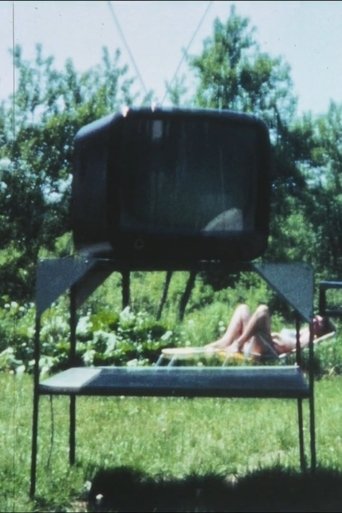
"This short film documents a day in our backyard while also standing in as a mini- creation myth. The film begins with word fragments written on the leader. There is sound, and the leader then lets there be light. Soon animal life appears on the earth, followed by people – and at some point, civilization and culture appear by way of a cast off TV set. Life continues as other events occur, and Time continually presses onward toward night. Throughout the film, we hear cryptic voices whose messages are unclear, and, as darkness descends and the TV set dominates, one voice from the ether constantly repeats a phrase. The sound is blurry, and as with a Rorschach test image, you will make of it what your inner life hears. I, of course, know exactly what the voice says, because I am the creator. But you will believe your own ears. (Spoiler alert. It’s in English). That’s the way of the world, and there’s no way out of it as far as I know." –Abbott Meader
Destroying Angel
1969
 6.0
"The film stars Bone, originally named Basil Catbone, a creature who survived several life threatening events to die at the age of 17. He was one of my mentors and a cherished friend. When this film was shown in Europe many years ago, someone called him the 'Charles Bronson of cats'. Dogs feared him, but with humans he was gentle. [...] A little girl awaits a school bus. A spider awaits its prey. Through it all, Bone, a feline Zen master, walks stolidly ahead, implying, perhaps, that there might be a means to resolve this, and we see him choose to balance himself and move on down the line, walking the path of the middle way." –Abbott Meader
Catwalk
1972
No synopsis available yet.
Vigil
1966
 NR
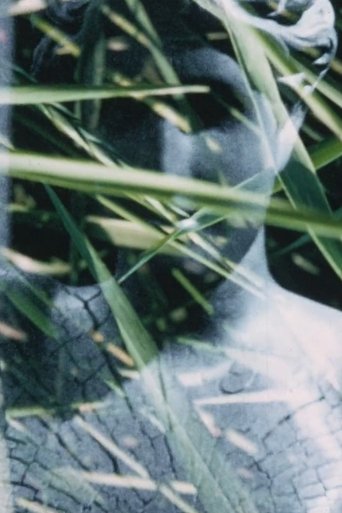
"This short, silent film, a gallery of shots put together like a jazz improv, uses many devices to affect the image that comes from the camera. I play with superimpositions, with drawing and scratching on the film, and layering over the camera images with texture and color. The result is a rather rhythmic, physical, playful event intended simply to happen as you watch it. The actual imagery of objects in a museum gallery, seen frequently throughout, was footage shot in the Colby College Museum of art in the 1960s." —Abbott Meader
Gallery
1968
"Here is the print of the film that I built up during last spring and summer. You all and others may find it able to speak something to you." — A. M., from a letter to the Cooperative.
An Interior
1964
 NR
"This is the fifth and final section of the 1977 film WEST BY NORTH. I feel it can stand by itself as a complete, if enigmatic statement. A casual browser is therefore afforded a look at a component of WXN, and may become interested in viewing the complete 25 minute film [...] The title is the conclusion of a dreamed phrase: "Flying low, out of creation, they met some rough spots in the mountains" -Abbott Meader
In the Mountains
1977
No synopsis available yet.
Departure
1966
 NR
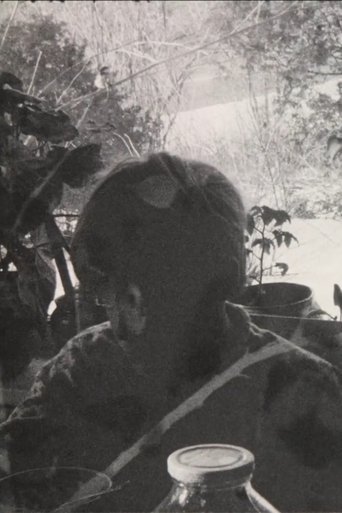
"Glimpses into a day in the life of three children. The three are busy with their lives. We see them, but what are they thinking? My camera screws up, but the effect seems appropriate and so I use the footage anyway. Birds are also busy with their own lives out there. Everybody is eating something. What kind of thinking do birds do? Oh, there’s a cat!. And a squirrel shows up. What a busy day! And soon it will be time for bed. Must not forget to brush your teeth." –Abbott Meader
Nogarok
1972
 NR
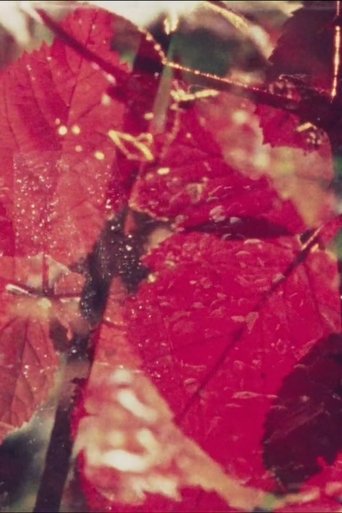
"A silent, in-camera improv that contemplates the early autumn colors and forms of some weathered, wild blackberries growing along a rural Maine railroad track. The berries themselves are gone - into many mouths or fallen to earth. Winter, as yet unseen, approaches from afar. The superimpositions were done in the camera and there was no further editing of the film." —Abbott Meader
Summerfall Black Berries
1982
 NR
"The direction of Western Culture's advance has been WXN, and now no further planetary geography remains into which to penetrate. Today there is talk of heading to Mars - a benighted concept. The geography that remains lies within, but our extroverted society seems largely determined not to explore it. So in a dream I heard the words, 'Flying low, out of creation, they met some rough spots in the mountains.' The film, in five short sections, explores and expands upon this statement. Beyond that, I would need to write pages. Better to just say, 'Take a look.'" —Abbott Meader
West By North
1977
 NR
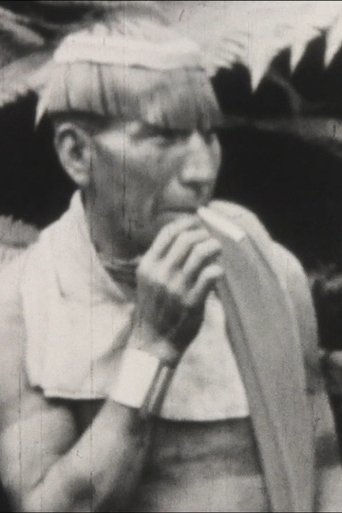
"Back in the 60s my friend Duff Decker and I would swap sound tapes that we made at home from scraps of TV, radio, records, along with our own noises. Sometimes these would center on a theme but often they were simply pure sound structures. The track here is of the latter sort, a tape sent to me by Duff. It stirred me to consider setting images to it as a playful and irreverant bagatelle. I had found some commercial travel movies that were being thrown out, and I also had numerous 'outs' from my own film work. These are what I used. The sounds and pictures criss cross over one another. Duff’s sound track tape is made of oppositions and shifts that seem to have no logical sequence and my images largely do the same. Yet I tried to feel my way toward something that might achieve a meaning out of meaninglessness. An abstract flow of cohesive irrationality. A movie! Well, I’m happy with the outcome, but if you’re not, you can blame Duff. He started it." –Abbott Meader
Criss Cross
1965