
Known for
 7.0
No synopsis available yet.
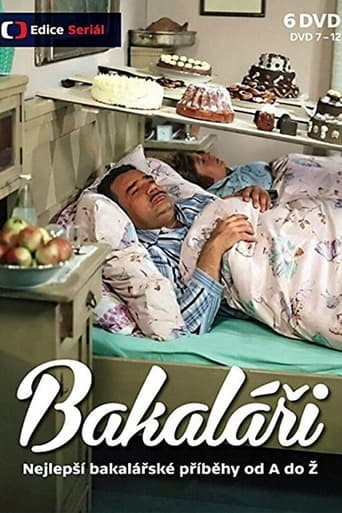
Bakaláři
1972
No synopsis available yet.
Postel s nebesy
1984
 NR
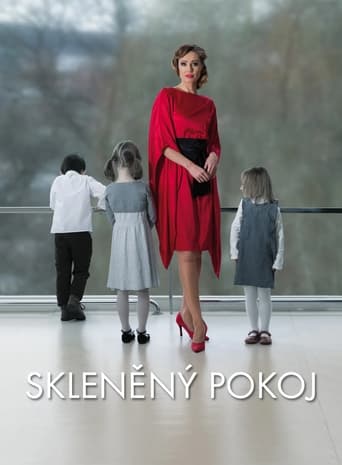
When the Tugendhat family had their villa built in the late 1920s, they had no idea how many stories it would inspire. A few years ago, British writer Simon Mawer wrote a novel called "The Glass Room." The novel tells the story of Liesel and Viktor Landauer, set in Brno between the two world wars. He was a promising industrialist, she was a rich beauty from a good family. As a wedding gift, they received a plot of land and had an Austrian architect build them a monumental house made of glass and concrete. Inside the house, their family life unfolds, but so do passionate stories of infidelity and even lesbian love. Through the glass of their villa, however, they can also observe the brown threat approaching from Hitler's Germany and the transformations of the young Czechoslovak Republic. When the threat becomes real, the Landauers understand that their time in the fictional City and in the house with the glass room has come to an end.
Skleněný pokoj
2021
 2.0
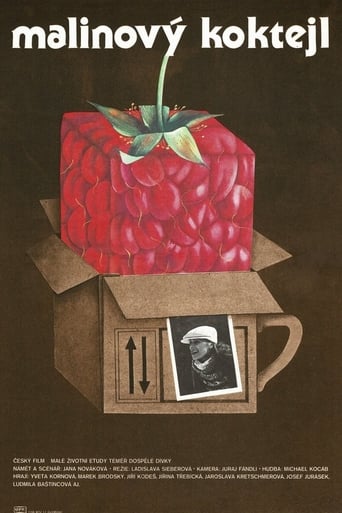
Story of a high-schooler who fails to gain a place at university and necessarily finds herself having to take a job behind the counter at a buffet.
Raspberry Coctail
1983
No synopsis available yet.
Překvapení
1978
In the second half of the 1980s, so-called critical films began to emerge, but they were afraid to make a sharper statement, moving on the basis of an engaged morality that wanted to improve the existing conditions cosmetically at best. The theme of the search for a new anchor in life becomes a central element: the protagonist, after returning from the war, does not want to devote himself to the constraints of elite sports, he rejects the dubious business of a friend. Most of all, he would be attracted to a perfectly ordinary job in a bakery. The dance clip inserts, however, make it difficult to navigate the already rather confusing narrative.
Pravidla kruhu
1988
Film credits
1980s · 3 titles
2.0Story of a high-schooler who fails to gain a place at university and necessarily finds herself having to take a job behind the counter at a buffet.
Raspberry Coctail
1983
In the second half of the 1980s, so-called critical films began to emerge, but they were afraid to make a sharper statement, moving on the basis of an engaged morality that wanted to improve the existing conditions cosmetically at best. The theme of the search for a new anchor in life becomes a central element: the protagonist, after returning from the war, does not want to devote himself to the constraints of elite sports, he rejects the dubious business of a friend. Most of all, he would be attracted to a perfectly ordinary job in a bakery. The dance clip inserts, however, make it difficult to navigate the already rather confusing narrative.
Pravidla kruhu
1988
No synopsis available yet.
Experiment
1981
Series credits
Behind the camera
NRWhen the Tugendhat family had their villa built in the late 1920s, they had no idea how many stories it would inspire. A few years ago, British writer Simon Mawer wrote a novel called "The Glass Room." The novel tells the story of Liesel and Viktor Landauer, set in Brno between the two world wars. He was a promising industrialist, she was a rich beauty from a good family. As a wedding gift, they received a plot of land and had an Austrian architect build them a monumental house made of glass and concrete. Inside the house, their family life unfolds, but so do passionate stories of infidelity and even lesbian love. Through the glass of their villa, however, they can also observe the brown threat approaching from Hitler's Germany and the transformations of the young Czechoslovak Republic. When the threat becomes real, the Landauers understand that their time in the fictional City and in the house with the glass room has come to an end.
Skleněný pokoj
2021
The production was based on Ivan Olbracht's novel Nikola Šuhaj loupežník (Nikola Šuhaj the Robber). The music draws on Petr Ulrych's famous LP, which was released in 1974, won the Bílá vrána (White Crow) award from Mladý svět magazine, and subsequently inspired a production at Prague's Divadlo Ateliér theater. Among other things, the band Javory was formed on this occasion. The expanded band Javory also plays and sings in the 2002 production of the Brno City Theater, and additional musical numbers were created for it. Of the 25 numbers, more than half are new to the performance. Petr Ulrych won the A. Radok Award for his music. Director and author of the theatrical adaptation Stanislav Moša incorporated film footage into the production, which works wonderfully as a reminiscence of natural beauty. Also worth mentioning is the impressive choreography of the police and bandit choirs and the excellent acting and singing performances, led by Petr Štěpán in the lead role.
Koločava
2002