

Writing
Paul Bourget
Born — Died
1852-09-02 — 1935-12-25
Place of birth
Amiens, Somme, Picardie, France
Known for
Writing
Credits
2 titles
Paul Bourget was a French novelist and critic who was a master of the psychological novel and a molder of opinion among French conservative intellectuals in the pre-World War I period. After completing his studies in philosophy, Bourget began his career as a poet, and several of his poems were set to music by Claude Debussy. Encouraged and deeply influenced by the critic Hippolyte Taine, he published a series of essays tracing the sources of contemporary pessimism to the works of Stendhal, Gustave Flaubert, Charles Baudelaire, Taine, and Ernest Renan. Fashionable in their day because of their high-society setting, his early novels, such as Cruelle Énigme (1885), Un Crime d’amour (1886), and…
Known for
No synopsis available yet.
L'écuyère
1922
 NR
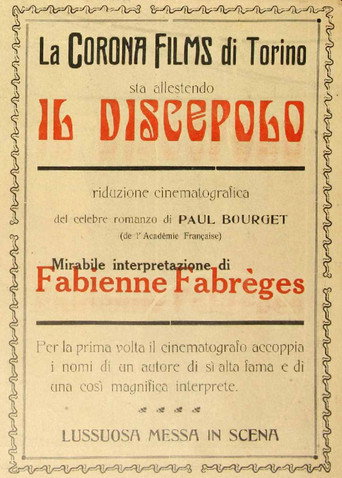
Adrien Sixte is a reclusive intellectual known for his theories on psychological materialism. Sixte’s orderly, self-enclosed world is violently interrupted when a desperate mother petitions his help and a judge summons him to a criminal trial. The young defendant, Robert Greslou—a student and self-styled disciple of Sixte—has sent his master a confidential memoir written in jail. Greslou’s psychological self analysis traces the nexus of causes that propelled him to his current predicament. The memoir culminates with his experience as a tutor for an aristocratic family: when he experiments with the affection he inspires in a young girl, the disciple’s actions eventually leading to her death.
Il discepolo
1917
Behind the camera
No synopsis available yet.
L'écuyère
1922
NRAdrien Sixte is a reclusive intellectual known for his theories on psychological materialism. Sixte’s orderly, self-enclosed world is violently interrupted when a desperate mother petitions his help and a judge summons him to a criminal trial. The young defendant, Robert Greslou—a student and self-styled disciple of Sixte—has sent his master a confidential memoir written in jail. Greslou’s psychological self analysis traces the nexus of causes that propelled him to his current predicament. The memoir culminates with his experience as a tutor for an aristocratic family: when he experiments with the affection he inspires in a young girl, the disciple’s actions eventually leading to her death.
Il discepolo
1917