Known for
 6.7
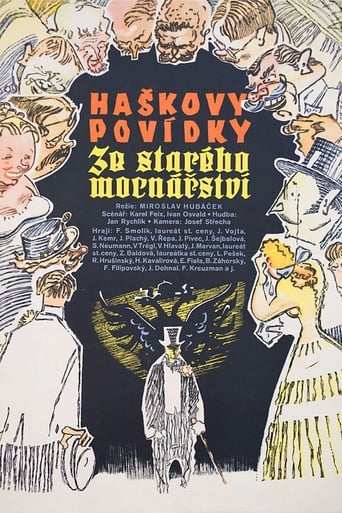
6.7Four short stories by the greatest Czech satirist Jaroslav Hašek. "Soup for Poor Children" tells the story of how Prince Robert himself cooked soup for poor children, "Meeting of the Municipal Council in Mejdlovary" is the history of filling the position of municipal policeman, "Trampotes of Mr. Tenkrát" shows how strange events lead to marriage and promotion, "Revolt of the Convict Šejba" depicts the victorious fight of the convict Šejba for a dumpling for ministering at mass.
Hasek’s Tales from the Old Monarchy
1952
 6.3
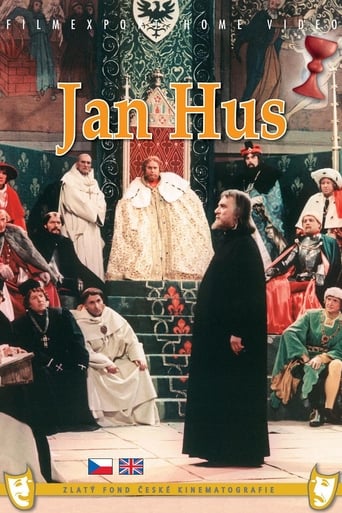
6.3The first part of the "Hussite Revolutionary Trilogy", completed with Jan Žižka (1955) and Proti všem (Against All Odds, 1957). The film captures the period from May 1412 to the summer of 1415, a turbulent time in the Czech Kingdom, during which there were protests in Prague against the sale of "omnipotent indulgences" whose sale throughout the kingdom was announced by Pope John XXIII. The ideological leader of this movement is the preacher Master Jan Hus, whose words, calling for the elimination of church abuses, are listened to in the Bethlehem Chapel by thousands of ordinary Praguers, Czech lords and Queen Sophie, wife of the Czech King Wenceslas IV.
Jan Hus
1955
The catastrophically dry weather of 1947 causes immense problems in the countryside. In the small village Klícov, only farmers Hánek and Bervida and the old Hromádka have water. The others must queue every day for a drop for themselves and their cattle. All the villagers lament over their previous decision to turn down the cooperative chairman Kouba's proposal to built a new village water-supply system.
Žízeň
1950
 6.7
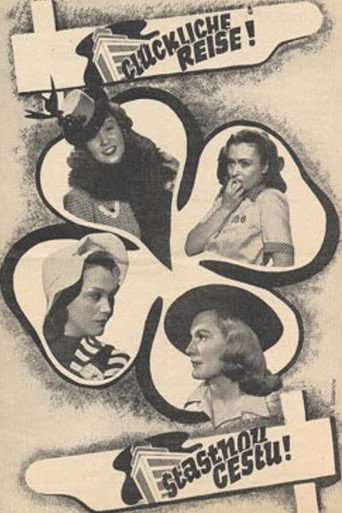
6.7Filmed during the Nazi occupation, this panoramic drama set in a Prague department store follows the divergent destinies of four female coworkers, each of whom seeks happiness in a different way.
Happy Journey
1943
Cold War Spy FIlm
Pan Habětín odchází
1949
 5.0
5.0The year is 1918. Toník returns home from the front. In Kladno, where he arrives, things are seething with discontent. The Social Democrats are in government, but nothing has changed. Socialization has not been implemented, there is hunger and food is still being skimped on. The first news about a socialist state arrives from Russia. On May 1st, the workers' Kladno manifests its loyalty to the ideals of the Great October Socialist Revolution. In December 1920, a general strike is declared in Kladno as well. The workers arm themselves, workers' councils take over the administration of the city and are also established in the surrounding villages. An armed uprising is being prepared. However, the right-wing leadership of the Social Democratic Party attacks the workers in the back. The army is sent to Kladno...
A red glow over Kladno
1956
Film credits
1950s · 16 titles
6.7Four short stories by the greatest Czech satirist Jaroslav Hašek. "Soup for Poor Children" tells the story of how Prince Robert himself cooked soup for poor children, "Meeting of the Municipal Council in Mejdlovary" is the history of filling the position of municipal policeman, "Trampotes of Mr. Tenkrát" shows how strange events lead to marriage and promotion, "Revolt of the Convict Šejba" depicts the victorious fight of the convict Šejba for a dumpling for ministering at mass.
Hasek’s Tales from the Old Monarchy
1952
6.3The first part of the "Hussite Revolutionary Trilogy", completed with Jan Žižka (1955) and Proti všem (Against All Odds, 1957). The film captures the period from May 1412 to the summer of 1415, a turbulent time in the Czech Kingdom, during which there were protests in Prague against the sale of "omnipotent indulgences" whose sale throughout the kingdom was announced by Pope John XXIII. The ideological leader of this movement is the preacher Master Jan Hus, whose words, calling for the elimination of church abuses, are listened to in the Bethlehem Chapel by thousands of ordinary Praguers, Czech lords and Queen Sophie, wife of the Czech King Wenceslas IV.
Jan Hus
1955
The catastrophically dry weather of 1947 causes immense problems in the countryside. In the small village Klícov, only farmers Hánek and Bervida and the old Hromádka have water. The others must queue every day for a drop for themselves and their cattle. All the villagers lament over their previous decision to turn down the cooperative chairman Kouba's proposal to built a new village water-supply system.
Žízeň
1950
5.0The year is 1918. Toník returns home from the front. In Kladno, where he arrives, things are seething with discontent. The Social Democrats are in government, but nothing has changed. Socialization has not been implemented, there is hunger and food is still being skimped on. The first news about a socialist state arrives from Russia. On May 1st, the workers' Kladno manifests its loyalty to the ideals of the Great October Socialist Revolution. In December 1920, a general strike is declared in Kladno as well. The workers arm themselves, workers' councils take over the administration of the city and are also established in the surrounding villages. An armed uprising is being prepared. However, the right-wing leadership of the Social Democratic Party attacks the workers in the back. The army is sent to Kladno...
A red glow over Kladno
1956
 7.5
7.5Young bricklayers Franta Doubrav and his friend Béla meet two girls, Mařka and Vlasta, on their way back from a friend's wedding, but they only manage to call them by their name and the construction site they are currently working on. Imagine their surprise when they discover that Mařka is a trained bricklayer who has joined Franta's father's work crew, where she proposes a new way of working that will help catch up on the construction delays. As a young girl, however, she must first deal with the distrust of the older and more experienced bricklayers.
Štika v rybníce
1952
A drama set in the Vítkovice Ironworks at the end of the occupation. It depicts the struggle of Ostrava steelworkers to save the blast furnaces, which the retreating Nazis want to blow up.
The Last Shot
1950
No synopsis available yet.
DS-70 nevyjíždí
1951
The story of a traveling comedy family that ends up in court, where young Fricek is charged with attempted murder because he protected his sister Olga from a rapist.
Comedians
1954
 7.5
7.5A few bus-loads of holidaymakers from the agricultural cooperative on a day trip arrive to see the show at the Slavia Circus. But, they have bad luck. It is Monday, the day on which the employees have their extra day off.
The Circus Will Be
1954
 5.0
5.0The movie describes proletarian life in the Czech Lands after World War I.
Anna the Proletarian
1953
The North Bohemian town of Chudoplesy in the middle of the 19th century: the only local industry is the domestic production of reed goods. The poor reeders organize a revolt against the exploitative factors.
Zvony z rákosu
1951
 6.5
6.5Early Days follows the early life of famous Czech writer Alois Jirásek. Jirásek had already developed his own view of the history of the Czech nation while he was at grammar school in Broumov. When he becomes the supply teach in Litomyšl, he has already written his first book and a number of poems. The local dignitaries await the arrival of the young writer in excited anticipation. Jirásek, however, is sickened by the empty patriotism from the depths of his soul and soon becomes disagreeable to the notables. The district sheriff tries to remove Jirásek from the school and drive him out of town. Unable to do this, the sheriff appoints a pro-Austrian headmaster who attempts to sabotage Jirásek. The students stand behind Jirásek , however, and discontent is not only felt in Litomyšl but throughout Bohemia.
Early Days
1953
An optimistic collective drama from the life of the workers on the construction site of the Youth Track. An amnestied prisoner wants to atone for his wrongdoing with an honest strike and reveals the vandal who was going to poison the drinking water cistern.
Veliká příležitost
1950
 6.7
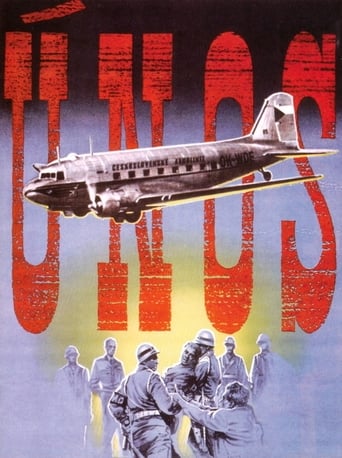
6.7American agents hijack a plane on the Ostrava-Prague route to launch a campaign against the People's Democratic Czechoslovakia. The plane lands in West Germany, but the Americans have an unexpected problem convincing the hijackers to stay in the West. Based on a true story.
Kidnapped
1953
The course of an organized strike by workers from North Moravian steelworks in 1931 to resist mass layoffs during the economic crisis.
The Trap
1951
No synopsis available yet.
Trojí setkání
1955
1940s · 8 titles
6.7Filmed during the Nazi occupation, this panoramic drama set in a Prague department store follows the divergent destinies of four female coworkers, each of whom seeks happiness in a different way.
Happy Journey
1943
Cold War Spy FIlm
Pan Habětín odchází
1949
 7.0
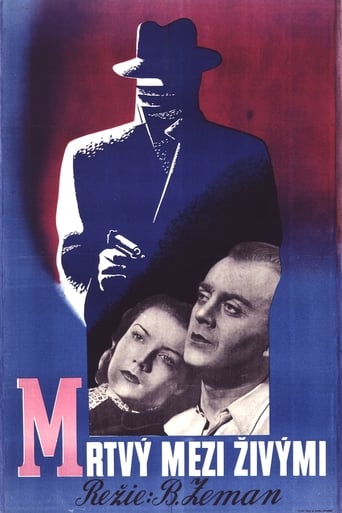
7.0Human bravery can take many forms, just as ideas about it can. Small-town public opinion begins to despise a postal clerk because he gave cash to robbers who didn't hesitate to shoot. The result is a successful study of a man whose previous certainties begin to crumble due to a fateful event.
A Dead Man among the Living
1947
The Czech revival movement is divided at the end of the first half of the 19th century. While the older generation, such as František Palacký, urges restraint, students lean towards radical positions. A report on the revolutionary events in Paris prompts Czech Prague residents to write down the demands of the Czech nation for self-determination and the proclamation of a constitution. Tensions peak during the All-Slavic Congress in Prague's Žofín. Vienna rejects the Czech demands and the congress is brutally dispersed by the Austrian police. Prague begins to build barricades...
Year of the Revolution 1848
1949
 5.0
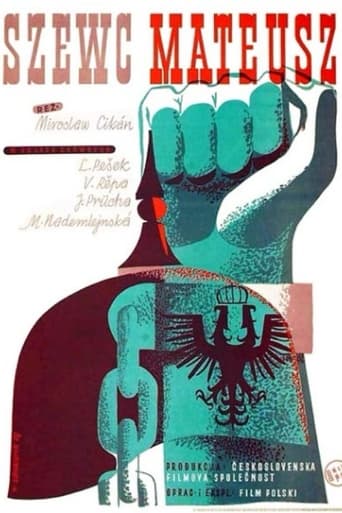
5.0The revolutionary year of 1848 brought great hopes among the hitherto silent classes, awakening social and national hopes. The response also penetrated the remote countryside, even as far as the Podkrkonoše Mountains. The young shoemaker there began to take an interest in social and political events, and he also experienced disappointment in later developments.
O ševci Matoušovi
1948
No synopsis available yet.
Tři knoflíky
1945
No synopsis available yet.
Dnes o půl jedenácté
1949
 7.0
7.0The foolish Pedro is supposed to marry the beautiful Rosita, who is also attracted to the adventurer Pancho - during his journey to see her, Pancho finds himself in prison, where he is tricked by a cunning desperado who decides to win Rosita for himself.
Pancho se žení
1946