

Directing
Roger Leenhardt
Born — Died
1903-07-23 — 1985-12-04
Place of birth
Montpellier, Hérault, France
Known for
Directing
Credits
24 titles
Roger Leenhardt (23 July 1903 – 4 December 1985) was a French writer and filmmaker. Born in a bourgeois Protestant family, this brilliant student of philosophy was very soon fascinated by cinema. Through a cousin, he started working for the newsreel program Éclair Journal and in 1934 set up his own production company with René Zuber, "Les Films du Compas," later known as, "Roger Leenhardt Films.” As a critic in the journal Esprit, he was considered one of the most perceptive observers of pre-war France and strongly influenced André Bazin and the entire "Nouvelle Vague.” Thanks to his series of articles known as "La petite école du spectateur," cinema became considered as an art and a lang…
Known for
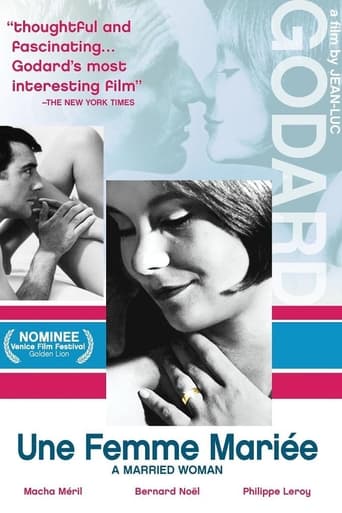 6.9
6.9A superficial woman finds conflict choosing between her abusive husband and her vain lover.
The Married Woman
1964
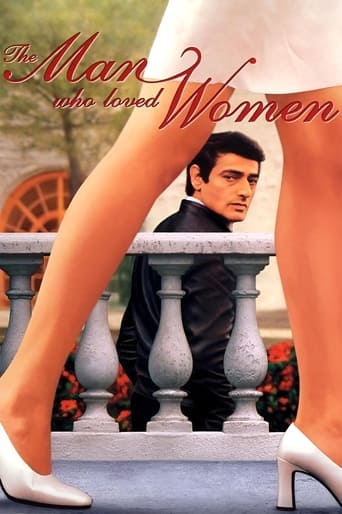 7.1
7.1At Bertrand Morane's burial there are many of the women that the 40-year-old engineer loved. In flashback Bertrand's life and love affairs are told by himself while writing an autobiographical novel.
The Man Who Loved Women
1977
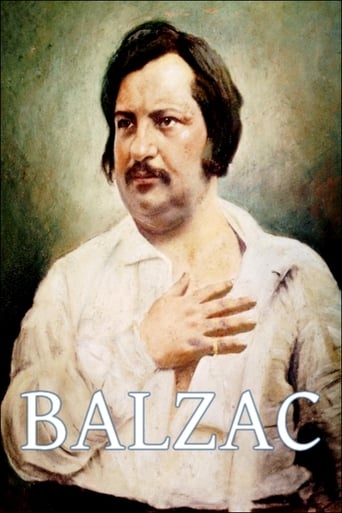 7.0
7.0Balzac is a 1951 short documentary film by French director Jean Vidal. It is a biopic on the work, life, and loves of the French playwright and novelist Honoré de Balzac, his evolution as a writer and how his individual works fit into the design of La Comedie Humaine. The film was nominated for an Academy Award in 1952 and won first prize for best director at the Mannheim-Heidelberg International Film Festival the same year.
Balzac
1951
 NR
NRNo synopsis available yet.
Trois portraits d'un oiseau qui n'existe pas
1963
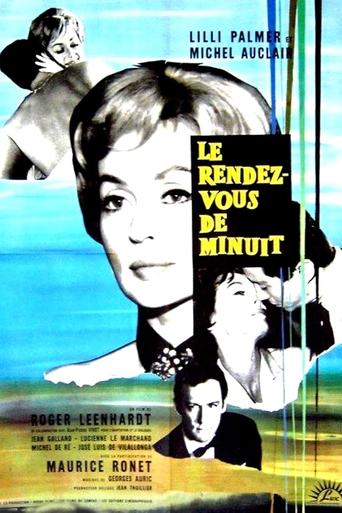 7.2
7.2A woman becomes distressed by the resemblance between the plot of a film and the reality of her own life. But what is reality: life or film?
Midnight Meeting
1962
No synopsis available yet.
Le Beatnik et le minet
1967
Film credits
Behind the camera
7.0Balzac is a 1951 short documentary film by French director Jean Vidal. It is a biopic on the work, life, and loves of the French playwright and novelist Honoré de Balzac, his evolution as a writer and how his individual works fit into the design of La Comedie Humaine. The film was nominated for an Academy Award in 1952 and won first prize for best director at the Mannheim-Heidelberg International Film Festival the same year.
Balzac
1951
NRNo synopsis available yet.
Trois portraits d'un oiseau qui n'existe pas
1963
7.2A woman becomes distressed by the resemblance between the plot of a film and the reality of her own life. But what is reality: life or film?
Midnight Meeting
1962
7.2A woman becomes distressed by the resemblance between the plot of a film and the reality of her own life. But what is reality: life or film?
Midnight Meeting
1962
No synopsis available yet.
Le Beatnik et le minet
1967
No synopsis available yet.
Le Beatnik et le minet
1967
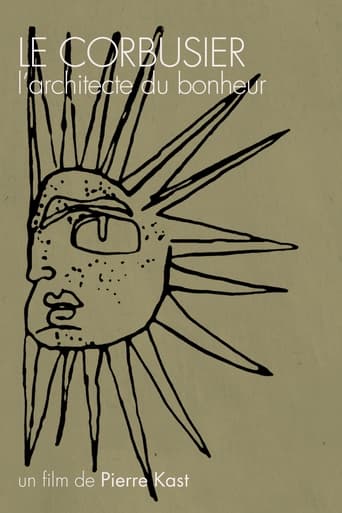 10.0
10.0Documentary devoted to the architectural and urban planning designs of Le Corbusier. The architect supports his in-depth reflection on the city and its necessary adaptation to modern life with plans, drawings and images, particularly Paris, whose revolutionary development dreamed of by Le Corbusier is exhibited here. Its first projects will remain at the stage of a model: the modernization plan for the city of Algiers. Some will be created by other architects: Ministry of Education in Rio de Janeiro, UN Palace in New York. From the post-war period in less than 10 years, Le Corbusier created large housing units in Marseille, Nantes, a chapel in Ronchamps, a factory in Saint-Dié, a town in Chandigarh in India. Through diagrams, the architect presents his theory of the "radiant city", the mathematical key modulor of his work as well as his project for reorganizing the countryside, industrial and urban cities into a grouping around a cooperative system.
Le Corbusier, l'architecte du bonheur
1957
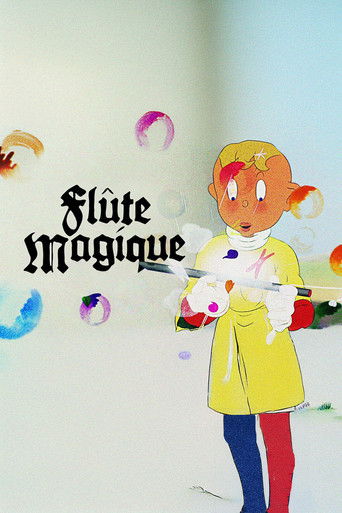 6.6
6.6A minstrel, barred from entering a castle, is given a magic flute that can manipulate movement.
The Magic Flute
1946
One of France's greatest drawing talents characterizes himself, his life and work with his own lithographs.
Daumier
1958
One of France's greatest drawing talents characterizes himself, his life and work with his own lithographs.
Daumier
1958
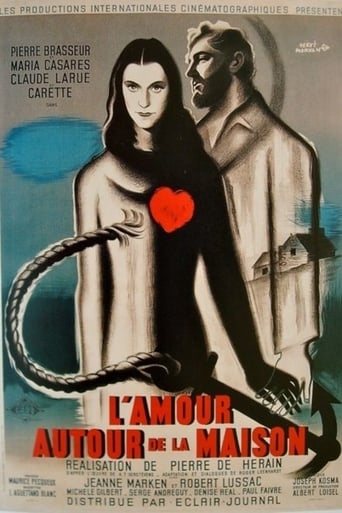 8.0
8.0In an isolated house, in Brittany, live two sisters around whom gravitate a whole series of strange characters. Between the eruption of the vagrant voyeur and that of the couple in love, the youngest kills her eldest and goes mad.
Love Around the House
1947
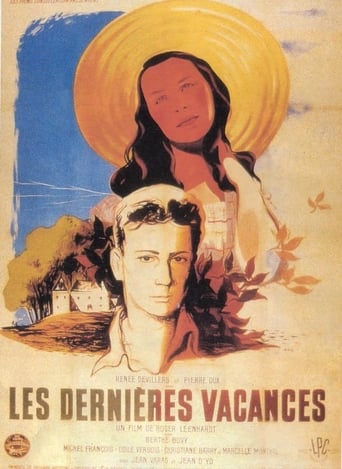 6.8
6.8A schoolboy remembers his last holiday in the big house of his family in the country, before it was sold.
The Last Vacation
1948
6.8A schoolboy remembers his last holiday in the big house of his family in the country, before it was sold.
The Last Vacation
1948
A short historical documentary by Roger Leenhardt and Jean Pierre Vivet that chronicles the eleventh-century invasion of England by William the Conqueror, using images of the Bayeux Tapestry to illustrate the story. As described by Erik Barnouw ("Documentary: A History of the Non-Fiction Film"), the film creatively animates the embroidered scenes to bring the Norman Conquest to life.
The Norman Conquest of England
1955
A short documentary about the construction of the parisian subway in the 50s.
Metro
1950
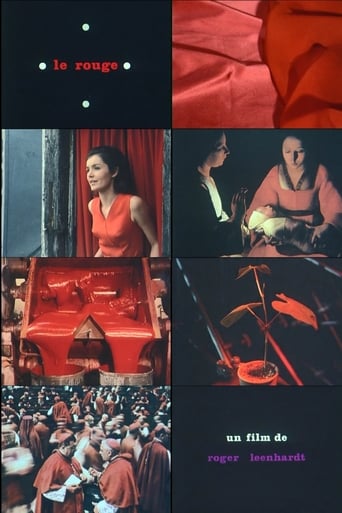 NR
NRShort documentary film on and around the color red
Le rouge
1967
 NR
NRThe prehistory of the cinema as we know it today, with its great inventors: Marey, Muybridge, Reynaud, Edison, the brothers Lumière and their great inventions: the kinetoscope, the praxinoscope, the chromophotograph, the film camera.
The Birth of Cinema
1946
NRThe prehistory of the cinema as we know it today, with its great inventors: Marey, Muybridge, Reynaud, Edison, the brothers Lumière and their great inventions: the kinetoscope, the praxinoscope, the chromophotograph, the film camera.
The Birth of Cinema
1946
NRThe prehistory of the cinema as we know it today, with its great inventors: Marey, Muybridge, Reynaud, Edison, the brothers Lumière and their great inventions: the kinetoscope, the praxinoscope, the chromophotograph, the film camera.
The Birth of Cinema
1946
This documentary short shows how a dry, semi-barren piece of desert that had been the object of conflict between two neighboring tribes in Morocco can be transformed by modern farming methods--including irrigation canals, mechanized forms of planting and harvesting--and can result in peace and cooperation between the two tribes instead of war.
New Ways for Old Morocco
1946
Traces the development of the animated cartoon from a 19th-century children's toy to modern Disney cartoons. Includes a complete animated show as it would have looked in the 1890s.
Animated Cartoons: The Toy That Grew Up
1946