
Directing
Robert Frank
Born
1924-11-09 (101)
Place of birth
Zurich, Switzerland
Known for
Directing
Credits
60 titles
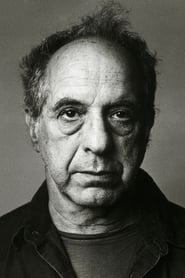
Robert Frank is one of the most acclaimed photographers of the 20th century. He is best known for his seminal book "The Americans", featuring photographs taken by the artist in the mid-1950s as he traveled across the U.S. on a Guggenheim fellowship. Robert Frank is also known as a filmmaker.
Known for
 5.6
5.6The South Bank Show is a television arts magazine show produced by ITV between 1978 and 2010. A new series began on Sky Arts from 27 May 2012. Presented by Melvyn Bragg, the show aims to bring both high art and popular culture to a mass audience.
The South Bank Show
1978
 9.0
9.0Hit videos.
Hit Parade
2021
 NR
NRScenes from the life and work at Anthology Film Archives. Much of the footage in this video was shot by Auguste Varkalis.
Laboratorium Anthology
1999
 4.0
4.0The 94-year-old Robert Frank’s unique recordings of his fellow artists Harry Smith and Allen Ginsberg, which he had salvaged from his own archive for Harry Smith at the Breslin Hotel.
Harry Smith at the Breslin Hotel
2017
 6.5
6.5Julius Orlovsky, after spending years in a New York mental hospital, emerges catatonic and must rely on his brother Peter, who lives with poet Allen Ginsberg. When Julius wanders off in the middle of filming, Frank hires and actor (Joseph Chaikin) to play the character and begins a fictional version of his psychological portrait. Then, as suddenly as he vanished, Julius turns up in an institution where he and Peter must face their relationship.
Me and My Brother
1969
 5.7
5.7A small film crew goes through several locations including Europe, New York and Mexico.
Second Century
1999
Film credits
2020s · 4 titles
 NR
NRAn artist in his own right, Clark Winter captured the intimacy of his longtime friendships with Robert Frank and June Leaf in a series of videos shot over nearly 30 years in New York and Nova Scotia. These are a precious record of the married couple’s seemingly inseparable—yet resolutely independent—home and work lives. Today, Winter serves as one of only three board members of the June Leaf and Robert Frank Foundation. — Museum of Modern Art
Robert Frank in Conversation with Clark Winter: 10 Films
2024
June 3, 1990. New York City. On his 64th birthday, Allen Ginsberg gathers a handful of friends in his downtown apartment. Among them, a young, unknown Chinese artist documents the day. His name is Ai Weiwei. The tape survives. Nothing “historic” happens and yet, everything is there.
ALLEN & AI
2026
 NR
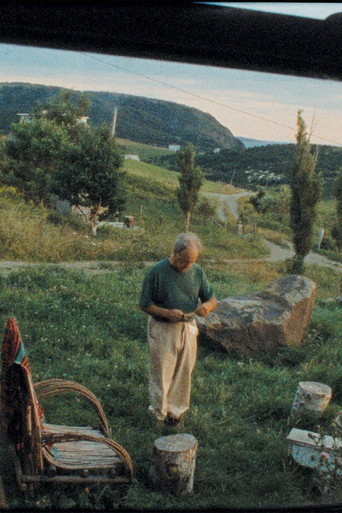
NRScenes from the life of a quiet man and a smart woman. They carry the celebrated surnames Frank and Leaf, both of which were crucial to the 20th century North American art scene, but here they are just Robert and June. Jem Cohen’s camera brims with tenderness for his beloved friends in their late years, searching for their presence in the calming topography of Mabou, Nova Scotia, or the urban decay of New York’s Bleecker Street. Drifting, mutating textures and formats, breathing along with changing landscapes. An exercise in spending time with the world. (Viennale)
Robert and June (and All the Time in the World)
2025
"In the summer of 2019 Kara [Walker] and I took our second and final visit to see Robert Frank and June Leaf at their place in Mabou, Nova Scotia. This video is a record of some of the conversations between us. A blooming friendship between two mid-career artists and two late-career ones. I never meant to make this film but some time after Robert died I looked back and lined these moments up." — Ari Marcopoulos
June and Robert Kara and Me
2022
2010s · 2 titles
 7.0
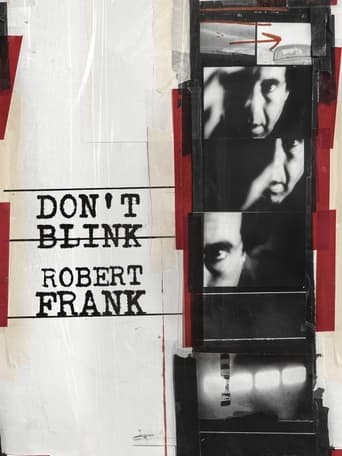
7.0The life and work of Robert Frank—as a photographer and a filmmaker—are so intertwined that they're one in the same, and the vast amount of territory he's covered, from The Americans in 1958 up to the present, is intimately registered in his now-formidable body of artistic gestures. From the early '90s on, Frank has been making his films and videos with the brilliant editor Laura Israel, who has helped him to keep things homemade and preserve the illuminating spark of first contact between camera and people/places. Don't Blink is Israel's like-minded portrait of her friend and collaborator, a lively rummage sale of images and sounds and recollected passages and unfathomable losses and friendships that leaves us a fast and fleeting imprint of the life of the Swiss-born man who reinvented himself the American way, and is still standing on ground of his own making at the age of 90.
Don't Blink - Robert Frank
2015
 NR
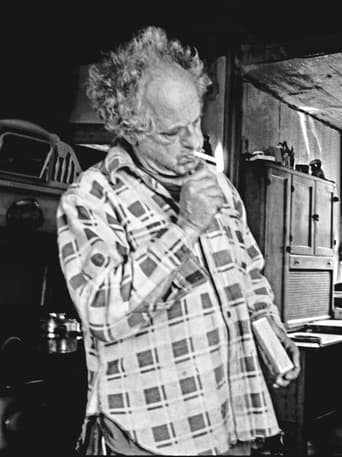
NRNo synopsis available yet.
Life Goes On
2015
2000s · 4 titles
 NR
NRFilmed during the shooting of the Sin of Jesus 1960, this film includes Robert Frank, Dick Bellamy, Mary Frank, and others.
Robert Frank Films
2006
 6.5
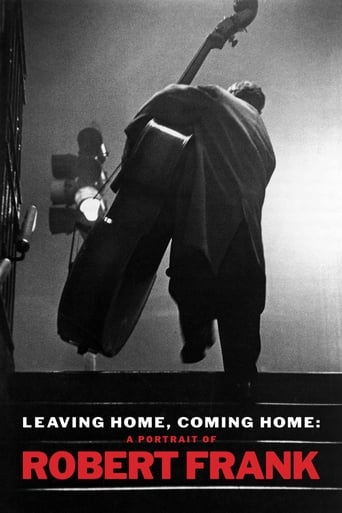
6.5A documentary on the photographer Robert Frank.
Leaving Home, Coming Home: A Portrait of Robert Frank
2004
Full Blossom: The Life Of Poet/Actor Roberts Blossom takes a look at Blossom's work onscreen, as well as the man behind the camera, examining his political and spiritual convictions, his belief in reincarnation (Blossom is certain his son was Michelangelo in a previous life), his career as a poet, and his relationship with his family.
Full Blossom: The Life of Poet/Actor Roberts Blossom
2000
 7.0
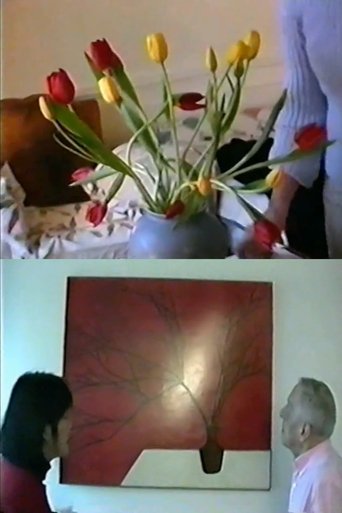
7.0Sanyu (1901-1964), an important Chinese artist, was a friend of Robert Frank's who died in anonymity in Paris. In this film portrait, Frank creates a requiem that includes dramatic and documentary scenes set in Paris, and a chronicle of his trip to Taipei to attend Sotheby's auction of the paintings Sanyu left him.
Sanyu
2005
1990s · 5 titles
NRScenes from the life and work at Anthology Film Archives. Much of the footage in this video was shot by Auguste Varkalis.
Laboratorium Anthology
1999
5.7A small film crew goes through several locations including Europe, New York and Mexico.
Second Century
1999
"Today memory creeps along the wall at Seven Bleecker. In the back of my eyes, longings and obsessions, Outside someone is yelling Robert! I love New York…." Robert Frank looks back on a lifetime of memory-gathering through photographs, home movies (his parents' gravesite, June Leaf making art), portraits of artist friends (Raoul Hague, Allen Ginsberg), and portraits of those he admired (Jean-Luc Godard). The film resembles one of Gregory Corso's "shuffle poems," as Frank muses, "Together go words and images without sound. I have an obsession in my life for Fragments which reveal and hide truth." — Museum of Modern Art
Moving Pictures
1994
Dedicated from one great photographer to another, I Remember reenacts an afternoon spent with Alfred Steiglitz. Robert Frank plays Steiglitz, Frank is played by the artist Jerome Souther, and Frank’s artist wife June Leaf plays Steiglitz’s own artist wife Georgia O’Keeffe (the two women bear an uncanny resemblance). Together, the three share in simple domestic pleasures, the “hospitality, the wood stove in the kitchen, chicken for lunch, Steiglitz waiting for the sun to appear through the clouds.” — Museum of Modern Art
I Remember
1998
Simple objects, photographs, and events prompt Frank to self-conscious rumination. From his homes in New York and Nova Scotia and on visits to friends, the artist contemplates his relationships, the anniversary of his daughter's death, his son's mental illness, and his work.
The Present
1996
1980s · 2 titles
 NR
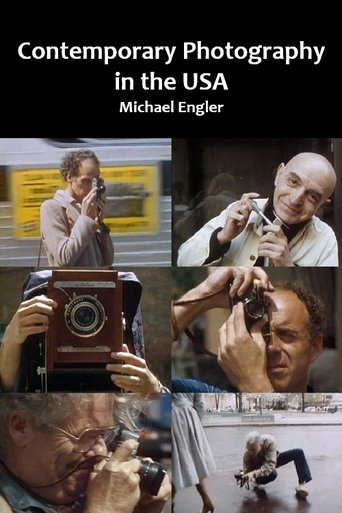
NRThe film of Michael Engler from the year 1982 showing the different methods of operation of photgraphers Harry Callahan, Mark Cohen, Robert Frank, Ralph Gibson, Duane Michals, Joel Meyerowitz, Stephen Shore, Garry Winogrand and others
Contemporary Photography in America
1982
 10.0
10.0Home Improvements, Robert Frank’s first video project, is a simple and poignant diary of consequential events. It is about the relationship between Frank’s life as an artist and his personal life, and how the two are inevitably intertwined. It was made cheaply with a half-inch video porta-pak. Home Improvements takes place in New York and Nova Scotia and in the mental space between these two opposing worlds
Home Improvements
1985
Series credits
5.6The South Bank Show is a television arts magazine show produced by ITV between 1978 and 2010. A new series began on Sky Arts from 27 May 2012. Presented by Melvyn Bragg, the show aims to bring both high art and popular culture to a mass audience.
The South Bank Show
1978
9.0Hit videos.
Hit Parade
2021
Behind the camera
4.0The 94-year-old Robert Frank’s unique recordings of his fellow artists Harry Smith and Allen Ginsberg, which he had salvaged from his own archive for Harry Smith at the Breslin Hotel.
Harry Smith at the Breslin Hotel
2017
6.5Julius Orlovsky, after spending years in a New York mental hospital, emerges catatonic and must rely on his brother Peter, who lives with poet Allen Ginsberg. When Julius wanders off in the middle of filming, Frank hires and actor (Joseph Chaikin) to play the character and begins a fictional version of his psychological portrait. Then, as suddenly as he vanished, Julius turns up in an institution where he and Peter must face their relationship.
Me and My Brother
1969
6.5Julius Orlovsky, after spending years in a New York mental hospital, emerges catatonic and must rely on his brother Peter, who lives with poet Allen Ginsberg. When Julius wanders off in the middle of filming, Frank hires and actor (Joseph Chaikin) to play the character and begins a fictional version of his psychological portrait. Then, as suddenly as he vanished, Julius turns up in an institution where he and Peter must face their relationship.
Me and My Brother
1969
"Today memory creeps along the wall at Seven Bleecker. In the back of my eyes, longings and obsessions, Outside someone is yelling Robert! I love New York…." Robert Frank looks back on a lifetime of memory-gathering through photographs, home movies (his parents' gravesite, June Leaf making art), portraits of artist friends (Raoul Hague, Allen Ginsberg), and portraits of those he admired (Jean-Luc Godard). The film resembles one of Gregory Corso's "shuffle poems," as Frank muses, "Together go words and images without sound. I have an obsession in my life for Fragments which reveal and hide truth." — Museum of Modern Art
Moving Pictures
1994
 8.0
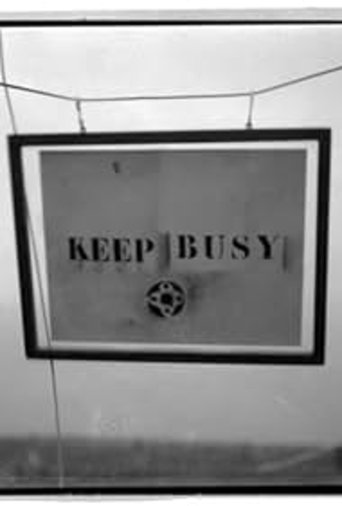
8.0The protagonists’ astounding verbal gymnastics and often incomprehensible interactions tend to descend into nonsense, and with the syncopated rhythm of its action and dialogue, this film is reminiscent of the playful and parodying elements of the Beat fantasy Pull My Daisy. The interweaving of documentary and fiction with the syncopated rhythm of its action and dialogue presents an absurd buzz of activity reminiscent of Beckett’s abstract comic grotesque.
Keep Busy
1975
An egg-sorting woman shrugs off even the appearance of Christ. From Isaak Babel story.
The Sin of Jesus
1961
 5.9
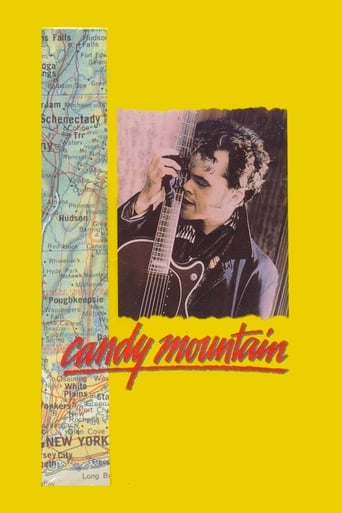
5.9A mediocre musician goes on the road in search of the world's greatest guitar maker.
Candy Mountain
1988
 5.8
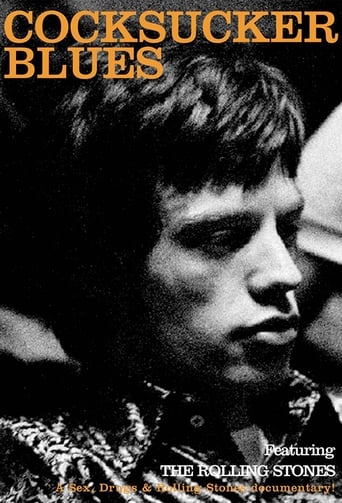
5.8This fly-on-the-wall documentary follows the Rolling Stones on their 1972 North American Tour, their first return to the States since the tragedy at Altamont.
Cocksucker Blues
1972
 6.0
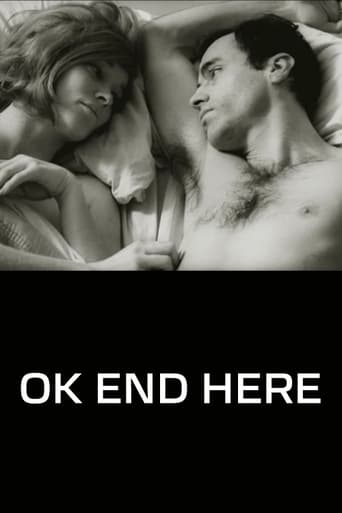
6.0O.K. End Here is Frank’s 1963 short film about inertia in a modern relationship. The film alternates between semidocumentary scenes and shots composed with rigid formality, and appears to have been directly influenced by the French Nouvelle Vague and Michelangelo Antonioni’s films.
O.K. End Here
1963
 NR
NRInvited to shoot the cover for their 1972 album Exile on Main St., Robert Frank developed a relationship with the Rolling Stones that extended beyond Cocksucker Blues to include this Super 8 short, a jittery montage of the band slumming on Skid Row in downtown Los Angeles and gadding about in Mick Jagger’s rented Bel-Air mansion that Frank wryly contrasted with images of poor Black street buskers on the Bowery. Graphic designer John Van Hamersveld ended up using still images and film strips from the Super 8 footage to create collages for the album’s back cover and inner sleeves; the original material is on view in the exhibition Life Dances On. — Museum of Modern Art
Rolling Stones Super 8 Footage
1972
 6.5
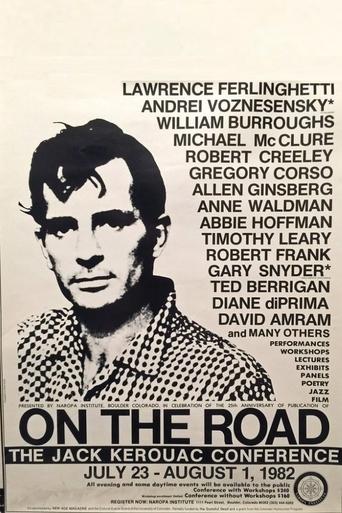
6.5In 1982, Robert Frank was on hand at the Naropa Institute in Boulder, Colorado, to film the Jack Kerouac Conference, a 25th-anniversary commemoration of On the Road in which poignantly aging Beats and fellow-traveling authors, activists, and composers (Allen Ginsberg, William Burroughs, Gregory Corso, Michael McClure, Herbert Huncke, Anne Waldman, Lawrence Ferlinghetti, Ken Kesey, Abbie Hoffman, David Amram) gathered on a rain-swept Chautauqua porch to recite poetry and raise a glass to their patron saint. Particularly memorable is Frank’s humorous encounter with a group of grizzled and well-lubricated onlookers. — Museum of Modern Art
This Song for Jack
1983
Filmed in Wendover, Nevada, in early 1981, Energy and How to Get It combines documentary and fictional ideas. What began as a documentary film about Robert Golka, an engineer who was experimenting with ball lightning and the development of fusion as an energy force, was turned into a spoof on the documentary form, inserting fictional characters into the story such as the Energy Czar (William Burroughs), and a Hollywood agent (filmmaker Robert Downey). (mfah.org)
Energy and How to Get It
1981
Alfred Leslie is a pivotal American artist-painter-filmmaker whose work spans the past fifty years. A contemporary of the Abstract Expressionists and a key figure in the extraordinary social milieu of downtown New York from the 1950s and 60s to the present, his own canvases were amongst the most revered of his peers. In 1964 he made 'Pull My Daisy' with the photographer Robert Frank and in 1966 collaborated with the inimitable poet Frank O'Hara on 'The Last Clean Shirt'. Leslie dramatically moved away from abstraction to make giant almost hyper-real portraits, the majority of which were destroyed in the now infamous fire that ripped through his studio and its neighboring blocks on October 17, 1966. This devastating event, that completely destroyed paintings, films and manuscripts, continues to inform his work today.
Alfred Leslie: Cool Man In A Golden Age
2009
 6.1
6.1Based on an incident in the life of Beat icon Neal Cassady and his wife, the painter Carolyn, the film tells the story of a railway brakeman whose wife invites a respected bishop over for dinner. However, the brakeman's Bohemian friends crash the party, with comic results. Pull My Daisy is a film that typifies the Beat Generation. Directed by Robert Frank and Alfred Leslie, Daisy was adapted by Jack Kerouac from the third act of his play, Beat Generation; Kerouac also provided improvised narration.
Pull My Daisy
1959
This rarely screened film was used to raise funds for the making of Energy and How to Get It. High-energy physicist Robert Golka was granted a lease on an airplane hangar once used to build B-29 bombers to further his experiments on ball lightning and free energy distribution. By the time Robert Frank and his crew arrived, Golka, his frisky older love interest Agnes Moon, and his dogs Nitro and Proton were facing eviction. — Museum of Modern Art
Project Tesla
1980
 9.0
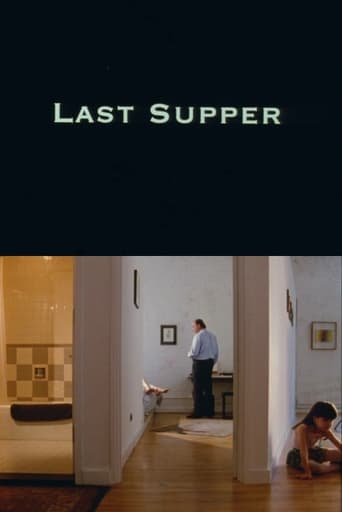
9.0In an empty lot in Harlem, an elite group of New Yorkers prepares for a book-signing party given in honor of a writer who never shows up. Local residents, dealing with the practicality of life, look on as the guests obsess about identity, status, and success.
Last Supper
1992
 6.6
6.6One of the longest handheld tracking shots in film history, It’s Real documents an hour in the street life of downtown Manhattan. Not only is it a unique record of a particular time and place—July 26, 1990, from 3:45 to 4:45 p.m. in the Lower East Side near Robert Frank’s studio (we note in a Daily News headline that after some 20 years the Zodiac killer still hasn’t been identified)—it’s also an experiment in fragmentary language, gesture, and life caught unawares. Snippets of dialogue captured in passing at phone booths and crosswalks, in alleyways, subways, and diners—chance encounters, only presumably, with people going about their day—have something of the aleatory cut-up technique of the Dadaists in the 1920s and William Burroughs and Byron Gysin in the 1950s, an effort to divine new and deeper meanings in ordinary life. — Museum of Modern Art
One Hour
1990
6.6One of the longest handheld tracking shots in film history, It’s Real documents an hour in the street life of downtown Manhattan. Not only is it a unique record of a particular time and place—July 26, 1990, from 3:45 to 4:45 p.m. in the Lower East Side near Robert Frank’s studio (we note in a Daily News headline that after some 20 years the Zodiac killer still hasn’t been identified)—it’s also an experiment in fragmentary language, gesture, and life caught unawares. Snippets of dialogue captured in passing at phone booths and crosswalks, in alleyways, subways, and diners—chance encounters, only presumably, with people going about their day—have something of the aleatory cut-up technique of the Dadaists in the 1920s and William Burroughs and Byron Gysin in the 1950s, an effort to divine new and deeper meanings in ordinary life. — Museum of Modern Art
One Hour
1990
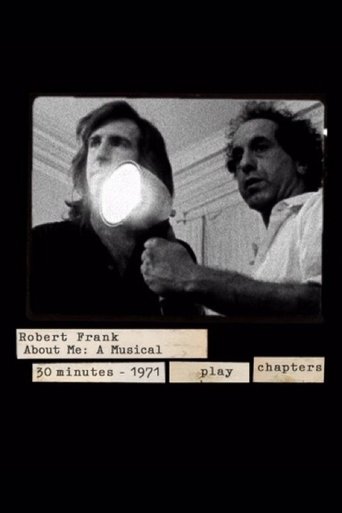 6.2
6.2A Musical Set in New York City
About Me: A Musical
1971
 8.0
8.0In the words of Robert Frank, Hunter is about “. . . a man whose destiny is not to find a destination. . . . A man who fears that he will never find what his imagination compels him to look for, a mystical traveler going by train and by car through . . . language and landscape.” The film was shot entirely on location in Germany’s industrial Ruhr region in September/October 1989.
Hunter
1989
10.0Home Improvements, Robert Frank’s first video project, is a simple and poignant diary of consequential events. It is about the relationship between Frank’s life as an artist and his personal life, and how the two are inevitably intertwined. It was made cheaply with a half-inch video porta-pak. Home Improvements takes place in New York and Nova Scotia and in the mental space between these two opposing worlds
Home Improvements
1985
10.0Home Improvements, Robert Frank’s first video project, is a simple and poignant diary of consequential events. It is about the relationship between Frank’s life as an artist and his personal life, and how the two are inevitably intertwined. It was made cheaply with a half-inch video porta-pak. Home Improvements takes place in New York and Nova Scotia and in the mental space between these two opposing worlds
Home Improvements
1985
In Fall of 1971, artist Robert Frank came to Rochester, NY to conduct a course on filmmaking at the recently established alternative art school, Visual Studies Workshop. By the time he came to Rochester, Frank had made seven films and was in production on the autobiographical fiction About Me: A Musical while preparing to shoot the controversial Rolling Stones documentary Cocksucker Blues. In need of money to shoot his next film, Frank proposed a non-traditional course to friend Nathan Lyons, suggesting the students work together to make their own movie with Frank acting as more of a collaborator than an instructor. Frank’s approach to working with the group of six students was simple: load up a camera and start shooting the world around you, including yourselves. The resulting 38 minute film is a valuable portrait of a creative collaboration between artists, and a stimulating document of what Frank refers to as ‘the chaos of the present.’
About Us
1972
Dedicated from one great photographer to another, I Remember reenacts an afternoon spent with Alfred Steiglitz. Robert Frank plays Steiglitz, Frank is played by the artist Jerome Souther, and Frank’s artist wife June Leaf plays Steiglitz’s own artist wife Georgia O’Keeffe (the two women bear an uncanny resemblance). Together, the three share in simple domestic pleasures, the “hospitality, the wood stove in the kitchen, chicken for lunch, Steiglitz waiting for the sun to appear through the clouds.” — Museum of Modern Art
I Remember
1998
Longtime friends and frequent foils, Allen Ginsberg and Gregory Corso appeared onstage together countless times over the years, reading to audiences that sometimes numbered in the hundreds or thousands. On January 9, 1984, Robert Frank filmed Ginsberg reading his poem “White Shroud,” while Corso read a poem he had written the night before, some turgid verses on priapic preoccupations. — Museum of Modern Art
Ginsberg/Corso Tapes
1984
Commissioned for an event commemorating the ongoing construction of a 21-mile tunnel through the Swiss Alps, Robert Frank’s experimental short is as terse and unflinching as a Dziga Vertov newsreel, superimposing images of his wife, the artist June Leaf, at work and at play with the emotionless felling of a farm cow. — Museum of Modern Art
Tunnel
2008
7.0Sanyu (1901-1964), an important Chinese artist, was a friend of Robert Frank's who died in anonymity in Paris. In this film portrait, Frank creates a requiem that includes dramatic and documentary scenes set in Paris, and a chronicle of his trip to Taipei to attend Sotheby's auction of the paintings Sanyu left him.
Sanyu
2005
Jonathan Demme wrote that “Robert Frank’s very short film Run, set to New Order’s tune of the same name, remains one of the most gratifying tastes of cinema ever. It’s a deep, rich and exhilarating emotional journey somehow compressed into the time it takes for New Order’s engaging pop song to play out.” Frank shot on Hi8 for the LA concert sequences and 35mm for the street scenes in Williamsburg, where Mabou Mines actor David Warrilow performs a pantomime date while a young girl (the daughter of Frank’s Brazilian percussionist friend Tony Noguera) twirls and drums behind him. Frank’s still photographs of the band also appear on a lamppost. — Museum of Modern Art
Run
1989
“Tell the truth and shame the devil”: Robert Frank had turned 80 when he set out to make True Story, repurposing still photographs, home movies, and excerpts of completed films to reflect on memory and resilience. Moments of delight (a lobster claw and wiggling toes silhouetted against the sky) brush against moments of melancholy (the camera drifting across one of his son Pablo’s tortured collage letters written in microscript: “He wanted to say everything, he wanted to get rid of his loneliness…”); an inventory of enfeeblement (“swollen toes, nails falling out, gum disease, itching, irregular heartbeat”) gives way to an image of steadfastness (the crotch of a old tree stump propping up another tree). — Museum of Modern Art
True Story
2004
Robert Frank’s unfinished first film offers a sense of his freewheeling style, an important aspect of his turn from photography to cinema, and a glimpse of his circle of family and friends in 1958 as they cavort on the dunes of Cape Cod in a playful Maya Deren–like psychodrama. — Museum of Modern Art
Provincetown
1958
In this punkish, puckish music video for a song from Patti Smith’s 1996 album Gone Again, Frank borrows Catholic signifiers from past films like Sin of Jesus and Last Supper, including a kitsch rendering of Jesus and his apostles, a Caravaggesque closeup of Smith’s naked, dirty foot, and a discarded rosary. The producer of Summer Cannibals, Michael Schamberg, was a persuasive guy with consummate good taste, having also recruited Chris Marker, Kathryn Bigelow, Jonathan Demme, Robert Longo, and William Wegman to work on various music videos for New Order, R.E.M., Grace Jones, Talking Heads, and the B-52’s. — Museum of Modern Art
Summer Cannibals
1996
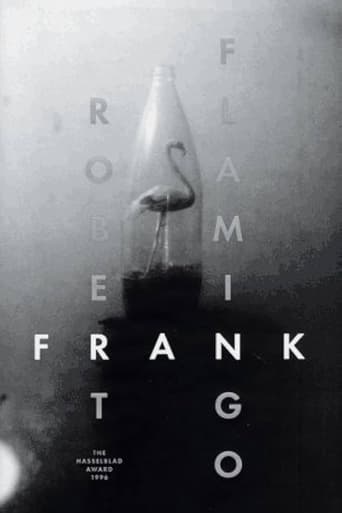 NR
NRIs this house getting built or demolished? Robert Frank’s poetic visual report packed with disorienting close-ups leaves it up to the viewer to decide. [Overview Courtesy of Mubi]
Flamingo
1996
Billboards and American flags and pinball machines, empty corridors and bustling classrooms, the clowning faces of the students at Reed College—Robert Frank shot and edited this quickfire succession of images during a visit to the Portland, Oregon, campus in 1971. – Museum of Modern Art
Untitled 1971
—
 NR
NRIn a simple, sensitive and entertaining video film, Robert Frank accompanies his local newspaper delivery boy during his morning round one chilly winter day in Nova Scotia.
Paper Route
2002
In the early 1970s Robert Frank and the Austrian filmmaker Peter Kubelka led a workshop at the Nova Scotia College of Art and Design, where students were treated to a lesson in creative spontaneity and nonconformism. — Museum of Modern Art
This Is a Film About
1972
 8.0
8.0Liferaft Earth opens with a newspaper report from Hayward, California: "Sandwiched between a restaurant and supermarket, 100 anti-population protesters spent their second starving day in a plastic enclosure...The so-called Hunger Show, a week-long starve-in aimed at dramatizing man's future in an overpopulated, underfed world…." This film was made for Stewart Brand, the visionary founder of the international ecological movement and publisher of the bestselling Whole Earth Catalog (1968-85).
Life-Raft Earth
1969
Robert Frank cared deeply about his friends and family, dedicating many of his photographs and films to them. This, the last video he completed in his lifetime, is a memento mori of his Swiss artist friend Fernando Garzoni: a watercolor, a glass of champagne, a handful of snapshots, a visit to a Jacques-Henri Lartigue show, a walk in the woods, a shy smile. — Museum of Modern Art
Fernando
2008
Shot in Alfred Leslie’s Bowery loft on Fourth Avenue and 12th Street, this silent production footage belies the long-held belief that Pull My Daisy was purely improvised, offering a tender glimpse of Leslie clowning with Frank’s artist wife Mary Frank and young son Pablo. — Museum of Modern Art
Pull My Daisy Production Footage
1959
Fragments originated as a film installation that was projected onto a hanging screen as part of the 2000 exhibition Hold Still, Keep Going at the Folkwang Museum in Essen, Germany. Robert Frank created a puzzling juxtaposition of images taken in Cairo on January 11, 1993, of Egyptian snake charmers and their cobras, with those of a squeegee man weaving through car traffic on the Bowery in New York on April 8, 1971. — Museum of Modern Art
Fragments
2000
 10.0
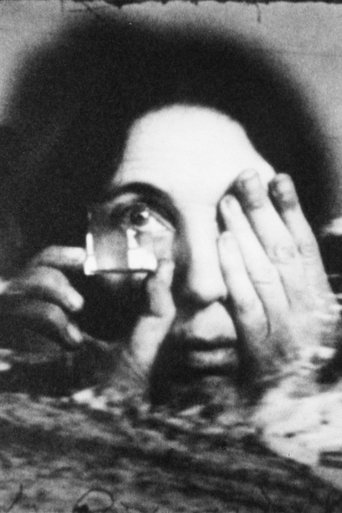
10.0Life Dances On is Robert Frank’s most personal and emotional work because it deals directly with his family and close friends. The film is dedicated to his daughter Andrea and to his friend and collaborator Danny Seymour, both deceased. Life Dances On is composed of delicately balanced, intuitive moments that merge Frank’s own sense of loss for two people close to him with several filmed portraits of those who share his life, including his family and people on the street in New York City.
Life Dances On...
1980