

Directing
Robbe De Hert
Born — Died
1942-09-20 — 2020-08-24
Place of birth
Farnborough, Hampshire, England, UK
Known for
Directing
Credits
56 titles
Robin François De Hert (20 September 1942 – 24 August 2020) was a Belgian film director.
Known for
 7.7
Do we still sing the praises of folly like Erasmus, or is it trendy again to be smart? And if so, who is the smartest? Who can talk about the medals won at the Olympic Games in London, but at the same time knows who Captain Haddock is? Who knows whether Lacan was a hair growth product or a psychoanalyst and can also program their own digital television? Who has déjà vu when leafing through the Encyclopedia Britannica and when reading the interviews with the new Miss Waregem Koerse? Who, oh who, is the smartest person in Flanders, Belgium, Europe, and by extension, the world? That is determined by a fierce battle between three fellow human beings. Every day, someone is eliminated, someone who may not be the smartest, but who is perhaps cherished in their family circle because of their many other talents. The others advance and are joined by a new challenger every day.
De Slimste Mens ter Wereld
2003
 NR
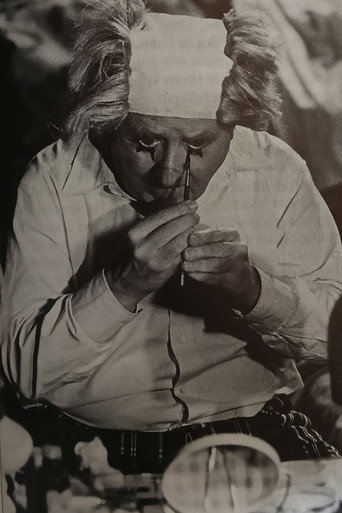
Filippi is a circus clown who lives a double existence: on stage he is successful and beloved, but privately he is consumed by jealousy and emotional fragility. He is in love with Arlette, a trapeze artist, but she prefers his rival Mario. When Filippi attempts to eliminate Mario, the situation spirals into tragedy, leading to Arlette’s death. Unable to cope with guilt, Filippi becomes trapped in a downward spiral of remorse, illusion, and emotional collapse. The story is largely told through flashbacks within the circus environment, blurring reality and memory.
Adieu Filippi
1968
 9.0
In this sequel to Blueberry Hill, the boys of the Catholic metal working-class, who are now all working, decide to take revenge on the hated former principal Verbiest, after the sanctimonious 'pillar of society' assaulted one of their girls.
Brylcream Boulevard
1995
 10.0
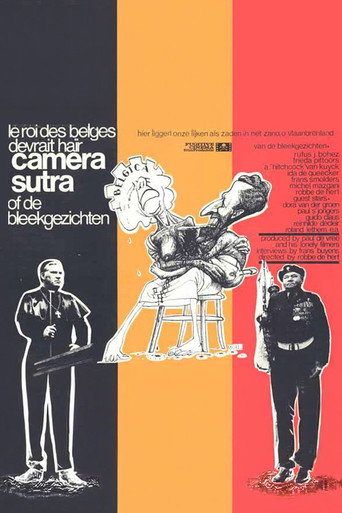
The Herts Camera Sutra or The Palefaces (1973) is a militant and visually fragmented critique of Belgian bourgeois society, blending documentary collage with semi-autobiographical fiction. De Hert attacks the distractions of nationalism, religion, and popular culture while exposing capitalism, social injustice, and postcolonial exploitation. The film’s second half shifts to a disillusioned group of rebellious youths, revealing the uncertainty and emotional paralysis behind revolutionary ideals. Both politically fierce and deeply self-questioning, the film captures the tension between radical ambition and powerlessness.
Camera Sutra (or the Pale Faces)
1973
 5.6
In the freezing winter of 1944, the devastating Battle of the Bulge rages across Belgium. Amid the chaos, an American soldier separated from his unit crosses paths with Richard, a cynical young Belgian boy, and Willy, a wounded German soldier they take as a prisoner.Stranded in a desolate, snowy landscape where survival overrides military allegiance, the three mismatched individuals form a fragile, surreal bond. As they trudge through the war-torn countryside, their basic survival instincts push political ideologies aside.
The Enemies
1968
 4.5
Springen (Jumping) is an absurdist comedy set inside 'Sempa Vivax', an exclusive and highly unusual retirement home housed in a castle.The facility caters specifically to wealthy elderly residents, offering them the unique opportunity to fully realize their wildest, final fantasies and unfulfilled dreams. Under the guidance of the home's eccentric staff, the residents engage in bizarre and extravagant activities, which range from reenacting passionate past romances to staging a simulated atomic war for entertainment.The narrative unfolds through the various subplots of these residents as they navigate their surreal daily lives, attempting to escape the realities of old age and mortality through illusion and play. The story explores the chaotic dynamics between the elderly elite, their families, and the staff members who facilitate their increasingly elaborate delusions.
Springen
1986
Film credits

1990s · 2 titles
 6.4
Placide's dad tells him on his deathbed he'll haunt Placide if he doesn't find a wife soon. Placide cautiously agrees, but he only wants to settle for a very beautiful woman. That might be easier said than done, since he is a vagabond. When he accidentally enters a photo shoot, Placide meets Sarah. He falls in love, but she is way out of his reach.
Koko Flanel
1990
 7.0
A documentary celebrating 25 years of flemish subsidised cinema.
Janssen & Janssens draaien een film
1990
1980s · 4 titles
4.5Springen (Jumping) is an absurdist comedy set inside 'Sempa Vivax', an exclusive and highly unusual retirement home housed in a castle.The facility caters specifically to wealthy elderly residents, offering them the unique opportunity to fully realize their wildest, final fantasies and unfulfilled dreams. Under the guidance of the home's eccentric staff, the residents engage in bizarre and extravagant activities, which range from reenacting passionate past romances to staging a simulated atomic war for entertainment.The narrative unfolds through the various subplots of these residents as they navigate their surreal daily lives, attempting to escape the realities of old age and mortality through illusion and play. The story explores the chaotic dynamics between the elderly elite, their families, and the staff members who facilitate their increasingly elaborate delusions.
Springen
1986
 5.8
Gaston and Leo are active in Antwerp's motorbike brigade. But the two are demoted to simple neighbourhood cops. When they track down a dangerous woman kidnapper and his accomplice, the pair soon find themselves back in favour. Before they can complete their sleuthing, they must escape the attentions of their wives.
Paniekzaaiers
1986
 9.0
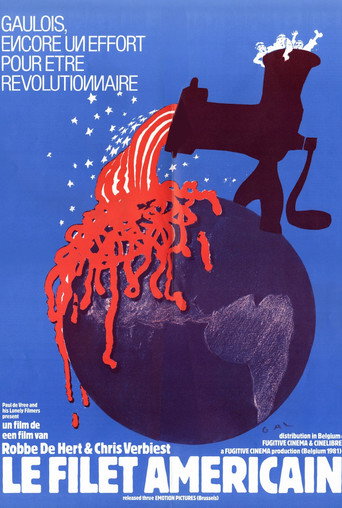
The documentary's legacy lies in its unapologetic fusion of agitprop and satire, a signature style of De Hert’s Fugitive Cinema collective. By juxtaposing Mandel’s economic theories with absurd military parades, the film exposes the contradictions of a society preparing for war while its social fabric decays. De Hert employs rapid montage, pop music, and street-level interviews to strip away the facade of state authority.Decades later, Le Filet Américain remains a vital historical document. It captures a specific era of Belgian polarization, marked by economic crises and the rise of the gendarmerie. The metaphor of the meat grinder endures as a powerful critique of how institutional systems compromise individual dignity for corporate profit.
Le Filet Américain
1981
 6.2
Hugues cannot get over the untimely death of his wife Blanche, who made him happy for ten years. He lives alone in his house in Bruges, a city he would like to be dead like his wife. The sorrowful widower has transformed the place he lives in into a shrine dedicated to his beloved wife. One day, he meets Jeanne, a ballet dancer, who looks like Blanche.
Silent Bruges
1981
1970s · 5 titles
10.0The Herts Camera Sutra or The Palefaces (1973) is a militant and visually fragmented critique of Belgian bourgeois society, blending documentary collage with semi-autobiographical fiction. De Hert attacks the distractions of nationalism, religion, and popular culture while exposing capitalism, social injustice, and postcolonial exploitation. The film’s second half shifts to a disillusioned group of rebellious youths, revealing the uncertainty and emotional paralysis behind revolutionary ideals. Both politically fierce and deeply self-questioning, the film captures the tension between radical ambition and powerlessness.
Camera Sutra (or the Pale Faces)
1973
 5.3
In this film version of the Dutch-language classic ('heimat'-)novel by Flemish author Felix Timmermans, the title character is a city-boy from Lier who after recovering from a life-threatening disease changes his life completely and his name to the self-invented Pallieter. He moves in with Charlote, a naive, caring relative in the country, where he starts frolicking, no longer caring for image, career or possessions, but concentrates on enjoying life -such as a draftee relative's Brueghelian wedding- and finds love with Marieke. A dark story-line however is when projected work on the river in the name of economical progress threatens the rural landscape they have fallen in love with...
Pallieter
1975
This historical costume drama is a mini-series on the life of Flemish first-rate Baroque painter Pieter Pauwel Rubens (1577-1640), whose artistic success throughout Europe not only made him a fortune allowing him to stock his Antwerp residence ('Rubenshuis' in Dutch) and a castle at Elewijt, in the countryside nearer Brussels, with numerous fashionable treasures, but also became an ennobled diplomat for the Spanish Hapsburg rulers of the Southern Low Countries (now Belgium), who often traveled, for painting commissions and/or diplomatic missions, to and worked in Italy, France, Spain, all Catholic powers, as well as protestant England and the United Provinces (mainly Holland), also allowing him to meet other prominent contemporaries such as artists. It further covers his marriages to Isabella Brandt and Hélène Fourment.
Rubens, schilder en diplomaat
1977
 9.0
Recovering all of the intertitles of the Battleship Potemkin, Jean-Marie Buchet substitutes for the images of the film various views that he himself shot and which are unrelated to the initial work, thus joining the technique of diversion widely recommended and applied by the Situationists.
Potemkine 3
1974
 10.0
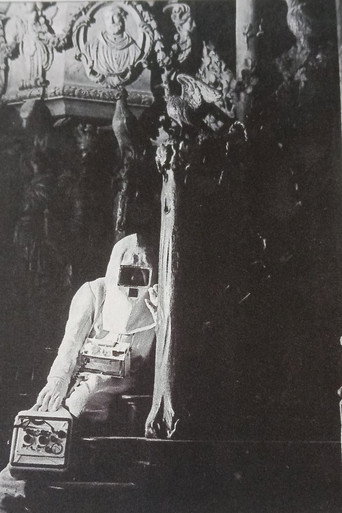
A three independent parts sci-fi drama. In the first, entitled The Bomb, a story of a garage mechanic is told who finds an atomic bomb by accident. The second part, entitled The Last Judgment, deals with the consequences of a military convoy carrying biological weapons going mad. In the third part, entitled Experts Of Evil, there is an accident at a chemical plant when a,pressurized container with dioxin explodes resulting in leakage.
Gejaagd door de winst (of het A.B.C. van de moderne samenleving)
1977
1960s · 4 titles
NRFilippi is a circus clown who lives a double existence: on stage he is successful and beloved, but privately he is consumed by jealousy and emotional fragility. He is in love with Arlette, a trapeze artist, but she prefers his rival Mario. When Filippi attempts to eliminate Mario, the situation spirals into tragedy, leading to Arlette’s death. Unable to cope with guilt, Filippi becomes trapped in a downward spiral of remorse, illusion, and emotional collapse. The story is largely told through flashbacks within the circus environment, blurring reality and memory.
Adieu Filippi
1968
5.6In the freezing winter of 1944, the devastating Battle of the Bulge rages across Belgium. Amid the chaos, an American soldier separated from his unit crosses paths with Richard, a cynical young Belgian boy, and Willy, a wounded German soldier they take as a prisoner.Stranded in a desolate, snowy landscape where survival overrides military allegiance, the three mismatched individuals form a fragile, surreal bond. As they trudge through the war-torn countryside, their basic survival instincts push political ideologies aside.
The Enemies
1968
 7.0
A short war film
19 december
1965
 10.0
Short animation film about the crusade of a Hebrew figure who is looking for somewhere to lay down his cross.
A Funny Thing Happened on My Way to Golgotha
1967
Series credits
Behind the camera
9.0In this sequel to Blueberry Hill, the boys of the Catholic metal working-class, who are now all working, decide to take revenge on the hated former principal Verbiest, after the sanctimonious 'pillar of society' assaulted one of their girls.
Brylcream Boulevard
1995
10.0The Herts Camera Sutra or The Palefaces (1973) is a militant and visually fragmented critique of Belgian bourgeois society, blending documentary collage with semi-autobiographical fiction. De Hert attacks the distractions of nationalism, religion, and popular culture while exposing capitalism, social injustice, and postcolonial exploitation. The film’s second half shifts to a disillusioned group of rebellious youths, revealing the uncertainty and emotional paralysis behind revolutionary ideals. Both politically fierce and deeply self-questioning, the film captures the tension between radical ambition and powerlessness.
Camera Sutra (or the Pale Faces)
1973
 7.0
Overview of the history of cinema in Flanders.
Hollywood on the river Scheldt
2018
9.0The documentary's legacy lies in its unapologetic fusion of agitprop and satire, a signature style of De Hert’s Fugitive Cinema collective. By juxtaposing Mandel’s economic theories with absurd military parades, the film exposes the contradictions of a society preparing for war while its social fabric decays. De Hert employs rapid montage, pop music, and street-level interviews to strip away the facade of state authority.Decades later, Le Filet Américain remains a vital historical document. It captures a specific era of Belgian polarization, marked by economic crises and the rise of the gendarmerie. The metaphor of the meat grinder endures as a powerful critique of how institutional systems compromise individual dignity for corporate profit.
Le Filet Américain
1981
 7.0
Story of two con men, Boorman and his younger assistant Laarmans, who are trying to sell companies their non-existing magazine.
Lijmen/Het been
2000
The wife of a local dictator gets a miscarriage during a failed assault by rebels. The dictators' brother suggesst to present the newly born baby of one a the dead rebels as his posterity.
De geboorte en dood van Dirk Vandersteen jr.
1968
 7.0
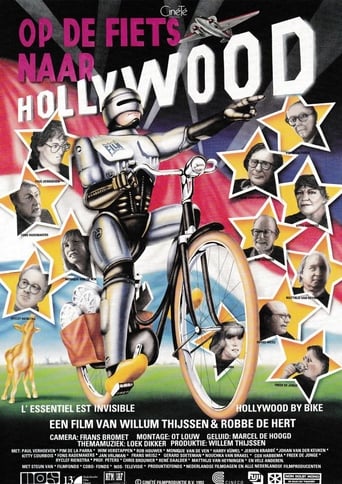
Documentary that looks back at 35 years of Dutch cinema, with Paul Verhoeven and others.
Hollywood by Bike
1993
7.0Documentary that looks back at 35 years of Dutch cinema, with Paul Verhoeven and others.
Hollywood by Bike
1993
 NR
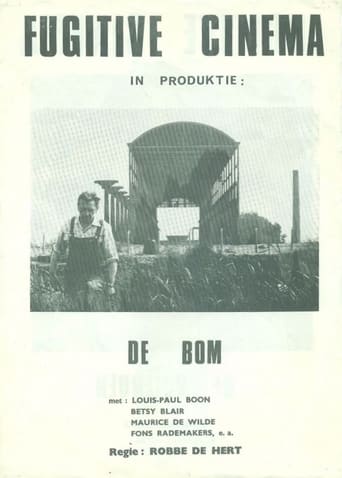
One day a garage owner finds an atomic bomb that has been lost by an airplane. He hides the bomb and shakes the country when he announces that he will not return the bomb until the production of such weapons of destruction is stopped.
De Bom (of het wanhoopskomitee)
1969
 5.0
Old entertainer gets a last chance to play a serious role.
Last Call
1995
 NR
In the harbor of Rotterdam, an action group called "Redpeace" discovers illegal weapon transports. Those are executed by shipping-trade Kusters Shipping Company. The discovery is annoying for Ann Kusters, the wife of Erik Kusters. She functions as a translator with the European parliament. It gets even worse when Ann is discovered and photographed while she's having an intimate rendez-vous with a french politician, whose investigating the illegal weapon transports. Short after, the man is found dead...
Trouble in Paradise
1989
NRIn the harbor of Rotterdam, an action group called "Redpeace" discovers illegal weapon transports. Those are executed by shipping-trade Kusters Shipping Company. The discovery is annoying for Ann Kusters, the wife of Erik Kusters. She functions as a translator with the European parliament. It gets even worse when Ann is discovered and photographed while she's having an intimate rendez-vous with a french politician, whose investigating the illegal weapon transports. Short after, the man is found dead...
Trouble in Paradise
1989
 5.1
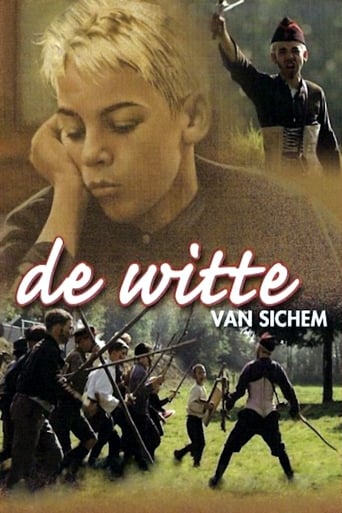
The second movie version, now in color, of Flemish (heimat-)author Ernest Claes' classical novel, titled after the nickname (Dutch 'the White', referring to a blond male) of the main character. The smart but naughty farmhands son's eternal mischief, pranks and disobedience drive his elders (especially teachers, family and father's grumpy employer, a rich farmer, but also neighbors and even the kind curate whose liturgical server he is) and classmates to despair in a time when a boy's punishment was still inevitable, swift and often severe; thus when his mother catches him skinny dipping she takes all his clothes home, forcing him to a long walk of shame, dreading dad's wrath all the way. This version also stresses the story's social and Flamingant aspects.
Whitey
1980
5.1The second movie version, now in color, of Flemish (heimat-)author Ernest Claes' classical novel, titled after the nickname (Dutch 'the White', referring to a blond male) of the main character. The smart but naughty farmhands son's eternal mischief, pranks and disobedience drive his elders (especially teachers, family and father's grumpy employer, a rich farmer, but also neighbors and even the kind curate whose liturgical server he is) and classmates to despair in a time when a boy's punishment was still inevitable, swift and often severe; thus when his mother catches him skinny dipping she takes all his clothes home, forcing him to a long walk of shame, dreading dad's wrath all the way. This version also stresses the story's social and Flamingant aspects.
Whitey
1980
 5.7
Gaston grew up on the fringes of society and interacts with other people as little as possible. Leo, on the other hand, is a very bourgeois person. He lives way above his station, but has a heart of gold. Using forged cheques and unsecured credit cards, he tries to keep up appearances. By a coincidence, Gaston's fate is linked to Leo's.
Zware jongens
1984
5.7Gaston grew up on the fringes of society and interacts with other people as little as possible. Leo, on the other hand, is a very bourgeois person. He lives way above his station, but has a heart of gold. Using forged cheques and unsecured credit cards, he tries to keep up appearances. By a coincidence, Gaston's fate is linked to Leo's.
Zware jongens
1984
 7.0
Antwerp. Someone is making a feature film. After shooting the scenes on location, the filmmaker wanders to the railway station. He's having difficulties with his material, it's a commissioned film. The story is giving him trouble too. But he cannot abandon the project. He now wants to introduce a male character so that he can explain his problems.
The Life We Dreamt Of
1982
7.0Antwerp. Someone is making a feature film. After shooting the scenes on location, the filmmaker wanders to the railway station. He's having difficulties with his material, it's a commissioned film. The story is giving him trouble too. But he cannot abandon the project. He now wants to introduce a male character so that he can explain his problems.
The Life We Dreamt Of
1982
10.0A three independent parts sci-fi drama. In the first, entitled The Bomb, a story of a garage mechanic is told who finds an atomic bomb by accident. The second part, entitled The Last Judgment, deals with the consequences of a military convoy carrying biological weapons going mad. In the third part, entitled Experts Of Evil, there is an accident at a chemical plant when a,pressurized container with dioxin explodes resulting in leakage.
Gejaagd door de winst (of het A.B.C. van de moderne samenleving)
1977
 NR
No synopsis available yet.
De Dokstaking (Dokstaking '73)
1975
 9.0
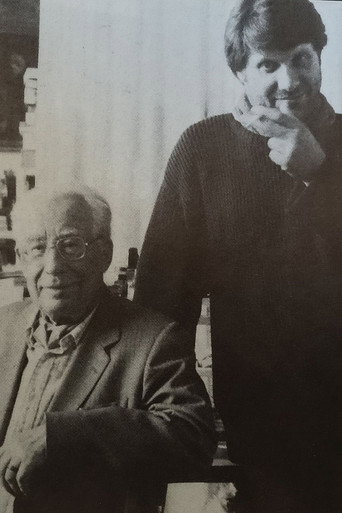
Robbe de Hert’s Henri Storck, ooggetuige (1986) is a brilliant cinematic homage to the founding father of Belgian documentary cinema. Filmed around Storck’s 80th birthday, the film eschews standard biographical formulas. Instead, De Hert crafts an intelligent, vibrant collage that synthesizes rare archival footage with intimate anecdotes told by Storck himself.The documentary excels at tracing Storck’s evolution from an Ostend avant-garde poet to a fierce social activist. De Hert’s signature rebellious tone shines through in bold creative choices, such as overlaying John Lennon's "Working Class Hero" onto the silent, gritty footage of Misère au Borinage (1933). This creates a powerful bridge between 1930s labor struggles and modern social critique
Henri Storck, ooggetuige
1986
9.0Robbe de Hert’s Henri Storck, ooggetuige (1986) is a brilliant cinematic homage to the founding father of Belgian documentary cinema. Filmed around Storck’s 80th birthday, the film eschews standard biographical formulas. Instead, De Hert crafts an intelligent, vibrant collage that synthesizes rare archival footage with intimate anecdotes told by Storck himself.The documentary excels at tracing Storck’s evolution from an Ostend avant-garde poet to a fierce social activist. De Hert’s signature rebellious tone shines through in bold creative choices, such as overlaying John Lennon's "Working Class Hero" onto the silent, gritty footage of Misère au Borinage (1933). This creates a powerful bridge between 1930s labor struggles and modern social critique
Henri Storck, ooggetuige
1986
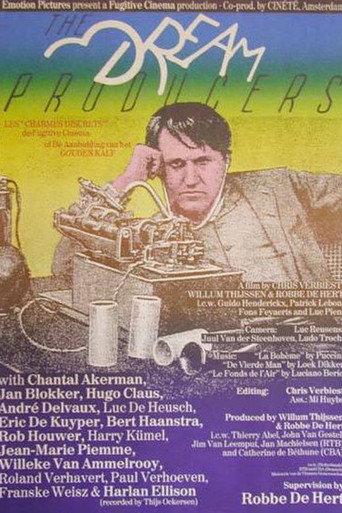 10.0
Documentary exploring why Belgian television doesn't invest more money in Belgian cinema as is the case in e.g. the netherlands.
De droomproducenten
1984
 8.0
Cinema Verité about Fons Noyens who cannot pay for the damages caused by an accident as his ensurance company had become bankrupt. We get to see the public auctioning of his household effects.
S.O.S. Fonske
1968
 9.0
Six young filmmakers were each given the chance to shoot a short on a common theme. Combined, their efforts result in a feature. The idea is to tell an alternative history of Antwerp, based on tall stories, rumors and events.
Elixir d'Anvers
1996
7.0A documentary celebrating 25 years of flemish subsidised cinema.
Janssen & Janssens draaien een film
1990
7.0A documentary celebrating 25 years of flemish subsidised cinema.
Janssen & Janssens draaien een film
1990
7.0A documentary celebrating 25 years of flemish subsidised cinema.
Janssen & Janssens draaien een film
1990
 6.6
Antwerp in the fifties. Robin de Hert grew up in a Catholic parochial environment; on the one hand there is his authoritarian father and the sadistic secretary of the Catholic boys technical school, on the other hand there are the 'Grieten' and the French teacher with whom Robin is getting a good band through a secret they share. If the secretary finds out about this secret, this has major implications for both the teacher and the students ...
Blueberry Hill
1989
6.6Antwerp in the fifties. Robin de Hert grew up in a Catholic parochial environment; on the one hand there is his authoritarian father and the sadistic secretary of the Catholic boys technical school, on the other hand there are the 'Grieten' and the French teacher with whom Robin is getting a good band through a secret they share. If the secretary finds out about this secret, this has major implications for both the teacher and the students ...
Blueberry Hill
1989
 7.0
Passers-by are filmed against the background of Antwerp's Central Station. A boy bumps into a girl in the crowd. Eye contact occurs.
Twee Keer Twee Ogen
1963
A documentary about cycling and the death of cycling world champion Jean-Pierre Monseré in 1971.
Dood van een sandwichman
1971
10.0Short animation film about the crusade of a Hebrew figure who is looking for somewhere to lay down his cross.
A Funny Thing Happened on My Way to Golgotha
1967
10.0Short animation film about the crusade of a Hebrew figure who is looking for somewhere to lay down his cross.
A Funny Thing Happened on My Way to Golgotha
1967
Gaston Vandermeerssche is a young, resourceful Flemish action hero of the Belgian resistance during World War II: he coaches surviving allied pilots trough occupied Belgium and France to Spain so they can regain England, each time a dangerous adventure as their poor mastery of local languages and customs add to the ever-present risks of trying to outsmart the Nazi troops and Gestapo agents. After a mess-up in the coordination from London he himself gets caught by the dreaded secret police for ruthless interrogation...
Gaston's War
1997