
Acting
Saburo Ukita
Known for
Acting
Credits
9 titles
Known for
 8.0
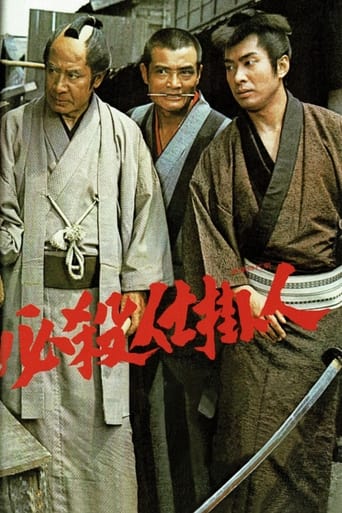
8.0A shikakenin was an under-the-cover trade that undertook killing in Edo. Hanemon of Otowa, an agency that introduced laborers and maids, was also one of these. Katsugoro Iseya was a timber dealer who had come in as a client. His target was the constructions magistrate Hanno, and the Tatsumiya who sipped on the benefits. Hanemon who had a stong code towards killing, where he would only kill those who do no good to be in the world, accepts this request. Baian Fujieda, a needle doctor would carry out the killing. However, the professional killer Baian fails to bring down Tatsumiya. Hanemon then looks to another shikakenin, the ronin Sanai Nishimura for the role. Although Sanai's ability with the sword is good, he lives poorly in a tenement, and accepts this commission on the condition that it is kept a secret from his wife and child. Here, they close in on Hanno and Tatsumiya again...
Professional Killers
1972
 7.0
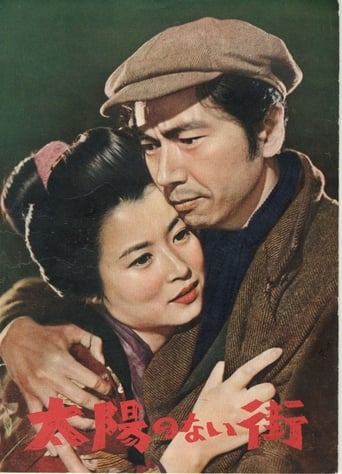
7.0Based on the novel by proletarian writer Sunao Tokunaga. The story is about a long strike by workers at a large printing house and the strikers' steadfastness, which neither hunger nor violence could break. The heroine of this story actively participates in her colleagues' struggle against layoffs, oppression, and police brutality.
The Street Without Sun
1954
 7.0
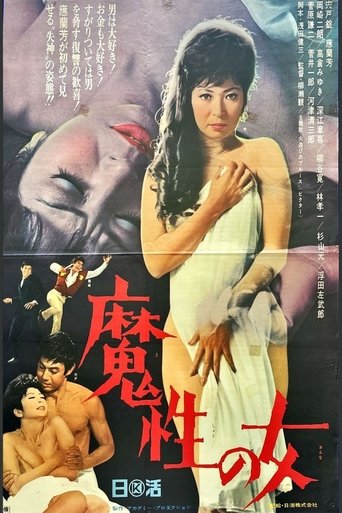
7.0No synopsis available yet.
魔性の女
1968
 7.0
7.0Zatoichi, the famed blind swordsman, returns to his home village for the first time in many years. He is befriended by Omiyo, who had the same wet-nurse as Zatoichi. He also encounters a boyhood friend, Shinbei, who is now wealthy and appears not to remember Zatoichi. Shinbei seems to be interested in repaying the villagers' debts, but is, in reality, manipulating the ownership of a now valuable rock quarry. Zatoichi learns of the subterfuge and confronts his old friend, who has a score of yakuza swordsmen backing his play.
Zatoichi's Conspiracy
1973
 7.0
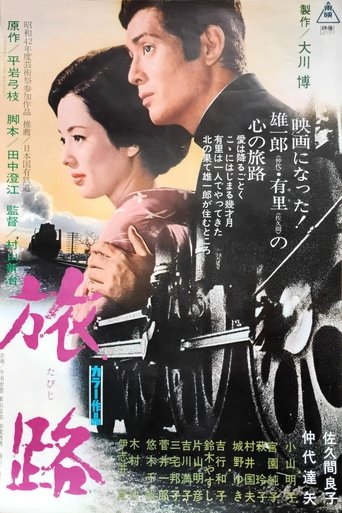
7.0After the death of his parents, railway worker Yuichiro Murofushi returns to his hometown and agrees to an arranged marriage at the insistence of his uncle and aunt. However, the arrangement soon falls through due to various circumstances.
The Journey
1967
Enoken's anachronistic take on the beloved (and already very funny) Edo-period novel "Shank's Mare," aka Tōkaidōchū Hizakurige, in which Yaji and Kita, two plebeian nobodies, have all sorts of strange and colorful encounters on the long road from Edo to Kyoto.
Enoken's Yaji and Kita
1939
Film credits
1960s · 2 titles
1950s · 2 titles
7.0Based on the novel by proletarian writer Sunao Tokunaga. The story is about a long strike by workers at a large printing house and the strikers' steadfastness, which neither hunger nor violence could break. The heroine of this story actively participates in her colleagues' struggle against layoffs, oppression, and police brutality.
The Street Without Sun
1954
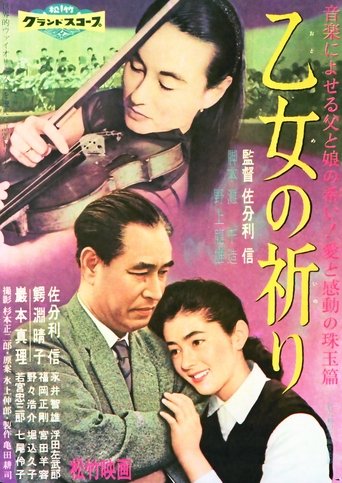 NR
NR1959 Japanese movie
Otome no inori
1959
1930s · 3 titles
Enoken's anachronistic take on the beloved (and already very funny) Edo-period novel "Shank's Mare," aka Tōkaidōchū Hizakurige, in which Yaji and Kita, two plebeian nobodies, have all sorts of strange and colorful encounters on the long road from Edo to Kyoto.
Enoken's Yaji and Kita
1939
The legendary ninja Kurama Tengu (Enoken) uses his superhuman powers to help free a band of street urchins from their Fagin-like master. The film's incredible climax, when Enoken fends off dozens of men attacking with ladders and handcarts, brings to mind a slightly less dextrous Jackie Chan.
Enoken's Kurama Tengu
1939
A typically modern take on the well-known Naniwabushi character (and real life 19th-century gangster) Mori no Ishimatsu, whose proverbial stupidity Enoken takes to farcical extremes.
Enoken's Mori no Ishimatsu
1939