

Acting
Max Gillies
Born
1941-11-16 (84)
Place of birth
Melbourne, Australia
Known for
Acting
Credits
23 titles
From Wikipedia, the free encyclopedia. Max Gillies AM (born 16 November 1941 in Melbourne) is an Australian actor. Gillies was a founding member of the experimental theatre company, the Australian Performing Group, which was active throughout the 1970s. In 1984 and 1985 he hosted the television program The Gillies Report, on the ABC. This was followed in 1986 by Gillies Republic and in 1992 by Gillies and Company. He was famous for being able to dress up and parody mercilessly a wide range of political figures, both in these television series and in two live solo theatrical performances he delivered later – The Big Con, and You're Dreaming. In July 2008 Gillies resurrected his caricature…
Known for
 6.7
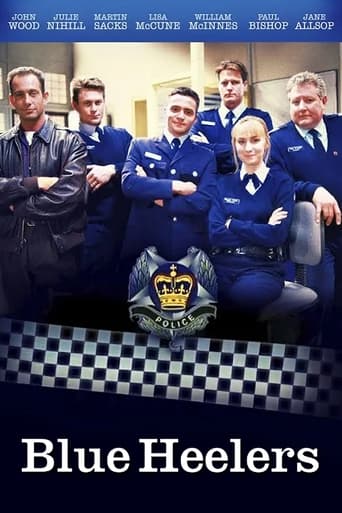
Blue Heelers was one of Australia's longest running weekly television drama series. Blue Heelers is a police drama series set in the fictional country town of Mount Thomas. Under the watchful eye of Tom Croydon (John Wood), the men and women of Mount Thomas Police Station fight crime, resolve disputes and tackle the social issues of the day. We watch their successes and their failures and learn to grow with them and their loved ones as the heart of the series develops.
Blue Heelers
1993
 6.2
Medical drama focusing on the working and personal lives of the doctors and nurses working on the front line of a busy inner city Emergency Department at All Saints Hospital.
All Saints
1998
 6.8
One year after a devastating flood kills five locals in an idyllic country town, a mysterious new plant appears with the power to restore their youth.
Bloom
2019
 6.0
Australian version of Michael Parkinson's UK talk show. He interviews a broad range of famous Australians, and in later series, international stars.
Parkinson In Australia
1979
 5.6
After surviving a car accident, a young man finds himself trapped in the isolated town of Paris, where the local economy depends on deliberately causing crashes and salvaging the wreckage. As he becomes entangled in the town’s routines, tensions between its residents and a rebellious group of youths begin to surface.
The Cars That Ate Paris
1974
 5.4
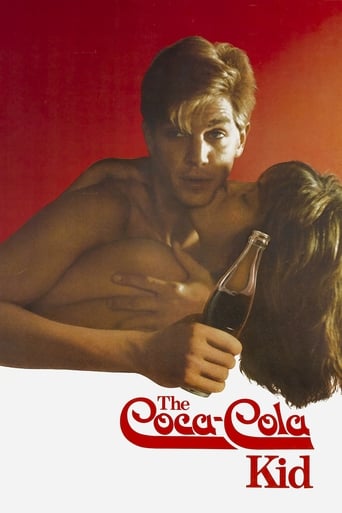
An eccentric marketing guru visits a Coca-Cola subsidiary in Australia to try and increase market penetration. He finds zero penetration in a valley owned by an old man who makes his own soft drinks, and visits the valley to see why. After "the Kid's" persistence is tested he's given a tour of the man's plant, and they begin talking of a joint venture. Things get more complicated when the Coca-Cola man begins falling in love with his temporary secretary, who seems to have connections to the valley.
The Coca-Cola Kid
1985
Film credits
2000s · 3 titles
The life and career of a larrikin comedian who found success on stage, in movies and on the wireless during the '20s, '30s and '40s. The film analyses his importance to the culture of Australian comedy.
Funny by George: The George Wallace Story
2000
 NR
The Sounds of Aus tells the story of the Australian accent: how it came about, how it has evolved over two hundred years of colonial and cultural history, and how it is today.
The Sounds of Aus
2007
 NR
Set entirely inside a lift, which represents the inside of Wil Schindel's head, this comically philosophical journey follow's Wil as he contemplates a promotion he's just been offered.
Wil
2006
1990s · 2 titles
 3.7
This caustic Australian comedy meant to burn those commercial interests who sponsor artists for tax breaks. It is also a sexually unresponsive wife's revenge against her cheating husband. Heiress Georgina Oliphant, the daughter of pharmaceutical magnate George Oliphant is on a mission to find a sculptor suitable of her father's sponsorship. Normally, George doesn't give a hoot about art, but tax time approaches and he needs a big deduction. Since large bronze statues are 100% deductible, that's what he wants. Georgina comes through with the lesbian sculptor Lily Carmichael who suggests a detailed male nude, sans fig leaf. For her model, Lily chooses unemployed hunk Karl-Heinz Applebaum who at first doesn't realize he is to model totally nude. Fortunately, coquettish Georgina is around to convince him to shed those clothes.
Lust and Revenge
1996
 6.3
Uplifting and intimate look at the last days of an elderly cancer victim. The film is even more relevant as it was written specifically for the lead actress, Sheila Florance, who was in fact dying of cancer as she created what is essentially a self-portrait.
A Woman's Tale
1991
1980s · 4 titles
5.4An eccentric marketing guru visits a Coca-Cola subsidiary in Australia to try and increase market penetration. He finds zero penetration in a valley owned by an old man who makes his own soft drinks, and visits the valley to see why. After "the Kid's" persistence is tested he's given a tour of the man's plant, and they begin talking of a joint venture. Things get more complicated when the Coca-Cola man begins falling in love with his temporary secretary, who seems to have connections to the valley.
The Coca-Cola Kid
1985
 NR
A satirical enquiry into the origins of media, their distribution and their effects on the way we behave. Those familiar with cartoonist Bruce Petty’s award winning film Leisure will enjoy the same sharp wit brought to bear on another institution, the media. This three-part film is a satirical enquiry into the origins of media, their distribution and their effects on the way we behave. The first part provides a brief history of print, radio, television and film. The second part proposes that a market-placed media produces the problem of monopolisation leading to mediocrity. Finally, Petty produces a caricature of the way ideas form in the mind from reading print, as distinct from passive looking and listening.
Megalomedia
1981
 6.0
A surfer abandoned in the middle of the Australian Outback encounters an alien who time-travels in a ship that looks like a 1950s greasy spoon restaurant and embroils the hero in a chase that involves him sorting out a time paradox so that he can wind back time to prevent the Japanese winning World War II.
As Time Goes By
1988
 NR
A young boy creates a world of puppet friends using pieces of rubbish found in the street.
Rubbish
1982
1970s · 10 titles
5.6After surviving a car accident, a young man finds himself trapped in the isolated town of Paris, where the local economy depends on deliberately causing crashes and salvaging the wreckage. As he becomes entangled in the town’s routines, tensions between its residents and a rebellious group of youths begin to surface.
The Cars That Ate Paris
1974
 4.7
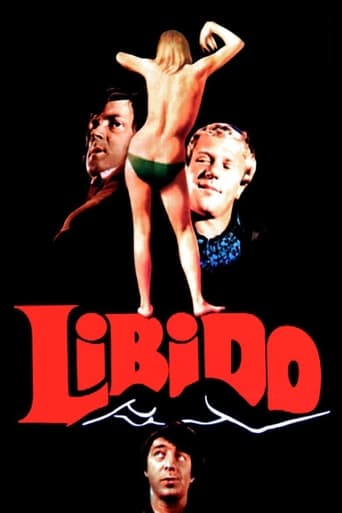
Scripted by four of Australia’s greatest authors (David Williamson, Thomas Keneally, Hal Porter and Craig McGregor), this quartet of carnal desires explores adultery and jealous fantasies, the end of innocence, the moral and spiritual conflicts of a priest and a nun in love. The stories define the exploration of women and the cultural upheaval of the early 70s.
Libido
1973
 5.6
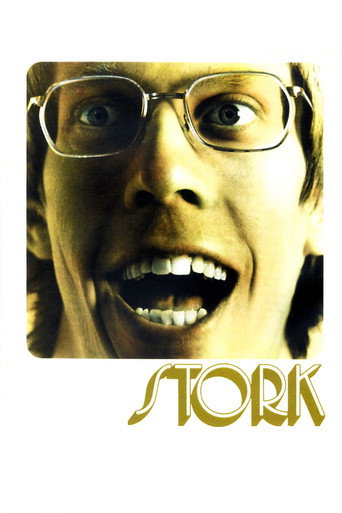
Stork is a gangly young man, a virgin with an overactive imagination who thinks he’s a revolutionary. Bored with a design job at General Motors Holden in Melbourne, he drops out and moves into a share house with his mate Westy. He daydreams his way through life, bungling job interviews, upsetting ‘respectable’ people, and getting drunk. The only girl in the house, Anna resists Stork’s advances, because she’s already involved with the other two resident males, Tony and Clyde. But when she becomes pregnant and Clyde and Anna decide to marry, Stork, Tony, Clyde and Westy are shocked when they realize that either one of the foursome could be the father. Then the fun begins....
Stork
1971
 6.8
Bert Deling's surreal, button-pushing and hallucinogenic paean to the emerging possibilities of avant-garde and homemade filmmaking. Telling the tale of a violent ex-cop searching for the man who killed his partner, the film takes an unexpected turn when he encounters drug lord Plastic Man and a tribe of LSD enthusiasts. What follows is both literal and metaphorical mayhem as the boundaries of the film start collapsing and our idea of what's real is pushed to its very limits.
Dalmas
1973
 4.7
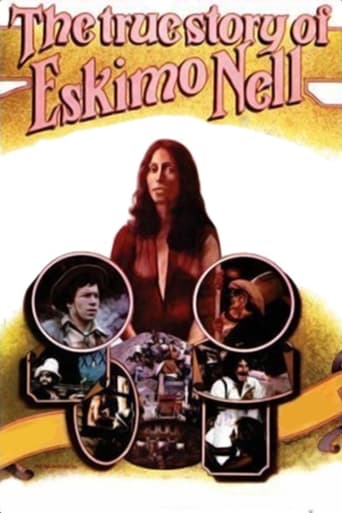
The bawdy saga of the most infamous whomper of all time.
The True Story of Eskimo Nell
1975
 9.0
In 1970, political journalist Richard lives with Penny but is having an affair with actress Dee. The two woman meet and become friends.
The Trespassers
1976
 4.6
Dimboola follows the interaction of various characters at a country wedding reception.
Dimboola
1979
A recording of the Australian Performing Group's performance of their first professional production season of Jack Hibberd's play "Dimboola" staged at the Pram Factory in Carlton, Melbourne, Victoria, Australia.
Dimboola: The Stage Play
1973
 5.2
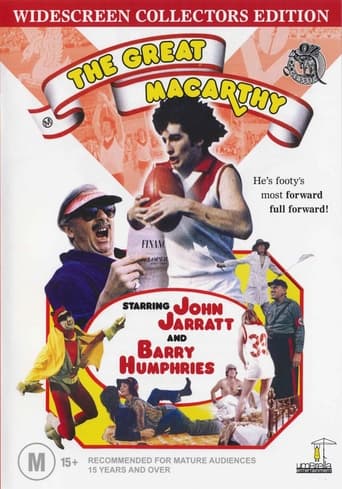
Macarthy is a country town football champ who is kidnapped in a neon lit helicopter by tyrant Colonel Ball-Miller, the tycoon president of the South Melbourne football club.
The Great MacArthy
1975
 3.3
Businessman Gerald Barker is invited to join a mysterious super corporation known as The Firm. His work in the organisation turns out to be of a unique and somewhat disturbing nature. But Gerald finds no comfort with his wife Melissa and friend Barry - his relationships with both collapse. In a surreal and strange fashion, Gerald eventually comes to understand what The Firm is about. Made on a tiny budget of $15,000 the film is a mix of naturalism and stylisation which the filmmaker hoped would work on 'a simple, surrealistic level'.
The Firm Man
1975
Series credits
6.7Blue Heelers was one of Australia's longest running weekly television drama series. Blue Heelers is a police drama series set in the fictional country town of Mount Thomas. Under the watchful eye of Tom Croydon (John Wood), the men and women of Mount Thomas Police Station fight crime, resolve disputes and tackle the social issues of the day. We watch their successes and their failures and learn to grow with them and their loved ones as the heart of the series develops.
Blue Heelers
1993
6.2Medical drama focusing on the working and personal lives of the doctors and nurses working on the front line of a busy inner city Emergency Department at All Saints Hospital.
All Saints
1998
6.8One year after a devastating flood kills five locals in an idyllic country town, a mysterious new plant appears with the power to restore their youth.
Bloom
2019
6.0Australian version of Michael Parkinson's UK talk show. He interviews a broad range of famous Australians, and in later series, international stars.
Parkinson In Australia
1979