

Directing
Michael New
Born — Died
1939-10-01 — 2019-06-18
Place of birth
Port of Spain, Trinidad, Trinidad and Tobago
Known for
Directing
Credits
7 titles
Michael New was born in October 1939 in Trinidad He made his first film works in France and the United Kingdom. In 1972, he took residence in Venezuela, where he began to work with the ULA Film Centre. He has made many narratives and documentary short films. Philmography: Chile 11 de Septiembre, Rosa de los vientos (1978), Cubagua (1986) and Florentino y el Diablo (1995).
Known for
 7.0
Florentino is a young horseman and singer, a free spirit living in the open world without restrictions, in the Venezuelan plains. He confronts the devil in a duel of improvised verses. As time passes, these unspoilt plains start to change. Through Florentino's voice and actions, the plains cannot be conquered. Its culture defies the devil in the eternal fight between good and evil, between life and death.
Florentino y el diablo
2000
 8.5
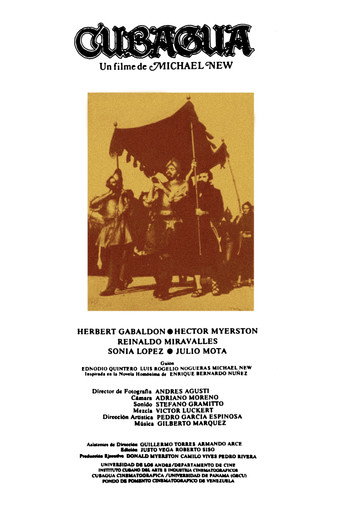
Based on the novel by Venezuelan writer Enrique Bernardo Núñez, the film tells the story of engineer Leiziaga discovering his historical doubles in the context of the colonization of the island of Cubagua in Venezuela. In this way, two stories are intertwined: one that takes place in the 16th century and another in the 20th century. The first story focuses on the life of the Spanish settlers who arrived in Cubagua and the exploitation of the indigenous peoples for pearl extraction; the second story, set in the 1920s, tells of Leiziaga's archaeological expedition, financed by a multinational oil company, in which he visits the island to study the ruins of the Spanish settlement, which leads him to reflect on the passage of time and the destruction caused by human exploitation, and through a game of mirrors, to realize the relationships between the past, present and future.
Cubagua
1987
A film by Michael New.
La rosa de los vientos
1978
This film talks about the overthrow of Salvador Allende in Chile.
Chile 11 de septiembre
1975
Documentary by Michael New.
Orinoco
2008
Behind the camera
7.0Florentino is a young horseman and singer, a free spirit living in the open world without restrictions, in the Venezuelan plains. He confronts the devil in a duel of improvised verses. As time passes, these unspoilt plains start to change. Through Florentino's voice and actions, the plains cannot be conquered. Its culture defies the devil in the eternal fight between good and evil, between life and death.
Florentino y el diablo
2000
8.5Based on the novel by Venezuelan writer Enrique Bernardo Núñez, the film tells the story of engineer Leiziaga discovering his historical doubles in the context of the colonization of the island of Cubagua in Venezuela. In this way, two stories are intertwined: one that takes place in the 16th century and another in the 20th century. The first story focuses on the life of the Spanish settlers who arrived in Cubagua and the exploitation of the indigenous peoples for pearl extraction; the second story, set in the 1920s, tells of Leiziaga's archaeological expedition, financed by a multinational oil company, in which he visits the island to study the ruins of the Spanish settlement, which leads him to reflect on the passage of time and the destruction caused by human exploitation, and through a game of mirrors, to realize the relationships between the past, present and future.
Cubagua
1987
A film by Michael New.
La rosa de los vientos
1978
This film talks about the overthrow of Salvador Allende in Chile.
Chile 11 de septiembre
1975
Documentary by Michael New.
Orinoco
2008