
Writing
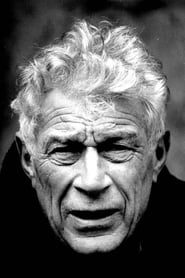
John Berger
Born — Died
1926-11-05 — 2017-01-02
Place of birth
Stoke Newington, London, England
Known for
Writing
Credits
41 titles
John Peter Berger (/ˈbɜːrdʒər/; 5 November 1926 – 2 January 2017) was an English art critic, novelist, painter and poet. His novel G. won the 1972 Booker Prize, and his essay on art criticism Ways of Seeing, written as an accompaniment to the BBC series of the same name, is often used as a university text. He lived in France for over fifty years.
Known for
 8.5
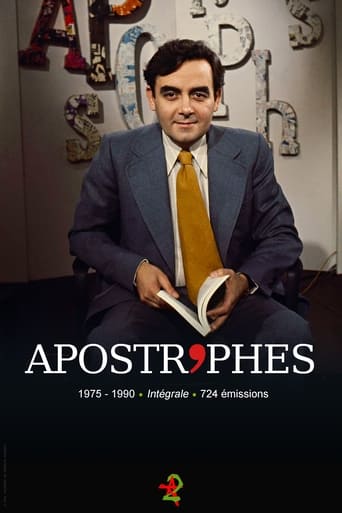
Apostrophes was a live, weekly, literary, prime-time, talk show on French television created and hosted by Bernard Pivot. It ran for fifteen years (724 episodes) from January 10, 1975, to June 22, 1990, and was one of the most watched shows on French television (around 6 million regular viewers). It was broadcast on Friday nights on the channel France 2 (which was called "Antenne 2" from 1975 to 1992). The hourlong show was devoted to books, authors and literature. The format varied between one-on-one interviews with a single author and open discussions between four or five authors.
Apostrophes
1975
A BBC TV cultural review show featuring celebrity interviews.
Saturday Review
1984
 5.5
Film Essay based on “And Our Faces, My Heart, Brief As Photos” by John Berger.
About Time
1985
 6.7
A look at the lives of several men and women in their 30s as they confront the slim gains of the "revolutionary" sixties. Max, a dissatisfied copy editor; Myriam, a redhead into tantric sex; and Marie, a supermarket checker who gives unauthorized discounts to the elderly, search for renewed meaning on a communal farm. The title character, a six-year-old child, is the carrier of their hopes for the future.
Jonah Who Will Be 25 in the Year 2000
1976
 7.0
No synopsis available yet.
Walter, retour en résistance
2009
 6.3
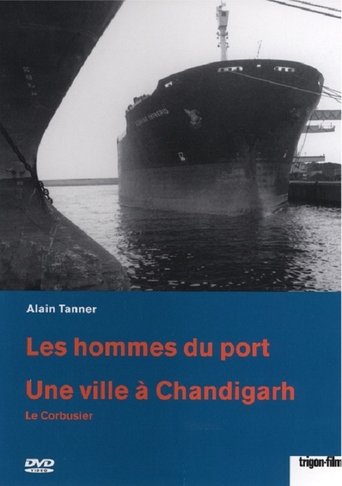
Documentary on the construction of Chandigarh, the new capital of the Indian Punjab region, planned by Albert Mayer and Swiss architect Le Corbusier.
A City at Chandigarh
1966
Film credits
2020s · 2 titles
 NR
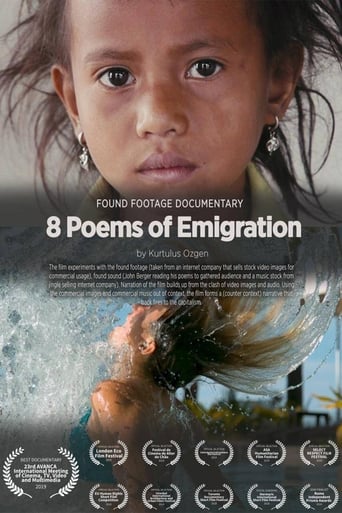
"8 Poems of Emigration" is a found footage film that focuses on the migration crisis. The film, while focusing on the immigration and immigration issue caused by the wild global capitalism, consists of the images and the found footage from the recording of the work named "8 Poetry of Immigration" that John Berger read to the audience in 2007 at the Fine Arts Center in Madrid. The narrative of the movie is revealed by the conflict between image and sound order. With the out-of-context (misuse) use of commercial images and music, the film creates a critical structure that opposes capitalism.
8 Poems of Emigration
2020
No synopsis available yet.
En recuerdo a John Berger
2026
2010s · 6 titles
 5.2
Art, politics and motorcycles - on the occasion of his 90th birthday John Berger or the Art of Looking is an intimate portrait of the writer and art critic whose ground-breaking work on seeing has shaped our understanding of the concept for over five decades. The film explores how paintings become narratives and stories turn into images, and rarely does anybody demonstrate this as poignantly as Berger.
John Berger or The Art of Looking
2016
 5.6
The Ways of Seeing writer is celebrated by Tilda Swinton and her fellow admirers in an unorthodox four-part documentary that visits him at his Alpine home
The Seasons in Quincy: Four Portraits of John Berger
2017
 NR
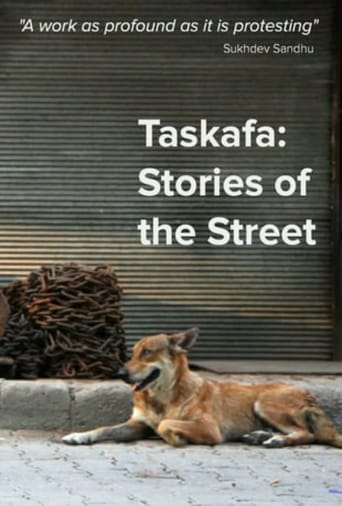
Taşkafa is a real dog and also a legend on the streets of Istanbul. John Berger begins Taşkafa’s story, reading from his novel, King, the story of the disappearance of a community told from a dog’s perspective. The area’s ordinary people – taxi drivers, shopkeepers, street traders – care deeply about the welfare of the city’s street dogs and they tell us stories about Taşkafa and their other canine neighbours. The animals are a symbol of community living, where people (and dogs) look out for each other, but this is a community in transition; one from which dogs are starting to be expelled. Eccentric, amusing and very warm, the film is a powerful indictment of the impact of global politics and the economic appropriation of public space but, even more, it is a tribute to both the spirit of resistance and to city life that can accommodate people and dogs together.
Taşkafa, Stories of the Street
2013
 7.0
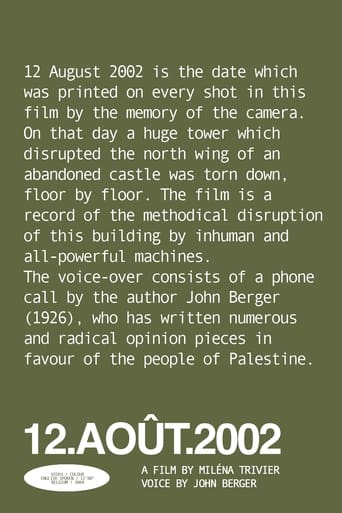
12 August 2002 is the date which was printed on every shot in this film by the memory of the camera. On that day a huge tower which disrupted the north wing of an abandoned castle was torn down, floor by floor. The film is a record of the methodical disruption of this building by inhuman and all-powerful machines. The voice-over consists of a phone call by the author John Berger (1926), who has written numerous and radical opinion pieces in favour of the people of Palestine.
12.Août.2002
2012
 NR
A creative documentary about becoming a parent... and how to reconceive yourself. Fiction director Josh Appignanesi turns the camera on himself and his wife as they undergo the ordeal of becoming parents in the era of man-children and assisted reproduction. Faced with fatherhood, Josh spirals comically into an envious career funk. But life-threatening complications emerge- the couple are tested to the brink, confronting shattering losses. It's a portrait of our generation going through a revolution in reproduction- forced to find new ways to think about ourselves as creative beings. We hear from Slavoj Žižek, John Berger, Darian Leader (20,000 Days) and Zadie Smith. Universal yet still taboo, it's a film for everyone who has children, wants them, or still feels like a child themselves.
The New Man
2016
Short super-8 film capturing the changes taking place in Soho and questioned by John Berger's essay on twelve theses on the economy of the dead.
The Economy of the Dead
2017
2000s · 6 titles
7.0No synopsis available yet.
Walter, retour en résistance
2009
 NR
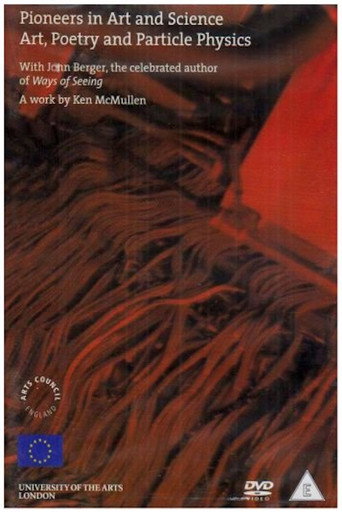
John Berger is one of our most celebrated and respected writers and broadcasters. A former winner of the Booker Prize, he also wrote one of the most influential books on art of our time, Ways of Seeing, which became a landmark documentary series on BBC Television. In Ken McMullen's engaging and accessible film, Art, Poetry and Particle Physics, he travels to the world's biggest particle physics laboratory at CERN in Geneva. The film charts an extraordinary and wide-ranging series of discussions and collaborations between Berger and the leading theoretical and experimental physicists John March Russell and Michael Doser.
Art, Poetry and Particle Physics
2004
 7.5
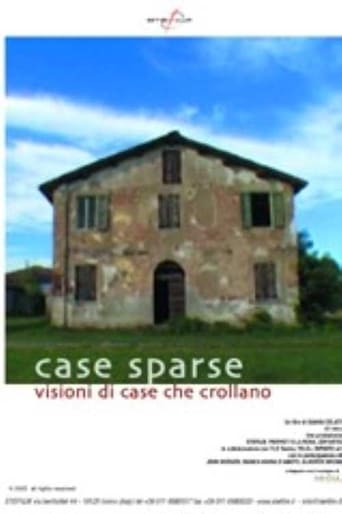
The countryside around the Po delta is dotted with abandoned houses and farmhouses. The landscape appears desertic, almost humanless. Some people shares stories about their bond with the land while the italian writer Gianni Celati documents the tragedy and the loss of values in this new landscape of desolation, with a superb narrative style.
Visioni di case che crollano
2002
An experimental journey to trace the lost ‘Arrows of Time’. Diary footage from the Director’s own observations at The Stanford Linear Accelerator Center are interwoven with poetry and commentary from cultural visionaries of the past such as Joseph Beuys and Jacques Derrida.
Arrows of Time
2007
 7.8
The Spectre of Hope is based on the latest work of photographer Sebastiao Salgado. Salgado spent 6 years traveling to over 40 countries, taking pictures of globalization and its consequences - most notably, the mass migrations of populations around the world. In the film, Salgado presents his remarkable photographs in conversation with John Berger.
The Spectre of Hope
2002
 NR
Address to the inaugural Palestine Festival of Literature
Letter from Gaza
2008
1990s · 2 titles
A BBC documentary in which art critic John Berger speaks about the meaning of human bodies in Rembrandt's painting. Also featuring the photographs of his long-time collabrator Jean Mohr.
The Embrace: An Essay by John Berger
1992
 NR
A few hours spent together give a young woman and an older man a new perspective on life.
Walk Me Home
1993
1980s · 4 titles
5.5Film Essay based on “And Our Faces, My Heart, Brief As Photos” by John Berger.
About Time
1985
 5.4
A group of individuals are stranded at a small island airport when the flight from the mainland is delayed. At that moment, a stranger appears and begins telling the story of a summer romance in Venice.
Play Me Something
1989
 NR
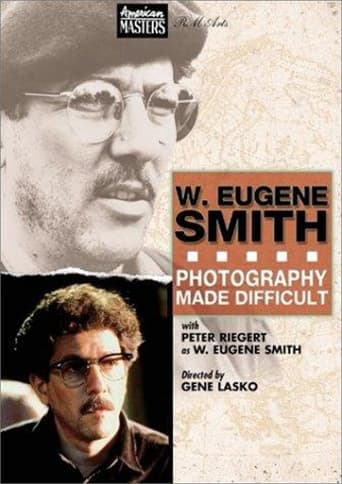
The war in the South Pacific, a country doctor in Colorado, victims of industrial pollution in a Japanese village — all were captured in unforgettable photographs by the legendary W. Eugene Smith. This program showcases over 600 of Smith’s stunning photographs and includes a dramatic recreation in which actor Peter Riegert (Crossing Delancey, Local Hero) portrays the artist using dialogue take from Smith’s diaries and letters. Interwoven through the program are archival footage and interviews with family and friends of this brilliant, complicated man, whose work developed from twin themes of common humanity and social responsibility.
W. Eugene Smith: Photography Made Difficult
1989
 NR
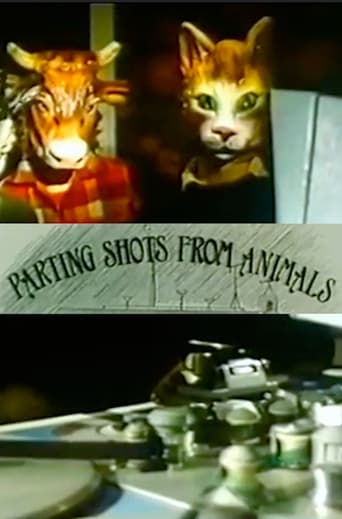
“Parting Shots from Animals” was inspired by essays by John Berger and developed in collaboration with Chris Rawlence. Shot entirely in the UK, it consists of a diverse series of arresting ‘films within a film’, each presented as if made about us from the perspective of the animals whose lives we may appear to celebrate, but continue to exploit and to destroy. While John Berger doesn’t appear in the film and wasn’t directly involved in it’s making, he narrates to great effect the text he co-wrote to accompany the film’s provocative opening sequence.
Parting Shots from Animals
1980
1970s · 3 titles
 NR
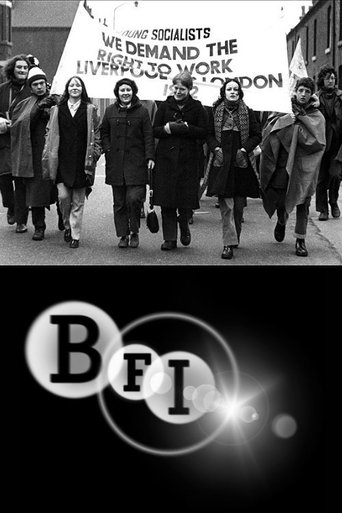
They're young, unemployed and on the march - from Glasgow, Liverpool and Swansea to London.
Right to Work March
1972
 NR
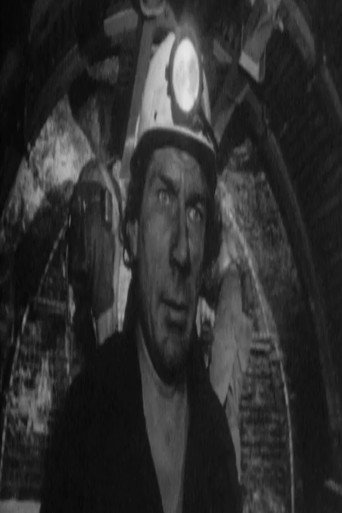
In this programme John Berger talks about Zola's novel 'Germinal' and illustrates his subject with extensive use of film of Creswell and its colliery.
Germinal
1973
 NR
“Pig Earth” marked John Berger’s first return to television after “Ways of Seeing”. The film, boldly using mostly still photographs, is based on John’s book of the same name, which was both a work of fiction as well as a history of French Peasant experience, as told by John ‘the story teller’, as if in the peasant’s own voices. All of which was given brilliant visual expression in the film through a series of beautifully edited sequences, each constructed from vivid and moving photographs of peasants and their lives, in black and white and colour, by John’s friend and long-time collaborator, the Swiss photographer Jean Mohr.
Pig Earth
1979
Series credits
8.5Apostrophes was a live, weekly, literary, prime-time, talk show on French television created and hosted by Bernard Pivot. It ran for fifteen years (724 episodes) from January 10, 1975, to June 22, 1990, and was one of the most watched shows on French television (around 6 million regular viewers). It was broadcast on Friday nights on the channel France 2 (which was called "Antenne 2" from 1975 to 1992). The hourlong show was devoted to books, authors and literature. The format varied between one-on-one interviews with a single author and open discussions between four or five authors.
Apostrophes
1975
A BBC TV cultural review show featuring celebrity interviews.
Saturday Review
1984
Series of four programmes in which writer John Berger and photographer Jean Mohr question the nature and practice of photography. GB. Annalogue, for the BBC. BBC2 tx 07/05/1989 - 28/05/1989
Another Way of Telling: Views on Photography
1989
 7.5
John Berger's Ways of Seeing changed the way people think about painting and art criticism. This watershed work shows, through word and image, how what we see is always influenced by a whole host of assumptions concerning the nature of beauty, truth, civilization, form, taste, class and gender. Exploring the layers of meaning within oil paintings, photographs and graphic art, Berger argues that when we see, we are not just looking - we are reading the language of images.
Ways of Seeing
1972
Behind the camera
5.5Film Essay based on “And Our Faces, My Heart, Brief As Photos” by John Berger.
About Time
1985
6.7A look at the lives of several men and women in their 30s as they confront the slim gains of the "revolutionary" sixties. Max, a dissatisfied copy editor; Myriam, a redhead into tantric sex; and Marie, a supermarket checker who gives unauthorized discounts to the elderly, search for renewed meaning on a communal farm. The title character, a six-year-old child, is the carrier of their hopes for the future.
Jonah Who Will Be 25 in the Year 2000
1976
6.3Documentary on the construction of Chandigarh, the new capital of the Indian Punjab region, planned by Albert Mayer and Swiss architect Le Corbusier.
A City at Chandigarh
1966
5.4A group of individuals are stranded at a small island airport when the flight from the mainland is delayed. At that moment, a stranger appears and begins telling the story of a summer romance in Venice.
Play Me Something
1989
 6.0
Paul is married, a successful engineer, and a conservative candidate in an upcoming local election. He falls in love with Adriana, a café waitress from Italy. Paul's party is very critical of foreign labour and wants to keep Switzerland to the Swiss. Where Paul falls deeper and deeper into the relationship and is ready to leave his wife, Adriana feels the social pressure growing and has to make her own decision.
The Middle of the World
1974
An old cowherd from Haute-Savoie who continues to raise his animals, according to the old methods, falls in love with a young shepherdess.
L'écho
1988
A BBC documentary in which art critic John Berger speaks about the meaning of human bodies in Rembrandt's painting. Also featuring the photographs of his long-time collabrator Jean Mohr.
The Embrace: An Essay by John Berger
1992
 6.7
Pierre and Paul, journalist and writer respectively, team up to write a screenplay based on the real story of a young woman accused by her uncle of trying to kill him. They decide to meet her.
The Salamander
1971
NRA few hours spent together give a young woman and an older man a new perspective on life.
Walk Me Home
1993
7.012 August 2002 is the date which was printed on every shot in this film by the memory of the camera. On that day a huge tower which disrupted the north wing of an abandoned castle was torn down, floor by floor. The film is a record of the methodical disruption of this building by inhuman and all-powerful machines. The voice-over consists of a phone call by the author John Berger (1926), who has written numerous and radical opinion pieces in favour of the people of Palestine.
12.Août.2002
2012
NR“Parting Shots from Animals” was inspired by essays by John Berger and developed in collaboration with Chris Rawlence. Shot entirely in the UK, it consists of a diverse series of arresting ‘films within a film’, each presented as if made about us from the perspective of the animals whose lives we may appear to celebrate, but continue to exploit and to destroy. While John Berger doesn’t appear in the film and wasn’t directly involved in it’s making, he narrates to great effect the text he co-wrote to accompany the film’s provocative opening sequence.
Parting Shots from Animals
1980
NRIn this programme John Berger talks about Zola's novel 'Germinal' and illustrates his subject with extensive use of film of Creswell and its colliery.
Germinal
1973
Short super-8 film capturing the changes taking place in Soho and questioned by John Berger's essay on twelve theses on the economy of the dead.
The Economy of the Dead
2017