
Directing
Jorge Fajardo
Known for
Directing
Credits
6 titles
Known for
 7.5
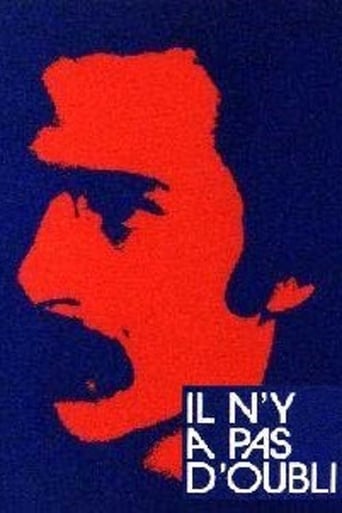
7.5No hay olvido, composed of three parts, each directed by a young Chilean filmmaker forced to flee his country, is about the difficult condition of exiles in a specific political and social context, in this case, Quebec. The first part, entitled J'explique certaines choses, is in Spanish with French subtitles, and shows us more precisely the lifestyle of a group of Chileans. In Slowly, which forms the second part, we are asked, through Lucia, a young Chilean exile, the problem of integration into a new social environment. Finally, Jours de fer (Steel Blues), the third and only part available in English, is a cruel reminder of the harsh condition of the uprooted man who must find work at all costs to ensure his survival.
There is no forgetting
1975
Pablo, Chilean emigrant, ex-professor, seeks work in a Montréal steel mill. Cut off from family, country and profession, he is baffled by a language he doesn't speak and a job he doesn't know. The film reproduces with accuracy and sensitivity his efforts to adjust to a new and bewildering world.
Steel Blues
1976
Lucia has left her native Chile and is now living in Montréal, Canada. Here, she tries to start a new life as an art teacher while also dealing with the painful memories of the coup d'etat that overthew the democratically elected government of Salvador Allende and drove many Chilean into exile.
Lentement
1975
A professor arrives in Montreal to give a lecture about his country. One by one, he justifies the accusations of human rights violations in Chile in a speech that gradually loses its coherence.
Conférence sur le Chili
1980
TV movie, a part of a Canadian series titled "The Legends of the World", telling the legend of the White Lady of Wieliczka reportedly haunting the grounds of the mine.
La Dame Blanche de Wieliczka
1984
Film credits
Behind the camera
7.5No hay olvido, composed of three parts, each directed by a young Chilean filmmaker forced to flee his country, is about the difficult condition of exiles in a specific political and social context, in this case, Quebec. The first part, entitled J'explique certaines choses, is in Spanish with French subtitles, and shows us more precisely the lifestyle of a group of Chileans. In Slowly, which forms the second part, we are asked, through Lucia, a young Chilean exile, the problem of integration into a new social environment. Finally, Jours de fer (Steel Blues), the third and only part available in English, is a cruel reminder of the harsh condition of the uprooted man who must find work at all costs to ensure his survival.
There is no forgetting
1975
Pablo, Chilean emigrant, ex-professor, seeks work in a Montréal steel mill. Cut off from family, country and profession, he is baffled by a language he doesn't speak and a job he doesn't know. The film reproduces with accuracy and sensitivity his efforts to adjust to a new and bewildering world.
Steel Blues
1976
A professor arrives in Montreal to give a lecture about his country. One by one, he justifies the accusations of human rights violations in Chile in a speech that gradually loses its coherence.
Conférence sur le Chili
1980
TV movie, a part of a Canadian series titled "The Legends of the World", telling the legend of the White Lady of Wieliczka reportedly haunting the grounds of the mine.
La Dame Blanche de Wieliczka
1984
TV movie, a part of a Canadian series titled "The Legends of the World", telling the legend of the White Lady of Wieliczka reportedly haunting the grounds of the mine.
La Dame Blanche de Wieliczka
1984