
Acting
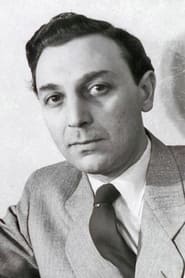
Martin Gregor
Born — Died
1906-11-14 — 1982-06-29
Place of birth
Trnava, Uhry, Austria-Hungary [now Slovakia]
Known for
Acting
Credits
76 titles
Known for
 7.0
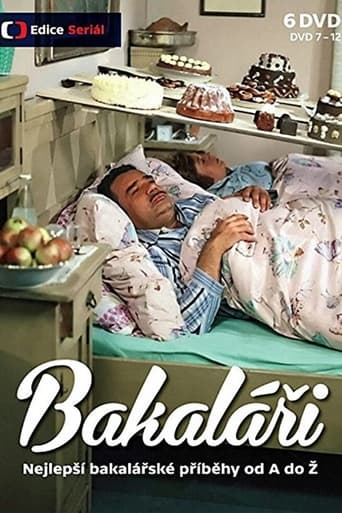
7.0No synopsis available yet.
Bakaláři
1972
No synopsis available yet.
Zaprášené histórie Ema Bohúňa
1970
 7.1
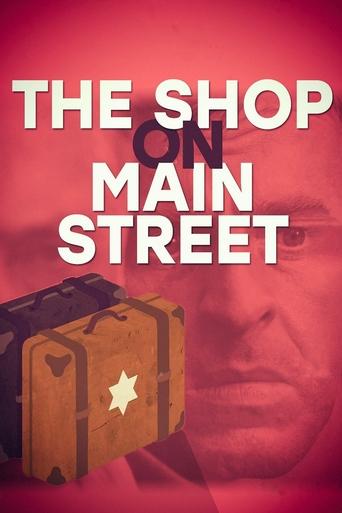
7.1In a small town in Nazi-occupied Slovakia during World War II, decent but timid carpenter Tono is named "Aryan comptroller" of a button store owned by an old Jewish widow, Rozalie. Since the post comes with a salary and standing in the town's corrupt hierarchy, Tono wrestles with greed and guilt as he and Rozalie gradually befriend each other. When the authorities order all Jews in town to be rounded up, Tono faces a moral dilemma unlike any he's known before.
The Shop on Main Street
1965
 7.0
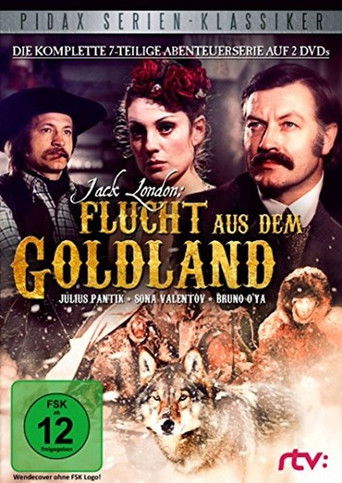
7.0No synopsis available yet.
Útek zo zlatej krajiny
1979
No synopsis available yet.
Americká tragédia
1977
The story of the great strike of the workers building the Cervena Skala - Mergecany railway line
The Struggle Will End Tomorrow
1951
Film credits
1980s · 5 titles
No synopsis available yet.
Jubelove deti
1981
No synopsis available yet.
Jennie Gerhardtová
1980
Slovak remake of the 1957 Sidney Lumet movie, "12 Angry Men".
Dvanásť nahnevaných mužov
1982
No synopsis available yet.
Človek nikdy nevie
1980
No synopsis available yet.
Sobota, nedeľa, pondelok
1980
1970s · 34 titles
No synopsis available yet.
Figliar Sťopka
1974
No synopsis available yet.
Monna Vanna
1973
No synopsis available yet.
Článok na prvú stranku
1978
 10.0
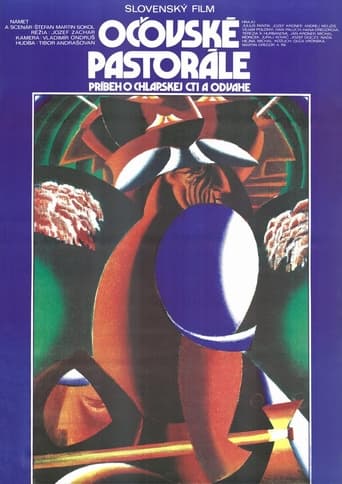
10.0The story of a peasant whose harshness and bluntness only provoke disputes and anger, and his honesty and sense of truth and honor in conjunction with the previous qualities only exacerbate these disputes. The Slovak village with its collective farming, confronted with the habits of a square nature, raised by private farming, creates the main plot and conflict. In parallel, there is a lyrical motif of the young generation, whose love relationships do not care about the old ridiculous anger of the old generation.
Očovské pastorále
1973
No synopsis available yet.
Básnikova cesta do neba
1971
No synopsis available yet.
Iní, ako ty a ja
1978
No synopsis available yet.
Žltá rozprávka
1978
 5.6
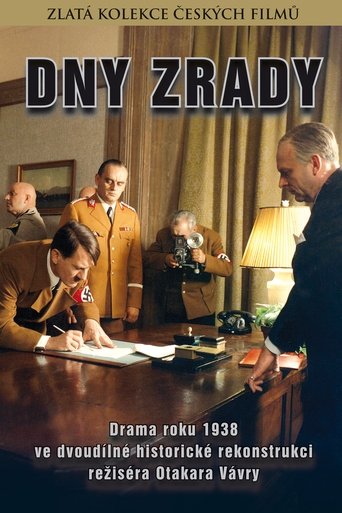
5.6This feature film based on the events of 1938 is a chronicle of the futile efforts of the Czechoslovak president Edvard Benes (Jirí Pleskot), politicians and ordinary citizens, to save the independence and the territorial integrity of the state from the advance of Hitler's Germany. On the 29th of March 1938 the leader of the Sudeten Germans Henlein (Werner Ehrlicher) has a meeting with Hitler (Gunnar Möller). Hitler orders him to intensify pressure on the Czechoslovak government. On the 24th of April in Carlsbad, the Sudetendeutsche Partei (Sudeten German Party) decides upon eight demands that are unacceptable to the Czechoslovak President, since they would ultimately lead to the break-up of the Republic. Benes still shows a certain willingness to negotiate, and Henlein resents this. The Germans are determined to make further negotiations impossible through incidents and violence.
Days of Betrayal
1973
No synopsis available yet.
Humánna povinnosť
1977
No synopsis available yet.
Najvzdialenejšia hviezda na nebi
1976
No synopsis available yet.
Bírbal a sprisahanci
1971
No synopsis available yet.
Čudný človek
1976
A story about how family means a lot even in Italy.
Platiť sa nebude!
1979
 10.0
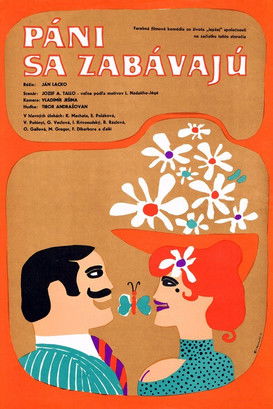
10.0The story of a rural landowner and his struggle with "friends" who try to deprive him of his advantageous position and beautiful wife.
Páni sa zabávajú
1972
No synopsis available yet.
Návšteva
1973
A story set in Tsarist Russia, set in a manor house. The main character is the mute Gerasim, who lives in a touching friendship with his dog Mumu. The dramatic plot is based on the petty intrigues of people from his environment.
Mumu
1973
No synopsis available yet.
Hlas toho tretieho
1977
No synopsis available yet.
Ex libris
1975
No synopsis available yet.
Pred západom slnka
1970
No synopsis available yet.
Škola klebiet
1977
No synopsis available yet.
Inkognito
1978
No synopsis available yet.
Úklady a láska
1971
No synopsis available yet.
Švédska zápalka
1971
No synopsis available yet.
Jubilejné spomienky
1979
A television adaptation of Shakespeare's tragedy about the destructive power of wealth. Timon, a rich and generous Athenian citizen, gives gifts to his friends generously and magnanimously. He helps everyone in need, regardless of their status. However, he is surrounded by false friends who refuse to help him when his coffers are empty and his barrels no longer overflow with wine. The attitude of his friends shakes his faith in the goodness of humanity, and he retreats to a cave on the seashore, where he dies by his own hand, cursing the entire human race. Even the famous warrior Alcibiades knows the ingratitude of Athens. When he speaks on behalf of a soldier sentenced to death for a minor offense, the senators expel him from the city. Alcibiades, a man of action, does not give up, defeats Athens, and conquers it. However, he finds Timon already dead.
Timon Aténsky
1973
 NR
NRTelevision adaptation of the novel by the Italian writer Italo Svevo. His hero is Zeno Cosini, the son of a merchant in Trieste. He is a type of useless person, defeated by life and incapable of action. The ironic insight with which the author draws a picture of the townspeople of Trieste at the turn of the century sounds like an accurate diagnosis of a social class that is doomed with its entire lifestyle and morality.
Zenovo vedomie
1976
No synopsis available yet.
Vzkriesenie Míny
1977
No synopsis available yet.
Takmer dokonalý muž
1975
No synopsis available yet.
Strašidlo
1978
No synopsis available yet.
Zbojníci
1978
No synopsis available yet.
Karol Ketzer
1976
No synopsis available yet.
Prerušujem pojednávanie
1975
No synopsis available yet.
Suttonský duch
1976
A TV adaptation of a novel by Austrian writer Stefan Zweig. The tragic love story of a lame girl and a lieutenant provides a framework for reflection on human compassion. A young officer wants to gain status and is looking for a "good match." He insinuates himself into the home of a local wealthy man, partly because he loves his niece. Under unfortunate circumstances, he discovers that the wealthy man's daughter has been paralyzed from the waist down for some time. She takes the officer's apologies and frequent visits as a sign of affection. She believes him and begins to hope again that she will recover. This is also so that she can be an equal partner to him, like other women. At first, the officer plays along.
Netrpezlivosť srdca
1974
1960s · 17 titles
7.1In a small town in Nazi-occupied Slovakia during World War II, decent but timid carpenter Tono is named "Aryan comptroller" of a button store owned by an old Jewish widow, Rozalie. Since the post comes with a salary and standing in the town's corrupt hierarchy, Tono wrestles with greed and guilt as he and Rozalie gradually befriend each other. When the authorities order all Jews in town to be rounded up, Tono faces a moral dilemma unlike any he's known before.
The Shop on Main Street
1965
 7.8
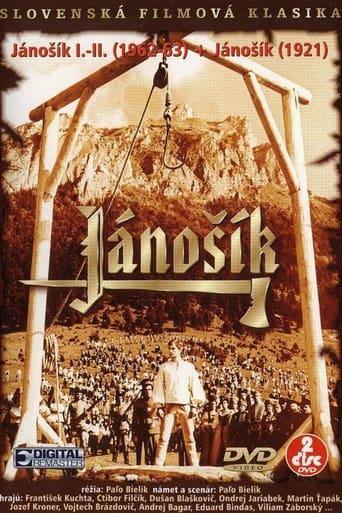
7.8This film is one of the most popular pictures of Slovak cinema and relates the story about the legendary folk hero and brigand Juro Jánošík [1688-1713] and the social situation in Slovakia of the late 17th and early 18th centuries. The first part talks about Jánošík's childhood, studies and return to his native village. In the second part Jánošík leaves for the hills, where he organizes his band of brigands and starts an anti-feudal resistance. The film concludes with Jánošík's execution.
Jánošík
1963
No synopsis available yet.
Zlatá panna
1965
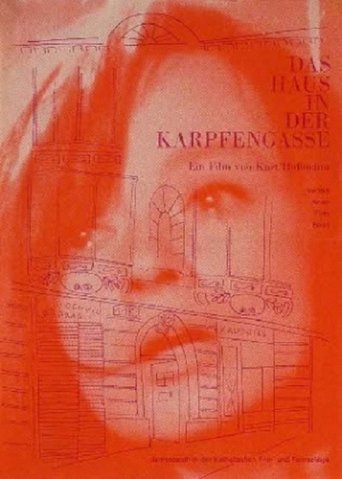 7.5
7.5The film depicts the fate of the residents of an apartment block in Prague’s Jewish quarter following the invasion by German troops in 1939. Among them is an elderly widow who had once disowned her son and now wishes to bring him to Brazil; there are also the owners of a stationery shop, who are driven to ruin by the German occupiers. The caretaker Glaser, who is of German descent, also comes under pressure when his son is arrested in a communist pub. To save his own skin, he informs on two young people who are active in the resistance.
The House in Karp Lane
1965
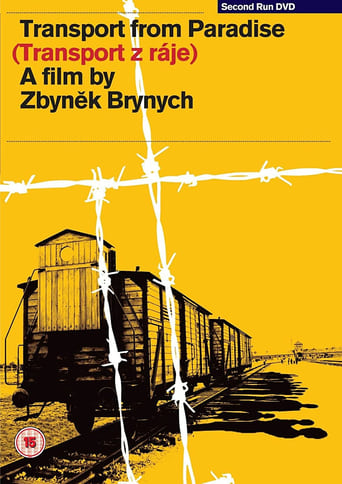 5.3
5.3Czechoslovakian Zbynek Brynych directs this psychological drama set in World War II Terezin ghetto. A dark, visual portrayal of the trials and tribulations the Theresienstadt people faced on a daily basis presented in a series of memorable stories. Their hopes and dreams unfold against the perpetual threat of deportation (or worse) by the Nazis. Based on the novel "Night and Hope" by Arnost Lustig.
Transport from Paradise
1963
No synopsis available yet.
Tisíc podpisov za obžalovaného
1964
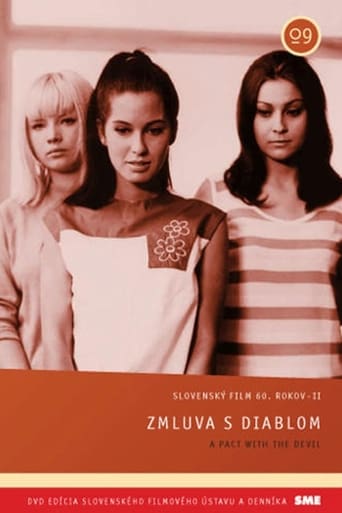 7.2
7.2A comedy about five students who are un-justly suspected of trying to lose their virginity before their graduation. The five girls first try to defend themselves, but when they find out that nobody believes them - neither the school principal nor even their own parents - they decide to accomplish what they have been falsely accused of. And although their clumsy attempts are mostly comic, at one point they almost cause a big tragedy.
A Pact with the Devil
1967
The detective case of Captain Jakubec and his colleague Lieutenant Michalek takes place in a small town where the auditor Burian dies after drinking a health syrup. The doctor concludes that it was a heart attack. However, the exhumation of the corpse confirms the suspicion that Burian was poisoned. The auditor's young wife and her lover are the primary suspects. Other candidates for the role of the perpetrator include the manager of the café Orlovský, who asked Burian to destroy the falsified statements in exchange for a bribe, and the managers of two stores where the shortage was discovered. However, the network of suspects continues to expand...
Murderer from Beyond the Grave
1967
The television film based on the novel of the same name by Ladislav Mňaček draws on the period of World War II and the Slovak National Uprising. The film's story is composed of two intertwining time lines. In the images of the present that frame the entire narrative, the young partisan Voloďa - a hero with autobiographical features - recovers from a serious injury. In feverish reminiscences and in conversations with his nurse Eliška, he recapitulates the eventful events of his time in the partisan group in the village of Ploština, which the partisans abandoned under the pressure of events and left to the mercy of the German commando. Voloďa is haunted by visions of the burning Ploština, remorse and responsibility for the tragedy. In feverish reminiscences, he relives the meetings of the partisan detachment with the German commando. Memories of the mysterious Jewish girl Marta, a partisan liaison with whom Pavol had a passionate love affair, also return to him.
Smrť sa volá Engelchen
1960
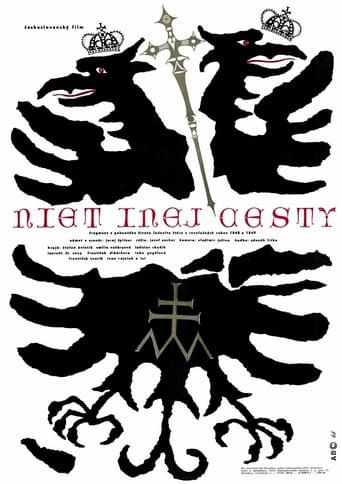 7.0
7.0A biographical film about the Slovak nationalist Ľudovít Štúr. It captures the revolutionary events of 1848 in Austria-Hungary, when Štúr, as a member of the Diet, led the fight for the national rights of the Slovak people.
Niet inej cesty
1968
 5.5
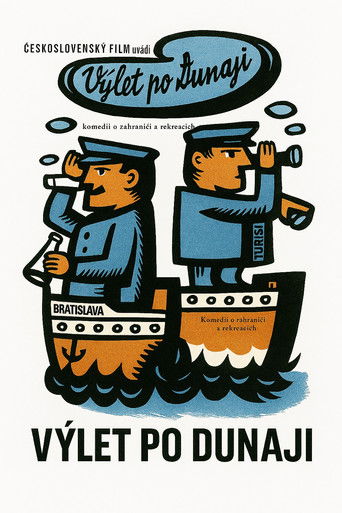
5.5A group of Slovak tourists travels to Budapest on a luxury liner with a trio of eternal fortune-tellers, the former customs officer Hraško, the flirtatious Irena Domastová, who is divorcing her husband, the Petráš family, the old Mr. Garbiarik and the elegant Mr. Belan. Each of them, however, is pursuing other, their own interests on this voyage...
Trip on the Danube
1963
 9.0
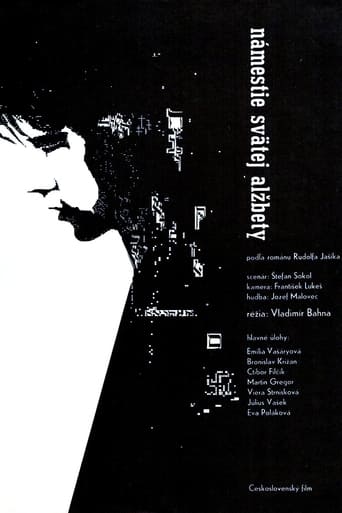
9.0Film adaptation of Rudolf Jašík's novel of the same name. The plot of the film is situated in the forties of our century, in the first years of the Second World War. It captures the political and social atmosphere of one of the Slovak towns that lives seemingly in the lee, far from the world and war. Well, appearances are deceiving. Beneath the surface of peaceful, everyday life, a tragic process is taking place, accelerating people's destinies, the disintegration of their characters, but also the maturing of their relationships. The film is the story of Eva and Igor, their love, violently interrupted by political events. In this era of personal and social tragedies, children become adults almost overnight, honest people become victims, and mentally ill people become murderers. The film about the fates of Eva and Igor, the Jewish cartmen Samko and Maxi, and the careerist Flórik presents a believable, convincing picture of the era marked by the expansion of fascism.
Saint Elizabeth Square
1966
No synopsis available yet.
Polnoc bude o päť minút
1962
The dramatization of the novel depicts a period when the patriarchal way of life in Russia was coming to an end and the aristocratic-landowner world, with its philosophy of life and hierarchy of values, was giving way to new forces. Oblomov is an organic part of the environment in which he lives. He is as closed off as Oblomovka and its inhabitants. He lives his life on the sofa and finds all the hustle and bustle of his contemporaries meaningless. The principle of his existence is peaceful lethargy, an effort to isolate himself from the flow of events and time. His opposite is his friend Stolz, whose philosophy of life presupposes constant movement and entrepreneurial spirit. He believes that man is capable of transforming the world with his energy and intellect. Oblomov's love for Olga, although reciprocated, is doomed to failure because they expect the impossible from each other – she expects decisiveness and action, he expects self-sacrificing love...
Oblomov
1964
No synopsis available yet.
Drotár
1966
No synopsis available yet.
Husári
1966
No synopsis available yet.
Ivanov
1964
1950s · 2 titles
The story of the great strike of the workers building the Cervena Skala - Mergecany railway line
The Struggle Will End Tomorrow
1951
 6.8
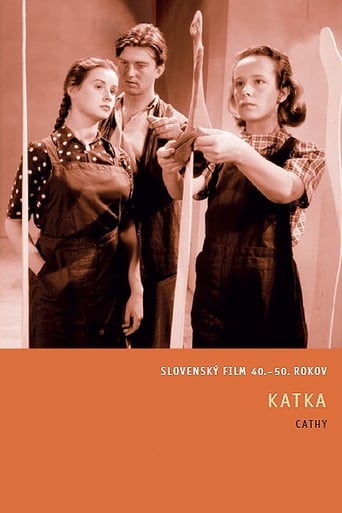
6.8Strong-willed peasant girl Katka disobeys her father and heads to the city to work in a factory, where no one knows quite what to make of her.
Katka
1950
1940s · 2 titles
No synopsis available yet.
Lož má krátke vlny
1949
 6.6
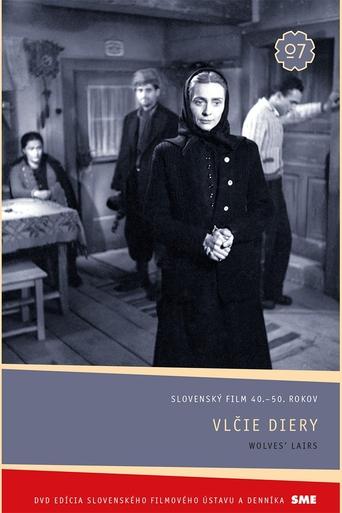
6.6This drama from the times of Slovak National Uprising is situated in a small Slovak village. It is the tragical story of a widow and her four sons who fight alongside the partisans against the German occupants.
Wolves' Lairs
1948
Series credits
7.0No synopsis available yet.
Bakaláři
1972
No synopsis available yet.
Zaprášené histórie Ema Bohúňa
1970
7.0No synopsis available yet.
Útek zo zlatej krajiny
1979
No synopsis available yet.
Americká tragédia
1977
No synopsis available yet.
Sesternica Beta
1978
No synopsis available yet.
Pavol zasahuje
1974
No synopsis available yet.
Ľudia z kanálovej štvrte
1975
No synopsis available yet.
Tridsaťdeväť stupňov v tieni
1976
No synopsis available yet.
Zastretý farebný svet
1980
No synopsis available yet.
Storočnica SND
2020
No synopsis available yet.
Hurá na letný byt
1976
No synopsis available yet.
Mŕtve duše
1971
No synopsis available yet.
Tajný agent
1974
No synopsis available yet.
Prípad jasnovidca Hanussena
1970
No synopsis available yet.
Sedem múdrych majstrov
1971
No synopsis available yet.
Amurské rozprávky
1975